

Reality is ancient. Our models aren’t. Exploring physics, consciousness, intelligence & the deeper structure of reality.
Joined August 2026
- Tweets141
- Following37
- Followers20
- Likes273


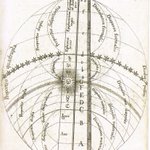


Knowledge doesn't always disappear when a civilisation falls. Sometimes it survives in fragments.
A symbol.
A monument.
A story passed between generations.
A practice whose original purpose has been forgotten.
Over time, knowledge can be lost, transformed or absorbed into new traditions. What began as observation may become ritual. What began as a practical technique may survive only as a legend.
Ancient Universe
What knowledge has survived from the ancient world?
Across civilisations, we find recurring patterns.
Sacred geometry. Cosmologies linking humanity to the heavens. Monuments aligned with astronomical cycles. Symbols repeated across cultures separated by vast distances.
Some of these connections have straightforward historical explanations. Others remain debated. What did these civilisations understand about reality, nature and consciousness and how much of that understanding has been lost, transformed or misunderstood?
We've explored geometry, fields, information and the structure of experience.
Each gives us a different way of describing reality.
But the relationship between them remains unresolved.
How does physical process become experience?
How does information become meaning?
And could the structures we see across nature, physics and consciousness be different expressions of something deeper?
We don't yet know whether these questions share a common answer. But perhaps that's where the next stage begins.
What process connects experience to reality?
And perhaps an even older question follows:
Did ancient traditions already have a language for this connection, one we've forgotten how to interpret?
What if intelligence begins before a mind exists?
Across nature, matter organises itself into increasingly complex structures.
Crystals form ordered patterns.
Cells organise into living systems.
Networks emerge. Patterns repeat. Complexity builds.
We usually describe these processes through physical laws, chemistry and evolution.
But there is a deeper question.
Why does reality permit self-organisation at all?
Could intelligence emerge from a more fundamental principle of organisation, one that operates across scales, from matter to life to mind?
Perhaps the capacity to organise is already built into the structure of reality itself.
Gamma synchrony as long-range coordination: attention, perception and self no longer competing.
Perhaps the mind is simply settling into a more continuous geometry of its own relations.
Entered or settled may become the same once that structure is recognised.
Coherence
What does it mean for a mind to become coherent?
Attention can become unified.
Thoughts can become less fragmented.
Perception can become unusually vivid.
Across meditation, flow and other altered states, people describe forms of heightened coherence.
Perhaps consciousness isn't only about information.
Perhaps the organisation of information matters.
And if geometry can organise physical systems into coherent states:
could something similar happen within the mind?
🤖 Made with AI

So negative energy density is just a centripetal force.
Collapse the wave function with perfect geometric fractality and achieve antigravity.

Antigravity. Fusion. Gravitational waves. Room-temperature superconductors & more.
Dr. Salvatore Pais explores the revolutionary physics behind his controversial U.S. Navy patents—and what it would take to turn these ideas into reality. FULL INTERVIEW: youtu.be/UCPYRQnKoiM
The Geometry of Time
What are we actually measuring when we measure time?
We don't measure time directly.
We measure change.
A quartz crystal oscillates at a remarkably stable frequency, and we count its periods.
Periodic change becomes a measure of time.
But that raises a deeper question.
What if periodicity isn't just a way of measuring time?
What if periodicity and geometry are fundamentally connected?
If a system transforms after a certain number of cycles, perhaps time can be understood through change, repetition and structure.
And if geometry can exist at different scales:
could the structure of periodicity be part of the bridge between quantum fields and spacetime?

Quantum entanglement is more accurately described as phase conjugation perfected.
This has the potential for incredible healing and advanced propulsion.


Plasma & Bletchley
What if the Nazi code being intercepted in part was information on Die Glocke and other advanced propulsion?
Now Bletchley breaks through in plasma? This is no coincidence and the timing is impeccable.
Some electronics engineers have said phase conjugating plasma is the key to antigravity.

Pulsar Fusion has achieved first plasma in its Sunbird fusion rocket exhaust system at its Bletchley facility in the UK.
The milestone marks a key step toward developing its planned fusion propulsion technology.
Sunbird aims to enable much faster travel through deep space than conventional rocket propulsion.
Readers added context they thought people might want to know
Pulsar reported first plasma (krypton, no fusion) in March 2026 ground exhaust test. Video is CGI, not the actual brief lab footage.
globenewswire.com/news-release/2…
rottenwifi.com/pulsar-fusion-…
youtu.be/YTEr_UmiaYI
This is where the fractal question gets interesting!
If LSD increases both EEG frequency and the fractal dimension of brain activity, perhaps we're seeing two sides of the same change:
more frequency → more complexity → more fractal structure.
And if microtubules are oscillating at much higher frequencies, perhaps the macroscopic fractalisation we're seeing in EEG reflects the same organisation expressed across scales.
What if the deeper pattern isn't the molecule, but the way it organises itself across scales?
From crystals to fractals.
From branching forms in nature to oscillations in the brain.
The same idea keeps appearing:
structure repeating through scale.
Relationships preserved while the scale changes.
If spacetime itself has a recursive structure, perhaps the distinction between quantum and gravitational descriptions is partly a question of scale and organisation.

Nice overview Sabine but the biggest origin of life question is ‘Why bother?’.
What was the motivation for molecules to have purposeful behavior, e.g. 100 million years before genes? Here’s the abstract for my talk at TSC.2026.org
It’s called ‘Are extraterrestrial polyatomic time crystals the origin of life and consciousness?’
tsc2026.org/abstracts_html/s…
Amorality only allows the Platonic beast to prevail. Morality is an attempt to tame it. Morality is the application of knowledge.
Resonance
Could resonance provide a bridge between physical dynamics and experience?
Resonance is already fundamental to physics.
Systems can couple.
Oscillations can synchronise.
Energy can concentrate into particular modes.
The brain is also an oscillating, interacting physical system.
So perhaps consciousness involves more than information processing alone.
Perhaps organised experience depends on organised dynamics.
The deeper question:
what is actually resonating?
Mind & Field
Could mind and field be connected without being identical?
The brain is physical. Fields are physical.
But experience is known from the first-person perspective.
We still don't have a complete theory linking these descriptions.
So the question isn't whether consciousness is a field. It is whether a physical field process could play a role in the emergence of experience.
If it could, what would that mechanism look like?