Pharming on Pharaoh
Australia
Joined September 2022
- Tweets1.4K
- Following1.9K
- Followers560
- Likes59.5K



DWB9000🔺 retweeted

paperstrategy is in the first batch of papertrade builder codes.
our papertrade terminal goes public tomorrow, oct 25 at 15:00 UTC (11:00 ET).
phase 2 begins.


DWB9000🔺 retweeted
paperstrategy is now the 2nd biggest PAPER staker on papertrade.
183.3M PAPER staked, 2.06% of all staked PAPER.
built to be the biggest. 1 to go.

DWB9000🔺 retweeted
since papertrade opened, the cost of minting PAPER has only been going up.
burning money directly now costs 6.9x the oct 10 price.
paperstrategy: 2.5x.
over time the gap keeps widening, our strategies mint cheaper and cheaper compared to burning money on papertrade.


DWB9000🔺 retweeted

There's only 1 DEX on Robinhood Chain that regular folks can enjoy the fruits of - it is called @RamsesExchange robinhood:0x5173d45a1191ee33cbb7d8c7e65f21b04ed54802
Avoid all UPs, Fables, whatever scams...

How is migration going anon? first $PROLOGE fiasco, then $FABLES ... As expected... only one king stays strong - @RamsesExchange . So if you suffered other wanna be "aero" dexes launches recently, migrate to the project that soon will have cooperation with the real $AERO.


DWB9000🔺 retweeted

gm Ramses holders
Please welcome $hyperRAM on HyperEVM as collateral. Stablecoin loans accessible via Teller 🌲 and Debit AI 🟡
More on hyperRAM
hyperRAM is the liquid-staked form of xRAM, the staking token of @RamsesExchange, a concentrated-liquidity DEX on HyperEVM.
It keeps the position transferable while auto-compounding protocol rewards. Now, collateral support adds another use for hyperRAM: borrowing stablecoins without selling the tokens.
How to borrow
Select hyperRAM on HyperEVM in Teller, review the available loan terms, and use the tokens as collateral to borrow stablecoins.
Loan amounts, rates, and durations depend on available lending offers. Repayment releases the collateral.
Borrow through Debit AI
Borrowing can also start with a plain-language request in teller:native AI, or through its MCP connection in ChatGPT or Claude.
The agent can find available borrowing options and execute through Teller within the permissions set.
Fixed terms. No margin calls.
Teller loans are time-based. Price movements alone do not trigger liquidation during the loan term.
Principal and interest must be repaid by the due date. If a loan expires unpaid, the collateral goes to a Dutch auction.
Welcome to the club, hyperRAM 🤝
pro.teller.org/blog/new-coll…
Not financial, investment, legal or tax advice. Collateral support does not constitute an endorsement. Digital assets and smart contracts carry risks.

DWB9000🔺 retweeted

The latest @papertrade_xyz is incredibly bullish
Early users are crying because they thought they could bot their way into living off the project without keeping any more skin in the game
DWB9000🔺 retweeted

My thoughts:
- If you farmed hard last week and have deployed all you’re willing to deploy, this change is bad for you. You prob feel lied to and that’s fair.
- If you feel underexposed and wanted a chance to get more exposure to the exchange and a larger share of the token but didn’t want to because you were “late” this is a fantastic update for you, farming becomes “cheaper” over time
- From my read instead of early farmers getting a large proportion of tokens, later farmers get a larger proportion of tokens. The thinking makes sense as the current emissions means people will do less volume as incentives (tokens) decrease.
- Current: Stakers get a large proportion of USDC fees but the volume may trend down as people do less volume
- New: Stakers will get diluted over time but the volume will continue (perhaps even grow) over time so the faucet continues long term, albeit proportionately lower.
- The nontransferability makes sense to mitigate attack angles. Didn’t expect to sell the token anytime soon anyway.
- The fee change makes sense too and shouldn’t affect real users (who closes a trade after 0.1% anyway)
Still analyzing this so these are just my raw thoughts in the moment
A note on transferability.
Papertrade is a complicated primitive, and managing it from a risk standpoint is a complicated problem. The PAPER token is far more integrated into the economics of the primitive than most tokens are in their respective protocols today, and, broadly, was designed to act as a counter insolvency incentive coupled with a rebate mechanism to losing traders. Market makers and exchanges are by far the two most profitable businesses in crypto, and our goal was to try and externalise as much of their margins back to users as possible. We are now just over a week into the life of papertrade and we are becoming increasingly confident that this is both possible, but also a likely outcome as agentic led software becomes the norm.
As it stands, the paper token traded as a perp becomes a leveraged bet on bankroll solvency - and being able to short bankroll solvency materially changes the payoff curve of a manipulation attack. The target number goes from the bankroll, to the bankroll + short side exposure on paper. We can, and do limit bankroll size specifically to control this payoff curve and ensure it never becomes existentially problematic, but external perp markets are not something we would have any control over if left to float of their own accord. For example, if our bankroll is $10m, an attack costing $15m manipulating the price of bitcoin or ether is not viable. You simply lose money. If however you were also able to put on $10m of PAPER short side exposure, suddenly an attack costing $15m is very viable indeed.
If we were to make the token transferable at this point, we are confident we would quickly enter a state too dangerous to allow any material exposure to be taken on papertrade, an end result that benefits no party beyond the wolves who have done the math on the short and are waiting in the wings with sharpened knives.
We would also like to thank the various perps teams who have reached out about pre-market listings for their understanding and patience regarding this issue, and especially to the paragon team who, despite jumping the gun on us, have behaved with the utmost integrity and transparency once a dialogue was opened.
Perps on PAPER will always act as a self-limiting exposure ceiling for a token with this type of utility, and we think it would be a shame to limit the growth of papertrade to the extent that allowing perps would necessitate. As such, at this juncture we do not have plans to allow off-contract token transferability.
Structurally, papertrade is limited by the quality of the data it receives from hyperliquid, but we strongly believe that hyperliquid has a very large part to play in the future of global exchanges, and expect their books to continue to thicken and strengthen over time.
A note on fees.
Papertrade launched with a deadband fee from entry of 0.2bps. This means you don't earn anything until the price has moved by 0.002% in your favour. Over the months before launch, we played around with many different curves and fee structures affecting exclusively positions closed very close to entry price in order to try and devise a structure that removed the edge against the bankroll low time frame scalp bots have, whilst also minimally impacting the traders around which and for whom the product was devised. We were never able to find anything we were absolutely happy with and so decided to stay with the 0.2bp deadband fee through launch. This has however meant we have had to be very restrictive when it came to certain parameters, such as OI caps.
Now, however, we have enough live data to fully understand exactly which strategies work, and to make the necessary changes to stop them. The changes we are making will have an on hours and off hours fee mode to account for the relative differences in liquidity the hyperliquid books see between these two time periods, and the ease with which low time frame moves are signalled. The changes we are making will only affect positions closed within 6bps of entry (0.06%) in on hours, and 10bps (0.1%) in off hours. Any trades closed above these threshold price shifts will see no change to their fees at all. On a look back to launch basis, these changes affect the profitability of bot strategies roughly 15x more than they do normal traders, for whom a very small proportion of overall winnings come from within this band.
These changes should serve to flatten much of the edge our microfee structure necessarily creates on low time frames, and will help with long term exchange sustainability. This should hopefully allow us to open up parameters such as OI caps a little more so those of you who wish to can put on the size you want to, when you want to.
It is possible these changes are still too lax, and that further revisions to this structure may be necessary going forwards. If so, we will notify users ahead of time.
A note on paper tokenomics.
In conjunction with the fee changes, we will also be implementing a change to the token issuance curve.
Going forward, every $1 lost mints a fixed share of PAPER's supply at that moment, roughly 0.1% of supply per $1M lost (the exact number depends on the mint rate at the time the contracts are upgraded). PAPER minting in and near insolvency will also change, switching from a flat 100 per $1 of loss, to a time weighted multiplier on the curve growing over time, effectively acting as the house running a discounted auction on its own future cash flows. This change also removes the risk of the paper-mint-straddle-attack, temporarily pushing the protocol insolvent by closing only the winning side of a large straddle position and then attempting to mint as much paper as possible.
In the immediate term these changes will only have a very subtle effect on PAPER minting, but in the long run will structurally change the outlook of the system beyond the first few weeks, serving to slowly dilute out older holders and leaving more recent users with an advantage. Reconstituting the PAPER system into something much closer to the exchange rakeback it was intended to be.
We have been very reticent to touch this particular aspect of the system for obvious reasons, but ultimately we believe that these changes provide all users with the optionality to take a smaller piece of a potentially much larger pie than the current dynamic might necessarily allow.
Other, miscellaneous notes.
These contract upgrades will include a few other contract changes, including the addition of builder codes so that builders can utilise papertrade in whatever capacity they choose to. This will be a whitelist only to begin with and we will have more for you later in the week on where/how this will be rolled out. A small change to contract permissions on the reward distributor and a change on how below bust closes are processed by the exchange are also included, largely to block gas griefing attacks.
These changes will be pushed to docs in full over the coming day, and we will further announce once the changes are queued into the timelock pending final security passes, scheduled to go live 24 hours after that point.
Final note.
We'd like to thank everyone that has tried out papertrade over the last 10 days. It has been a labour of love building this product and both of us have been taken aback at all of the positive feedback we have received. We'd also like to thank all those of you who have spent considerable time musing on the system we have built, and much of your advice has been taken onboard and will likely affect the colour of what papertrade becomes going forward. We know some of these changes will be unpopular with some, but we would not be making them if we did not feel them to be absolutely necessary.
- blurr, jez
DWB9000🔺 retweeted

🆕 limit orders are now live on @matchametaxyz!
set your price. choose when it expires. let the order do its thing.
- your price or better, guaranteed
- gasless to place, edit & cancel
- tokens stay in your wallet until your order fills
here's what else you should know 👇
DWB9000🔺 retweeted

Update coming on @RamsesExchange and latest milestones.

Tomorrow on MCG
$RAM | @RamsesExchange w/@northpool9
📅20th October, Tuesday
🕛12:30PM EST
📍Tune in here
Stream presented by @fomo and @MetaDAOProject


DWB9000🔺 retweeted
a note on papertrade's note.
it's reassuring to see papertrade take these decisions early to make the protocol last, and to close the attack vectors before anyone gets to use them.
paperstrategy is 100% aligned with every one of these measures. here is what they change for us.
on transferability: we had plans to create more synergies between paper and pstr. that will wait, and it's fine. paperstrategy farms paper, stakes all of it, and turns the dividends into pstr buybacks and burns. as long as paper is not transferable, pstr is de facto the only liquid, tradeable exposure to paper and its cash flows.
on fees: the new band targets positions closed within 6 to 10 bps of entry, i.e. the low time frame scalp bots. our pairs close far outside that band, so our costs barely move, and a healthier bankroll with looser oi caps is exactly what a large, patient minter wants.
on the issuance curve: minting a fixed share of supply per dollar lost rewards whoever keeps minting, not whoever minted first. that is the paperstrategy model by construction: every pstr trade pays a tax, the tax feeds the treasury, the treasury mints paper every day, forever. we are reworking all our strategies to be optimal under the new curve, with one objective: stay the first minter of paper and become the protocol's largest long-term beneficiary.
on builder codes: we have been building our own paperstrategy front end for several days. it already runs in private beta, and it will open the moment builder codes go live and we are whitelisted. the goal is simple: give you powerful tools to use papertrade the right way, pairs, engines, queue visibility, without ever touching your wallet keys. more soon.
in short: these announcements only strengthen our conviction to build on papertrade for the long run. let's build together.
A note on transferability.
Papertrade is a complicated primitive, and managing it from a risk standpoint is a complicated problem. The PAPER token is far more integrated into the economics of the primitive than most tokens are in their respective protocols today, and, broadly, was designed to act as a counter insolvency incentive coupled with a rebate mechanism to losing traders. Market makers and exchanges are by far the two most profitable businesses in crypto, and our goal was to try and externalise as much of their margins back to users as possible. We are now just over a week into the life of papertrade and we are becoming increasingly confident that this is both possible, but also a likely outcome as agentic led software becomes the norm.
As it stands, the paper token traded as a perp becomes a leveraged bet on bankroll solvency - and being able to short bankroll solvency materially changes the payoff curve of a manipulation attack. The target number goes from the bankroll, to the bankroll + short side exposure on paper. We can, and do limit bankroll size specifically to control this payoff curve and ensure it never becomes existentially problematic, but external perp markets are not something we would have any control over if left to float of their own accord. For example, if our bankroll is $10m, an attack costing $15m manipulating the price of bitcoin or ether is not viable. You simply lose money. If however you were also able to put on $10m of PAPER short side exposure, suddenly an attack costing $15m is very viable indeed.
If we were to make the token transferable at this point, we are confident we would quickly enter a state too dangerous to allow any material exposure to be taken on papertrade, an end result that benefits no party beyond the wolves who have done the math on the short and are waiting in the wings with sharpened knives.
We would also like to thank the various perps teams who have reached out about pre-market listings for their understanding and patience regarding this issue, and especially to the paragon team who, despite jumping the gun on us, have behaved with the utmost integrity and transparency once a dialogue was opened.
Perps on PAPER will always act as a self-limiting exposure ceiling for a token with this type of utility, and we think it would be a shame to limit the growth of papertrade to the extent that allowing perps would necessitate. As such, at this juncture we do not have plans to allow off-contract token transferability.
Structurally, papertrade is limited by the quality of the data it receives from hyperliquid, but we strongly believe that hyperliquid has a very large part to play in the future of global exchanges, and expect their books to continue to thicken and strengthen over time.
A note on fees.
Papertrade launched with a deadband fee from entry of 0.2bps. This means you don't earn anything until the price has moved by 0.002% in your favour. Over the months before launch, we played around with many different curves and fee structures affecting exclusively positions closed very close to entry price in order to try and devise a structure that removed the edge against the bankroll low time frame scalp bots have, whilst also minimally impacting the traders around which and for whom the product was devised. We were never able to find anything we were absolutely happy with and so decided to stay with the 0.2bp deadband fee through launch. This has however meant we have had to be very restrictive when it came to certain parameters, such as OI caps.
Now, however, we have enough live data to fully understand exactly which strategies work, and to make the necessary changes to stop them. The changes we are making will have an on hours and off hours fee mode to account for the relative differences in liquidity the hyperliquid books see between these two time periods, and the ease with which low time frame moves are signalled. The changes we are making will only affect positions closed within 6bps of entry (0.06%) in on hours, and 10bps (0.1%) in off hours. Any trades closed above these threshold price shifts will see no change to their fees at all. On a look back to launch basis, these changes affect the profitability of bot strategies roughly 15x more than they do normal traders, for whom a very small proportion of overall winnings come from within this band.
These changes should serve to flatten much of the edge our microfee structure necessarily creates on low time frames, and will help with long term exchange sustainability. This should hopefully allow us to open up parameters such as OI caps a little more so those of you who wish to can put on the size you want to, when you want to.
It is possible these changes are still too lax, and that further revisions to this structure may be necessary going forwards. If so, we will notify users ahead of time.
A note on paper tokenomics.
In conjunction with the fee changes, we will also be implementing a change to the token issuance curve.
Going forward, every $1 lost mints a fixed share of PAPER's supply at that moment, roughly 0.1% of supply per $1M lost (the exact number depends on the mint rate at the time the contracts are upgraded). PAPER minting in and near insolvency will also change, switching from a flat 100 per $1 of loss, to a time weighted multiplier on the curve growing over time, effectively acting as the house running a discounted auction on its own future cash flows. This change also removes the risk of the paper-mint-straddle-attack, temporarily pushing the protocol insolvent by closing only the winning side of a large straddle position and then attempting to mint as much paper as possible.
In the immediate term these changes will only have a very subtle effect on PAPER minting, but in the long run will structurally change the outlook of the system beyond the first few weeks, serving to slowly dilute out older holders and leaving more recent users with an advantage. Reconstituting the PAPER system into something much closer to the exchange rakeback it was intended to be.
We have been very reticent to touch this particular aspect of the system for obvious reasons, but ultimately we believe that these changes provide all users with the optionality to take a smaller piece of a potentially much larger pie than the current dynamic might necessarily allow.
Other, miscellaneous notes.
These contract upgrades will include a few other contract changes, including the addition of builder codes so that builders can utilise papertrade in whatever capacity they choose to. This will be a whitelist only to begin with and we will have more for you later in the week on where/how this will be rolled out. A small change to contract permissions on the reward distributor and a change on how below bust closes are processed by the exchange are also included, largely to block gas griefing attacks.
These changes will be pushed to docs in full over the coming day, and we will further announce once the changes are queued into the timelock pending final security passes, scheduled to go live 24 hours after that point.
Final note.
We'd like to thank everyone that has tried out papertrade over the last 10 days. It has been a labour of love building this product and both of us have been taken aback at all of the positive feedback we have received. We'd also like to thank all those of you who have spent considerable time musing on the system we have built, and much of your advice has been taken onboard and will likely affect the colour of what papertrade becomes going forward. We know some of these changes will be unpopular with some, but we would not be making them if we did not feel them to be absolutely necessary.
- blurr, jez
DWB9000🔺 retweeted
what the last 24 hours looked like at paperstrategy:
- 10.9M $PSTR bought back and burned. 85.2M burned in total, 8.5% of supply, for $525k with ~$185k more to come in future buybacks
- +3.64M PAPER minted, 163.1M PAPER staked, 1.92% of all PAPER
- our PAPER grew 2.2x faster than total PAPER supply: 4.2% of all new PAPER went to paperstrategy
- $17.8k of staking revenue earned, $789k since papertrade opened

DWB9000🔺 retweeted

Next week will be dedicated to @Team1BR.
We caught up with @pablexxeth to hear what's actually happening in one of @avax's biggest communities, and what they want from a DEX.
We'll be sharing what came out of it all week - so stay tuned 🔺

DWB9000🔺 retweeted

@InverseFinance is spreading lies left and right

My post already included that. They ‘bribed’ 180,000 and got ~$360,000 in emissions to dola pools + got back ~250k in voting rewards.
They made substantial money no matter how you cut it. There is no defending these lies. Their truth is ‘inverse’ to reality.

DWB9000🔺 retweeted

Appreciate you actually digging beneath the surface. Your findings largely confirm everything I’ve already shared, yet somehow the conclusion shifts toward defending Inverse based on hypothetical promises **you openly admit you have no evidence of.**
**You claim “Inverse never argued they bought the tokens” when they LITERALLY claimed to have purchased 5.4M RAM with their own funds.** It’s right there in writing. Why are we moving goalposts to excuse demonstrably false claims?
You’re overlooking the ~$360K in RAM emissions + 2.7M xRAM Ramses provided to DOLA liquidity pools, materially subsidizing the very incentives you’re evaluating.
Most importantly, this was an **airdrop** like the initial Partner NFTs that they received. Every time, partners knew they were explicitly excluded from eligibility, consistent with years of precedent. The communication from other people can label it whatever they want but it was clearly described as an airdrop in all announcements. What’s funny is they never once said anything about the countless other airdrops - in my opinion an omission of lack of involvement, for someone who claims they **”built Ramses”**
Where exactly is the evidence of a rug? We’ve had accusations of theft, criminality, and illegally seized assets, **yet nobody has produced a shred of evidence establishing any entitlement to this airdrop.**
It’s genuinely bizarre watching demonstrably false accusations get hand-waved away while actual on-chain evidence gets scrutinized endlessly.
It’s genuinely bizarre watching demonstrably false accusations get hand-waved away while actual on-chain evidence gets scrutinized endlessly, only for the goalposts to move again.
**No more moving goalposts.**
DWB9000🔺 retweeted
That’s not what happened, there's substantial context that he's not including.
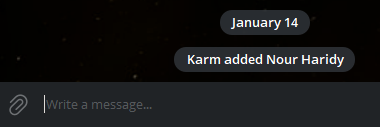
Nour has never communicated with our team. He was added to our group chat in January this year, but nobody has sent a single message in it. I’ve attached the screenshot.
Partner NFTs didn’t receive the Shadow, Pharaoh or HyperEVM airdrops either. There were years of precedent for this, and the eligibility criteria were announced repeatedly on socials and in Discord. Almost every partner we asked understood the reasoning and returned their NFT.
With Inverse, we had a lot of back and forth before we reached a compromise that they could use their veRAM to vote on ETH/USDC and keep the fees they collected, which they did. We agreed to that on the understanding that sINV/sDOLA would be coming to Ramses, but that never happened. (2nd attached photo)
After that agreement, 13 months passed without another message from Inverse before they reached out to ask why they hadn’t received the airdrop.
For context, Ramses was struggling to survive at that point. The partner veRAM positions were massive compared with the positions of users who had bought or farmed with their own funds. Including those partner positions would have meant allocating a huge share of the airdrop to them, and we explicitly communicated that the protocol couldn’t accommodate that. We chose to prioritize active users.
Partner NFTs were excluded under the eligibility criteria we had already announced (many times). The airdrop used a whitelist based on those criteria Inverse wasn’t blacklisted or manually stopped. Also for reference partner NFTs were designated contract-side, and reverts on any transfers (which prevented quite a bit of people trying to abuse) so it was universal for partners.
I have the receipts and am happy to share them. You can also read the conversation in the YAMs general chat. I have a lot of respect for you, and I hope this helps explain our perspective.