

Data Analyst. Mostly markets. Live Markets and OSINT Feeds: https://teapaw.org/t.co/Ve5QTGmq5a Me IRL: https://teapaw.org/t.co/qnwI9jJ9uN
Texas, USA
Joined October 2011
- Tweets10.8K
- Following146
- Followers1.1K
- Likes31.7K






Pinned Tweet
I've been looking at the relationship between WTI crude prices and U.S. commercial crude inventories, particularly how the current geopolitical crisis compares with previous periods of significant oil market disruption.
This scatter plot compares weekly WTI prices against commercial crude inventories relative to their five-year seasonal average. I've isolated several major crisis periods, including the Arab Spring and Libyan civil war, the 2014–2016 oil collapse, the 2018 Iran sanctions, the 2019 Saudi oil facility attacks, COVID-19, the Russian invasion of Ukraine, and the ongoing crisis in 2026. The highlighted green line traces the progression of prices and inventories throughout this year, while the dashed red line represents the historical relationship estimated using data through 2018.
What's interesting to me is that, despite the severity of the current geopolitical situation, 2026 doesn't appear particularly extraordinary when measured against the historical relationship between WTI prices and U.S. commercial crude inventories. There are certainly periods this year when prices have deviated from the historical trend, but those deviations aren't especially unusual compared with previous crises. In fact, several earlier periods, particularly 2011–2012 and 2022, show substantially greater dispersion, with crude prices reaching much higher levels relative to comparable inventory conditions.
This isn't to suggest that the current crisis isn't serious. Shipping disruptions through the Strait of Hormuz, attacks on energy infrastructure, and persistent uncertainty surrounding Iranian exports are very real concerns. We've also seen extraordinary tightness in refined products, particularly diesel, that isn't necessarily captured by looking at U.S. commercial crude inventories alone.
But I think this comparison provides some useful perspective. While crude prices are elevated and geopolitical risks remain substantial, the market isn't necessarily pricing crude at levels that are historically unreasonable relative to domestic inventories. If anything, the chart suggests that previous crises have produced considerably more extreme departures from the historical relationship.
Of course, U.S. inventories are only one component of the global petroleum market, and this relationship isn't a definitive measure of fair value. Still, I think it's an important distinction: we can be experiencing a serious geopolitical and physical supply crisis without crude prices necessarily being extraordinarily expensive by every historical measure.
#OOTT
agitlytics.com/projects/prop…


Aub. retweeted

Americans have now spent $142 billion more on gasoline and diesel since March 1, enough to buy 361,000 homes at the September median price, enough to house over 900,000 people

Aub. retweeted

Matthew Yglesias continues to say that talking about ICE and excessive force in immigration enforcement helps Republicans. He is obviously wrong about this and refuses to acknowledge the data. Way past time for everyone to update their priors on this.


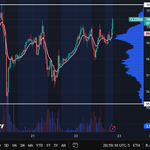
I think the most interesting development today is that the market seems to be increasingly ignoring the administration's diplomatic jawboning. Trump again suggested that negotiations with Iran were underway and reiterated his intention to avoid attacking before the midterms. A couple of hours later, December WTI was still trading near $103. Unlike Tuesday, when reports of a possible diplomatic agreement briefly pushed crude into the mid-$95 range, today's assurances barely seemed to interrupt the rally.
Going into this weekend, I think there's a reasonable possibility of some limited or preliminary military strikes. Israel's election is Tuesday, October 27, and we've seen considerable reporting about Netanyahu's interest in renewed operations against Iran. I don't know how that political situation will ultimately affect Israeli decisions, but I certainly wouldn't rule out an escalation before the election. At the same time, Trump is now publicly discussing the possibility of another American operation, even while maintaining that he intends to wait until after November 3.
I can also see Iran continuing to apply pressure during this period. If Washington actually intends to avoid renewed strikes until after the midterms, Tehran has a window in which it can continue imposing costs on commercial shipping and maintaining leverage in negotiations. Ansar Allah could continue doing the same against Saudi infrastructure, although I'm not convinced the Houthis are necessarily calculating their actions around the American electoral calendar in quite the same way.
I still think the underlying strategic problem is unresolved. Even if Kpler's reported recovery in regional exports is accurate, keeping those volumes moving through an ongoing conflict is going to be much more difficult than restoring them temporarily. Iran has demonstrated that it can threaten commercial shipping without completely shutting down Hormuz, and neither tanker escorts nor limited military operations offer an obvious permanent solution to that problem.
That's ultimately why I remain skeptical that another short bombing campaign would fundamentally change the situation. Washington either has to negotiate a settlement that likely involves substantial concessions to Iran, pursue a much larger and riskier military confrontation, or tolerate a prolonged stalemate in which shipping remains expensive and vulnerable. I don't see an especially easy way for the administration to present any of those outcomes as a decisive victory.
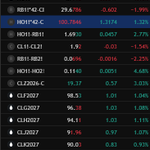
Meanwhile, prices just keep moving higher. WTI has now finished above $103, Brent is approaching $117, and crude backwardation continues to strengthen. There's certainly a geopolitical risk premium in these prices, but I'm still not convinced the possibility of another major round of fighting is fully reflected in the market. My outlook remains for crude to stay elevated unless there's a genuine de-escalation, with substantial upside risk if the conflict expands again.
#OOTT


Textbook FAS

Illuminating exchange with a 19 year old voter in Detroit, worried about @AbdulElSayed’s name. @AJEnglish #Midterms2026 #Michigan
Aub. retweeted

There is something deeply wrong with a political system that allows one trillionaire to buy his own personal U.S. Senator.

Aub. retweeted

Oh my goodness.
Big 4 with SPR is the lowest in history.
Big 4 without SPR is the lowest since 2014.


Aub. retweeted

🚨 NEW: The U.S. and Israel are preparing to resume attacks on Iran, possibly before Tuesday’s Israeli elections, according to senior Iranian officials and a U.S. official who spoke to Drop Site. The White House denies plans for U.S. strikes before the midterms.
What each told Drop Site:
🔸 Gen. Mohsen Rezaei, Secretary of Iran’s Supreme National Security Council, in an exclusive written interview with Drop Site
➤ Iran retains the capacity to launch missiles and drones at U.S. assets and would expand its targets: “Cables, data centers and artificial intelligence facilities could also come within range. If the conflict begins again, we will have a broader plan.”
➤ On previously unused capabilities: “We did not deploy all our capabilities in the previous stages… and we are also prepared for the next stage.”
➤ On Gulf states whose energy infrastructure could help sustain the U.S. blockade: “Those governments should not assume they can participate in economic warfare against Iran without putting themselves at risk.”
➤ On diplomacy: Iran has presented seven new conditions through intermediaries. “Until those conditions are fulfilled, Iran will neither reopen the strait nor return to negotiations.”
🔸 A senior Iranian official
➤ Tehran’s intelligence assessment sees a high likelihood that large-scale bombing begins before the Israeli vote on October 27. “Trump has sat on Iran’s proposed package for ending the war, and negotiations have stalled.”
➤ Tehran believes Israel would strike first, “destroying Iran’s newly deployed air defense systems, in order to open the path for American bombers,” while the U.S. would target defenses along the Strait of Hormuz and potentially attempt to seize an Iranian island.
➤ Trump may launch a “token” attack on an underground nuclear site such as Pickaxe Mountain to claim victory.
➤ “Should another war against Iran begin… their casualty figures will be ten times higher.”
🔸 A U.S. official
➤ Military assets are moving rapidly into place ahead of an expected green light from Trump, with CENTCOM chief Gen. Bradley Cooper among those pushing for renewed attacks.
➤ “CENTCOM is putting all the pieces into place to renew major combat operations.”
➤ The official doubted strikes would come before the Israeli vote, but said: “We did start Epic Fury without all our assets in place.”
➤ “Trump has backed off major combat operations against Iran or the Houthis [Ansarallah] seven times since July… At the last minute, he calls it off.”
🔸 White House Principal Deputy Press Secretary Anna Kelly
➤ “The United States will not be attacking Iran at any time prior to the midterm elections.”
—
The USS Theodore Roosevelt and the 13th Marine Expeditionary Unit are heading to the region, bringing approximately 10,000 additional sailors and Marines. Two other U.S. aircraft carriers are already in the Arabian Sea.
Israeli Prime Minister Benjamin Netanyahu, trailing in the polls, claimed Wednesday without evidence that Iran is developing a nuclear weapon and said his directive to the Israeli military, Mossad and security agencies is “to topple the regime in Iran.”
🔗 Full details in the new report from Jeremy Scahill, Peiman Salehi and Ryan Grim, linked below.


⚡️NEW from @DropSiteNews: The War Tehran Believes Is Coming
Iran believes the U.S. and Israel may strike before the midterms. Top security official Gen. Mohsen Rezaei tells Drop Site Iran has new targets in its sights.
By @jeremyscahill, @peimansalehi_, and @ryangrim
dropsitenews.com/p/iran-war-…

Aub. retweeted

IRAN ANALYSIS: Despite the claim from many Western analysts that Iran has “overplayed their hand”, I continue to believe that Iran has repeatedly UNDERPLAYED their hand.
They have been TOO concerned with how the world and the public views them, and this has allowed for the Araghchi/Ghalibaf/Pezeshkian’s of Iran to hold back the more hardline elements from taking more aggressive measures.
That is now changing, and is reflected in recent statements from Ghalibaf, and the recent op-ed published this morning by Abbas Araghchi in the Financial times, alongside the total sidelining of Pezeshkian in recent weeks.
If the United States and Israel return to all-out war, Iran will take the more extreme measures of escalation dominance that they have so far restrained themselves from employing.
It would be a historic mistake akin to launching the war to begin with for President Trump to reignite a full-scale war against Iran in the coming days and weeks.
Aub. retweeted

The U.S. State Department is preparing to order some embassy personnel and their families to leave Gulf countries, a U.S. official told Reuters.
The last time an order of this kind was issued was in early March, during the first days of the war against Iran.
As of now, it is highly likely that the countries involved are Bahrain, Qatar, the UAE, and Kuwait.
