

Co-Founder Coinkite. Programmer.
Canada
Joined October 2010
- Tweets17.5K
- Following406
- Followers3.6K
- Likes1.1K





DocHex retweeted

The fun fact about the eMudhra certificate leak is that the numbers were so low that only an AI or a flawed/test script would have found them. No sane human would have thought that a fellow human could have done something that stupid.


DocHex retweeted

Anthropic says one of its internal Claude models identified how the seeds for NIST's ECDSA elliptic curves were generated.
→ The seeds, supplied by the NSA without explanation in the 1990s, had long prompted suspicions of a backdoor
→ Anthropic says the seeds were produced by the lrand48 random number generator, seeded with timestamps from 1997 and 1998
→ The company says the finding is not a cryptographic break or weakness in the curves
→ It published code to reproduce the results, and some seeds and base points remain unexplained
Source: anthropic.com/research/ecdsa…

DocHex retweeted

First they came for the software engineers, I said nothing for I was not a software engineer.
Then they came for the mathematicians, I said nothing for I was not a mathematician.
Then they came for the product managers and I said "make sure you get all the product managers"
DocHex retweeted

Which manufacturer can you truly trust 100%?
Coldcard had a real multi-year RNG coding error that got exploited. It was found, fixed, and they added mandatory user entropy (dice rolls) so the same class of failure is impossible.
Ledger is currently dealing with physical implants in reseller units that read seeds off the screen and pass Genuine Check—harder to spot without opening the device. Jade had its own firmware issues; Liquid (same org) lost ~4k BTC to a software cache bug. Older Trezor One has long-known physical extraction paths.
Every major wallet has had problems. Coldcard just gets the loudest dumping while offering the clearest path to user-controlled entropy and the most obvious tamper evidence.
Find, fix, move on.

DocHex retweeted
We know exactly what the Coldcard problem was: a firmware issue that was identified, publicly documented, and fixed. Current recommended firmware routes seed generation to the hardware RNG, includes boot-time checks that fail closed if the path is wrong, and requires additional user entropy for new seeds. Independent reviews and device tests have confirmed the fix. Updating does not repair old seeds generated on vulnerable firmware—those still need migration.
A known, fixed firmware bug is also an infinitely easier problem to address than an undetected supply-chain implant of malicious hardware, which is far harder to discover and remediate.
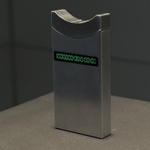
Coldcard was ahead of its time in offering a clear case that lets anyone examine the hardware without needing to disassemble it. That transparency is useful for checking that the expected components are present and that nothing has been physically swapped or added.

DocHex retweeted

Everyone is frantically trying to invent the @COLDCARDwallet

Following the tampering of @Ledger devices and the theft of funds, wouldn't it be better for major hardware wallet manufacturers (Ledger, Trezor, Safepal, Bitbox, Ellipal, ColdCard, etc.) to start considering the production of transparent models?
At the very least, this would save users from having to play amateur mechanic by opening up the device!
It probably wouldn't solve the problem, but at least major changes would be noticed.

DocHex retweeted

People finding out @COLDCARDwallet was way ahead of its time to protek against these types of attacks with transparent enclosures.


DocHex retweeted

I've met the @Trezor team at @EthCC, know people from @Ledger, and was recommending @COLDCARDwallet and Opendime almost 7 years ago.
One thing I genuinely believe: these companies are not the bad actors.
They've spent years building products with a shared mission: helping people protect their assets and take control of their financial sovereignty.
And that deserves recognition.
But I think we need to have an uncomfortable conversation about the hardware wallet industry's current business model.
What happens when the weakest link is no longer the hardware or firmware, but everything surrounding it?
Shipping companies. Logistics providers. Authorized resellers. Customer databases. Third-party services.
Every additional intermediary introduces another potential attack surface.
Even when manufacturers do everything right, a compromise somewhere in that chain can expose customers to phishing, targeted attacks, privacy violations, or worse.
And every incident damages trust, not just in one company, but across the entire self-custody ecosystem.
I'm particularly paranoid about these risks because I believe privacy is inseparable from security.
A secure element cannot protect your personal information once it has been exposed through a third party.
So perhaps the question isn't whether these companies are doing enough.
Perhaps the question is whether the traditional hardware wallet distribution model is still compatible with the level of privacy and security we're trying to achieve.
Could open hardware, local assembly, DIY approaches, and minimizing customer data collection help reduce some of these risks?
I believe they're worth exploring.
That's part of the thinking behind #LeekWallet, an open-source DIY hardware wallet project exploring a different approach to self-custody.
Not a replacement for everything these companies have built. Not a claim of superior security. And certainly not an attempt to capitalize on anyone's misfortune.
Just another contribution to a problem our industry needs to solve collectively.
I hope those responsible for attacks are held accountable, and I hope we can turn these incidents into an opportunity to rethink how we protect users.
Self-custody should not require surrendering your privacy just to acquire the tools that protect your assets.
If you are interested into Open Source Hardware wallets please make sure to take a look into
initiatives.thedao.fund/init…
@ETHGlobal finalist
@EthAppsGuild hackathon winner
DocHex retweeted

I know it's probably not many of you, but for the other crazy fucks like me still using it, this makes the first hardware device you can directly import Codex32 shares into for backup recovery.

COLDCARD firmware 5.6.3 and 1.5.3Q are live. 🧊
• Codex32 + Shamir backups
• Seed Vault names for temporary seeds
• PSBTv2 locktime support and stricter parsing
• More signing and firmware hardening
Read what’s new: blog.coinkite.com/coldcard-f…

DocHex retweeted

I’m hopeful @COLDCARDwallet gets bigger and better and continues to build. If you never have failure you never learn . They will learn from this and get better.

DocHex retweeted

You’re treating additional features as though they remove the standard workflow. They don’t.
COLDCARD supports MS1. Generate your seed and shares entirely by hand, then import only when you need to sign.
CW1/CX1 extend support to existing BIP39 and extended-key wallets. Neither Codex32 nor SLIP39 provides a standard way to split and recover existing BIP39 seed words. We chose to support those users rather than leave them behind. The extensions and their compatibility requirements are explicit - they don’t change or break standard MS1.
The ~300-roll count belongs to the handbook’s manual, bias-removing method—not a universal security minimum. Measured bias in inexpensive dice
(gwern.net/doc/statistics/pro…) can cost less than one bit over 50 independent rolls. COLDCARD’s 50 rolls are a minimum, not a limit: roll more, or generate everything by hand and import MS1. Both are supported.
BIP93 also explicitly defines long strings. You can prefer the manual workflow—we support it—but calling additional options a destruction of its benefits is "inaccurate".
The options are there. Pick the workflow you trust—or bitch on Twitter that other people get a choice...
DocHex retweeted

The term “common whore” implies that there also exist uncommon, rare, and legendary whores
DocHex retweeted

You can still do the right thing, we would work with you.

To whoever drained the COLDCARD funds,
You may be celebrating. You discovered a vulnerability, executed the exploit, and walked away with over 1,500 BTC.
But what you actually acquired isn't just bitcoin. You acquired one of the most heavily monitored UTXO sets on the planet.
Every forensic blockchain company has already tagged those outputs.
Every exchange, institutional custodian, compliance provider, and investigator will be watching where those coins move. CoinJoin, cross-chain bridges, mixers, peel chains, OTC desks, privacy tools... none of them magically erase history. Blockchain analysis in 2026 is far more sophisticated than many people realize.
What many hackers fail to appreciate is that Bitcoin has no statute of limitations. Every transaction you make from this moment forward becomes part of a permanent public record. Twenty years from now, the blockchain will still contain the complete history of every satoshi you moved. The data isn't going anywhere.
Forensic tools won't stand still either. Machine learning models, address clustering techniques, exchange intelligence, leaked databases, KYC records, seized servers, surveillance footage, IP logs, phone metadata, travel records, and future analytical methods that don't even exist today can all be combined retrospectively.
Investigators don't need to solve the puzzle today. They can revisit the exact same blockchain years from now with better technology and new intelligence, following your historical transactions as if they happened yesterday.**
As someone who lost bitcoin during the Mt. Gox collapse, I know what it's like to watch your coins disappear. It took years of uncertainty before I recovered anything.
You also have absolutely no idea whose money you've taken. It isn't just individuals and companies. Some victims may have extensive resources, influential connections, or backgrounds you know nothing about. Among hundreds of affected people could be former intelligence officers, wealthy financiers, organized crime figures, or people with both the means and the determination to pursue this indefinitely. You simply don't know whose interests you've just collided with.
Many victims have similar stories. Some may shrug it off. Others may dedicate years, or far more, to identifying those responsible. You simply don't know who is behind those wallets or how determined they may be.
If you think the challenge is over because the exploit succeeded, you've mistaken the easiest part for the hardest. Stealing the bitcoin was the beginning.
Living with it is the real problem. Every attempt to cash out, every wallet you touch, every service you use, every mistake you make, increases the probability of connecting your online identity to your real one.
If I were in your position, I would seriously consider approaching CoinKite and negotiating the return of the funds in exchange for a reasonable bounty or audit fee. You proved your technical ability.
That's far better than spending the rest of your life trying to move one of the most notorious collections of tainted bitcoin ever created while constantly wondering who is watching your next transaction

