

MD MED, DM (ENDOCRINOLOGY AIIMS, NEW DELHI -Currently NOT at AIIMS). A passionate endocrinologist, a doting mother & a loving wife! #WomenInMedicine #medtwitter
Dubai, United Arab Emirates
Joined January 2014
- Tweets6.7K
- Following2.8K
- Followers8.4K
- Likes30.4K





Pinned Tweet
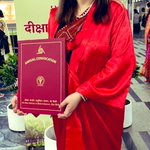
Deeply honoured to have attained my DM in Endocrinology from the prestigious AIIMS, New Delhi. Grateful for this journey of growth and learning!🎓🙏 #AIIMS #Endocrinology #Blessed #Convocation


Sarah Alam retweeted
Every week, I see a new study talking about this or that effect of GLP-1 receptor agonists like #ozempic. FINALLY, we have a study evaluating all the outcomes (good and bad) in one dataset. There are some... surprises. 🧵

Sarah Alam retweeted

#AddisonsDiseaseAwarenessDay: Do listen to experts from America, Europe, Africa, Asia discuss #Adrenal #advocacy. Topics include #Endocrinologist as Sherlock Holmes, Metabolic syndrome as Cushingoid precursor, Essential drugs in adrenal medicine youtube.com/live/2rJYZFyYRyY…
@adrenal

Sarah Alam retweeted

It is with a deep sense of sadness that I write these words about Professor Narayana Panicker Kochupillai, who passed away yesterday. Prof Kochupillai- or Kochu as he was called by his friends- was one of the founding fathers of Endocrinology in India. Born on February 10, 1939, he grew up in Alleppey, Kerala. He joined the All India Institute of Medical Sciences, New Delhi (AIIMS) as an undergraduate student in the late 1950s. Having completed his undergraduate and MD education from the AIIMS, he underwent training in the then newly developed, pathbreaking technology of radioimmunoassay as a Sam Berson fellow in New York with the Nobel Laureate Rosalyn Yalow, an association that he often spoke about and cherished throughout his life. The other person he always regarded as his guru was Prof V Ramalingaswami of AIIMS/ICMR. He spent his academic career at AIIMS where he rose to become the Head of the Department of Endocrinology and Metabolism. He was a fellow and an emeritus Professor of the Indian National Science Academy. He was a worthy winner of the BC Roy Award of the Medical Council of India and was honoured by the Government of India with the Padma Shri. On superannuation from AIIMS he moved to Bangalore where he remained till his last day.
Dr Kochupillai had many accomplishments to his credit. He established and developed radioimmunoassay of hormones at AIIMS. He pioneered the study of thyroid diseases in India and, trained generations of endocrinologists. But if I had to choose one achievement that stands out it would be his role in identifying and studying iodine deficiency (with committed and outstanding colleagues like Profs Karmarkar, Godbole, and Pandav). I was fortunate to have been part of this illustrious team for a few years. They pursued iodine deficiency from the field to the bench, studying the prevalence of goitre, cretinism, and neonatal hypothyroidism with a combination of dedicated and painstaking fieldwork and sophisticated modern technology, which ultimately led to universal salt iodation and the virtual eradication of iodine deficiency. The impact of this contribution is not understood by many younger colleagues who have not seen the days when India was severely afflicted by a deficiency of iodine. Millions were suffering from mental and physical retardation- various forms of cretinism, unable to lead a normal life. Eradication of iodine deficiency by adding a pinch of iodine to common salt has contributed to realization of our human resource potential.
I first met Dr Kochupillai in 1984, when I was looking for an option for training in endocrinology, having heard that he may have a vacant position. Dr Kochupillai said that his position was a research position, involving field trips. Iin my enthusiasm, I did not inquire further and said yes immediately. Within a few minutes of our conversation, he had sent me off to Professor Ahuja’s room, where I stood like a scared rabbit for what seemed like an eternity before Professor Ahuja acknowledged my presence- but that’s another story. Soon after joining, I was packed off to the iodine-deficient areas of Assam and UP. At first, it came as a shock (this is not what I come for, I thought!), but seeing the general enthusiasm of colleagues I soon got used to it. Dr Kochupillai used to join us on some of these trips. What was remarkable for me was the physical effort Dr Kochupillai was willing to put in and the discomfort he happily faced on these field trips without ever complaining. It would mean staying in dismally maintained government guest houses or even railway waiting rooms, consuming virtually inedible food, at times cooking ourselves, and battling giant mosquitoes. During these trips, Dr Kochupillai was “one of us”- not the boss or the Professor. We had numerous interesting and enlightening conversations, which impacted me deeply. He was a true intellectual, and his range of knowledge extended way beyond medicine and included spirituality and the Vedas. Coming from UP, it was remarkable to see a senior faculty member undergo all this physical discomfort- purely for the sake of science and public good. It inspired me to tailor my subsequent research to public health needs. It’s worth keeping in mind that Dr Kochupillai grew up in the beautiful villages of Kerala, and spent his life in metropolitan Delhi. And here he was, comfortable in the most underdeveloped parts of UP. His own personal requirements were remarkably limited and he always led a simple life, a lesson for all of us.
Among other things we all shared a fondness for Indian classical music, leading to a heated debate about favourite singers (Dr Kochupillai’s favourite was Kumar Gandharva). He often mentioned to me that in Kerala in the late 1950s the word "Institute" referred to typing or coaching schools- and no one understood why someone would travel to Delhi to join an "Institute"! Dr Kochupillai apparently did not know a word of Hindi when he joined AIIMS and his familiarity with English was also very limited. On a lighter note, his lack of proficiency in the local languages made him the target of pranks among his classmates. It is a different matter that he developed his language skills to such a degree that he became an outstanding teacher and orator. At times during field trips, he would offer to cook, and I remember once when he cooked rice and we all started eating and praising effusively when he asked “Kaisa bana hai?” When he took the first spoonful himself he made a face- and exclaimed how bad it was (it was virtually inedible),- “Boss ne banaya is liye achha bolta hai??”. I could go on and on with such stories.
Back at AIIMS he was an amazing teacher with profound knowledge of the subject. Thyroid was his first love, but later he contributed significantly to the field of bone disorders and diabetes too. For me, the biggest learning was during his bedside teaching where could seamlessly apply basic science to clinical signs. He taught me how to question everything and not be limited by what is written or published. I had no experience of laboratory work when I joined AIIMS but was proficient in immunoassay techniques by the time I left AIIMS in 1988, thanks to him and Dr Godbole. (During 1987-88 after completing my DM degree I worked as a Lecturer under him in the Iodine Deficiency Program).
After I left AIIMS to join Sanjay Gandhi PGIMS, Lucknow he continued to guide and mentor me He was a forceful and impactful personality and did not mince words when criticizing. I remember facing one promotion committee where he just brushed aside an unreasonable expert and took charge of the interview, directing it in my favour. At times we disagreed on academic issues but then that is what he had taught us.
The endocrine fraternity of the country will always remember his contribution. May he be in peace wherever he is.
#Endocrinology @ESEndocrinology @TheEndoSociety @IndiaESI @aiims_newdelhi

Sarah Alam retweeted

"Never let the fire die inside you"
Nice meeting you all @ESICON2023
@SanjayKalraDr1 @DrSarahAlam @saptarshi5 @drmathewjohn @dr_rsantosh @KopalleNalini
@AskDrShashank @doc_aswi @ashokvendo @providenceendo @Kaushik42449631 @Sakthiv47283073 @frendos_india @mvramamohan @vvdevandr

I would like to wish "Happy Teachers' Day” to Uptodate, Google, Google scholar, pubmed, Medscape, and ChatGPT!
💐💐💐💐💐💐
#HappyTeachersDay
#MedTwitter
@UpToDate @googlescholar_ @MedscapeEndo @chatgptaitalk
Credit : @HiyaBoro2
Sarah Alam retweeted

My 27/Y old pt .. A gem of a young man .. DIAGNOSED with CARDIOMYOPATHY with EF = 15% since 1 yr .. Had resuscitated cardiac arrest in the hospital .. Then i went on to place a CRT-D on him and god willingly the risk paid off .. Today he celebrated his birthday & brought a cake to the hospital so that i could cut along with him .. His positive vibe is so infectious .. Amazing ..
It was wonderful .. GOD BLESS HIM ..
#CardioTwitter
#Stories
#Cardiology #lifelessons
#positivethinking


“Fasting is not mandatory but preferable or ideal.”
#TSH testing #Hypothyroidism
Read this thread 🧵

Busting some of the latest circulating myths -
1. IV Beauty drips - 👎
If you’re a healthy person, there is no reason for you to need to be on an IV vitamin drip. Skip the drip, opt for sustainable skin care and healthy lifestyle.
2. Endosphere for weight loss - 👎
1/3
3. Claim for reversal of Type 1 diabetes - 👎
Type 1 diabetes is an autoimmune condition where insulin-producing cells in pancreas are destroyed. Managing Type 1 diabetes requires insulin.
Feel free to add more to
“Yea 👍 or Nay👎” Edition
#EvidenceBasedMedicine #MedTwitter
3/3
1
7
943
4. Papaya leaves for dengue fever - 👎Claim that papaya leaves can increase platelet count in dengue patients lacks any definitive scientific basis!
@nihardesai7
Feel free to add more to
“Yea 👍 or Nay 👎” Edition
#EvidenceBasedMedicine
#MedTwitter
1
5
842
🎥 Reliving the precious moments through this reel. Laughter, love, hardwork and unforgettable memories all in motion. #Aiims #Convocation #CherishedMoments #Endocrinology #MedTwitter
instagram.com/reel/CwSmZJlJR…
It's a proud day for all the Indians around the world with the success of #Chandrayaan-3's Vikram Lander moon landing. Congratulations everyone! 👏👏👏👏👏👏👏👏#SpaceExploration #Moonmission #Chandrayaan3

14
1,735
I ask the patients if someone gives you 4 oranges 🍊to eat, you will likely not be able to eat that much but you can gulp down a big glass in 1 go, you are missing on fibre and just spiking your blood glucose levels. It does not matter it is REAL orange juice or packed!
#Diabetes

Sarah Alam retweeted

Happy Doctor's Day to all the Doctors who tirelessly work to heal, comfort and save lives. Your dedication serves as a beacon of light in the darkest of times.
#happydoctorsday2023
@Satyayadav__ @_Rheuma @desi_rr @aiims_newdelhi @AIIMSRDA

Sarah Alam retweeted

31st May is #WorldNoTobaccoDay
A🧵 on everything related to tobacco, how it leads to addiction, why it's difficult to quit, and what the options are! Request you to spare a couple of minutes!
1/n

I find some of her posts problematic, like “recommending” people with diabetes to eat mangoes.
According to her post, Mangoes = “Anti-Diabetes”??
Saying that you can have in moderation is one thing, while calling it “anti-diabetes” is not correct!
#MedTwitter #Diabetes #Mango


How can such a learned person be so dumb.
She says there is no protein gap.
She is not aware of what is going on in india.
80% of the Indian population are protein deficient.
This dumb lady is speaking of diary & meat industry while the processed foods industry are the most power one the world over.
@dlifein @Mindzatwork @mindmusclepro @anjupete @PramilaMundra @anjupete @maheklokhandwa2
While mangoes can be consumed by people with diabetes, it's important to consume them in moderation, and be mindful of overall carbohydrate intake to maintain blood sugar levels.
An excellent post on how to consume mangoes by @DrAmbrishMithal. Please follow for authentic advice!
2
12
1,434
Choose wisely, follow wisely!
#MedTwitter

Much discussion about #mangoes and #diabetes these days
Misleading reports in the media - mangoes safe for all vs mangoes prohibited for people with diabetes
The truth is somewhere in between
Watch "To eat or not to eat mangoes?" in Hindi
youtu.be/MfuGZXJNT24
1
7
1,577