

EB Research Partnership funds research aimed at treating and curing Epidermolysis Bullosa (EB). 🦋 #HealEB 🔬 Find a cure
- Tweets2.5K
- Following383
- Followers3.3K
- Likes2K






ALT Matter of Time documentary on Netflix, premiering February 9. A powerful rare disease film following families living with Epidermolysis Bullosa, researchers racing toward treatments, and Eddie Vedder’s benefit concert supporting EB research.

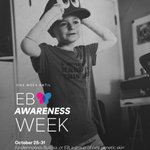
ALT A person with bandaged arms is standing and placing a cap on their head, featuring large cartoon eyes. The image promotes "EB Awareness Week" from October 25-31, raising awareness for Epidermolysis Bullosa, a rare genetic skin disorder.

ALT A person in a hospital bed, with visible skin conditions, looks up. Text on the image announces "One week until EB Awareness Week," emphasizing awareness for Epidermolysis Bullosa from October 25-31.

ALT A smiling adult holding a child with visible skin bandages. The image has a text overlay reading "One week until EB Awareness Week, October 25-31. Epidermolysis Bullosa, or EB, a group of rare genetic skin disorders that cause blistering, tearing, and fragility of the skin." A butterfly logo is included.

ALT A person smiles while sitting in a medical setting. Text overlay promotes "EB Awareness Week" happening October 25-31, highlighting Epidermolysis Bullosa, a rare genetic skin disorder.

ALT Poster for "The Plunge turns 10" event during EB Awareness Week, organized by EB Research Partnership. Features text about an October Town Hall for the 2027 Plunge for Elodie. Date and time: October 27, 5 PM ET. Includes RSVP information. Image shows a smiling adult holding a child dressed in a fairy costume.

ALT Two individuals are standing in front of a backdrop with the Milken Institute logo. Both are dressed in suits and smiling at the camera.

ALT Two people are seated on a stage at the Milken Institute event. One individual is speaking into a microphone, while the other listens attentively. A backdrop features the Milken Institute logo. Audience members are visible in the foreground.

ALT Two individuals are seated on stage in armchairs, engaged in conversation at the Milken Institute event. They are surrounded by a blue backdrop featuring the Milken Institute's logo. An audience is visible in the foreground.

ALT Two individuals are seated on a stage at the Milken Institute event. They are engaged in a discussion, with one holding a microphone and gesturing while the other listens attentively. A blue backdrop displays the Milken Institute logo. A table with water bottles and a glass is between them.


ALT A promotional graphic for the NORD Breakthrough Summit, held October 25-27 in Washington, D.C. It announces "The Next Decade of Rare Disease: A CEO Leadership Dialogue," moderated by Becky Quick, co-anchor of CNBC's "Squawk Box" and host of "CNBC Cures."










ALT The image illustrates Epidermolysis Bullosa Simplex (EBS). It shows a diagram of the skin layers labeled "Epidermis," "Epidermal Junction," and "Dermis." Text explains that symptoms range from mild to severe, with blisters forming on the epidermis, commonly on hands and feet. Pink blurred shapes serve as a background.

ALT Diagram illustrating Junctional Epidermolysis Bullosa (JEB). Includes a cross-section of skin layers: epidermis, epidermal junction, and dermis. Text explains that JEB causes blisters between the epidermis and dermis, affecting skin and internal linings. Describes two types: Generalized Intermediate and Generalized Severe, noting the severity and possible fatality in infancy. Background has pink, out-of-focus areas.

ALT Diagram explaining Dystrophic Epidermolysis Bullosa (DEB). It includes a cross-section of skin layers labeled "epidermis," "epidermal junction," and "dermis" with text describing symptoms and types of DEB: dominant and recessive. Pink abstract shapes surround the diagram.

ALT Diagram illustrating the layers of skin: epidermis, epidermal junction, and dermis, with text explaining Kindler Syndrome (KS). Describes it as a rare type of epidermolysis bullosa (EB) where skin can sunburn easily, blisters form on any skin layer and internal organs, and there's an increased risk of squamous cell carcinoma in the mouth.


