

Official account of the Republicans on the U.S. Senate Committee on Environment & Public Works, led by Chairman @SenCapito of West Virginia
Washington, D.C.
Joined January 2013
- Tweets6.4K
- Following694
- Followers6.7K
- Likes923




Pinned Tweet
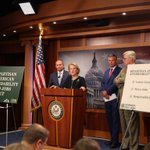
TODAY: EPW Chairman @SenCapito and Ranking Member @SenWhitehouse, alongside ENR Chairman @SenMikeLee and Ranking Member @SenatorHeinrich, have introduced the Bipartisan American Affordability and Jobs Act of 2026, historic legislation to reform the federal environmental permitting and review processes.
Read more about this groundbreaking bipartisan policy agreement that will transform our nation’s ability to build infrastructure, supply reliable energy, and expand manufacturing so we can create good-paying jobs and increase affordability for all Americans: epw.senate.gov/public/index.…

U.S. Senate EPW Committee GOP retweeted

We joined @CEBAPower, @SEIA, @AdvEnergyUnited, and @ACORE to deliver a simple message to Congress: pass the Bipartisan American Affordability and Jobs Act of 2026 (BAAJA).
With 350+ GW of clean energy ready to meet rising electricity demand, bipartisan permitting reform can unlock transmission investment, create jobs, and strengthen America’s energy future. Negotiators have reached an agreement. Now Congress must follow through.
Read our joint trade letter: punchbowl.news/baaja-joint-t…
U.S. Senate EPW Committee GOP retweeted

America can't maintain its manufacturing edge without the infrastructure to support growth. ACC joined 130+ organizations urging Congress to pass the Senate's permitting reform bill and strengthen U.S. competitiveness. #ChemistryCreates
Read the letter⬇️
ow.ly/4mxe5100cLG

U.S. Senate EPW Committee GOP retweeted

Enacting durable permitting reform is one of the most consequential steps Congress can take to make life more affordable.
Today, we joined a broad coalition of over 100 organizations urging Congress to pass the Bipartisan American Affordability and Jobs Act this year.
For more ⬇️ api.org/-/media/Files/misc/2…

U.S. Senate EPW Committee GOP retweeted

A major coalition is lining up behind permitting reform. API joined 137 organizations in urging Congress to pass the Bipartisan American Affordability and Jobs Act this year.

U.S. Senate EPW Committee GOP retweeted

Permitting reform is critical to America's economic competitiveness and our national security. Proud to join this letter urging Congress to pass the Bipartisan American Affordability and Jobs Act, so that American industry can build the infrastructure needed to secure our prosperity and safety for years to come.

NEWS: 19 FORMER ECONOMIC AND NATIONAL SECURITY LEADERS ENDORSE THE BIPARTISAN PERMITTING REFORM BILL
Today, a group of former Cabinet members and White House principals across seven Democratic and Republican administrations sent a letter calling on Congress to pass BAAJA. Here are the signatories:
Janet YELLEN, Michael R. POMPEO, Steven T. MNUCHIN, Leon E. PANETTA, Timothy F. GEITHNER, Henry M. PAULSON, Jr., Robert E. RUBIN, Stephen MIRAN, Jared BERNSTEIN, Tyler GOODSPEED, Jason FURMAN, Glenn HUBBARD, Laura D’Andrea TYSON, Michael J. BOSKIN, Jeffrey ZIENTS, Jake SULLIVAN, Brian DEESE, Larry KUDLOW, Allan B. HUBBARD
Key highlights from the letter:
1. “We are not building infrastructure fast enough to remain globally competitive… The median time for a new power plant to move from an interconnection request to commercial operation has more than doubled, from less than two years for projects built between 2000 and 2007 to more than four years for projects built between 2018 and 2024.
2. China has built more high-voltage transmission in the last fifteen years than the U.S. has built in all of its history... In 2024, China accounted for 31.5% of global knowledge- and technology-intensive manufacturing value added, compared with 20.7% for the United States.
3. Federally funded or permitted projects require NEPA review, but private projects often do not, creating a threat of failure precisely where the government is trying to be proactive, strategic, and engaged.
4. A project that spends years awaiting approval must continue carrying development and financing costs while remaining exposed to rising input costs. The IEA reports that prices for utility-scale transformers increased 26% in 2024, while lead times for some transformers have stretched as long as six years.
5. Mining projects also face tremendous uncertainty: a 2026 study by researchers at the Colorado School of Mines found that permitting for modern mining projects takes an average of 5.5 years, rising to 8.9 years for contested projects. The U.S. currently has the second-longest mine development timeline in the world.
6. The Bipartisan American Affordability and Jobs Act is the most significant bipartisan legislative effort that Congress has undertaken in decades to tackle these challenges.
7. BAAJA addresses key constraints stifling American industry by requiring interregional transmission planning, strengthening the federal backstop for nationally significant transmission lines, and creating a faster, more predictable process for connecting new generation to the grid.
8. BAAJA also makes permits more durable by imposing tighter timelines for litigation and limiting frivolous lawsuits that can halt projects indefinitely, while preserving community input and judicial review of substantive agency decisions.”
The letter was organized by @arnabdatta321 on behalf of @IFP and covered exclusively by the WSJ this morning.


U.S. Senate EPW Committee GOP retweeted

It’s clear—The Bipartisan American Affordability and Jobs Act is backed by immense support!
We need permitting reform NOW to unleash American energy, lower costs for families, and protect our national security. Let’s get this bill passed!
NEWS: 19 FORMER ECONOMIC AND NATIONAL SECURITY LEADERS ENDORSE THE BIPARTISAN PERMITTING REFORM BILL
Today, a group of former Cabinet members and White House principals across seven Democratic and Republican administrations sent a letter calling on Congress to pass BAAJA. Here are the signatories:
Janet YELLEN, Michael R. POMPEO, Steven T. MNUCHIN, Leon E. PANETTA, Timothy F. GEITHNER, Henry M. PAULSON, Jr., Robert E. RUBIN, Stephen MIRAN, Jared BERNSTEIN, Tyler GOODSPEED, Jason FURMAN, Glenn HUBBARD, Laura D’Andrea TYSON, Michael J. BOSKIN, Jeffrey ZIENTS, Jake SULLIVAN, Brian DEESE, Larry KUDLOW, Allan B. HUBBARD
Key highlights from the letter:
1. “We are not building infrastructure fast enough to remain globally competitive… The median time for a new power plant to move from an interconnection request to commercial operation has more than doubled, from less than two years for projects built between 2000 and 2007 to more than four years for projects built between 2018 and 2024.
2. China has built more high-voltage transmission in the last fifteen years than the U.S. has built in all of its history... In 2024, China accounted for 31.5% of global knowledge- and technology-intensive manufacturing value added, compared with 20.7% for the United States.
3. Federally funded or permitted projects require NEPA review, but private projects often do not, creating a threat of failure precisely where the government is trying to be proactive, strategic, and engaged.
4. A project that spends years awaiting approval must continue carrying development and financing costs while remaining exposed to rising input costs. The IEA reports that prices for utility-scale transformers increased 26% in 2024, while lead times for some transformers have stretched as long as six years.
5. Mining projects also face tremendous uncertainty: a 2026 study by researchers at the Colorado School of Mines found that permitting for modern mining projects takes an average of 5.5 years, rising to 8.9 years for contested projects. The U.S. currently has the second-longest mine development timeline in the world.
6. The Bipartisan American Affordability and Jobs Act is the most significant bipartisan legislative effort that Congress has undertaken in decades to tackle these challenges.
7. BAAJA addresses key constraints stifling American industry by requiring interregional transmission planning, strengthening the federal backstop for nationally significant transmission lines, and creating a faster, more predictable process for connecting new generation to the grid.
8. BAAJA also makes permits more durable by imposing tighter timelines for litigation and limiting frivolous lawsuits that can halt projects indefinitely, while preserving community input and judicial review of substantive agency decisions.”
The letter was organized by @arnabdatta321 on behalf of @IFP and covered exclusively by the WSJ this morning.
U.S. Senate EPW Committee GOP retweeted

Today, CEBA joined the @SEIA, @USCleanPower, @ACORE, and @AdvEnergyUnited in a letter to congressional leaders sharing the clean energy industry's strong support for the Bipartisan American Affordability and Jobs Act (BAAJA).
"Passing BAAJA is not only the biggest step we can take to improve energy affordability for all Americans, it is also an enormous opportunity for clean energy deployment to reduce emissions from the power sector," CEBA’s Vice President of Government Affairs @REnglandDC said. "Congress should take the deal on the table and pass it this year."
ceba.org/wp-content/uploads/…


Scoop: Clean energy trades @CEBAPower, @ACORE, @AdvEnergyUnited, @USCleanPower, & @SEIA are formally endorsing the Senate's bipartisan permitting reform bill in a joint letter to congressional leaders punchbowl.news/baaja-joint-t…
U.S. Senate EPW Committee GOP retweeted

"Permitting delays present a major obstacle across the entire energy system. Connection delays act like an additional tax on production. Every month and year of delay costs billions of dollars. "
@DavidRMalpass explains how permitting reform can unleash energy abundance ⬇️
washingtonexaminer.com/op-ed…

U.S. Senate EPW Committee GOP retweeted

A bipartisan group of former economic and national security leaders is urging Congress to pass the American Affordability and Jobs Act, pointing to long permitting timelines as a barrier to U.S. mining, energy and infrastructure development. For the full letter: ifp.org/wp-content/uploads/e…

U.S. Senate EPW Committee GOP retweeted
👀 When Janet Yellen and Mike Pompeo sign the same letter, Congress should pay attention...
19 former leaders from seven administrations back BAAJA because it fixes what's holding America back. It sets firm deadlines on lawsuits that stall projects for years, paves the way for durable permitting, and speeds up connecting new power to the grid.
The result is more energy, built faster and at a lower cost. It's time to pass it.
NEWS: 19 FORMER ECONOMIC AND NATIONAL SECURITY LEADERS ENDORSE THE BIPARTISAN PERMITTING REFORM BILL
Today, a group of former Cabinet members and White House principals across seven Democratic and Republican administrations sent a letter calling on Congress to pass BAAJA. Here are the signatories:
Janet YELLEN, Michael R. POMPEO, Steven T. MNUCHIN, Leon E. PANETTA, Timothy F. GEITHNER, Henry M. PAULSON, Jr., Robert E. RUBIN, Stephen MIRAN, Jared BERNSTEIN, Tyler GOODSPEED, Jason FURMAN, Glenn HUBBARD, Laura D’Andrea TYSON, Michael J. BOSKIN, Jeffrey ZIENTS, Jake SULLIVAN, Brian DEESE, Larry KUDLOW, Allan B. HUBBARD
Key highlights from the letter:
1. “We are not building infrastructure fast enough to remain globally competitive… The median time for a new power plant to move from an interconnection request to commercial operation has more than doubled, from less than two years for projects built between 2000 and 2007 to more than four years for projects built between 2018 and 2024.
2. China has built more high-voltage transmission in the last fifteen years than the U.S. has built in all of its history... In 2024, China accounted for 31.5% of global knowledge- and technology-intensive manufacturing value added, compared with 20.7% for the United States.
3. Federally funded or permitted projects require NEPA review, but private projects often do not, creating a threat of failure precisely where the government is trying to be proactive, strategic, and engaged.
4. A project that spends years awaiting approval must continue carrying development and financing costs while remaining exposed to rising input costs. The IEA reports that prices for utility-scale transformers increased 26% in 2024, while lead times for some transformers have stretched as long as six years.
5. Mining projects also face tremendous uncertainty: a 2026 study by researchers at the Colorado School of Mines found that permitting for modern mining projects takes an average of 5.5 years, rising to 8.9 years for contested projects. The U.S. currently has the second-longest mine development timeline in the world.
6. The Bipartisan American Affordability and Jobs Act is the most significant bipartisan legislative effort that Congress has undertaken in decades to tackle these challenges.
7. BAAJA addresses key constraints stifling American industry by requiring interregional transmission planning, strengthening the federal backstop for nationally significant transmission lines, and creating a faster, more predictable process for connecting new generation to the grid.
8. BAAJA also makes permits more durable by imposing tighter timelines for litigation and limiting frivolous lawsuits that can halt projects indefinitely, while preserving community input and judicial review of substantive agency decisions.”
The letter was organized by @arnabdatta321 on behalf of @IFP and covered exclusively by the WSJ this morning.
U.S. Senate EPW Committee GOP retweeted
Permitting reform is about more than growing our economy and building new infrastructure.
Passing the Bipartisan American Affordability and Jobs Act will be key to protecting our national security and preserving American leadership around the globe.
wsj.com/politics/policy/u-s-…

Everybody’s talking about #BAAJA! You’ve heard that the Bipartisan American Affordability and Jobs Act would modernize our federal permitting processes so we can build critical infrastructure faster. But how exactly does this legislation benefit the American people? 🧵

Modern, reliable infrastructure is essential for American businesses to transport goods and services across our country and internationally. When permitting delays slow down projects for years or even decades, businesses and families pay the cost. BAAJA will remove permitting obstacles so our economy can thrive and compete on an international scale.
#PassBAAJA

BAAJA is not just about building big things faster. It’s about lowering costs for American families and helping American businesses compete — while continuing to protect the environment we all cherish. This historic, bipartisan legislation will unlock cheaper energy, good-paying jobs, and economic growth. It’s a win for all Americans.
#PassBAAJA

U.S. Senate EPW Committee GOP retweeted
483 gigawatts of clean energy is at risk
$81.2 billion could be added to families' electricity bills
$121 billon in local investments are threatened
Delays only cost us more. Pass permitting reform now.
build.communitycleanenergy.o…

U.S. Senate EPW Committee GOP retweeted
After more than a decade of debate over permitting reform, now is the time to get it done.
@EnergyUnderSec @DrakeWellMuseum @ForumDrake @ENERGY

U.S. Senate EPW Committee GOP retweeted
“I’m excited about BAAJA. It could potentially be that opportunity to not just pass something out of the House, but get 60 votes in the Senate, get it to the president’s desk, and have him sign it.”
@RepNikkiB is right. The Bipartisan American Affordability and Jobs Act is a real chance to bring down energy bills for American families. Now is the time to get the job done.
More from @ThomasHochman 👇
greentape.pub/p/right-of-way…


I asked @RepNikkiB about the debate among Democrats on timing: Cut a bipartisan deal now, or wait until Dems have a majority?
"There's a fierce urgency of now," she told us.
"I think we have to take moments of opportunity where we see them. I'm excited about BAAJA."

U.S. Senate EPW Committee GOP retweeted
Permitting delays are costing Americans billions on their energy bills.
Tell Congress to stop the delays. Pass BAAJA now:
build.communitycleanenergy.o…
