



EdwarDiGi retweeted

👀 Bessent signals he’d support Jensen coming back to $NVDA
Brennan: The President says Jensen Huang should get his job back. You said the board of directors needs to go to the outside.
Bessent: Well, Jensen is on the outside now.
This is truly unbelievable 🤯
Journalist: “The president said he should come back”
Bessent: “well I said they should look for a candidate outside and now Jensen is outside” 🤡 @JensenHuang we have hope

50
EdwarDiGi retweeted

CTA's went from max 100% long $SPX on October 5th to loading up shorts across the board.
Context: The medium-speed model has swung from a peak net long of about 73% of AUM this year to a net short of about 10% across global equities, versus lows of 18% in 2020 and 38% in 2022.


EdwarDiGi retweeted

Best take on $nvda
“Beyond equity investments, Nvidia has roughly $25 billion in additional future investment commitments, $36 billion in neo cloud compute purchase commitments, and an estimated $100 billion in credit guarantees supporting financing arrangements across the industry.
Added together, these commitments run to roughly $100 billion to $200 billion, comparable to about a year of Nvidia's own trailing earnings, a pattern drawing some comparison to the excess of the early-2000s technology bubble, though nowhere near that scale relative to Nvidia's own size and cash generation.
The current amounts do not look alarming given how cash-generative the business is, but if these arrangements keep growing substantially from here, they could become a genuine source of concern.”


EdwarDiGi retweeted

MICRON $MU— The Price Shock Is Reaching AI Server Buyers
Memory inflation has become severe enough that some AI server manufacturers are reportedly reopening signed orders rather than absorbing the cost themselves. The Financial Times reported November 22 that Dell, HPE, Lenovo and Supermicro are seeking increases of up to 45% on certain server orders. HPE had already told investors in March that its contracts now permit repricing between quotation and shipment when component costs rise.
That's consequential for Micron. A DRAM shortage translates into more durable profits when customers further down the supply chain can afford increasingly expensive systems. The reported repricing suggests that pressure is reaching final buyers, although a 45% server price increase cannot be attributed entirely to memory. Graphics processors, circuit boards and other components also contribute.
The important distinction now is between requested price increases and completed deployments. Continued customer acceptance would support elevated memory pricing. Rising cancellations, smaller memory configurations or delayed installations would signal that scarcity is beginning to undermine the demand sustaining Micron's margins.
EdwarDiGi retweeted

RAMAGEDDON: THE MEMORY SHORTAGE COULD LAST UNTIL 2028
At a CSIS panel in Washington on Friday, experts discussed how AI's appetite for memory is spilling over into the broader economy.
DRAM inventories at Samsung Electronics, SK hynix and Micron are reportedly down to around 10 days.
New memory fabs can cost up to $20 billion and take 3–4 years to come online.
Former US national security official Jeff Greene raised an interesting point: memory shortages are contributing to inflation, yet the issue has received little attention in the broader inflation debate.
Meanwhile, startups unable to secure HBM are exploring alternative chip architectures.
What interests me is how a shortage in one semiconductor segment is beginning to influence consumer prices, industrial policy and the direction of technological innovation.
Source: CSIS, Nov. 20 / EDaily, Nov. 22.
m.edaily.co.kr/News/Read?new…


EdwarDiGi retweeted

Lenovo’s AI server pipeline reached $80 billion. Hon Hai says its US capacity is fully booked for the next 18 months.
J.P. Morgan expects more backlog to convert to revenue as NVIDIA’s Vera Rubin platform ramps from Lenovo’s fiscal Q4 2027.
At J.P. Morgan’s conference, Hon Hai said customers had booked its US capacity for the next 18 months. Automation has cut assembly time for a compute tray from several hours to a few minutes, with yields above 99%. That timing applies to the tray inside a rack. The complete rack still needs integration and testing.
The rack counts cover different products:
Hon Hai puts its AI rack market share above 40% today and expects it to approach 50% in 2027. It counts NVIDIA NVL72 racks, HGX systems at three per rack, and custom-chip racks. For NVL72 alone, J.P. Morgan estimates worldwide shipments of about 70,000 racks in 2026 and 90,000 in 2027.
$NVDA $DELL $VRT $CRDO $ALAB


EdwarDiGi retweeted

$AAPL $MU $SKHY
For a decade, $AAPL ran the toughest procurement desk in tech, squeezing memory makers with short-term contracts and annual price cuts. Seeing that playbook break overnight marks a rare shift in hardware power.
Samsung has already signed multi-year DRAM agreements with 10 customers, SK Hynix with 14, and $MU with 26, leaving Apple as the final Big Tech holdout without a Samsung LTA. After reportedly paying double its prior DRAM price in February, Apple is now finalizing a four-to-five-year Samsung contract through 2031 or 2032 with market-floating pricing.
When the sharpest buyer in consumer electronics trades price control for guaranteed volume, pricing power belongs firmly to the three DRAM suppliers.


$AAPL $MU
Watching $MU plunge 12% to 14% Friday to roughly 3.4x forward earnings feels bizarre on the exact week $AAPL, trading near 39x trailing earnings at $342.56, moved to lock in DRAM supply for the next half-decade.
South Korean media report Apple is finalizing a four-to-five-year DRAM agreement with Samsung starting in 1H27 that guarantees minimum volume while letting prices float with market conditions, right after signing a similar deal with SK Hynix. Meanwhile, Micron already holds 26 multi-year strategic agreements and SK Hynix has locked over half of its 2027-2028 capacity.
Wall Street dumped memory like a collapsing commodity just as the world's largest hardware buyer surrendered short-term pricing leverage.

EdwarDiGi retweeted
$AAPL $MU
Traders questioning how tight conventional DRAM really is only need to look at what smartphone makers without $AAPL's $5 trillion balance sheet are doing to survive.
With high-bandwidth memory consuming 23% of global DRAM wafers at Samsung, SK Hynix, and $MU in 2026 and nearing 30% in 2027, mobile supply is getting squeezed dry. TrendForce now projects reballed, recycled memory chips will jump from 3%-4% of smartphones in 2026 to 7%-9% in 2027, risking shorter device lifespans and higher warranty costs.
Apple can sign five-year agreements to secure virgin DRAM through 2032, while smaller handset brands are forced to scavenge desoldered chips.

$AAPL
Headlines about $AAPL securing a four-to-five-year Samsung DRAM deal sound reassuring for shareholders worried about iPhone production delays, yet the contract terms leave a glaring hole on the income statement.
Apple just posted a 47.9% gross margin on $114.5B in quarterly revenue while stockpiling $10 billion in parts and hearing CEO John Ternus call memory pricing unprecedented. Because the new Samsung agreement sets a minimum supply floor without locking in fixed low prices, Apple's component bill remains exposed as conventional DRAM contract prices climb another 10% to 15% in Q4.
Guaranteed silicon protects unit shipments, while floating memory prices force Apple to absorb higher BOM costs or raise retail prices.

EdwarDiGi retweeted
$AAPL
Headlines about $AAPL securing a four-to-five-year Samsung DRAM deal sound reassuring for shareholders worried about iPhone production delays, yet the contract terms leave a glaring hole on the income statement.
Apple just posted a 47.9% gross margin on $114.5B in quarterly revenue while stockpiling $10 billion in parts and hearing CEO John Ternus call memory pricing unprecedented. Because the new Samsung agreement sets a minimum supply floor without locking in fixed low prices, Apple's component bill remains exposed as conventional DRAM contract prices climb another 10% to 15% in Q4.
Guaranteed silicon protects unit shipments, while floating memory prices force Apple to absorb higher BOM costs or raise retail prices.
$AAPL $MU $SKHY
For a decade, $AAPL ran the toughest procurement desk in tech, squeezing memory makers with short-term contracts and annual price cuts. Seeing that playbook break overnight marks a rare shift in hardware power.
Samsung has already signed multi-year DRAM agreements with 10 customers, SK Hynix with 14, and $MU with 26, leaving Apple as the final Big Tech holdout without a Samsung LTA. After reportedly paying double its prior DRAM price in February, Apple is now finalizing a four-to-five-year Samsung contract through 2031 or 2032 with market-floating pricing.
When the sharpest buyer in consumer electronics trades price control for guaranteed volume, pricing power belongs firmly to the three DRAM suppliers.
Not reassuring for bulls to see a post like this becoming viral, although Elon’s comment attracted a lot of support.
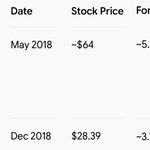
In 2018 $MU halved like today, with FWRD PE losing 40%
In 2026, stock price halved PE 2027 went from 7-8x to 2.8x, losing 65% as E became bigger and P decreased


WTF
$SNDK 2.2x
$SKHY 2.6x
$MU 2.8x
Sandisk can buy back half its market cap in JUST 12 MONTHS.
$COST is 44x for hot dogs and bulk toilet paper.

1
1
188
EdwarDiGi retweeted
Remember my post about everyone fearing Democrats to kill data centers? Here is Bernie Sanders today.

EdwarDiGi retweeted

This is without a doubt in line with consensus thinking nowadays, but I think the historical analogy misses two rather important characteristics of this particular techno-economic revolution
First, we have rarely witnessed a technological transformation of this magnitude where supply is so clearly constrained relative to demand across multiple critical inputs simultaneously: compute, HBM, advanced packaging, power, DC capacity, the list goes on
Second, the speed of diffusion and monetization is unlike any of the previous five big technological waves. AI can be distributed through existing digital infrastructure, with commercially valuable applications and measurable productivity gains emerging remarkably early in the cycle
There's a fundamental difference between building infrastructure in anticipation of demand that might materialize years later and racing to build infrastructure because demand is already running ahead of available capacity
Also important not to lose sight of demand elasticity when considering the downward trajectory of compute prices. Lower prices are a key driver of broader adoption, potentially unlocking entirely new use cases and significantly expanding aggregate demand

There is no debate (imo) about demand for AI usage. It will grow fast. Debate is what the price of the compute will be, who pays for it, how much will they be willing to pay, how much supply there will be, and who captures the profit pool. Just like every other technology revolution, predicting demand doesn’t always tell us which stocks will ultimately capture the most profits