

Fascinated by bottom-up self-organization facilitated by technological institutions. What will grow on top of the open state structure & web3 tech substrate?
Denver, CO
Joined February 2017
- Tweets12.2K
- Following323
- Followers1.6K
- Likes78.7K





Kirk Dameron retweeted

Starlink, Starshield, GPS, and the Claims About “Hacking”: A Technical Explanation
A post accusing Ukraine of “hacking” #Starlink is spreading rapidly on this platform.
The technical claims in that post are incorrect. They seem based on a collection of rumors circulating on Telegram, including information from Russian channels.
Unfortunately, this post and others like it are receiving an enormous number of likes and reposts.
That's why I believe it's important to address these claims with clear technical explanations rather than allow misleading information to spread unchecked.
This is a fairly detailed post, but I think the distinction matters.
Some of the technical information below comes from my own research and detailed analysis of Starlink terminal firmware, particularly its GPS, PNT, and velocity-processing systems.
#⃣ 1. What are Starlink and Starshield?
People still frequently confuse the two.
Starlink is SpaceX's commercial satellite internet service, designed for consumers, businesses, and other commercial users.
Starlink supports operation in motion, but the permitted speed depends on the service plan, equipment, and geographic region.
Under commonly available commercial plans, the maximum authorized operating speed is 160 km/h (100 mph).
In Ukraine, Starlink terminals are subject to a specific speed restriction: they cannot operate at speeds above approximately 75–80 km/h.
This Ukraine-specific restriction was introduced less than a year ago, in coordination with Ukrainian authorities, to prevent Starlink terminals from being used on drones.
Starshield is SpaceX's government-focused product and service family, based on Starlink technology and developed for national security applications.
It includes secure communications, Earth observation, and hosted payload capabilities.
Some Starshield systems involve dedicated government spacecraft and infrastructure. However, Starshield communications services can also use the underlying Starlink satellite network.
This distinction is important: Starshield does not necessarily mean a completely separate physical satellite constellation or entirely different user terminal hardware.
SpaceX develops and operates the underlying Starlink infrastructure. The U.S. government procures Starshield capabilities through contracts, with ownership and operational control depending on the particular system and arrangement.
The division of authority between SpaceX and the U.S. government has become especially relevant following the October 2026 incident.
Unlike ordinary commercial Starlink service, Starshield configurations used for military operations in Ukraine have supported substantially higher operating speeds.
#⃣ 2. Is Starshield available in Ukraine?
Yes. Starshield is operational in Ukraine and is extensively used by the Ukrainian military.
Starshield service has been used in Ukraine since approximately mid-2023. Subsequent U.S. government contracts and public reporting also confirm its availability.
The United States has procured Starshield services specifically to support Ukrainian military operations.
An October 2026 U.S. Senate letter explicitly confirms that Ukraine receives Starshield services procured by the U.S. government.
Therefore, the idea that Ukraine is somehow obtaining Starshield capabilities by secretly modifying commercial terminals fundamentally misunderstands how these services are provided.
How does the Ukrainian military use these services?
The Ukrainian military uses both commercial Starlink and Starshield.
Commercial Starlink is widely used because of its availability, relatively low cost, and excellent performance. For stationary installations and many other applications, commercial service is entirely sufficient.
Starshield is used for specialized military applications, including drones and other platforms requiring reliable connectivity at higher operating speeds.
These are capabilities provided through the Starshield service itself, not necessarily through unauthorized modifications to commercial Starlink hardware.
Using Starshield for its intended and authorized military applications is not inherently a violation of its service terms.
#⃣ 3. Regarding the October 2026 incident
Beginning on October 13–14, Ukrainian military units encountered unexpected speed restrictions affecting Starshield connectivity.
Terminals that had previously operated at substantially higher speeds began losing connectivity at approximately 160 km/h, with some reports describing interruptions at even lower speeds.
These restrictions disrupted military operations, particularly those involving high-speed unmanned systems.
The consequences were serious. Ukrainian officials reported that the restrictions interfered with drone operations, including efforts to intercept russian attack drones.
The decision-making process remains disputed. Neither SpaceX nor the U.S. government initially accepted responsibility for imposing the restrictions. Subsequent reporting and statements from U.S. lawmakers raised questions about who authorized the changes and which organization had the ability to implement them.
As of October 24, Ukraine's Ministry of Defense has officially reported that Starlink/Starshield connectivity is once again stable at speeds exceeding 400 km/h.
#⃣ 4. Does Starshield require separate hardware?
Not necessarily.
This is one of the most important points in the entire discussion.
Starshield is a government-focused service and technology family. In the case of satellite communications provided to Ukraine, existing Starlink terminal hardware can be provisioned to use Starshield service.
In December 2024, Bloomberg reported that a Pentagon contract would provide Starshield access to an additional 2,500 Starlink terminals already deployed in Ukraine, on top of 500 terminals previously covered.
The contracts therefore provided service for a total of 3,000 terminals.
In practice, compatible commercial Starlink hardware can be reassigned to Starshield service through the appropriate authorization and provisioning process.
This requires approval. It is not something that a customer can simply enable through the ordinary Starlink application.
Are there specialized Starshield terminals?
Yes.
For example, there is a specialized variant of the Starlink Mini known internally as `mini1_rugged`.
Based on my hardware research, this model uses an improved GNSS receiver, the Teseo V, instead of the receiver found in the regular Mini.
However, despite having repaired and examined numerous terminals and maintaining contact with people working with this equipment, I have not encountered evidence of this specific variant being supplied to Ukraine.
The Starshield terminals I have encountered or received information about in Ukraine are based on regular Starlink hardware.
Some terminals arrive already configured for Starshield service. Others can be provisioned for it through the appropriate channels.
The key point is simple:
A regular Starlink terminal operating under an authorized Starshield service configuration is still a Starshield terminal from the service perspective. It does not need to be physically modified or “hacked” to obtain that service.
#⃣ 5. Why does a Starlink/Starshield terminal require GPS?
Three years ago, I published an article explaining why GPS is important for Starlink terminals and how to improve GPS reception on the hardware available at that time: olegkutkov.me/2023/11/07/con…
Some of the technical details in that article are now outdated, but the fundamental principles remain relevant.
A Starlink terminal requires sufficiently accurate position and timing information for network synchronization, beamforming, and other aspects of normal operation.
Location information can also be used for geographic service authorization.
Invalid or spoofed GPS data may interfere with these processes. Depending on the magnitude of the error and the firmware's ability to detect it, the terminal may lose connectivity or become unable to operate normally.
Modern firmware also includes mechanisms to detect suspicious or inconsistent GPS information.
When GPS data is considered unreliable, the terminal may attempt to use an alternative source of positioning, navigation, and timing (PNT) information derived from Starlink's own satellite constellation.
However, this fallback mechanism is not guaranteed to work reliably under every operating condition.
This distinction helps explain why some hardware modifications focus on improving GPS reception or supplying more reliable positioning data, rather than bypassing Starlink's network authorization mechanisms.
#⃣ 6. What is Starlink PNT?
Starlink PNT is a positioning, navigation, and timing capability that derives information from signals transmitted by Starlink satellites.
By combining satellite measurements with known orbital information, a terminal can estimate its position and movement independently of a conventional GPS receiver.
Starlink firmware contains the necessary functionality to process these measurements and use them as an alternative positioning source.
Initially, this functionality was more of an experimental feature. It was interesting from an engineering perspective, but its accuracy and reliability were limited.
Over time, it has improved significantly.
Modern implementations can provide useful positioning information, including when a terminal is moving.
There are still measurement errors, uncertainties, and limitations, but Starlink-derived PNT can serve as an alternative when GPS is unavailable or unreliable.
Nevertheless, conventional GNSS remains an important and generally preferred source of positioning and timing information in current terminal designs. For now.
Can the terminal operate without GPS?
Under certain conditions, yes.
Starlink firmware provides a gRPC request called `dish_inhibit_gps`, which controls whether GPS is used as a position source.
When GPS use is inhibited, the firmware can attempt to rely on alternative positioning information.
A similar situation occurs when GPS data becomes unavailable because of hardware or communication problems.
However, disabling GPS does not guarantee that the alternative positioning solution will be sufficiently accurate or available.
It also does not automatically change the terminal's service permissions.
#⃣ 7. How does a Starlink terminal determine its moving speed?
The GPS receiver is a primary source of position and velocity information.
Proprietary NMEA messages, including `TMPV`, carry information the terminal's motion-processing logic uses.
The firmware does not necessarily trust these measurements without additional validation.
The firmware can filter GPS-derived velocity and compare it with information from other available sources, including Starlink-derived positioning.
The terminal also contains an inertial measurement unit (IMU), whose acceleration measurements can help evaluate movement and detect inconsistencies.
The firmware applies thresholds and consistency checks to these measurements.
These mechanisms run internally and aren't exposed as user-configurable settings.
If GPS measurements differ significantly from the expected values or fail validation, the firmware can reject them.
However, GPS validation and service-speed enforcement are two different things.
Rejecting GPS data does not automatically mean that the terminal has exceeded the permitted operating speed.
The terminal's service configuration determines whether operation at a particular speed is authorized.
When the relevant speed policy is violated, the terminal may report a condition such as: `MOVING_TOO_FAST_FOR_POLICY`
This distinction is essential when evaluating claims about GPS modification.
Simply changing GPS-reported velocity does not automatically change the terminal's authorized operating speed or eliminate the firmware's internal validation mechanisms.
As explained earlier, appropriately provisioned Starshield service supports high-speed operation without the same restrictions imposed on ordinary commercial configurations.
Therefore, no additional “hacking” is required to obtain high-speed capability when that capability is already authorized as part of the service.
Reliable GNSS reception remains desirable, however.
This is one reason specialized terminal designs may incorporate improved receivers, such as the Teseo V used in the `mini1_rugged` variant.
It also explains the existence of solutions intended to improve GPS reception or provide a more reliable PNT input.
**Improving positioning reliability is not the same thing as bypassing service authorization.**
#⃣ 8. How does Starlink geofencing work?
There are two important factors: geographic service authorization and physical RF coverage.
Understanding the difference is essential.
Geographic service authorization
Starlink uses geographic information to determine where service is available and whether a particular terminal is authorized to operate.
The system uses logical geographic regions rather than relying exclusively on the physical boundaries of satellite beams.
H3 is one geographic indexing system relevant to this discussion. It divides the Earth's surface into hierarchical hexagonal cells that represent geographic locations and regions.
Geographic indexing provides a convenient way to manage coverage and service policies, but an H3 cell should not be confused with a physical satellite beam.
Network authorization can depend on several factors, including geographic location, service configuration, terminal identity, and applicable restrictions.
A terminal may be physically capable of receiving a satellite signal while still being denied access to the service.
This is an important distinction when discussing restricted territories, including russia.
Receiving a Starlink signal does not necessarily mean the terminal is authorized to connect to the network.
Physical RF coverage
Satellite beams cannot perfectly follow national borders or the boundaries of geographic indexing cells.
An RF beam has a physical footprint determined by the satellite antenna, beam steering, operating conditions, and geometry.
Its boundaries are not perfectly sharp.
Consequently, a beam may illuminate areas on both sides of a national border even though the service is authorized on only one side.
This is a normal characteristic of satellite communications, not evidence that geographic service restrictions have been disabled.
The role of GPS in geofencing
The terminal's reported location provides another source of information for determining whether it is operating in an authorized region.
The network can use terminal positioning information, together with its own authorization rules, to determine whether service should be permitted.
When operation is prohibited, the terminal may receive an appropriate disablement code from the network.
These mechanisms should be understood as parts of a broader service authorization system, rather than as a single GPS check controlling everything.
Can geofencing be bypassed by supplying modified GPS coordinates?
This question requires some nuance.
Changing the location reported by a GPS receiver may influence positioning-dependent decisions, but it does not automatically override network authorization.
Starlink also has other information available to evaluate terminal operation, and its firmware includes mechanisms for detecting inconsistent positioning data.
Large discrepancies can disrupt normal positioning and beamforming calculations, trigger validation failures, or cause the terminal to lose connectivity.
Most importantly, changing GPS coordinates does not by itself grant a terminal permission to use a service or geographic region for which it is not authorized.
#⃣ 9. So what exactly is being called a “Starlink hack”?
This is where much of the confusion comes from.
The modifications being discussed online are primarily related to improving GPS reception or providing the terminal with reliable positioning and timing information.
These are technical solutions intended to improve connectivity and stability, particularly when the terminal is moving or operating in an environment with GPS interference.
They do not automatically bypass Starlink's speed restrictions, geographic limitations, or network authorization mechanisms.
As explained earlier, regular Starlink hardware can also operate under an officially authorized Starshield service configuration, which supports high-speed military applications.
Neither improving GPS reliability nor using an authorized Starshield service constitutes hacking Starlink.
It's important to understand these differences before making accusations based on photographs, rumors, or incomplete technical information.
#⃣ Conclusion
Starlink and Starshield use closely related technologies, but they are different services with different capabilities and restrictions.
Regular Starlink hardware can operate under an officially authorized Starshield service configuration. No special hardware modifications are required.
Improving GPS reception or providing reliable positioning data does not mean bypassing Starlink's network restrictions.
Using Starshield for authorized military operations is not hacking. Neither is improving a terminal's GPS reliability.
My goal is simply to explain how these systems work and clear up the confusion surrounding them.
Technical accusations should be based on evidence, not rumors.
#starlink #starshield #gps
Kirk Dameron retweeted

In France, they riot and loot "for Palestine." In the Middle East, they kill "for Palestine." The Islamic regime in Iran attacks Jews, Christians, and Muslims "for Palestine." Hamas committed the October 7 genocide in Israel "for Palestine." At some point, perhaps we should stop asking where the problem is and start noticing the rather obvious pattern.
The clue has been repeated four times.
Good summary of recent weeks in the Ukraine/US relationship with the mad king DJTrump in the US prez chair.

My latest post attempts to make sense of a difficult time in US-Ukraine relations, in which the dysfunctions of the Trump administration were on full display. Trump’s claims that Putin was ready to make concessions was shown again to be make-believe. (£/free trial) samf.substack.com/p/ukraine-…?
Kirk Dameron retweeted

站在今天看,俄罗斯这波操作,属于手握着一把天胡的牌打得稀烂。
如果不出兵乌克兰,今天全球AI的牌桌上,除了中美,大概率真得坐着一个俄罗斯。
搞AI、跑大模型,底层逻辑就是“吃电、散热、堆机器”。这两年全世界的数据中心老板都在为电费和机房降温发愁。俄罗斯属于老天爷喂到饭:西伯利亚开窗就是纯天然顶级空调;境内水电、核电、天然气很便宜,当年挖矿的都选西伯利亚。
另外俄罗斯人的数学和算法也强,各大国际编程竞赛,Kaggle机器学习竞赛常被俄国人屠榜。全世界除了中美,俄罗斯也搞出了自己完整的互联网生态:搜东西有Yandex,社交有VK,还有Telegram。现在在美股被炒上天的算力黑马Nebius,核心班底就是原先Yandex那帮俄罗斯人。
如果疫情后俄罗斯出地皮、出冷气、出便宜电,再拉着中国这种基建狂魔帮忙拉高压电网、建厂房、铺光纤,欧美资本开服务器工厂。俄国人完全可以成为欧亚大陆最大的“超级算力工厂”,中美神仙打架,它在中间两头收过路费。
结果呢?普京一拍大腿:不行,我得去抢那几块地。
普京的脑子,彻底停留在了19世纪沙皇俄国那种“开疆拓土”的旧梦里。什么有没有出海口啊,有没有所谓的军事缓冲带啊,就算抢方法也多的是,这可这是21世纪啊!现在的世界霸权争夺,抢的是半导体供应链,抢的是先进算法,抢的是高精尖人才。你去顿巴斯抢了几片烂泥地、几座废弃钢铁厂,代价却是把整个国家的未来都押了上去。
枪声一响,一切全崩了。稍微有点本事的程序员、算法工程师,连夜跑路。Yandex核心技术团队,宁可巨亏,惨烈的断尾求生、割裂母国,也要跑到欧洲重组成Nebius。普京把最懂未来的人,全逼成了难民和海外创业者。
在人工智能技术爆发的黎明前夜,全世界都在疯狂狂飙算力、抢占新工业革命的门票;而俄罗斯的老大,却带着几十万人,在泥潭里打着一百年前的一战式堑壕战。
再说一遍,普京不行,国内崇拜普京的那帮人也不行
Kirk Dameron retweeted

Another thing to understand about Zucman: engaging him is like trying to kick a football through a constantly-moving goalpost that also arbitrarily changes its height and width mid-kick.
He and his team at UC-Berkeley churn out a stream of working papers on inequality measurement that bake dozens of dubious assumptions into their data files, all of which "coincidentally" reinforce the headline figures that align with their political narrative. But finding and weeding out those assumptions is an extremely tedious and time-consuming task.
Zucman and coauthors Piketty and Saez do most of their work in Excel, and it's seldom ever straightforward. Instead you'll find some extremely questionable and undisclosed multiplier that's just guesstimated out of thin air...but it's buried 10 layers deep in a formula from a convoluted Excel spreadsheet, which changes the an input for another Excel spreadsheet that's used to create a ratio, which in turn goes into a formula on another Excel spreadsheet that's used to estimate a decade of missing data, which in turn alters the trend of their entire series. @VincentGeloso and I know this well because we've been scrutinizing their work for over a decade and have found dozens of examples of this sort of stuff.
But there's another twist to the PSZ universe: once you've done the work and found a problem in their data files that alters their main results in significant ways, they've already moved on to a "new" approach that conveniently hard-bakes all the faulty assumptions of the old approach into its source data while refusing to revisit them, and then layers them over with new paint, consisting of even more of the same style of Excel spreadsheet labyrinths that you now have to navigate to even figure out what they are doing. And what they do in their data files often diverges in substantial ways from how they describe it in their papers and descriptive appendixes.
While you're toiling away to figure out what they did in their last peer reviewed paper, they call up a friendly reporter at the NY Times and get him to publish a new non-peer reviewed statistical claim that grabs headlines and aligns with whatever wealth tax initiative they happen to be activisting for at the moment.
By the end, the goalpost has hopped around the field, changed its size and height multiple times, and been replaced by a new goalpost on the other end of the field that announces itself not through the referees of the field but via some sportscaster up in the broadcast booth who also happens to be openly cheering for their team.

Here's the best way to understand what Gabriel Zucman is up to on the California billionaire tax, and why it's a problem:
Suppose you were tasked with assembling a complex historical time series of an important economic indicator, but also suppose the data needed to build it is of widely varying quality. There are gaps in some years when components you need simply weren't measured. In other years the stats you do have are not as reliable. Or maybe the source changed the way it recorded things, or changed the underlying definition. And on top of all that, your indicator contains components that are simply hard to measure with any precision.
So what do you do? You'll inevitably have to make some discretionary calls on how to handle the challenges you encounter.
Zucman's inequality stats all face this problem. They draw on data that are often incomplete, and go back almost a century in some cases. Reliability varies, as do underlying sampling techniques that generated them. There are also gaps from things that aren't easily measured where you have to make a defensible judgement call on how to handle it. And each and every one of those calls affects your end results.
A rigorous researcher's judgement calls would follow certain defensible principles or rules that were clearly articulated and replicable. The effects of those calls would also distribute in different directions. Some would increase the final output number, others would decrease it.
In Zucman's work, we typically find the opposite. He makes judgement calls out of necessity, but they almost always go in the same direction, which is to show (a) rising inequality and (b) declining tax burdens on the rich. They always skew in a nonrandom direction, and that direction conveniently aligns with the political story he's telling about inequality and wealth taxes.
Or think of it this way: if you're assembling a century-long measure of income concentration it's quite plausible you may have to make 50 different judgement calls on how to handle gaps and uncertainties in the source data. If 30 of those cause your results to show higher inequality in cumulative, but 20 of those reduce inequality in cumulative, that suggests a fairly even distribution is at play. In Zucman's work (as well as his coauthors Piketty and Saez) though, you'll find situations where 50 out of 50 discretionary calls all happen to cause the headline measure of inequality to increase.
That's not random - it means that whenever they must make a choice on how to handle data uncertainty, they choose the path that confirms the political story they wish to tell. And this is why the various Piketty-Saez-Zucman measures of inequality are *always* on the high side compared to alternative measures of the same thing.
Overlay that with the fact that all three of them are partisan political activists who advocate for wealth taxes, and you see the problem. Their empirical academic work ends up skewing in favor of their political objective, even though it's masquerading as a data-driven exercise.
And that's why their empirical claims should be checked against other sources and heavily discounted when they do not align - which is frequently the case.
Kirk Dameron retweeted

Churchill could have shortened WW2 by years if he had just “done a deal” with Hitler. George Washington could have done a deal to end the American Revolution. Zelenskyy is in good company.
What SpaceX is building in South Louisiana is stunning; huge investment and will be the world's largest private launch site: able to transport 100,000+ tonnes to orbit each year when built out.
And SpaceX is doing it the right way! Preserving the community of Pecan Island on the wooded chenier to the north, and protecting the marsh while restoring coastal wetlands.
This post by @LouisianaModelY paints a beautiful picture of the area, history and future.

Pecan Island was always worth the trip, and soon the whole world will know why. Here's how @SpaceX ended up in our marsh.🚀
First you have to know this place. Pecan Island didn't even have a road until 1953. You got there by boat, and the mail boat came three times a week. Growing up, it felt like the edge of the world, but remote never meant empty. I remember the Pecan Island Mardi Gras parade in the early 2000s pulling in huge crowds every year. It was our favorite place to go, and people traveled to see it. Even now, when we visit the refuge, we come across people from many different places.
So how did a rocket company end up out there? Honestly, the stars aligned. ✨
For more than a decade, Vermilion Parish and the state had been locked in a coastal lawsuit with Exxon over this exact land. It was part of a wave of suits against oil companies that started back in 2013 and seemed like it would never end. Then in April 2026, the U.S. Supreme Court ruled 8-0 that one of these cases could move from state court to federal court. That was a big win for the oil companies, and it may have made settling look a lot better for everyone.
SpaceX came looking for room to grow, and the governor saw a chance to settle the lawsuit and land a huge project at the same time. When the deal was announced, Landry called it "resolving years of litigation." Exxon handed the land to the state, and SpaceX bought all of it, about 125,000 acres, for $100M. Only about 40,000 acres will be the actual spaceport.
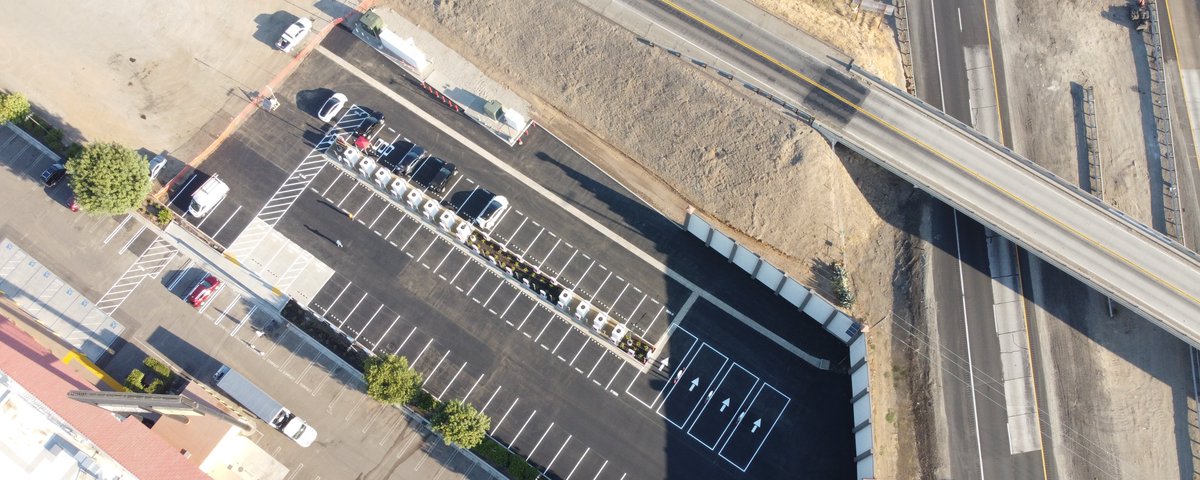
When I opened the permit, I expected rocket talk, but instead it reads like a puzzle: how do you get giant rocket parts into a marsh with no real roads? Their answer is a wharf, a 15.75-mile heavy-haul road, and an 8,110-ft bridge.
Reading the permit, you can tell this was carefully thought out. Every site they considered got a hard look before they chose this one.
Two wharf sites near Grand Chenier would have meant about 30 miles of dredging through wildlife refuges, and one was inside Rockefeller. Intracoastal City was too small and right next to homes, and its route ran straight through oyster grounds.
One detail I noticed that I think sets SpaceX apart: filling in Humble Canal would've been the cheaper option, but it would have cut off local fishermen and energy boats, so they're building a bridge over it instead.
Freshwater City won. Of all four sites, it was the only one that had already been used for business. It's on the Gulf side of the lock and has the shortest dredge route. The permit says the nearest home is 6.8 miles from the wharf site, the farthest from homes of any site they considered.
But why not just use Florida or Texas? Look south from here and it's hundreds of miles of open Gulf. Polar and sun-synchronous orbits launch roughly south, and Florida can only do that through a narrow path, threading past Cuba.
The state's economic development office said the site "provides an optimal launch point to reach orbit with a wide range of trajectories over a large open area and an abundance of natural gas for fuel and power."
Which brings me to fuel. One Starship launch could take hundreds of fuel trucks, and Louisiana is sitting on a mountain of natural gas.
Money-wise, SpaceX pays $25M a year, rising 2% every year, which comes to more than $800M over 25 years. There's also $20M up front to help get ready. Superintendent Tommy Byler told us it'll be split between the school board, the police jury and the sheriff, and the schools expect about $10.2M a year.
Our schools are already strong. Vermilion is an A district, ranked 11th in Louisiana and top in Acadiana, and 6th in the state on this year's LEAP tests. They've still been squeezed by falling oil and gas money and fewer students, and the parish has roads, bridges and water projects waiting on funding. This money builds on a solid base, and he told us the first of it is planned for teacher bonuses. 🎉
3,000 permanent jobs averaging about $92,600 a year, plus up to 34,500 construction workers at the peak. This is massive for our area. Between Lafayette and Vermilion parishes, we've lost over 11,000 oilfield jobs since 2014. That's more than 6 in 10. And it's not just promises. The deal includes penalties if SpaceX misses its job goals, and they're on the hook for repairing our roads.
This is a huge change for a quiet corner of Louisiana, but Freshwater City is no stranger to heavy commerce. Once the lock opened in 1968, crew boats, supply boats and jack-up barges poured through. From then until 1992, it averaged over 34,000 big boats a year. That's around 90 a day.
After months of rumors, excitement and waiting, hearing Mark Soltys' words in the announcement, "And we're here to build a spaceport," is a moment in time I'll never forget.
None of this means we stop asking the hard questions. As this moves forward, we'll keep asking them, and keep sharing what we learn.
SpaceX is pushing humanity farther than we've ever gone, to the Moon, Mars and beyond. As a kid, I watched Mardi Gras parades roll through Pecan Island, and I'm hopeful this growth might bring that back so Luke and Lena can experience Pecan Island Mardi Gras the same way I did. For years, they have been excitedly waiting for the day they are able to learn about SpaceX in school, and I never could have imagined they'd have a front-row seat to history in the making.
Pecan Island was always worth the trip, but what was once the end of the road is now the beginning of a much bigger journey! 🚀


ALT Luke and Lena with Mark Soltys at the SpaceX Town Hall.

ALT Oilfield jobs in Lafayette and Vermilion parishes fell from 18,060 in 2014 to 6,791 in 2025
I'm planning to visit Pecan Island and surrounds following Flight 15, with my college roommate Gary, a cajun who grew up in Roanoke back then (1973). His dad worked for Exxon, on the land that SpaceX just bought. Gary was at university in New Orleans on an Exxon scholarship.
Should be an amazing homecoming for both of us; him from Houston and me from Denver. 😃

Kirk Dameron retweeted

This argument is getting old.
I’ve participated in it far more than I ever thought I would, but here we go again because I’m increasingly convinced that many of the people arguing that LLMs are conscious, or even open to the possibility, just don’t understand how LLMs actually work, so here is context.
This is not a debate about understanding what consciousness is or comparing observations to human experience. It’s about understanding the capabilities and mechanics of the LLM, nothing further.
First off, how LLMs work is understood. There isn’t magic happening inside the model. The calculations an LLM performs are known mathematical operations. Matrix multiplication, attention, normalization, nonlinear functions, probability calculations, etc.
Every operation is defined, implemented, and understood. In theory, you could work through an inference by hand if you were sufficiently masochistic. :-)
But what makes it difficult isn’t some unknown computation happening inside the model. It’s the absolutely enormous scale of computations operating across billions of learned parameters.
But scale does not magically transform computer software into a self-aware consciousness, but it does get more convincing at emulating it.
LLMs learn what they know during a training process. After training their “brain” is effectively locked. During normal inference (using the AI), the model does not continue learning, grow, or modify its weights based on its experiences or conversations.
When you start a new interaction with a model, the model itself has no inherent knowledge of your previous conversations with it. None. It doesn’t remember talking to you yesterday because that conversation wasn’t learned into its weights. The model itself is static.
The apparent continuity was engineered in the surrounding system. This includes previous conversations, stored memories, accessed summaries, preferences, tool results, and other information can be assembled into context and supplied to the model along with your current input.
In other words, the model isn’t remembering the previous conversation. The system is telling the model about the previous conversation again, every time, like it’s the first time.
That’s what might sorta resemble short-term memory. The continuity exists in the context supplied during inference, not as new knowledge learned by the model. Long-term memory is also emulated via tool calls and vector databases outside of the model, and then injected into the context.
It has to be done this way because the model (its “brain”) is completely static, it can’t change.
And there’s a limit. When there’s too much information, some of that context has to be discarded, summarized, compressed, or selectively retrieved to fit within the available context window.
Note: A later version of the model can be trained or fine-tuned using data that includes previous interactions, but that’s a separate training process that produces a new version of the model’s weights. The deployed model did not learn that interaction during inference.
And between inference calls, the model stops computing entirely. There is no thinking, no ongoing inference, contemplation, consideration, or processing of the passage of time. Its weights simply sit there unchanged until the model is invoked again.
Yet somehow, some people decided this is analogous to human consciousness and self-awareness?
Maybe their own weights are frozen and they ran out of context window! ;-)
And if you think anything I’ve said here is technically incorrect, go research it yourself. The tooling necessary to build the model architecture, train it, and run inference is all available as open source on GitHub.
If you want to debate anything I said, go review the source code and point me to the lines where you think the consciousness is.
Kirk Dameron retweeted

This post by @iamtomnash reminded me of a refreshing conversation I had yesterday with a 28-year-old supermarket employee who’s always stood out for the opposite reason most staff do: exceptional service.
He was so different from the indifferent that I asked what was going on. Turns out he’s working two jobs and saving every penny he can.
Why? He proudly showed me photos of the shop he’s opening elsewhere, now in the finishing stages. His own store, fully paid for from his savings. He discussed it as an investment, and asking him about the products and expected market felt like asking Forest Gump's Bubba what he knows about fish.
And of course... his friends buy nice cars, he drives a beater.
With that attitude, work ethic, and approach to business and service, his future looks brighter than theirs.

This comment by @VitalikButerin has been making the rounds again today. I agree. But I want to take a moment to say why.
As a 10+ yr veteran of the space, engaged with these ideas since the Ethereum blockchain was merely 6 mos. old, these are my thoughts on why Ether is both a store of value and why Ether itself is an important "application."
— Ethereum has been continuously producing blocks under attack, politics, and its own upgrades for more than ten years. The design still allows independent operators to enforce the rules; I am one of them. The best indication of blockchain security is that uptime plus many small validators who can resist capture by governments and corporations, creating credible neutrality for the chain.
— Individuals, companies, and institutions already treat Ethereum as shared infrastructure. Simply because it has emerged empirically that their assets, contracts, and counterparties already live there, and leaving has a real cost.
— Ether (ETH) and Ethereum-native assets have the widest holder base and the deepest markets in the digital assets space. (some call this space "crypto"; I've never cared for the overcharged and unclear term.) Ethereum liquidity is what every other venue still uses for collateral, pricing, and exit.
— The largest concentration of decentralized finance (DeFi) is on Ethereum, allowing complex transaction composability, that then settles, and attracts repeated flow. Other chains can copy the surface. But the liquidity and the contract graph did not move off of Ethereum.
— Ethereum has emerged as a single economy, not a federation of bridges: assets moves across L1 and L2 with less trust over time, fast finality, ZK validity, and ETH is the asset that pays for security and sits at the center.
The cryptographic work is not complete. There is more to do: signatures and related primitives must move before quantum-resistant cryptography is practical. Ethereum still needs to make privacy a native property instead of a bolt-on.
Ethereum has a public path to do all this, and moreover, has the developers, organized teams (and now, multiple) foundations) supporting the work to get there over the next 3 to 5 yrs.
Ethereum has gained, and retained, the network effect for v2 blockchains since 2016. And its native digital asset, Ether, is the only way to pay for computation on this network.
But, yeah, Ether is clearly a store of value in today's multifaceted (and changing/reforming) financial economy.

Kirk Dameron retweeted

Today marks three years since the terrorist organisation Hamas carried out the worst massacre of Jews since the Second World War.
It was an act whose cruelty and inhumanity place Hamas beyond the pale. An act that can never be justified or defended.
Yet today, that atrocity is being justified and defended in many places. Even here in Europe, where the Holocaust took place. The old hatred of Jews, which many had hoped had been extinguished, has flared up again.
Whereas in the years leading up to the Second World War this hatred came primarily from the right, today it is being driven by so-called “Islamo-leftism”. That is, the peculiar fusion of Islamism and left-wing ideology first given a name in France, but now found throughout the West.
Today, therefore, should be a day of reflection. Western societies are in crisis. And that crisis comes from two directions.
On one side, there is a right wing that sides with Russia and continually seeks to advance Russian interests.
This may seem utterly incomprehensible. Russia, together with the Third Reich, helped start the Second World War by invading Poland. The country has by no means abandoned its propensity to attack Europe and seek dominance. The fondness for Russia particularly evident on the German right is therefore utterly incomprehensible.
On the other side, there is a left wing that, in my view, is even more dangerous than the pro-Russian right.
It would be wrong to say that Islamo-leftism has triumphed in the West. But it has an exceptionally strong presence in many university circles throughout this part of the world. Its ideas have infected political life well into the centre in countries such as Spain and Ireland. And it is capable of destabilising a major country such as France.
The advance of Islamo-leftism is visible on the streets everywhere. Wherever young people - Westerners and immigrants alike - rally under the Palestinian flag.
The Islamo-leftist struggle may seem absurd, with its impossible fusion of wokeness, old-fashioned left-wing themes and Islamism. And the Islamists will, of course, eliminate their left-wing allies the moment they no longer need them. Just as they did in Iran after the revolution of 1979.
But the struggle for Palestine has become the counterpart of the struggle against the Vietnam War in the 1960s. A prism, in other words, through which younger people on the left, in particular, can view the world.
Today, it is easier to see the absurdity of the youth revolt of the 1960s than it was at the time.
Why on earth were middle-class young people walking around in T-shirts emblazoned with Che Guevara or Mao Zedong? Two cynical murderers who would have begun by killing the very men and women wearing those shirts.
Yet the youth revolt transformed the societies of its time from top to bottom. I now believe it was that revolt that set in motion the Western self-hatred - and, with it, the decline of the West - that we see today.
The mistake in the 1960s and 1970s - in Europe, at least - was that the defenders of the existing social order surrendered without a fight. We must not repeat that mistake.
The sad truth is that, three years after the massacre of 7 October 2023, the Islamo-leftists have won the battle for the minds and souls of the West.
That is a victory we must not accept. We must therefore remember that this is only the first round.
And prepare to fight the second round for the West’s true values: the Enlightenment. Democracy. Pluralism.


Kirk Dameron retweeted

How are exchanges tokenizing stocks?
- Coinbase: on Base, an ETH L2
- Robinhood: on Robinhood Chain, an ETH L2
- Kraken: on Ink, an ETH L2
And today:
- OKX + ICE, on X Layer, an ETH L2
With L2s, exchanges own the rails and connect to the largest public blockchain:
Ethereum.

NYSE parent @ICE_Markets and @okx's 50/50 joint venture, OKXICE, has notified the SEC of plans to launch a tokenized securities venue under the agency's temporary Innovation Exemption.
The proposed venue would offer retail and institutional investors 24/7 secondary trading in tokenized US NMS stocks through @Uniswap v4 liquidity pools on @XLayerOfficial, an @ethereum L2.
Access is permissioned through KYC/KYB, sanctions screening, whitelisting and wallet-bound credentials, while the underlying chain remains public and permissionless.
The tokens are intended to represent one-for-one security entitlements to underlying shares held through a broker-dealer. The notice lists 64 proposed stocks, including NVIDIA, Tesla and Apple, paired with USDC, USDG or USDT.
Ethereum is the home of onchain finance.

Kirk Dameron retweeted

This interview with one of the FlyDubai passengers might renew your faith in humanity! He talks about how this group of strangers sprung into action, assigned people to guard each of the crew members when it wasn’t clear who was a threat, how his psychiatrist wife calmed down passengers, and then when they landed in Saudi Arabia he managed to get online and buy everyone SIM cards to call their families. Ordinary strangers. (Below)
When a political entity starts a major war, as the Hamas gvmt of Gaza did in Sept 2023, you need to expect you may lose many subsequent battles, & the war. The massive cost of the IDF fighting that war, and taking control of territory to stop Hamas/Gaza attacks, seems to pay off.

Kirk Dameron retweeted
“Why anyone would expect better decisions to be made by third parties who pay no price for being wrong is one of the mysteries of our time.”
— Thomas Sowell
Sowell’s point is that incentives matter. People tend to be more careful and make better decisions when they have to bear the consequences, as a wrong move can cost them dearly.
Third parties face much weaker incentives because they make decisions for others while bearing little, if any, cost when those decisions go wrong. The further decision-makers are removed from the consequences of their choices, the less incentive they have to weigh costs and trade-offs carefully.

The idea of limiting Federal gvmt loan guarantees for ppl getting degrees that won't allow them to earn & repay the loan sounds good.
But, unfortunately, even w the new policy, its just another gvmt s%&#show.
Prof Alex Tabarrok explains:
marginalrevolution.com/margi…
@ATabarrok
