

Nonpartisan energy education on oil and natural gas’ role in America’s economy, energy security, and communities.
Joined May 2026
- Tweets61
- Following154
- Followers624
- Likes2




There’s no substitute for seeing American energy production firsthand.
AEPC brought bipartisan congressional staff to Midland, Texas, to learn how oil and natural gas are produced in the Permian Basin. At @ovintiv and @Diamondback_EP sites, staff explored water recycling, drilling, completions and production, with the people doing this work every day as their guides.
Thank you to our hosts for opening your doors and helping make energy education a hands-on experience.


⚡️Energy Word of the Week: Intermittent Power
Wind and solar generate electricity when natural conditions allow. As their share of the power mix grows, grid operators balance their changing output with other resources to meet demand.
#EnergyLiteracy

How do these resources work together to keep electricity available when we need it? Explore Electric Grid Fundamentals energymatters.org/learn/#gri…

When refineries go offline or transportation bottlenecks emerge, crude prices become only part of the equation. A timely look at the steps in between and what they mean for your wallet. 👇

Refinery outages and transportation constraints are sending the price spread between refined fuels and oil to historic levels. Looking at crude prices alone doesn't tell the whole story on the impact to consumers, the economy and inflation. My latest with @JesseBThompson below
⚡️Energy word of the week: Drawdown
A drawdown is the release of crude oil from the Strategic Petroleum Reserve (SPR).
Drawdowns can be used during major supply disruptions or through other authorized sales. Learn more about how the SPR works: energymatters.org/the-strate…
#EnergyLiteracy #Energy101

America stores emergency crude oil in underground salt caverns. How does it get to market when supplies are disrupted, and what does it take to replace it?
Explore the role of the Strategic Petroleum Reserve in AEPC’s new explainer: energymatters.org/the-strate…

⚡️Energy Word of the Week: Associated Gas
One well can produce both oil and natural gas. When natural gas is produced alongside crude oil, it’s called associated gas. It's one reason oil-producing regions also help supply the nation’s natural gas.
#EnergyLiteracy #EnergyEducation #NaturalGas
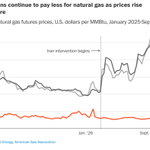
"The U.S. has achieved natural gas affordability through abundant supply driven by technological progress," @PostOpinions writes.
Learn why American consumers are paying less for natural gas: washingtonpost.com/opinions/…

The Dallas Fed's @gjgolding explains what could happen if the U.S. bans diesel exports.
⚡️Energy Word of the Week: Condensate
As natural gas reaches the surface, some hydrocarbons turn to liquid. That liquid, called condensate, is separated near the well. Refineries can process it into gasoline blending components, jet fuel, diesel and raw materials for making plastics and other products.
What does American energy mean to the communities where it’s produced?
During AEPC’s field tour in Pinedale, Wyoming, Mayor Murdock shared a local perspective with our group. Energy workers are Pinedale residents who care about their neighbors and the future of their community.
It was a reminder that the story of American energy is also a story about the people and places behind it.
Refining capacity matters. With U.S. refineries running at full capacity and global disruptions cutting supply, diesel and gas prices remain elevated.
Our latest explainer breaks down how supply shortages drive prices and the economics behind crack spreads.
energymatters.org/refining-e…

Gas prices can feel unpredictable, but they're not random. They reflect production, refining, transportation, taxes, and global supply-and-demand dynamics.
Read our explainer that breaks down what drives prices at the pump — and why states like CA and TX look so different: energymatters.org/gasoline-p…

⚡Energy Word of the Week: Associated Natural Gas
Natural gas found in the same reservoir as crude oil. It may be dissolved in the oil or exist separately within the reservoir and is produced alongside oil during extraction.
Learn more about American energy: energymatters.org
⚡️Energy Word of the Week: Petrochemicals
Materials made from oil and natural gas that are used to create everyday products. They help make items such as medical equipment, electronics, clothing, packaging, building materials, and household goods.
Learn more: energymatters.org/learn/#eve…
