

Europe, decoded. Marble meets megabytes. Our YouTube account: https://xitter.cf/t.co/1GnHPAhOrK
Joined October 2023
- Tweets930
- Following666
- Followers1.3K
- Likes158






Europe is building a bigger border force, with deportations, surveillance and data-sharing moving closer to the centre of migration policy. But stronger enforcement is not the same as smarter migration management.
The real test is whether Frontex can enforce Europe’s borders while protecting fundamental rights, ensuring independent oversight and guaranteeing access to asylum. A border agency’s power must grow alongside its accountability, not ahead of it.
Security and human dignity are not competing objectives. Europe must prove it can defend both.
euobserver.com/244422/a-bigg…

Europe’s industrial challenge is not just competing imports. It is turning its scientific excellence, technology and purchasing power into products the world wants to buy. “Made in Europe” will only work if it goes beyond protectionism: competitive energy, less fragmented markets, faster innovation and the ability to scale European companies globally.
The goal cannot simply be fewer imports. It must be more European exports. Strategic autonomy is measured not by what Europe keeps out, but by what it can produce and sell to the world.

At the Port of Antwerp-Bruges, container throughput rose 1.2% in the first nine months of the year. Yet the number of empty containers sailing back to Asia jumped 11.7%. We import plenty, but we don’t fill enough boxes on the way out.
At the same time, the UK has signalled it could discuss tariffs on Chinese EVs as the price of access to the EU’s “Made in Europe” programme, as long as the deal serves British interests. Beijing has already warned of retaliation. Protecting industry without damaging trade relationships is a delicate balance.
Europe already has what it takes: deep industrial know-how, world-class scientists, advanced technology and the largest single market in the world. What’s missing is a strategy that joins these strengths together.
So “Made in Europe” should be more than a trade instrument. It should be a promise that Europe is the best place to innovate, build, invest and export from. That means: helping European companies scale up,
delivering competitive energy prices etc;
The real measure of success isn’t how well we shield our market. It’s how many European products win customers abroad, and how few containers leave Europe empty.
That’s the opportunity behind Made in Europe.
The most revealing part of this crisis is not that Trump is moving closer to Putin. It is that Europe sees the danger, condemns the concessions, yet still feels too dependent on Washington to change course.
That is the strategic trap: Europe is expected to live with the consequences of decisions it does not control. Keeping a seat at the table is not the same as having leverage. Until Europe can defend Ukraine and sustain pressure on Moscow without relying on Washington’s political goodwill, its security will remain vulnerable to America’s next change of direction.

Donald Trump's embrace of Vladimir Putin has jolted and roiled Europe, driving a new wedge between transatlantic allies.
But for all their outrage, Europeans are not yet willing, and not yet ready, to break away and go their separate way.
My analysis.
euronews.com/2026/10/21/trum…

The real test of diplomacy is whether it changes the aggressor’s incentives, not whether it pressures the victim into submission.
If weapons already paid for by European allies are delayed, Ukraine’s ability to defend itself is weakened while Moscow gains time. As Madeleine Dean argues, nothing about Ukraine should be decided without Ukraine.
Europe must ensure that its financial commitments translate into actual defensive capabilities, because a peace built by weakening Ukraine while easing pressure on Russia risks rewarding the very aggression it is supposed to end.

Congresswoman Madeleine Dean accused Trump of helping Putin by delaying $400 million in weapons for Ukraine, disrupting missile warnings, and easing sanctions on Russia.
“We have found that our president, and this is sad, he has been a puppet of Putin.”
kyivpost.com/post/87557

The real test of diplomacy is whether it changes the aggressor’s incentives, not whether it pressures the victim into submission.
If weapons already paid for by European allies are delayed, Ukraine’s ability to defend itself is weakened while Moscow gains time. As Madeleine Dean argues, nothing about Ukraine should be decided without Ukraine.
Europe must ensure that its financial commitments translate into actual defensive capabilities, because a peace built by weakening Ukraine while easing pressure on Russia risks rewarding the very aggression it is supposed to end.
Congresswoman Madeleine Dean accused Trump of helping Putin by delaying $400 million in weapons for Ukraine, disrupting missile warnings, and easing sanctions on Russia.
“We have found that our president, and this is sad, he has been a puppet of Putin.”
kyivpost.com/post/87557
The danger is not simply who sits at the table, but who gets to decide the outcome.
A summit between Washington, Moscow and Beijing cannot legitimately determine Ukraine’s future while Kyiv is excluded and Europe’s security is treated as negotiable. Putin would gain more than a diplomatic photo opportunity if Russia’s aggression were rewarded with concessions agreed over Ukraine’s head.
Peace cannot mean giving the aggressor a veto over the sovereignty of its victim. Any credible settlement must include Ukraine, involve Europe and deliver enforceable security guarantees.

A peace deal negotiated over Ukraine’s head would not end the conflict. It would undermine the very sovereignty it claims to settle. Putin may want Washington and Beijing to decide Europe’s security, but Europe cannot outsource its future, and Ukraine cannot be treated as a bargaining chip.
No Ukraine, no legitimate peace. No Europe, no lasting European security.

🇪🇺🇺🇦 Europe's future will not be decided in Washington
Putin is proposing a summit with Trump and Xi Jinping to negotiate an end to the war, without Ukraine or Europe at the table.
Previous attempts to negotiate over Kyiv's head have failed
No agreement can determine Ukraine's future without Ukraine or without Europe.
There will be no lasting peace without Kyiv and Brussels.
Washington does not decide for Europe.

Russia’s rebuilding of tank reserves despite heavy losses in Ukraine highlights a strategic reality: battlefield attrition has not stopped its defence industry from regenerating military capacity. Satellite imagery of new equipment at storage bases is evidence of reconstitution, not proof of an imminent attack on NATO.
But for Europe, the implication is clear: defence planning must account not only for the forces Russia deploys today, but also for the capabilities it is rebuilding for tomorrow.
Deterrence depends on preparing for that trajectory before it becomes an immediate threat.

Russia is replenishing previously depleted military storage bases with newly manufactured tanks and armored vehicles, according to an investigation by Radio Liberty.
One of these bases is just 500 km from the Russian border with NATO.
Satellite imagery shows that the 22nd Central Tank Reserve Base in Bui, Kostroma region, has received new T-90M tanks and BTR-82A armored personnel carriers between October 2025 and October 2026.
Meanwhile, Russia’s 349th Central Tank Storage Base in Topchikha, Altai Krai, has also reportedly received significant quantities of military equipment, including potentially hundreds of additional vehicles.
The findings suggest that despite heavy battlefield losses in Ukraine, Russia’s defense industry continues to produce and repair armored vehicles while rebuilding its reserves.
Although Moscow publicly denies plans to attack NATO countries, the growing stockpiles and expansion of military infrastructure near Northern Europe’s borders are telling another story.
📹: Covert Cabal
Europe cannot claim strategic autonomy while depending on American companies and Chinese technology for one of the most transformative technologies of our time.
AI is not just another digital service. Whoever controls the models can influence access, prices, innovation and the capabilities of entire industries. If Europe relies entirely on systems built elsewhere, it risks becoming a customer in a market that will shape its economic future.
The answer is not to shut out foreign technology, but to invest seriously in European AI companies, computing infrastructure, talent and research.
The real cost of AI sovereignty is investment. The cost of having none may be dependence. Europe must decide whether it wants to help shape the AI era or simply pay to participate in it.
itpro.com/technology/artific…

Ukraine’s dependence on privately controlled satellite infrastructure exposes a fundamental weakness in Europe’s security architecture.
A capability essential to a country’s defence cannot depend indefinitely on the decisions of individual billionaires or the political calculations of another government.
Europe must invest in secure, interoperable alternatives and the capacity to deploy them quickly.
Digital sovereignty is no longer just about technology. It is about whether Europe can guarantee its own security when political interests diverge.

Our group, @RenewEurope , is calling on European leaders to take urgent action, as the restrictions imposed by @Starlink are jeopardizing Ukraine’s defense. We must not leave it up to @elonmusk and Donald Trump @POTUS to decide whether Ukraine will be able to defend itself or not.
It is time for Europe to step in and ensure that Kyiv has access to satellite communications and that European capabilities can be deployed to fill the gap.
Digital sovereignty is a security imperative. 🇪🇺🇺🇦


The central question is what Russia must give up to get sanctions relief. If Moscow receives economic concessions while Ukraine is asked to restrain the tools that impose costs on Russia, negotiations risk rewarding endurance rather than changing behaviour.
Europe’s leverage lies in making relief conditional on verifiable Russian concessions, not treating pressure as an obstacle to peace.
A deal that eases the pressure without changing the Kremlin’s incentives may buy a pause, not peace.

Zoom out from the headlines. Russia's war is now a contest of endurance, and endurance runs on money, fuel, and on StarLink.
Ukraine's strikes on refineries and Europe's frozen assets are the two pressures Moscow feels most.
This week Washington has floated relief on both: unfreezing assets to restart talks, and buying Russian diesel if Ukraine stops hitting refineries.
That is not mediation. It is lifting the pressure that is working. Europe cannot stop Washington, but it can refuse to pay for it: the assets stay frozen, sanctions hold, and support for Ukraine continues.
Europe wants to spend more on defence, support Ukraine and compete globally, yet its leaders are negotiating deep cuts to the EU’s next long term budget. Meanwhile, joint borrowing is becoming the norm, just without a coherent long term plan.
That is the contradiction at the heart of Europe’s fiscal debate: the EU is expanding its ambitions while shrinking the common budget meant to deliver them.
Borrowing together is not the problem in itself. The real question is whether Europe can turn crisis driven loans into a sustainable strategy, with clear priorities, proper safeguards and a credible way to repay the debt.
Strategic autonomy cannot be built on political ambition alone. It requires a financial architecture capable of paying for it.

Leaders eye deep EU budget cuts, while long-term joint borrowing becomes the new normal euobserver.com/242658/leader…

Albania is witnessing growing public anger.
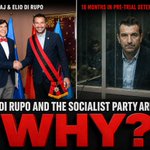
The Flamingo protests have exposed deep concerns over controversial coastal development, environmental protection and political transparency. Now, student protests over education and their future are adding to the pressure on Edi Rama’s government.
The wider issue is accountability. The Veliaj case has also raised questions about due process, judicial independence and the democratic mandate of an elected mayor.
Yet Rama continues to present Albania’s EU integration as a success story in Brussels, seemingly detached from the unrest at home.
Where are the European Parliament’s voices? If the EU’s commitment to the rule of law, democratic standards and environmental protection is serious, these concerns cannot be brushed aside in the name of enlargement.
Albania’s European future should be judged not only by what its government promises in Brussels, but also by what is happening on the streets at home.
tiranatimes.com/student-prot…

39 ballistic missiles in one night, striking Ukraine’s power infrastructure and residential areas. If reports of missing advance intelligence warnings are confirmed, that raises a serious question: is Ukraine being left with less time to prepare for attacks that threaten civilian lives?
Air defence is not just about intercepting missiles. Early warning can mean the difference between reaching shelter and being caught in the open.
Ukraine needs more than expressions of solidarity. It needs the intelligence, warning systems and air defence support that save lives.


Europe’s economic model is facing a brutal reality check.
The EU wants to compete with the US and China, reindustrialise, fund the green transition and strengthen its strategic autonomy. But ambition without investment is just political rhetoric.
The real question is whether Europe can abandon the reflex of fiscal restraint long enough to finance its own future.
You cannot demand global competitiveness while underinvesting in the industries, technologies and infrastructure that make it possible.
Europe’s problem is not a lack of strategy papers. It is the growing gap between what Brussels promises and what Europe is prepared to fund.

As French borrowing costs go up, talk of a new Eurocrisis has rekindled. The fiscal pressures also complicate a deal on long term EU spending, as 13 EU member state challenge EU overregulation. My latest for @brusselsreport: brusselsreport.eu/2026/10/13…

Brussels has a credibility problem: Europe writes the rules, then negotiates with those who want to escape them.
The methane fight exposes the real test of EU climate policy. Are its standards binding commitments, or opening offers that disappear when fossil fuel interests push back?
Five Socialist MEPs are challenging von der Leyen to draw a line: one year, or withdraw the proposal.
Because a rule that can be endlessly postponed is not much of a rule. It is political theatre.
Socialist MEPs urge von der Leyen to cap methane-rules delay at one year, or withdraw it euobserver.com/242455/social…

Russia is testing Europe’s borders with sabotage, covert operatives and deniable attacks. The real danger is not just the damage being done, but the lack of a credible response.
Gabrielius Landsbergis asks the question European leaders cannot avoid: what happens when the “little green men” cross a NATO border and Europe finally opens fire?
Deterrence means nothing if the Kremlin believes Europe will always hesitate.

If Europe shoots little green men — what then?
landsbergis.com/if-europe-sh…

Europe is making qualifications portable. But what about the skills that diplomas never capture?
Millions of young Europeans have the communication, teamwork and critical thinking employers need, yet struggle to prove it across borders.
The challenge is not just recognising what people have studied. It is recognising what they can actually do.
Microcredentials could help bridge that gap. Europe must now turn skills portability from policy ambition into real opportunity for young people.
euobserver.com/242377/europe…

The EU faces a difficult balancing act in Georgia: keeping practical channels open without allowing cooperation on connectivity to obscure democratic backsliding. Engagement below the political level can preserve useful links, but it must not become a substitute for political accountability.
The real test is whether Brussels can keep the door open to Georgian society while making clear that the door to deeper European integration depends on democratic progress.
