

CEO, CirroLytix | AI & Data Science Leader | Responsible AI, Policy & Social Impact
Philippines
Joined July 2010
- Tweets843
- Following61
- Followers109
- Likes301
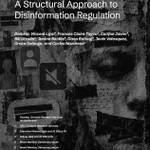



You can fact-check a lie. But can you stop the machinery making it go viral?
Disinformation is amplified by algorithms, coordinated networks, and paid influence operations.
So regulate the reach and not the truth.

Our paper with @docligot and fellow co-authors, “Governing Reach, Not Truth,” is included in UP CIDS’ Philippine Strategic Outlook 2030.
We make the case for tackling manipulation without policing speech.
Read p. 144:
cids.up.edu.ph/up-monograph/…
#Disinformation #DigitalGovernance

The Philippines can have a strong semiconductor industry and still rely on technologies it does not control.
The issue is exposure: which chips, tools, or components are hardest to replace if access is cut?
Which dependency would hurt us most?
#ai #semiconductor #geoeconomics

Agree or disagree?
The Philippines has real semiconductor capability but limited control over critical technologies it depends on.
The issue isn’t making everything locally. It’s deciding what to build, diversify, or secure through trusted partners.
Where’s the line?
#ai

AI security is bigger than cyberattacks. It includes scams, deepfakes, online abuse and exploitation, misinformation, and AI-enabled threats to critical systems.
A single central agency can’t see all of that first.
Can those closest to the harm act fast enough before it spreads?

AI-enabled harm is scaling across scams, TFGBV, OSAEC, and radicalization.
For the Philippines, the challenge is coordination across platforms, law enforcement, child protection, finance, schools, and security.
Can our institutions move as fast as the harm does?

What should Filipinos gain from Pax Silica? Jobs, skills, local suppliers, research, and startups. We must negotiate for those outcomes.
A theme in our AI & Geoeconomics roundtable, and the focus of my Aug 24 Monday Circle talk: turning strategic importance into local capability.
Glad to see @docligot included in the unofficial IT Philippines community poll. Working with him at @cirrolytix , I’ve seen his commitment to responsible AI, data ethics, and building people’s skills. Good to spot his name on the list.


Check out the full article here: bilyonaryo.com/almirol-tops-…

Pax Silica should be judged by what the Philippines keeps and not by the size of the investment announcement.
The real test: what local capability, supplier growth, know-how, IP, and bargaining power remain here 5–10 years later?
#ai #geoeconomics

Pax Silica can look like a win on paper and still be a weak deal for the Philippines.
We need clear asks on local capability, tech transfer, Filipino suppliers, and risk sharing, backed by technical evidence.
What are the 5–10 outcomes we refuse to leave to chance?

The Pax Silica debate should no longer be about whether resource demand is large. It should be about whether the Philippines has credible scenarios, thresholds, and safeguards for managing that demand.
#PaxSilica #AI #Geoeconomics #AIPolicy #TechPolicy #IndustrialPolicy

By the time we fix every semiconductor bottleneck, the higher-value work may already be elsewhere.
The smart move is sequencing: build no-regret capabilities now while bigger reforms continue.
What semiconductor capabilities become much harder to acquire if we wait another 3 yrs?

If major semiconductor investors get incentives, infrastructure, and policy support, the Philippines should be clear about the return.
Every major deal should come with a capability plan: Filipino skills, suppliers, technology, and ownership.
What should we require in return?

What if our biggest semiconductor opportunity is hiding in plain sight?
Many chip firms already know the Philippines through BPO and shared services.
How do we turn that access into deeper capability, investment, and leverage before others do?
#ai #semiconductors #geoeconomics

The Philippines has decades in semiconductors. But if Malaysia and Vietnam keep moving faster into higher-value segments, history alone won’t protect our leverage.
What capability are we building now that makes the Philippines harder to replace?
#ai #geoeconomics

Everyone is talking about automation and agentic AI. But many enterprises are still getting the basics of digitization right.
There’s no single starting line for AI. The better question: What should we modernize next and what business problem will it actually solve?


Different organizations are at different stages: digitizing manual work, connecting fragmented workflows, strengthening governance, or exploring AI.
Thanks, @IBM Philippines, for bringing these perspectives together.
See original post here: lnkd.in/p/gnMgPJjR

What if Philippine BPO survives AI, but Filipinos still capture too little of the upside?
Foreign investment and jobs matter. So does owning more of the clients, tools, processes, and decisions behind the work.
Will we keep delivering, or move up the value chain?

Philippine BPO may have an AI coordination problem.
Some capabilities are hard to build firm by firm: shared standards, workforce pathways, governance, labor-market intelligence.
What should the sector build together before fragmentation becomes a disadvantage?
#ai #bpo #itbpm

The Philippines built its BPO edge on world-class execution. AI is shifting value upstream.
Are we building people and firms clients will trust to redesign the work, or just training them to use the tools that redesign it for them?
#ai #bpo #itbpm #futureofwork
