

Top-Rated Podcast: The Food Professor, https://xitter.cf/t.co/29ja7aUR5b
Joined October 2012
- Tweets79.8K
- Following3K
- Followers78.7K
- Likes90.5K







"Alberta Feeds More Than the Oil-and-Gas Story" -Food Professor iheart.com/podcast/962-shane…

Majority of Food Bank clients facing severe food insecurity: report calgaryherald.com/news/major…

The Food Professor retweeted

This is a disgrace!


You can’t make this up.
On the left, Bernard Sévigny, Quebec’s new agriculture minister and former mayor of Sherbrooke.
On the right, Marie-Claude Bibeau, former federal agriculture minister and now mayor of Sherbrooke.
Both are married to each other.
And don't forget, Bernard is a separatist. Not Marie-Claude.


The Food Professor retweeted
Are Canadians getting tired of chasing grocery savings? And what happens when getting to the store costs more?
Tomorrow at 6 a.m. ET, we release our Fall 2026 Canadian Food Sentiment Index, supported by Caddle.
A fresh look at how Canadians are coping—and where the pressure is building. Stay tuned.

The Food Professor retweeted

The most fundamental human need is food. Year-over-year food bank attendance/reliance increases by Canadians are, to quote @FoodProfessor, "insane."

The Food Professor retweeted

Supply management was sold to us as stability. One plant lockout and nobody will even say where the eggs are being graded? Stable for who, exactly?
The Food Professor retweeted

⚠️ 🇨🇦 ⚜️ Les quotas de poulet offerts gratuitement : encore une fois, Ottawa cache le magot pendant que les Québécois paient le prix fort
Sous Mark Carney, le fédéral continue de distribuer pour rien les quotas d’importation de poulet à des transformateurs qui peuvent ensuite les revendre ou les louer, générant potentiellement 245 millions de dollars de valeur de transfert chaque année, sans la moindre transparence sur qui en profite vraiment.
C’est l’horreur, comme le dit le professeur Sylvain Charlebois. Le Canada gère ses importations de poulet par des contingents tarifaires (TRQ) sous l’OMC, l’ACEUM et le PTPGP. Le volume total tourne autour de 121 600 tonnes métriques pour 2026. Ottawa, via Affaires mondiales Canada, alloue ces quotas gratuitement à des transformateurs, distributeurs et opérateurs de services alimentaires selon leur historique d’activité. Pas d’enchères, pas de paiement au gouvernement : juste un privilège accordé.
Ces détenteurs peuvent ensuite transférer une partie de leur allocation à d’autres entreprises, avec l’approbation fédérale. C’est là que le magot se crée. Charlebois estime que la valeur de transfert annuelle de ces quotas pourrait atteindre 245 millions de dollars. Autrement dit, des firmes qui reçoivent l’accès pour rien peuvent facturer d’autres joueurs pour l’utiliser, tandis que le consommateur québécois, lui, paie le poulet cher à cause du système de gestion de l’offre qui limite la production domestique et impose des tarifs monstrueux (jusqu’à 249 %) au-delà du quota.
Le gouvernement Carney refuse de mettre la gestion de l’offre sur la table des négociations commerciales et a même appuyé des projets de loi pour la verrouiller davantage. Pendant ce temps, la production canadienne a manqué ses cibles à répétition dans les derniers cycles, forçant des importations record et des prix élevés. Au Québec, où l’élevage de volaille est important, on subit les conséquences d’un système fédéral opaque qui protège des intérêts bien précis sans jamais expliquer clairement qui reçoit quoi, qui transfère et à quel prix.
Ottawa devrait publier la liste complète des détenteurs, les transferts effectués et les montants chargés. Mais sous Carney, la transparence reste un luxe que le fédéral ne se permet pas quand il s’agit de défendre son modèle de quotas gratuits. Les familles québécoises, elles, continuent de payer.
The horror...
Chicken processors get import quotas, FOR FREE.
Why allocate access to firms that can charge others to use it? Canada’s chicken import quotas could generate $245M annually in transfer value.
Ottawa should disclose who gets the quotas, who transfers them and what they charge.

The horror...
Chicken processors get import quotas, FOR FREE.
Why allocate access to firms that can charge others to use it? Canada’s chicken import quotas could generate $245M annually in transfer value.
Ottawa should disclose who gets the quotas, who transfers them and what they charge.

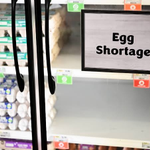
Egg shortages in Quebec due to lock-out.
The company says eggs are being redirected to an Ontario facility. Great, but quotas are allocated based on provincial demand and managed provincially.
If no eggs are being lost, why are shortages being reported in Quebec?
NEWS: Egg supply disruption is unfolding in Quebec. More than 120 workers at Burnbrae’s Saint-Zotique grading plant have been locked out since October 2. Eggs are being redirected to Ontario for grading, but the receiving facility has not been publicly identified.
The Saint-Zotique plant reportedly handles about 16.8 million eggs a week. Shortages are now being reported in Quebec grocery stores. Continued egg production does not eliminate added transport costs, delays or potential losses.

McCain voit grand. Le Canada devrait suivre. lesaffaires.com/opinions/mcc…


Don't forget, eggs are supply managed in Canada.
The lack of transparency is borderline insulting...
NEWS: Egg supply disruption is unfolding in Quebec. More than 120 workers at Burnbrae’s Saint-Zotique grading plant have been locked out since October 2. Eggs are being redirected to Ontario for grading, but the receiving facility has not been publicly identified.
The Saint-Zotique plant reportedly handles about 16.8 million eggs a week. Shortages are now being reported in Quebec grocery stores. Continued egg production does not eliminate added transport costs, delays or potential losses.
The Food Professor retweeted
Visited Canadian Premium Foods in Toronto today with President Augo Pinho (Left) and plant manager Claudio Neves (Right) at one of the company’s five facilities across Canada.
We discussed supply management, TRQ allocations, wholesale and retail chicken prices, the Grocery Code of Conduct, labour challenges, and much more.
Augo started selling meat in downtown Toronto at just 18 and has since become an influential figure in Canada’s poultry industry. Such an inspiring journey.
Great visit—thank you both!

The Food Professor retweeted

Oh Canada .
Food Bank use increases ~ 81% since 2021.
What has happened in those 5 years to contribute to such a significant increase?