

A nonpartisan think tank amplifying Global South expertise in Global North policy circles.
Washington DC
Joined January 2026
- Tweets186
- Following186
- Followers86
- Likes20




Pinned Tweet
Introducing the Global South Policy Hub.🌏
A new nonpartisan #thinktank based in #WashingtonDC, dedicated to amplifying the perspectives, expertise, and priorities of the #GlobalSouth in international policy spaces.
We're launching soon! Follow us for more insights and updates!
What is BRICS and how should the United States view it?
Nonresident Fellow Ana Saggioro Garcia explains that as emerging economies seek a greater voice in global decision-making, BRICS has become one of the most significant political and economic forums of the 21st century.
Watch the video to learn more.
@anasaggioro
@pucriooficial
@UFRRJ
@BRICSPolicy
@IRI_PUCRio
#BRICS #WorldOrder #GlobalSouth #InternationalAffairs
73
$55.7 billion needed. $7.2 billion allocated.
That’s the climate finance gap facing Caribbean small-island states from 2015 to 2030. In her new brief, Nonresident Fellow Geneva Oliverie argues that the problem goes beyond the gap.
Read the brief to learn more: gsphub.org/publications/the-….
@V20Group
#GlobalSouth #Caribbean #Climatefinance

7
Climate shocks keep pulling Caribbean investment into rebuilding instead of long-term growth.
Nonresident Fellow Geneva Oliverie makes the case that breaking that cycle would free the region to invest in its own prosperity, and that a climate-resilient Caribbean is in the interest of the United States too, from energy security to trade.
Her solution is to strengthen the Caribbean’s existing financial institutions, rather than building new ones.
Read the brief: gsphub.org/publications/the-….
@V20Group
#GlobalSouth #Caribbean #Climatefinance

15
As competition for critical minerals intensifies, the United States is falling behind in its engagement with Global South mineral-producing countries.
Guest expert Putra Adhiguna argues that an effective approach requires pairing U.S. investments with three key commitments: long-term stability signals, greater speed in delivery, and standards that producers can realistically achieve.
Adhiguna suggests that building resilient and responsible mineral supply chains will depend on partnerships that create mutual value, strengthen trust, and support sustainable development.
Read more about this issue: gsphub.org/publications/thre…
#CriticalMinerals #GlobalSouth
43
What stood out from the first week of #COP31?
Our Nonresident Fellow @ShuvaRaha was on the ground in Türkiye, tracking the key discussions shaping the future of climate action and global cooperation.
Watch Shuva's reflections on the first week of COP31 and what the discussions could mean for the road ahead.
@CEEWIndia
#ClimatePolicy #ClimateResilience #Turkiye
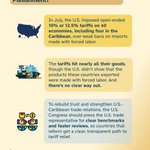
According to Nonresident Fellow Alicia Nicholl, Washington’s forced-labor tariffs hit most goods from the Bahamas, the Dominican Republic, Guyana, and Trinidad and Tobago, even though the United States didn’t show that the exports were made with forced labor.
Nicholls argues that clear compliance benchmarks, faster reform reviews, and technical assistance would better serve the goal of ending forced labor and keep U.S.-Caribbean trade strong.
The U.S. Congress can help by pressing the U.S. trade representative for a clear path to tariff relief.
Read her analysis: gsphub.org/publications/part….
@licylaw
@uwisrc
#InternationalTrade #Caribbean #TradePolicy


We are pleased to announce that our Executive Director, @AudeDarnal, will co-moderate a dinner discussion with Enrique Mendizabal of @onthinktanks at the T20 U.S. Summit in New York this week, hosted by The @StimsonCenter, @QuincyInst, and The @BrookingsInst.
The conversation, "The United Nations and G20: Toward Strengthened Partnerships for the Post-2030 Development Agenda and a Just, Stable & Prosperous Global Economy," will bring together policymakers, practitioners, and thought leaders to explore how multilateral cooperation can support a more inclusive and resilient global future.
The discussion is supported by the Permanent Missions of Germany, the African Union, Namibia, Australia, the United Kingdom, Zambia, and Canada to the United Nations, along with the United Nations University Centre for Policy Research (UNU-CPR).
Learn more: ggin.stimson.org/t20-us-summ….
#T20 #G20 #GlobalGovernance #UN #SustainableDevelopment #GlobalSouth

Trade partnership or punishment?
Nonresident Fellow Alicia Nicholls argues that for Caribbean countries such as The Bahamas, the Dominican Republic, Guyana, and Trinidad and Tobago, open-ended tariff enforcement with no end in sight hinders trade relations between the United States and the Caribbean. It matters for the U.S. economy.
Read: gsphub.org/publications/part….
@LicyLaw
@uwisrc
#InternationalTrade #Caribbean #TradePolicy

52
Some things can’t be learned from a briefing memo.
On our inaugural educational trip to South Africa, a bipartisan group of senior U.S. congressional staffers heard directly from leading South African policy experts in Johannesburg and government officials in Pretoria and met with community and business representatives in the platinum mining region of Marikana.
Staffers returned home with firsthand insight into governance, development finance, critical minerals, and the Global South’s role in a shifting world order—perspectives that can inform U.S. foreign policy.
We are building South-North bridges to advance shared prosperity and security.
Support our mission: gsphub.org/donate.
#GSPH #GlobalSouth
Multipolarity doesn’t automatically make the world fairer.
In her policy brief, Nonresident Fellow Ana Saggioro Garcia argues that while China and coalitions like BRICS offer Global South countries more geopolitical options, many South-South investment deals still reproduce the old rules. And at the IMF and the UN, more Global South seats will mean little if the rules on debt and finance stay the same.
For Washington, blocking reform may protect U.S. privileges now, but it erodes these institutions’ legitimacy.
Explore Garica’s arguments in the full policy brief: gsphub.org/publications/glob…
@pucriooficial
#GlobalSouth #GlobalGovernance
#Multipolarity

36
At #COP31, U.N. Secretary-General António Guterres noted that developing economies outside China are home to nearly two-thirds of humanity, yet receive under one-fifth of clean energy investment and pay two to three times more to borrow.
In her brief, Nonresident Fellow Geneva Oliverie from the CVF-V20 Secretariat explains why. Across climate-vulnerable economies, debt service runs about four times their climate investment needs. Her fixes:
→ Faster, time-bound debt restructuring that includes private lenders
→ Disaster clauses that pause payments after major shocks
→ IMF and World Bank programs that account for climate risk
→ A U.N. framework for sovereign debt restructuring
As the largest IMF and World Bank shareholder, the United States can push these reforms forward.
Read the brief: How to Break the Global South’s Cycle of Debt Crises
gsphub.org/publications/how-…
@V20Group
#GlobalSouth #ClimateFinance

29
Tariffs without a roadmap won't build better trade relations between the United States and its close neighbors, argues Nonresident Fellow Alicia Nicholls in her latest policy brief.
Nicholls argues that a durable U.S.-Caribbean trade partnership requires transparency, measurable compliance standards, realistic timelines, and a review mechanism that recognizes policy improvements. Without these measures, U.S. forced-labor tariffs will only strain regional cooperation.
Read: gsphub.org/publications/part….
@uwisrc
@LicyLaw
#InternationalTrade #Caribbean #Tradepolicy

Your support helps Global South expertise inform Global North policy spaces by advancing research and promoting exchanges and convenings that make more equitable decision‑making possible.
Donate at gsphub.org/donate.
#GSPH
#GlobalSouth

27
Global governance works better when the countries it affects help shape it.
The Global South Policy Hub brings Global South expertise to Global North policy actors through dialogue and publications.
Learn more: gsphub.org.
#GSPH #GlobalSouth

38
The Global South Policy Hub uses its presence in Washington to work at the intersection of global governance and Global North policy, starting with U.S. foreign policy.
Support us:
•Donate: gsphub.org/donate
•Subscribe to our newsletter: gsphub.org/newsletter
•Share our work: gsphub.org
#GSPH #GlobalSouth

21
Resisting international reform may cost U.S. foreign policy.
Nonresident Fellow Ana Saggioro Garcia argues that while the U.S. government’s efforts to block changes to global governance and international organizations' rules may preserve U.S. influence today, they may accelerate its erosion tomorrow.
When reform stalls, Global South countries look elsewhere and are strengthening alternative institutions.
Garcia further states that the United States faces a strategic choice: negotiate change now and shape a more balanced global order or face a fragmented system later where U.S. influence is harder to sustain.
Read the full brief for Garcia’s insights on why meaningful reform is a geopolitical imperative.
gsphub.org/publications/glob…
@UFRRJ
#GlobalSouth #GlobalGovernance
#Multipolarity
@Universidade Federal Rural do Rio De Janeiro


25
What does it take to get off a U.S. tariff list?
Four Caribbean countries are still waiting for an answer.
The Bahamas, the Dominican Republic, Guyana, and Trinidad and Tobago face open-ended U.S. forced-labor tariffs. Two have already moved to ban forced-labor imports, but there’s still no clear path to full relief.
Nonresident Fellow Alicia Nicholls examines how clear benchmarks and faster reviews by the Office of the U.S. Trade Representative could make the process work, and the oversight role Congress plays.
Read more here: gsphub.org/publications/part…
#InternationalTrade #Caribbean
@LicyLaw

At the Global South Policy Hub, we champion the expertise, priorities, and lived realities of Global South populations to inform Global North policymaking spaces.
Our mission: to advance a more equitable international order for all.
For more about our work, visit: gsphub.org/
@AudeDarnal
#GSPH #GlobalSouth

31
At the Global South Policy Hub, Global South expertise is not an afterthought—it is a driver of change.
By creating opportunities for deeper South-North dialogue, we seek to inform debates on U.S. foreign policy and the wider international order.
As we pursue this mission, we invite individuals and institutions that believe in a more equitable world order to partner with us and support our work.
We are building South-North bridges to advance shared prosperity and security.
Partner with us to ensure Global South perspectives inform the global policies that affect billions.
Donate at gsphub.org/donate.
#GSPH #GlobalSouth

19
In Lesotho, textiles make up about 80% of exports to the United States, and roughly 40,000 people work in the apparel sector, along with tens of thousands in Kenya, Madagascar, and Eswatini.
Their jobs and livelihoods depend on the African Growth and Opportunity Act (AGOA), yet uncertainty surrounding its reform and long-term renewal continues to pose significant challenges.
In her latest brief, Nonresident Fellow Ivory Kairo argues that the U.S. Congress should pass a long-term reauthorization, with rules of origin built together with African trade institutions.
Read full analysis: gsphub.org/publications/how-….
@AFPHAfrica
@_AfricanUnion
@AfCFTA
#InternationalTrade #Africa


2
72