

Full-time collector Part-time degen Occasional co-founder
Terminally Online
Joined December 2014
- Tweets53.2K
- Following4.8K
- Followers48.7K
- Likes298K




Pinned Tweet
New pinned post.
- Nothing posted on twitter by me is financial advice.
- Opinions are my own and do not represent anyone or any entity I might be affiliated with.
- I won't (seriously) respond to toxicity.
I have massive amounts of FOMO right now. Don't mind missing other trips that much but missing Marfa hurts.
Have fun y'all 🥲
Marfa Yucca #204 by @DaCaldera


Giannis Sourdis (🦉,🦉) retweeted

We believe great multiplayer experiences should bring people together, not just place them in the same world. 🛡️⚔️
At Couch Heroes, we're building an adventure where different heroes have room to shine, and cooperation in the face of adversity is at the heart of the experience.
After all, every hero has their own path, but some of the greatest stories are written together. ✨
#couch_heroes #gamedev #indiegame #gaming #mutiplayer

Giannis Sourdis (🦉,🦉) retweeted

Tomorrows arrives Tuesday.
3,333 generative works on Ethereum Mainnet.
Oct 20 · 3PM ET
Ξ0.044 public
Ξ0.033 Kaoform + Argonauts holders
Kaoform: 3 discounted + 1 guaranteed
(1,111 reserved, first 5 min)
Argonauts: 1 discount per Argonaut held
Get ready


Giannis Sourdis (🦉,🦉) retweeted

"Degrees of Disruption: Vera Molnár at the V&A" by Peter Bauman @monkantony_tez
Bauman on Vera Molnár at the V&A + the link from handmade algos → computer algos → models
🎮 Includes 2 playable demos 🎮
📐 lerandom.art/editorial/degre…📐
Mentions: @V_and_A @harmvddorpel @mattdesl @zachlieberman @soficrespo91 @entangledlight @Licia_He @reas @williamapan @_chenglou @michaelspalter @spalterdigital
Giannis Sourdis (🦉,🦉) retweeted
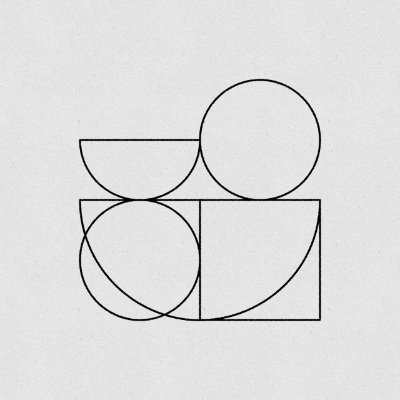
Meridian #870 is currently on display at the Victoria & Albert Museum in London as part of their new show, Degrees of Disruption: Vera Molnar and Generative Art. 🤗🎉

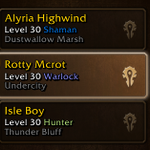
Okay I think I'm done with WoW Forever for now 😅😂
PvP is fun
PvE is fun
Leveling is fun
Community is back (a bit toxic at times but that's classic wow)
Great success, see you November 4th 👍


Giannis Sourdis (🦉,🦉) retweeted

When an Art Movement Becomes a Marketplace
Crypto art promised to revolutionize the art world. But are we building a cultural movement, or simply a market that has forgotten what it was supposed to change?
Every artistic movement begins with a rupture. A moment in which artists, thinkers, and cultural figures begin questioning the structures, conventions, and values that define their time. Movements are not necessarily united by a single aesthetic or a common manifesto, but by the conviction that art can become something different from what it has been until that moment. Dadaism challenged the very definition of an artwork, Conceptual Art questioned the primacy of the physical object, and countless other movements transformed the relationship between artistic production, institutions, and society. Their importance was never determined exclusively by the economic value of the works they produced, but by the ideas they introduced and the cultural transformations they made possible.
When crypto art began to emerge as a recognizable cultural phenomenon, it carried many of these same ambitions. Blockchain was not simply presented as another technology through which artworks could be bought and sold. It represented the possibility of rethinking the relationship between artists, collectors, institutions, and ownership itself. Digital artists, historically marginalized by a system that struggled to recognize the value of immaterial works, suddenly had access to new forms of distribution, economic independence, and direct engagement with their audiences. Decentralization promised to challenge established hierarchies, while the emergence of new communities suggested that cultural legitimacy might no longer depend exclusively on traditional gatekeepers.
For a moment, it seemed that we were not merely witnessing the creation of a new art market, but participating in the formation of a new artistic movement.
And perhaps we were.
Yet, looking at the ecosystem today, I increasingly find myself questioning whether the movement we once believed in is gradually becoming something fundamentally different. What began as an attempt to transform the structures of the art world seems, in certain parts of the ecosystem, to have evolved into a market increasingly obsessed with reproducing the very mechanisms it originally promised to challenge.
The distinction matters because an artistic movement and an art market are not interchangeable concepts. A movement generates ideas, experimentation, critical debate, and new ways of understanding artistic practice. A market generates transactions, prices, liquidity, and economic opportunities. Both can coexist, and historically they often have. But when the market becomes the primary force determining which ideas deserve attention, which artists receive recognition, and which works are considered important, the relationship between cultural and economic value begins to change.
And I believe this is one of the most significant contradictions facing crypto art today.
When Price Becomes the Language of Art
We have developed an extraordinary ability to measure the financial performance of artworks, yet we do not always discuss their cultural significance with the same intensity. We know which collections sold out, which artists reached extraordinary prices, which wallets acquired important pieces, and which markets are experiencing renewed activity. We follow floor prices, trading volumes, and liquidity with remarkable attention. But how often do we dedicate that same energy to understanding what an artist is actually trying to communicate? How frequently do we discuss the evolution of their visual language, the references behind their work, or the contribution they might be making to contemporary artistic research?
The problem is not that we talk about money. The problem begins when money becomes the dominant language through which we talk about art.
This creates a dangerous reversal. Instead of economic recognition emerging from an artwork's perceived cultural importance, financial performance can become the primary evidence used to establish that importance. An artist is considered relevant because important collectors are buying their work. A collection is celebrated because it sells out. A project becomes culturally visible because its market generates attention.
But a sold-out collection is not necessarily an artistic achievement, just as an artwork that struggles to find a buyer is not necessarily less significant. Market success and artistic relevance can reinforce one another, but they are not the same thing.
This is not a problem exclusive to crypto art. The traditional art market has spent decades navigating similar contradictions. Yet there is something particularly revealing about seeing these dynamics emerge within an ecosystem that originally positioned itself as an alternative to that very system.
We criticized the concentration of cultural power in galleries, institutions, and established collectors, only to discover that new forms of influence could emerge around prominent wallets, influential personalities, and platforms capable of directing attention. We celebrated the possibility of giving artists greater independence, while creating an environment in which constant visibility, community management, and market expectations can become inseparable from artistic practice. We spoke about democratizing access, yet often continue to direct our collective attention toward artists who have already received substantial validation.
In some ways, we changed the infrastructure without fundamentally changing the logic.
The Responsibility of Curating Beyond Sales
I encounter this contradiction regularly through my work as a curator. Working closely with artists, developing collections, discussing their creative processes, and attempting to introduce their work to new audiences has made me increasingly aware of the distance that can exist between artistic value and market recognition. Some of the most compelling conversations I have had with artists concern ideas that cannot be translated into a sales pitch, creative decisions that make little commercial sense, or experiments whose importance may only become apparent years from now.
And yet, when these projects enter the market, the conversation can quickly narrow to their immediate financial performance.
How many works sold? How quickly? Who collected them? What happens next?
These are legitimate questions, particularly within an ecosystem where artists and the people supporting them need economic sustainability. Sales matter. They allow artists to continue creating, platforms to operate, and curators to invest time and resources in new projects. Pretending otherwise would mean ignoring the practical foundations that make much of our work possible.
But they cannot be the only questions we ask.
If the success of an artistic project is evaluated almost exclusively through its commercial outcome, we risk discouraging precisely the kind of experimentation that gives an artistic movement its historical relevance.
An artist should not have to demonstrate immediate market demand for their work to deserve cultural attention. Nor should a curator's responsibility end when a collection sells out. If we genuinely believe that crypto art represents an important chapter in the history of contemporary art, then our responsibility extends beyond facilitating transactions. It involves building context, preserving ideas, encouraging critical discussion, documenting artistic development, and creating opportunities for voices that have not yet found an established market.
I see curatorial work as part of this responsibility. Selecting an artist is only the beginning. Understanding their research, questioning their decisions, connecting their practice to a broader artistic conversation, and creating the conditions for their work to be encountered and understood are equally important. Commercial success can support this process, but it should never replace it.
This leads me to what I consider an even more important question: are we actually building an art history, or are we simply documenting a history of sales?
Blockchain Preserves Ownership, Not Meaning
Every artistic movement eventually leaves behind a cultural record. We remember the artists who challenged conventions, the works that introduced new possibilities, the debates that shaped their reception, and the institutions or individuals who helped those ideas circulate. The historical significance of a movement is not established by its commercial performance alone, but by the influence it continues to exercise long after its original economic circumstances have disappeared.
What will remain of crypto art twenty or thirty years from now?
Will we be able to explain why certain works mattered, what artistic questions they addressed, and how they contributed to the evolution of digital culture? Will we have developed the critical language necessary to distinguish meaningful experimentation from temporary market trends? Will future generations encounter a rich body of artistic research, writing, exhibitions, and documentation, or will they primarily inherit records of transactions, price fluctuations, and celebrated sales?
Blockchain may preserve the history of ownership, but it does not automatically preserve the history of meaning.
A transaction can tell us when an artwork changed hands and how much someone paid for it. It cannot explain why the work was created, what it represented within its historical context, or why future generations should consider it important. Those responsibilities belong to artists, writers, curators, collectors, researchers, and institutions. Technology can support cultural memory, but it cannot replace the intellectual work required to construct it.
And this is where I believe the future of crypto art will ultimately be decided.
Not simply through the return of liquidity or the arrival of another speculative cycle, but through our willingness to build an ecosystem that can sustain artistic development beyond immediate financial incentives.
We often speak about wanting to discover the next generation of important digital artists. Yet discovering artists requires more than waiting for the market to identify them. It requires taking risks, investing in unfamiliar practices, supporting emerging voices, and accepting that meaningful artistic development rarely follows the timelines of financial speculation.
There is a contradiction in celebrating the idea of artistic discovery while directing most of our resources and attention toward artists whose markets are already established. If we want new voices to emerge, we must create the conditions that allow them to develop before they become commercially desirable.
A Market That Supports Culture
This is also why I believe the primary market deserves a more serious place in our conversations. Acquiring a work directly from an artist is not merely a financial transaction. It can represent a concrete contribution to the continuation of their practice, allowing them to produce new work, experiment with unfamiliar ideas, and build a sustainable career. It can also support the curatorial and technological structures that help bring those works into the world.
Of course, purchasing on the primary market does not automatically make someone a better collector, just as participating in the secondary market does not make someone a speculator. Both play important roles in a functioning art economy. The secondary market can contribute to an artist's visibility, establish new relationships between works and collectors, and help create the confidence necessary for long-term collecting. Financial considerations are not incompatible with genuine appreciation, and expecting collectors to ignore the economic dimension of their acquisitions would be unrealistic.
The question is how these different parts of the market contribute to the development of the artistic ecosystem as a whole.
If we want an environment capable of continuously producing new artistic value, we must recognize that this value requires investment long before it becomes visible through market performance.
The same responsibility applies to collectors. Collecting art has never been exclusively about ownership. At its most meaningful, collecting is also an act of cultural participation. Collectors can preserve works, support artists during uncertain stages of their careers, contribute to the development of new practices, and help establish the conditions through which art becomes part of a broader cultural conversation.
When collecting is reduced entirely to financial opportunity, we lose part of that responsibility. And when artistic production becomes increasingly shaped by the expectations of those seeking immediate financial returns, we risk transforming artists into providers of assets rather than creators of ideas.
I do not believe we should have to choose between a thriving art market and a meaningful cultural movement. The real ambition should be to build an ecosystem where commercial success strengthens artistic experimentation, where sales create opportunities for emerging artists, and where economic growth contributes to a cultural legacy that extends far beyond individual transactions.
A market should not be the enemy of artistic research. It should be one of the structures that makes that research possible.
Did We Abandon Our Ideals, or Did We Never Fully Realize Them?
None of this means that crypto art was ever a perfectly idealistic movement subsequently corrupted by money. Speculation, entrepreneurship, experimentation, and genuine artistic ambition have coexisted within this ecosystem from the beginning. It would be historically inaccurate to imagine a pure revolutionary past that suddenly disappeared when commercial interests arrived.
The more uncomfortable possibility is that we never fully resolved the tension between our cultural ambitions and the economic incentives we were building.
We wanted artistic freedom, but also immediate liquidity. We wanted decentralization, but continued to seek validation from influential figures. We wanted to challenge the traditional art system, but often adopted its most recognizable symbols of success. We wanted to create a movement, yet frequently measured our progress as though we were building a financial marketplace.
Perhaps the issue is not that we abandoned our ideals, but that we created an environment in which acting according to those ideals is not always what receives the greatest reward.
That distinction matters because it suggests that the future is not predetermined.
There are still artists using blockchain to explore questions of authorship, permanence, participation, generative systems, and digital ownership. There are still collectors who acquire works because they believe in the artists behind them, regardless of immediate resale opportunities. There are still curators, writers, and platforms attempting to create meaningful cultural frameworks around artistic practices that deserve greater recognition.
The movement has not disappeared. But its cultural ambitions are competing with an economic narrative that often speaks louder.
I do not believe the solution is to reject the market. Artists deserve to be paid, collectors deserve functioning markets, and the people building the infrastructure around digital art need sustainable economic models. Without these conditions, much of the experimentation we celebrate would become increasingly difficult to maintain.
The real challenge is to remember what the market is supposed to support.
A healthy art ecosystem should generate economic opportunities while producing cultural value. It should allow emerging artists to develop without constantly comparing themselves to established names. It should encourage collectors to recognize significance beyond price and create space for criticism that is not automatically interpreted as hostility toward the market.
Above all, it should be capable of discussing its own future without reducing every conversation to the question of when prices will rise again.
What Will We Leave Behind?
A new bull market might bring back attention, transactions, and capital. It might create opportunities for artists and platforms that are currently struggling. But it will not, by itself, provide the intellectual foundations necessary for crypto art to be remembered as an important artistic movement.
A market recovery is not the same thing as cultural progress.
And perhaps that is the distinction we have been avoiding.
We have spent years demonstrating that digital artworks can be owned, traded, and assigned significant economic value. That achievement matters, particularly for artists whose work had previously struggled to find recognition within traditional collecting structures. But proving that digital art can be sold was never supposed to be the final destination.
It was supposed to open the door to something larger.
The possibility of building new artistic languages, new relationships between creators and audiences, new models of cultural participation, and a more inclusive understanding of what contemporary art can become.
If we allow that ambition to disappear beneath the constant pursuit of liquidity, then the greatest failure of crypto art will not be a market crash or the disappearance of speculative capital. It will be the possibility that a movement capable of transforming our understanding of art ultimately becomes remembered primarily for the financial mechanisms it introduced.
I want to see an ecosystem in which commercial growth and cultural development reinforce one another. Where a successful release does not represent the end of an artistic conversation, but the beginning of new possibilities. Where collectors are recognized not only for the value of their acquisitions, but also for the artists they helped support. Where curators and platforms are judged not exclusively by the volume of their sales, but also by the quality of the cultural contributions they make possible.
Because when future generations look back at this moment, I hope they will find more than an extraordinary archive of prices, wallets, and transactions. I hope they will discover artists who challenged the boundaries of their medium, works that expanded the possibilities of digital expression, and a community that understood its responsibility in shaping a new chapter of art history.
The question is no longer whether crypto art can sustain a market. We have already demonstrated that it can. The question is whether we are willing to build the cultural foundations that will allow it to matter beyond that market.
An art market can survive as long as people are willing to buy and sell. An artistic movement survives when its ideas remain worth discussing, challenging, and carrying forward.
And perhaps, before asking when the next bull market will arrive, we should ask ourselves something far more important.
If we truly believe we are part of an artistic movement, what are we doing today to ensure that it will be remembered as one?
SEA SCULPTURES CELADON WATER ESSENTIAL PALE ROSE 7 by @petcortright


Even though I don't really agree with the exact phrasing here, it's delusional to expect that a movement should exclusively remain "organic" and grassroots forever.
I've seen countless replies like this:
"But that's how the movement started, it was organic and I was there!"
Yes that's how a movement starts, not how it necessarily evolves and grows...
If you want it to remain a micro-niche with *your rules* that's cool (not really) but especially when we are talking about something that has to do with NFTs/Blockchain and has decentralization so deeply engraved in it, I find it funny that people still try to enforce their beliefs/wants on others. Is this what permissionless means to some of you?
Regardless I would personally have used the word preach/educate and not sell (even if Benny didn't mean it the way most people understood it I think).

So I’m going to miss:
- Frieze London
- Art Basel Paris
- Art Blocks Marfa
- Paris Photo
- Tokyo Social Club
- Art Basel Miami
It’s fine I guess.


I sadly can't disagree with all the hate Blur is getting now that they are shutting down but let's be honest here.
Blur wasn't the main reason for the downfall of NFTs. It wasn't a platform or code, it was humans.
I've said this before, many many times. When the majority of the people in the scene were opportunists and flippers (good for them), who didn't want to pay royalties, would bot releases to flip for a few dollars, etc what did we expect would happen? The infinite money glitch was going to end at some point and it ended badly.
Regardless NFTs weren't killed by a single platform, they had their moment, they exploded in popularity and then imploded. They will be back just like crypto comes back from the dead every few years.