Independent history project by @NicoFassino. Exploring Catholic history through the untold and forgotten experiences of the laity across the centuries.
Joined July 2020
- Tweets2.4K
- Following521
- Followers6K
- Likes1.1K
I’m back with a new research project!
It's a study of vernacular congregational participation at Mass between 1861 and 1961.
Everything you think you know about liturgy before the Second Vatican Council is probably wrong 🧵⤵️
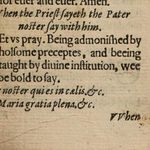
The practice of the congregation reciting the Our Father with the priest was, strictly speaking, foreign to the Roman Rite... on the level of what was prescribed in the official liturgical books
But it was indeed a local custom in many places, long before Vatican II
🧵
This post is ostensibly about the ancient and famous frescos of Santa Maria Antiqua
Yet the image shown is a meaningless, fake, AI-generated frankenstein mishmash which does NOT represent either the Antiqua frescos or other real Byzantine iconography
what is the point of this?
The earliest known depiction of the Virgin Mary as a queen (Santa Maria Regina) is a 6th-century palimpsest wall painting located in the ancient church of Santa Maria Antiqua in Rome, Italy. Here the word “palimpsest” means incomplete.
That church is in the Roman Forum and beneath the slopes of the Palatine Hill. It is something of a time capsule in that it was ruined and covered over by an earthquake in AD 847, and was more or less been left untouched and buried for over a millennium. It has once been the papal church of Rome (under Pope John VII). Because Santa Maria Antiqua was never redecorated by the baroque aesthetic in later years, it reveals the paleo-Christian aesthetic of the earlier ages of our history. Now excavated, this gives us a glimpse of what Roman churches would have looked like in the first millennium.
In looking at these palimpsest frescos therein, one is sometimes looking at multiple frescos at once, as sometimes the outer layer of the latest fresco is seen, and sometimes one or more of the older frescos that are earlier are seen partially beneath, depending upon how many layers of plaster were chipped away. So, it can be a little like looking at three partially completed puzzles one a top another.
This church is fifth century, and the fresco of the enthroned Virgin Mary is from the sixth century, and is considered to be the oldest extant image of Mary as a Queen in the world.
Love finding little smiley face guys in medieval manuscripts (this is from a 15th century Book of Hours)
I regularly access microfilm in my archival work, and I am of course grateful that the materials are preserved at all
However, I have encountered some records where the cellulose acetate is warped and the film can no longer be used
If the originals were destroyed .... it's gone
Inspiring and aspirational 😅
(the year is over half gone, and I have accomplished almost none of my original project and article goals for the year)
8
597
Yes. I touched upon this in my "New Mass of 1964" series, as many of you know.
It was quite difficult to hunt down a variety of contemporary sources and surveys, but they do exist and speak to this reality.
Sharon's annual Carmelites-of-the-Compiegne posting is always a treasure
This is precisely why I undertook my study of the implementation and reception of the liturgical reform between 1964 and 1968
As I described in my "New Mass of 1964" series, there are essentially zero works of scholarship in English which cover this period in any depth
Sharon is back with another characteristically excellent and interesting project.
On what days and at what times did Catholics get married around the turn of the century?
The custom of getting married on Saturday, or in the afternoon, only became popular very recently!
This column from 1892 is such a brilliant find. It offers an extraordinary glimpse into the state of Catholic marriage practice in America around the turn of the 20th century
... there were very very few people getting married at nuptial masses!
teapaw.org/1SharonKabel/status/20…
Replying to @1SharonKabel
I confess that what might be more interesting than my original research q is the constellation of moving stories I found.
For my conclusion, I transcribed a column from Father Edward Sweeney (1843-1909). He paints a vivid picture of domestic Catholic life in Maryland.
As far as I am aware, Sheen did not comment much on the revised liturgy between 1964 and 1968 or after the new missal of 1970
However, it is worth noting that he did not only say things like this privately to individuals. He also expressed similar sentiments publicly:
***1628 🤦♂️ what a typo lol
Replying to @HandMissals
It is less well known that this original medieval rood screen was replaced during the early 17th century
In 1826, the French queen Anne of Austria ordered the wholesale renovation of the rood screen
It was designed in baroque fashion by François Mansart and installed in 1645
20
1,834
This post inspired me to do a quick mini-thread on the rood screens of Notre Dame
I learned a number of interesting things while researching for my recent Pillar article on the history of altars at the cathedral
There's not much info on this in English, so check it out:
🧵⤵️
(also, for those interested, here is the Pillar piece I did on the history of altars at Notre Dame)
pillarcatholic.com/p/the-alt…
This reminded me of something I found while researching rituales:
The 1680 rite for Les Mans directs that the couple should kneel on the lowest step of the altar (husband on the Epistle side, the wife on the Gospel side) and hold candles throughout the wedding mass!
Why at a Nuptial Mass the Couple May, and Should, Kneel Inside the Sanctuary dlvr.it/TSWRKf
it also directs that the veil, the velatio nuptialis, be used during the nuptial blessing
this is a fascinating and ancient christian custom which fell out of favor in many places in modern times, even before the second vatican council
sicutincensum.wordpress.com/…
I just learned that my "New Mass of 1964" series received mention in the @CatholicHerald
My thanks to @LMSChairman for reading and engaging with my study of the popular reception of the initial liturgical reforms, between 1964 and 1968
Research into the liturgical reforms introduced before the Novus Ordo reveals that confusion, resistance and division were already apparent long before 1969.
✍️ @LMSChairman
thecatholicherald.com/articl…
I’m back with the final installment of “The ‘New Mass’ of 1964” series
This article is the conclusion for the whole series
It's a huge milestone for me as I wrap up this project, so come along with me for one final thread!
🧵⤵️
Here’s a link, please check it out:
🔗handmissalhistory.com/newmas…
I missed the brouhaha over this yesterday
setting that aside, it is remarkable to me that almost *literally identical* statements were being published in diocesan newspapers in 1966 about the failures of the New Liturgy
e.g., The Catholic Transcript, September 2, 1966, page 3:
I’m back with the fourth installment of “The ‘New Mass’ of 1964” series
Part 4 is titled “What went wrong?”: Pastoral Accompaniment, Disillusionment, and Blame
🧵⤵️
This installment explores how the church provided pastoral care to the laity during the initial liturgical changes
and how the laity and clergy dealt with confusion, frustration, shifting expectations, and feelings of failure
Here’s the link:
🔗handmissalhistory.com/newmas…
Happy Easter!
As some of you likely noticed, my fourth installment in the "New Mass of 1964" series was delayed last Fall
Things got totally derailed by a combination of home improvement projects, endless family health issues, and an extraordinarily busy period for my day job