

The National Integrated Heat Health Information System (NIHHIS). Follow us for information, tools, and resources on heat and health #NIHHIS #HeatSafety @NOAA
- Tweets1.8K
- Following86
- Followers1.6K
- Likes1.1K



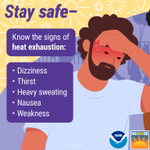




ALT A graphic showing ways to recognize and treat heat exhaustion and heat stroke. Symptoms of heat exhaustion include dizziness, thirst, heavy sweating, nausea, and weakness. If someone is experiencing heat exhaustion, move them to a cooler area, loosen clothing, sip cool water, and seek medical help if symptoms don't improve. Heat exhaustion can lead to heat stroke. Symptoms of heat stroke include confusion, dizziness, and becoming unconscious. If someone is experiencing heat stroke, call 911, move them to a cooler area, loosen their clothing and remove extra layers, and cool them with water or ice. Heat stroke can cause death or permanent disability if emergency treatment is not given. Stay cool, stay hydrated, and stay informed!"

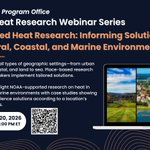
ALT The text says, “NOAA Climate Program Office. Extreme Heat Research Webinar Series. Place-Based Heat Research: Informing Solutions Across Rural, Coastal, and Marine Environments. Extreme heat affects all types of geographic settings – from urban to rural, inland to coastal, and land to sea. Place-based research can help decision-makers implement tailored solutions. This webinar will highlight NOAA-supported research on heat in rural, coastal, and marine environments with case studies showing how to strategize resilience solutions according to a location’s unique characteristics. October 20, 2026. 2:00-3:00 p.m. ET." A laptop also shows a series of three vertical images showing different landscapes. The left image shows a field with blue skies in rural Vermont. The middle image shows coastal Charleston with buildings along the water. The right image shows a coral garden with fish and other marine wildlife. A QR code links to a registration page for the event.

ALT A prolonged, dangerous October heat wave across coastal and southern California, with color-coded maps showing max highs into the 90s–110°F and bullet points urging heat safety, hydration, and limited night relief.

ALT Tuesday, Oct. 6: NWS HeatRisk forecast for the western U.S. showing widespread Minor heat risk, with Moderate risk across much of California’s Central Valley and southern California. Pockets of Major and Extreme heat risk appear along portions of coastal and southern California, including areas near Los Angeles and San Diego.

ALT Wednesday, Oct. 7: NWS HeatRisk forecast showing Minor heat risk across much of the West. Moderate risk remains widespread across California’s Central Valley and southern California, with pockets of Major to Extreme heat risk along parts of the coast and near the California-Arizona border.

ALT Thursday, Oct. 8: NWS HeatRisk forecast showing continued Moderate heat risk across large portions of California, including the Central Valley and southern California. Areas of Major and locally Extreme heat risk are concentrated across parts of southern California and the lower Colorado River Valley.

ALT Friday, Oct. 9: NWS HeatRisk forecast showing heat impacts beginning to ease. Minor risk covers most of the region, with Moderate risk lingering through portions of California’s Central Valley and southern California. Smaller pockets of Major to Extreme heat risk remain near the California-Arizona border.

ALT Forecast images showing high temperatures and Heat Risk through Thursday.

ALT The text says, “NOAA Climate Program Office. Extreme Heat Research Webinar Series. Place-Based Heat Research: Informing Solutions Across Rural, Coastal, and Marine Environments. Extreme heat affects all types of geographic settings – from urban to rural, inland to coastal, and land to sea. Place-based research can help decision-makers implement tailored solutions. This webinar will highlight NOAA-supported research on heat in rural, coastal, and marine environments with case studies showing how to strategize resilience solutions according to a location’s unique characteristics. October 20, 2026. 2:00-3:00 p.m. ET." A laptop also shows a series of three vertical images showing different landscapes. The left image shows a field with blue skies in rural Vermont. The middle image shows coastal Charleston with buildings along the water. The right image shows a coral garden with fish and other marine wildlife. A QR code links to a registration page for the event.


ALT Major to Extreme Heat Risk is forecast for central and southern Coastal California over the next week.


ALT An illustration showing ways to recognize and treat heat exhaustion and heat stroke. Symptoms of heat exhaustion include dizziness, thirst, heavy sweating, nausea, and weakness. If someone is experiencing heat exhaustion, move them to a cooler area, loosen clothing, sip cool water, and seek medical help if symptoms don't improve. Heat exhaustion can lead to heat stroke. Symptoms of heat stroke include confusion, dizziness, and becoming unconscious. If someone is experiencing heat stroke, call 911, move them to a cooler area, loosen their clothing and remove extra layers, and cool them with water or ice. Heat stroke can cause death or permanent disability if emergency treatment is not given. Stay cool, stay hydrated, and stay informed!

ALT An illustration showing ways to recognize and treat heat exhaustion and heat stroke. Symptoms of heat exhaustion include dizziness, thirst, heavy sweating, nausea, and weakness. If someone is experiencing heat exhaustion, move them to a cooler area, loosen clothing, sip cool water, and seek medical help if symptoms don't improve. Heat exhaustion can lead to heat stroke. Symptoms of heat stroke include confusion, dizziness, and becoming unconscious. If someone is experiencing heat stroke, call 911, move them to a cooler area, loosen their clothing and remove extra layers, and cool them with water or ice. Heat stroke can cause death or permanent disability if emergency treatment is not given. Stay cool, stay hydrated, and stay informed!"

ALT A screenshot of the Communicating About Heat page on Heat.gov, showing 8 resources arranged in rows. The resources include weather safety information for people who are deaf and hard of hearing, warning signs of heat-related illness, summer infographics, checklists to stay safe before a heat wave, Spanish language outreach materials, heat safety social media resources, and social media graphics.

ALT Practice Heat Safety wherever you are. Job Sites: stay hydrated and take breaks in the shade as often as possible. Indoors: Check up on the elderly, sick and those without AC. Vehicles: Never leave kids or pets unattended - LOOK before you LOCK. Outdoors: Limit strenuous outdoor activities, find shade, and stay hydrated. Heat-related deaths are preventable. Protect yourself and others from the impacts of heat waves.

ALT Long-Duration Heat Wave Continues Sweltering heat persists over the central to southern U.S. through Friday night. Highs of 95-105°F, and limited nighttime relief due to numerous record warm lows in the mid-to-upper 70s°F, will maintain widespread Extreme HeatRisk from the Plains to the southern Mid-Atlantic. Heat Focus Shifts South This Weekend Relief from heat will arrive this weekend for the Ohio Valley and Mid-Atlantic, while dangerous heat lingers over the South-Central States through the holiday weekend into next week. Heat index values through the early next week are forecast to max into the 105-110°F range over the Southern Plains, Lower Mississippi Valley, and Gulf Coast. Protection from the Extreme Heat Limit afternoon outdoor activity, stay hydrated, and ensure access to A/C or cooling centers. Check on vulnerable family, friends, and neighbors. Ensure animals have fresh water and shade. Never leave kids or pets unattended in vehicles.

ALT Dangerous heat will persist across the Southwest through Friday with daytime highs of 110-115°F. Expect numerous daily record highs and Major to Extreme HeatRisk. Little overnight relief is expected as many areas may not cool below 80°F for several nights in a row. Temperatures return to near-normal levels over the weekend. Dangerous heat will build across the Southern Plains again beginning this weekend, and persist into next week. Daytime highs of 95-105°F, with limited recovery at night due to lows only in the mid-70s (°F), will result in widespread Major to Extreme HeatRisk. Increased chances for extreme heat continue into early Sep. A moderate risk (40-60% chance) of extreme heat remains highlighted across the south-central CONUS and Lower and Middle Mississippi, and Tennessee Valleys, Sep 4-6. Limit outdoor activity, stay hydrated, and ensure access to A/C or cooling centers. Check on vulnerable family, friends, and neighbors. Never leave kids or pets unattended in vehicles.