

Economics and Financial Markets
Joined December 2020
- Tweets23.1K
- Following239
- Followers537
- Likes20.6K




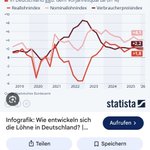



Vei über 50% Staatsquote in D oder F.

"In der Volkswirtschaftslehre hat eine intellektuelle Verengung stattgefunden, die es so in keiner anderen Sozialwissenschaft gibt: Zulässig ist nur noch ein Paradigma, das Märkte idealisiert." @IsabellaMWeber @derStandardat derstandard.at/story/3000000…

Food for thought once again.

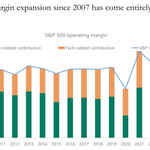
More importantly, if we break productivity down into its components — output and employees — we see the US acceleration starting 2022 is primarily a tech layoffs story.
Output remained on trend, and unlike other sectors/countries where employment flatlined, in US tech it fell and has kept falling in a straight line.


Andreas Homberger retweeted

Aus aktuellem Anlass ein kleines Beispiel aus Mikroökonomik:
Toyz produziert Spielzeugautos und verkauft sie im Shop um € 5 pro Stück. Die Regierung findet das zu teuer und will, dass die Kunden höchstens € 3 dafür bezahlen müssen. Was kann sie nun tun?
1/5
Beim ersten Versuch mit dem Mietendeckel in Berlin hat sich das Angebot an inserierten Mietwohnungen ruck zuck halbiert.
I would bet against this statement
"This time is different" are expensive terms in financial markets.


Another area where China and Asia lead. Interestingly, many European countries are ahead of the USA.

Aus heutiger Sicht es es denkbar, dass in der Amtszeit KKS beide Schweizer Grossbanken von der Bildfläche verschwinden.


BS baut nach AR am wenigsten Wohnungen in CH. Regulierung und Bürokratie funktionieren.
bazonline.ch/wohnungsbau-bas…

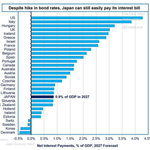
This is a clear disadvantage for the US with its high leverage.

The gap between benchmark borrowing costs in the US and China has reached its widest level ever, threatening to accelerate a shift in capital flows between the world’s two biggest economies. ft.trib.al/ErVDopv

The US needs a lot of money:
1. Government deficit (5-8% of GDP)
2. Private (close to alltime low)
3. Companies (Capex)
One (likely) source is external (from abroad) financing. But it means large capital imports and by implication a (big) current account deficit.


5Y performance (in LC) through 31.07.2026:
- MSCI EMU: 65%
- MSCI USA: 75%
- European Banks: 321%
- Mag 7: 189%
- Semis: 256%
PE European banks: 11.
Conclusion: hype vs. reality & the stock market is not the economy.
