

Ian Ilett retweeted

Wall Street just dumped the biggest IPO in history on regular people in 24 hours.
On Wednesday night, Anthropic priced its shares at $83, above the range it had been marketing. Counting the private placement, it was the biggest share sale on record.
Retail investors got less than 20% of the IPO shares. Everyone else had to wait for the open.
And the open is where it gets ugly:
The market opened at 9:30 on Thursday. Anthropic didn't trade until 11:48. The first trade printed at $111.50, 34% above the IPO price. One minute later it hit $114.99.
By the close, about 832 million shares had changed hands. The IPO sold 980 million.
That's the equivalent of 85% of the entire deal trading hands in a single day.
So who was selling into that first rush?
Anyone who got an allocation at $83 could lock in a 34% gain before lunch.
Up to 315 million shares held by Anthropic's directors, officers, employees and consultants who aren't founders became eligible to sell from the very FIRST day. At $111.50, that's about $35 billion of stock.
And Anthropic's 7 co-founders sold 23.6 million shares in the IPO itself. At $83, that's about $2 billion.
I can't tell who sold which share. Nobody can yet.
But I know who was on the other side of that $111.50 print: The people who couldn't get in at $83 and paid whatever the market asked.
On Thursday, Dario Amodei gave a speech at the Nasdaq as the stock got ready to trade.
Then came today:
Anthropic fell as much as 14% and traded right back near its $83 IPO price. About $180 billion of market value disappeared in a single session.
Anyone who bought that first trade at $111.50 lost about 25% in a little over 24 hours.
The company's name literally means "relating to humans". But the humans who bought at the open got the worst deal in the building...
The people who got in at $83 are roughly where they started. Most of them had a full day to sell at a profit.
And it happened on the same day the Nasdaq wiped out its entire gain for 2026. This was the IPO that was supposed to rescue the AI trade.
The next wave of buyers is already on the calendar. MSCI could add Anthropic around December 1, Russell around December 11, and the Nasdaq-100 around December 21. Bloomberg estimates index-related buying could top $19 billion in the first month.
Those index funds hold retirement money, and they don't get to choose the price.
So the order goes like this: Wall Street got it at $83, the public chased it to $111.50, the price fell back to $83 in a day, and retirement accounts are next in line.
That's what I mean by dumped.
You can only feel bad for the people who are buying this.
Ian Ilett retweeted

The scale of this is absolutely staggering and warrants an independent inquiry both into the range of people involved and the funding source for this operation.

EXCLUSIVE: A @BylineTimes analysis of 25,000 posts confirms that the 'Habibi' X account run by former State Department officer Benjamin Tait - with what The Times calls "private backing" - is a politically partisan disinformation account.
Tait, who in 2019 was sole director of a company chaired by Lord Ian Austin which ran a £130k+ funded anti-Labour Facebook ad campaign (whose donors are unidentified) has targeted 153 Labour MPs.
That's compared to 12 Conservatives in that period (one of them was James Cleverly, current Conservative Mayor of London candidate).
Of the 153 MPs targeted, *101* of them experienced misleading or unsubstantiated claims published by Tait, through expertly altering words, using incorrect images, and deploying sweeping generalisations.
Among the MPs Tait targeted with misleading disinformation are the Prime Minister @andyburnham and Foreign Secretary @Ed_Miliband
bylinetimes.com/2026/11/20/h…

Ian Ilett retweeted

In 2018, hard Brexit ads from a mystery account @mainstreamuk started flooding the internet. Tory MP Damian Collins raised it as eg of how social media platforms are used by unknown actors using untraceable money to undermine our democracy. A year later, Ian Austin, an ex Labour MP later ennobled by Boris Johnson launched a campaign to ‘restore civility’ to politics. He did so by spending £134k on Corbyn attack ads from the same @mainstreamuk account. It was run by a man called Ben Tait who has now been revealed to be an anonymous troll, @habibi_uk. We still have no idea where any of this money came from. To the people defending Ben Tait, you are defending astroturfed fake grassroots campaigns. You are defending the multi-billion social media companies that enable it & profit from it. You are defending a system in which none of us have any idea who is influencing our politics. And, crucially, who is paying. You are defending oligarchy.

Ok. Here’s a new puzzler from those of you following the Habibi scandal. (And yes, it definitely *is* a scandal).
How come I was tweeting at @mainstreamuk the campaign we now know he ran way back in 2018?
1/

Ian Ilett retweeted

Today, we are launching Paris Manifesto against the international oligarchy.
Together with more than 100 researchers from around the world - economists, political scientists, legal scholars, sociologists, philosophers, historians and others -, we are sounding the alarm: the explosion of extreme wealth is a threat to our democracies. 🧵
parismanifesto.world/

Ian Ilett retweeted
The man who ran America's 2008 bank bailout just warned that markets are underestimating the risk of the AI boom unwinding.
Hank Paulson was Treasury Secretary when Lehman collapsed. Before that he ran Goldman Sachs.
And he just said: "I've never seen so much money chasing one opportunity with not a lot of earnings and ROI backing it up."
He wasn't alone that day.
Baidu CEO Robin Li told the APEC CEO Summit in Shenzhen that AI could turn into a bubble if companies can't turn adoption into real profits. He said the spread of AI applications has fallen short of expectations despite all the infrastructure spending.
So the former head of the US Treasury and the boss of one of China's biggest AI companies said basically the same thing on the same day.
But the thing that worries me most:
The money funding AI is changing shape.
Global AI funding fell from $239.1 billion in the first quarter of 2026 to $153.1 billion in the second quarter, then to $103.3 billion in the third, according to figures cited in a Fortune op-ed.
That's a drop of about 57% in 6 months.
And the gap is being filled with DEBT. Morgan Stanley projects nearly $570 billion of global AI-related debt issuance this year, more than double last year.
Equity funding is shrinking, and lenders are stepping in to fill the hole.
That matters because debt is how losses spread. A missed payment hits banks, insurers and pension funds that never chose to bet on AI.
The cracks are already visible: In October, the yield on CoreWeave's 2031 bonds blew past 16%, a level that usually signals distress.
And the price of borrowing is going UP.
Fed Governor Christopher Waller said this week the Fed may need to shock people with a half-point hike in December. Markets are pricing a 100% chance of a hike next month. The 10-year Treasury yield is still above 5%.
So the AI boom is switching from equity money to borrowed money at the exact moment borrowing gets more expensive.
And this rhymes with 2008. Back then, the problem was loans made against the assumption that house prices would keep rising. In 2026, it's loans made against the assumption that AI demand keeps rising fast enough to pay for the data centers.
And the stock market is starting to feel it.
It's true that the biggest spenders, Microsoft, Alphabet, Amazon and Meta, mostly pay for this out of enormous cash flows. Nvidia just reported $65.3 billion of profit in a single quarter. Most of this debt sits with strong companies, and a correction in AI stocks wouldn't automatically become a banking crisis.
But that's only true for the giants.
CoreWeave's bond yields blowing past 16% tell you the risk sits at the bottom of the chain with the weakest borrowers, and in 2008 that's where the trouble started.
Paulson also said governments need to work much more closely with business to cut the odds of a catastrophe or a financial crisis. When a former Treasury Secretary says that out loud in Silicon Valley, I think people should listen.

#EmmaBarnett barracks #Lucy Powell throughout #BBC ##Today programme interview. Can’t leave soon enough
6
308
Ian Ilett retweeted

This is absolutely brilliant, by legendary Australian investor John Hempton, who explains the core financial paradox at the heart of the AI story (and which also, to some extent, may explain the Jensen Huang story).
The numbers say that about $7 trillion in AI compute is set to be built by 2030. For the industry to earn that back, given those chips have a roughly 5-year lifespan and cost a lot to run, they need to generate about $2 trillion of AI revenue a year.
Hempton says the only way you can get to these sorts of numbers is by selling AI as a productivity tool to businesses, meaning replacing workers.
And since, for reasons he explains in the video, no company fires people to save just 10% in costs, the savings have to be about double what businesses pay for the AI: roughly $4 trillion in savings on wages a year.
What does firing $4 trillion worth of workers mean concretely? Hempton calculated this equates to roughly 10% of the OECD’s total wage bill of about $40 trillion: one in every ten dollars paid to workers across the OECD’s 38 member countries.
Which, naturally, when you suddenly take that much income out of people’s pockets, would trigger a massive global recession.
And here's the paradox: in a massive global recession, there's no way businesses will pay $2 trillion a year for AI, so the return disappears anyway.
In other words, AI's only possible path to success given the numbers requires destroying the very economy that is supposed to pay for it.
HOWEVER - and here's where the Nvidia/Jensen Huang story might come into play (and, to be clear, this is now me speaking and not Hempton given this interview is prior to the whole Nvidia saga) - this all rests on a core assumption: that compute stays super expensive. Which in practice means Nvidia keeping its pricing power, with a 75% gross margin on its chips.
Break Nvidia's pricing power, and the $7 trillion bill, the $2 trillion in revenue and the 10% of jobs all shrink with it.
This would also put the whole China story in a different light. Maybe it's not so much a "we don't want the Chinese to be competitive with similar chips to us" story as it is a "we don't want Chinese demand to drive up chip prices" one. Or probably both.
And, as such, you could actually think about the US export controls not as a national security measure but as a good old subsidy for US AI players (together with a handicap for their Chinese competitors), a way to limit the price of chips.
This holds even with China itself blocking Nvidia imports, since Chinese firms simply rent the chips abroad instead, in places like Southeast Asia, which is precisely what this whole Alice Huang/Megaspeed story is about.
The main obstacle for all this was, of course... Jensen. Obviously, the guy wanted the exact opposite: as many buyers as possible, Chinese players included, to keep chip prices and Nvidia’s margins sky-high. He was also the one man with the clout to make that happen.
All hard to prove, of course, but I can imagine that quite a few corks popped this week in Anthropic's offices: nothing like the news that the man keeping your biggest cost sky-high is out when you're a week away from a $1.2 trillion IPO.
Ian Ilett retweeted

Latest EDITORIAL in Left Horizons: midterms open a new era in US politics
The US midterms are a stunning and potentially decisive defeat for Trump and his policies, and they open a new era in US politics...
left-horizons.com/2026/11/07…

Ian Ilett retweeted
To understand what's at stake, take a look at this brilliant diagram (h/t Bloomberg) with Nvidia at the dead heart of the AI bubble. I wrote this exactly a year ago when only @GaryMarcus & @edzitron aside from niche business press were talking about it


Ian Ilett retweeted

Urge the British Library not to close its reading rooms - which are currently free to the public - and turn them into private office space. Please sign the Petition!
c.org/5m8fW5tK4C via @UKChange


Ian Ilett retweeted

Big Tech companies lost nearly $900bn in market value after another sharp rise in their spending in the third quarter, which has turned some of the most profitable businesses in history into cash incinerators as they stake their futures on AI. ft.trib.al/F9qwRWg


Ian Ilett retweeted
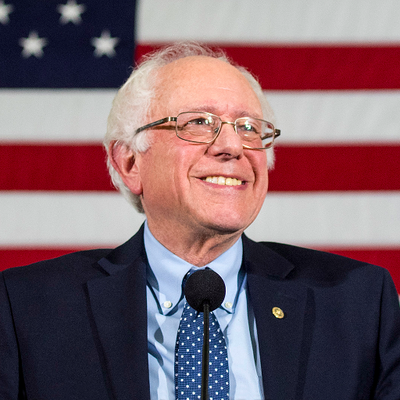
Mr. President, instead of spewing racist hatred against Abdul, explain to the American people why you:
- Gave the top 1% $1 trillion in tax cuts
- Threw 15 million Americans off the healthcare they had
- Unleashed brutal ICE raids
- Dragged us into an illegal war with Iran
Ian Ilett retweeted

House Judiciary Committee Releases Report on Trump’s Epstein Ties with New Assault Allegations democracynow.org/2026/10/27/…

Ian Ilett retweeted

Another person has died in ICE custody — this is the 28th known death this year.
The cruelty of this rogue agency is beyond unconscionable. Abolish ICE.
Ian Ilett retweeted
Woah! Go New Mexico. This is a really important message to Silicon Valley tech companies: you are not above the law

Meta ordered to pay $25 billion penalty in New Mexico Cambridge Analytica case cnbc.com/2026/10/21/meta-new…
Ian Ilett retweeted

A few thoughts on the announcement that the Jackdaw gas field development will go ahead 🧵
You'll hear claims today arguing we need Jackdaw for various reasons. Primarily some combination of energy security, perhaps cheaper bills and jobs. We should be sceptical of them.
Ian Ilett retweeted
The next time Nick Clegg in invited onto BBC to pontificate as an independent tech expert…please note that here he is, named in the $27bn New Mexico judgment as one of execs engaged in a systematic cover-up of Facebook’s deceptive consumer practices.
