

Qualified & Experienced enough to critically voice my opinions H&SC/EDU #Safeguarding Aditus Potens AF™ #SexNotGender #LetWomenSpeak All views are my own ❤️
United Kingdom
Joined August 2014
- Tweets78.4K
- Following12.9K
- Followers12.7K
- Likes35K




Pinned Tweet
Males have a significant physical advantage over females. That is just science. No hormones or surgery can negate the advantage. #TruthIsNotACrime #TruthIsNotAHateCrime #FactIsNotHate #MenAreNotWomen #WomenAreNotMen


#Science The genetic differences between men and women - A study analysed the expression of 20,000 genes in the body tissues of donors. They found that 6,500 of them are expressed differently in men and women


Jennifer Thetford-Kay retweeted

24th October, 2012
Corporal David O’Connor, aged 27 from Havant, Hampshire, of 40 Commando Royal Marines, was killed by small arms fire in the village of Char Kutsa, Helmand, Afghanistan alongside his colleague Corporal Channing Day.
Lest we Forget David and his colleague 🏴🇬🇧

Jennifer Thetford-Kay retweeted
24th October, 2012
Corporal Channing Day, aged 25 from Comber, and of 3 Medical Regiment was killed in the village of Char Kutsa, Helmand Province, Afghanistan, by small arms fire alongside her colleague Corporal David O’Connor
Lest we Forget Channing Day and David O’Connor 🇬🇧

Jennifer Thetford-Kay retweeted

If I was in power, day one we'd burn all the lanyards.

People need to wake up to the fact that the ideologues who support this self-ID gender insanity won’t change their minds. Theirs is a cult-like mindset, a foundational belief, almost religious in its intensity. You’d probably have more success persuading a practising Christian, Muslim or Jew to abandon their faith than convincing these zealots to reconsider the consequences of what they’re doing.
The only solution is to vote them out of power and root them out of civic institutions, the NHS and the media.
We need people in positions of authority who are rational, sensible and capable of exercising common sense. Of course compassion and kindness matter. But not an ideological interpretation of those virtues that ignores the unintended consequences and regressive, harmful repercussions of bad legislation.
Sensible people need to stop hiding, start speaking out and challenge these ideas wherever they take hold.
Otherwise, this madness will never end.
I support the principle behind this petition: disability should have a strong, visible voice at Cabinet level, with real cross-government authority to hold departments to account for the impact of their policies on disabled people.
I do think the wording could be tighter.
Disability already has ministerial responsibility, so the case is not that there is currently no ministerial voice at all. The stronger argument is that disability needs dedicated Cabinet-level leadership, because policy affecting disabled people cuts across welfare, health, social care, education, employment, transport, housing and justice.
I would also have preferred the petition to call specifically for a Cabinet Minister for Disability, rather than combining disability with a broader “Equalities” portfolio. If the concern is that disability gets lost within wider responsibilities, creating another broad portfolio risks repeating the same problem.
There is also one legal wording point: disability does not “affect all the protected characteristics”; disability is itself a protected characteristic, although disabled people can of course experience overlapping disadvantage linked to other characteristics.
So yes, I support the direction of travel but for me, the real test is not the title. It is whether the role has the authority, accountability and cross-departmental reach to make government actually deliver.
That is the question I’d like us to examine in the Disability Settlement too.

petition.parliament.uk/petit… Please sign 🖋 share. The disabled community need to have a Cabinet Minister Appointed for Disabilities and Equalities to have a dedicated voice.
@JenKteach I've come across this while sharing your video on FB. Your thoughts?

Appoint a Minister for Disability & Equalities, with responsibility for overseeing disability rights, equality policy, fair treatment of all disabled people as disability affects all the protected characteristics. petition.parliament.uk/petit…
Thank you, Baroness Deech, for pressing the Government on the age at which children can genuinely understand and consent to puberty blockers and cross-sex hormones, and for raising concerns about bone health, fertility, sexual development and brain maturation.
How can an 11- or 12-year-old assess long-term risks to bone health, fertility and development?
Can a child sufficiently understand and evaluate the potential lifelong consequences of puberty suppression or masculinising and feminising hormones to give genuinely informed consent?
The Government's reliance on parental consent, child assent and trial safeguards was beyond disappointing....
These do not answer the fundamental question.

Extraordinary testimony from Baroness Cass yesterday on the profile of children who will be part of the *Puberty Blockers Trial*. Little kids who have been 'socially transitioned' from early childhood. Harmed by their parents - reinforced by the State... @Transgendertrd 1/

Jennifer Thetford-Kay retweeted

if you see this, like the post, sign both if you are able to, share your examples and let us know why it matters
#Petition · Require sex specific language in government, (NHS) hospitals, education, and public bodies · Change.org
change.org/p/require-sex-spe…
Who decides what our children are taught and who scrutinises those decisions?
Having worked in education and safeguarding for many years, I believe these are questions we should always be asking. External organisations do not become exempt from scrutiny simply because their materials promote 'inclusion'. Political impartiality, parental transparency and safeguarding are responsibilities, not optional extras.
An important analysis from @ProtectTeach. 👇

LGBT+ HISTORY MONTH 2027: WHO DECIDES WHAT SCHOOLS TEACH?
Schools OUT is preparing to launch its 2027 theme. But what responsibilities do schools have when using external organisations' resources?
In a new policy analysis, Protect and Teach examines political impartiality, parental transparency and safeguarding.
Inclusion does not remove the need for independent scrutiny.
Read the full analysis from Protect and Teach 👇
protectandteach.org/an-exami…

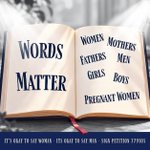
WORDS MATTER. MEANINGS MATTER. PRECISION MATTERS.
Not just for women. Not just for men. For everyone.
In medicine, words describe bodies, symptoms, risks and treatments.
In safeguarding, words help identify who is at risk, what protection is needed and why.
In law and public policy, definitions have consequences.
And in education, children need clear, accurate explanations of the world around them.
Parliamentary Petition 779105 asks for women, girls, mothers and pregnant women to remain the primary and default terminology in public-sector communications.
Its central argument is that sex-specific language matters for safeguarding and healthcare; including for men and children.
9,391 signatures. Just 609 from a formal Government response.
This is a question about clarity, language and public policy that deserves proper consideration.
Read the petition and decide for yourself.
petition.parliament.uk/petit…

@HeadWarriorTWM @DreyfusJames @Glinner
Read the petition and decide for yourself.
petition.parliament.uk/petit…
Jennifer Thetford-Kay retweeted

This was a brilliant discussion from a panel of experts, well worth watching all of it.
#BinTheBill

Due to popular demand we've published our first #BattleFest full debate early:
CONVERSION PRACTICES BILL: CRIMINALISING PARENTS, TEACHERS AND PRIESTS?
W/ @janmacvarish of @SpeechUnion, Lucy Beney, @el_nagashi, @JNHanvey, @HJoyceGender, @SVPhillimore
youtu.be/NUCHW3mMZyg

Jennifer Thetford-Kay retweeted
Let us know if you have signed either or both petitions & confirm your sex, question asked on #bluesky Require sex specific language in government, NHS, education & public bodies
@HoCpetitions 9391 /100.000
petition.parliament.uk/petit…
@Change 211/100.000
change.org/p/require-sex-spe…
90%Women
10%Man
10 votes • 6 days Jennifer Thetford-Kay retweeted

“Without their dogs, a lot of them wouldn’t be here.”
Fiona MacDonald began Bravehound – a charity the Veterans’ Foundation is proud to support – with a simple mission: to provide trained dogs to veterans suffering with PTSD to help with their rehabilitation.
The results have been transformational.
Find out why Bravehound has been such a success story – and why funding from the Veterans’ Foundation has been crucial to saving the lives of veterans in need.
*You can help support charities like Bravehound by playing the Veterans’ Lottery. This month’s jackpot is £75,000.
Sign up here: veteransfoundation.org.uk/lo…

Jennifer Thetford-Kay retweeted
We are saddened to hear of the passing of D-Day veteran Roland James ‘Jim’ Churm, aged 102. 🌺 🕯️🇬🇧
Jim served as a Royal Navy medic during the Normandy landings on 6 June 1944, caring for sick and injured personnel aboard a landing craft supporting the assault on Sword Beach.
His dedication to others continued long after the war, through a career in nursing and physiotherapy, and his involvement in remembrance activities.
In 2025, Jim was awarded France’s Légion d’Honneur in recognition of his wartime service. For Jim, it was also an opportunity to remember those who never returned home.
Our thoughts are with Jim’s family, friends and all who knew him.
Thank you for your service, Jim. Rest in peace. 🌺🕊️
dng24.co.uk/d-day-veteran-di…

Jennifer Thetford-Kay retweeted

How is #surrogacy made to be socially acceptable?
Language is how - the words we use, or an absence of words, allows us to hide, pretend or spin a certain narrative.
We speak plainly.
Women become pregnant and give birth.
When babies are born and they need their mothers.
No linguistic engineering make these realities disappear.
Read more in our latest blog:
stopsurrogacynowuk.org/2026/…

ALT Stop Surrogacy Now UK branding reads "Read our latest blog, The Language of Surrogacy: A Linguistic Disguise for the Erasure of Mothers" by Lexi Ellingsworth.

It's a good question...
Since when did the exploitation of women for their ability to have babies become fashionable?
When did children become an item you could purchase?
This is #surrogacy.
🎅🎄 WE'RE DOWN TO SINGLE FIGURES! 🎄🎅
JUST 9 WEEKS UNTIL CHRISTMAS MORNING! ❤️
Yes, NINE!
We've officially crossed the line from double digits to single digits, and I feel this deserves some sort of celebration! 🥳
In exactly nine weeks, Father Christmas will have been, Rudolph will have demolished his carrot, the mince pies will have mysteriously vanished, and millions of people will be surrounded by wrapping paper wondering why nobody remembered to buy batteries! 😂
Meanwhile, Christmas enthusiasts are practically jingling already, while the "IT'S ONLY OCTOBER!" brigade are considering muting me until Boxing Day.
And I have a very important question…
🎅 Have you watched a Christmas film yet?
And for those of you who insist it's far too early…
I regret to inform you that I'll be back next Friday with an even smaller number! 🤣
This countdown is for everyone who LOVES Christmas, everyone who wants to know, everyone who NEEDS to know, and especially those who didn't know they needed to know!
63 DAYS TO GO! 🎄❤️ You're very welcome! 😇🎅

23 OCTOBER 1843 STEAK, CHAMPAGNE AND ABSOLUTELY NO HEALTH AND SAFETY.
THE DAY FOURTEEN MEN DECIDED TO HAVE DINNER ON TOP OF NELSON'S COLUMN. The Victorians gave us steam railways, remarkable engineering, magnificent architecture and extraordinary feats of invention. They also occasionally gave us the sort of decisions that make you wonder whether anybody had considered the consequences.
Take 23 October 1843. London's magnificent Nelson's Column was nearing completion in Trafalgar Square.
The statue of Admiral Lord Nelson had not yet been lifted into its final position. So, naturally, a group of fourteen men decided that this was the perfect opportunity for a celebratory meal.
At the top of the column. Approximately 170 feet above Trafalgar Square.
Their menu? Steak. Champagne. And, presumably, an extremely relaxed attitude towards gravity. The food and drink were hauled up to the dizzying dining location by pulley. There, perched above London, the party enjoyed what must surely qualify as one of the most spectacularly impractical dinner engagements in British history.
One can only imagine the conversation.
"More champagne?"
"Certainly. Just don't drop the bottle on the pedestrians."
Nelson's statue was installed the following month, completing the principal monument. The four enormous bronze lions at its base would not arrive until 1867. So, if you are walking through Trafalgar Square today, spare a thought for the fourteen Victorian gentlemen who looked at a towering construction site and thought:
"You know what this needs? A steak dinner."
The original London rooftop dining experience.

Jennifer Thetford-Kay retweeted

1/ It is hard not to see parallels between the seismic 1991 case that clarified that the marriage contract never included rape and consent matters and the For Women Scotland judgment of 2025.
In both cases, women’s rights were found to be enshrined in law but were wilfully ignored.
Some will say these were the mores of the times but ignore the fact that the mores are always to the detriment of women and girls.
The recent cases of husbands drugging their wives show that abuse in the domestic sphere is alive, kicking and raping.
23 OCTOBER 1991. SHE WAS HIS WIFE. SHE WAS NOT HIS PROPERTY. The day the House of Lords ended the marital rape exemption in English common law.
For centuries, English law had tolerated an extraordinary proposition: that a woman, simply by marrying, had given her husband consent to sexual intercourse that she could never withdraw. The idea was famously expressed by the 17th-century jurist Sir Matthew Hale and published in his History of the Pleas of the Crown in 1736.
It became known as the marital rape exemption.
It rested upon a legal fiction: that marriage itself supplied permanent consent.
A woman's refusal could therefore be treated very differently depending upon whether the man assaulting her was her husband.
On 23rd October 1991, the House of Lords decisively rejected that doctrine. The case was R v R.
A husband had been convicted of attempted rape and assault occasioning actual bodily harm after attacking his estranged wife. He appealed, arguing that a husband could not, in law, be guilty of raping his wife.
The legal question before the House of Lords was stark: Could a husband be criminally liable for raping his wife?
The Law Lords unanimously answered yes.
Lord Keith of Kinkel examined the history of the supposed exemption, including the increasingly narrow exceptions that courts had developed over the preceding decades. The problem was not simply that the law was old. It was that the principle upon which it depended was indefensible.
Marriage did not make consent irrevocable. The judges rejected the proposition that a husband possessed a special immunity from the ordinary criminal law of rape.
Importantly, Parliament did not pass a new law legalising prosecution on that day. The House of Lords removed a supposed common-law immunity, recognising that it no longer formed part of English law. The ruling was a landmark for England and Wales. Scotland had already rejected the supposed marital exemption in 1989. And it raises an uncomfortable historical question.
How many generations of women had lived under a legal system in which marriage was treated as diminishing their right to refuse?
A wedding ceremony does not extinguish bodily autonomy.
Marriage is not perpetual consent.
Thirty-five years ago today, the highest court in the land confirmed a principle that should never have been in doubt.
Historical source: R v R [1991] UKHL 12, 23 October 1991.

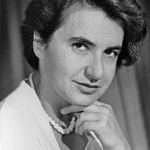
23 OCTOBER 1951 BEFORE THE FAMOUS DNA PHOTOGRAPH, ROSALIND FRANKLIN WAS ALREADY CHANGING SCIENCE.
Most people who recognise the name Rosalind Franklin associate her with DNA, X-ray crystallography and the celebrated Photograph 51. But Franklin's scientific achievements extended far beyond the structure of DNA...And 75 years ago today, she published a particularly important piece of research.
On 23 October 1951, the Proceedings of the Royal Society A published her paper: Crystallite Growth in Graphitizing and Non-Graphitizing Carbons.
It doesn't exactly trip off the tongue. But its scientific significance was considerable. Franklin had been investigating carbon materials and what happened to their internal structures when subjected to extremely high temperatures. Her research showed that different carbons behaved in fundamentally different ways.
Some could develop an increasingly ordered graphite structure when heated. Others resisted that transformation, even under intense heat. The explanation lay partly in the arrangement and connections of the tiny ordered regions within the materials. In graphitizing carbon, these regions could gradually rearrange into a more orderly structure. In non-graphitizing carbon, stronger cross-linking and less favourable orientation made that process much more difficult.
She was demonstrating that the microscopic organisation of a material could determine its behaviour. The research contributed to the scientific understanding of carbon structure and graphitization.
Among those who reviewed Franklin's paper for the Royal Society was Dorothy Crowfoot Hodgkin, herself a pioneering crystallographer and future Nobel Prize winner. Two remarkable women scientists, connected through the exacting process of scientific research.
Franklin would go on to make her best-known contributions to the study of DNA, but reducing her entire career to one photograph does her a disservice. She was an accomplished scientist before her DNA work, and her later research also investigated viruses.
She died in 1958, aged just 37. Rosalind Franklin deserves to be remembered not simply for the recognition she did not receive, but for the exceptional science she actually produced. And on this day in 1951, that science was carbon.

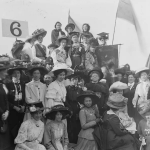
120 years ago today, a confrontation at the House of Commons highlighted a growing division within Britain's campaign for women's voting rights.
On 23 October 1906, members of the militant Women's Social and Political Union (WSPU) attempted to force their way into parliamentary areas at Westminster. Police intervened, and ten women were arrested. The protest was part of an increasingly confrontational campaign associated with Emmeline Pankhurst and the WSPU.
Among those associated with the demonstration and subsequent imprisonment were Adela Pankhurst, Emmeline Pethick-Lawrence, Mary Gawthorpe and Anne Cobden-Sanderson. The women who appeared before the magistrates refused the conditions imposed upon them to secure their release. They were imprisoned. The episode provoked further protest and helped attract attention to the suffrage campaign.
Women had been campaigning for parliamentary representation since the nineteenth century. Long before the WSPU was established in 1903, campaigners had organised petitions, lobbied MPs, formed political societies and pursued legislative reform. Among the most influential was Millicent Garrett Fawcett, who led the National Union of Women's Suffrage Societies (NUWSS). The suffragists believed that lasting reform required building parliamentary and public support through constitutional means.
The suffragettes took a different approach. Frustrated with the lack of progress, they embraced increasingly militant tactics. At first, these involved disruption and civil disobedience. In later years, elements of the movement engaged in window-smashing, arson, attacks on post boxes and other forms of sabotage. Their activities undoubtedly attracted publicity.
Meanwhile, the suffragists continued the painstaking work of winning political support. By the outbreak of the First World War, more than fifty women's suffrage societies were operating across Britain. The war itself transformed the political landscape. Women's contribution to wartime industry, public services and national life challenged longstanding assumptions about their capabilities and citizenship. Parliamentary negotiations, electoral reform and decades of campaigning culminated in the Representation of the People Act 1918. That Act enfranchised some women aged 30 and over who met the relevant qualifications.
It was not equal voting rights. Those arrived in 1928, when women gained the parliamentary franchise on the same terms as men.
So, when we remember 23 October 1906, we should remember more than arrests and confrontations. We should remember the constitutional campaigners whose work receives far less attention than the dramatic exploits of the suffragettes. We should remember that women campaigning for the same objective did not necessarily agree about the methods. And we should distinguish between making headlines and achieving legislative change.
The history of women's suffrage belongs to far more women than the Pankhursts.
