

Co-owner & Chief Brand Officer of BodyBio - focused supplements for cellular health. Mom of 3, CGP/wellness angel investor.
New Jersey, USA
Joined August 2021
- Tweets281
- Following224
- Followers373
- Likes3.2K


This fall, more than 100 Londoners gave us an entire day to talk to them about cellular health. We’re looking to hire the person who wants to keep that conversation going.
The day started with morning qigong and a deep dive into mitochondrial membrane health and ended with a panel discussion where we busted a few myths about popular detox trends. In between: breathwork, a talk on the cell danger response, and a session on how perimenopause affects detoxification.
When I finally got a moment to check my phone, it was 4pm and most of the room was still there with no signs of slowing down.
BodyBio customers are a different breed. They’re hungry to learn. They read things all the way to the end, including the fine print, and write back with questions. Many of them reach out to share what they’ve found through their own independent research.
They are OBSESSED with cellular health. And we love them for it.
And that audience is a lot bigger than most people realize: 800,000+ customers, 35,000+ healthcare practitioners, and more than a few celebrities you’ve seen in your newsfeed.
Someone has to look after those relationships. We’d like it to be you.
The role we're looking to fill is Lifecycle Marketing Manager. You’ll own everything that happens after someone’s first order: email, SMS, subscriptions, retention, win-back, and more.
An audience that invests this much time and energy into BodyBio deserves someone who is ready to reciprocate.
If that sounds like you, we'd love to hear from you:
bodybio.applytojob.com/apply…

1
64
You won’t see me landing a bicycle kick anytime soon, but it is incredibly rewarding to land on @CommnThreadCo's list of 100 DTC leaders and innovators this year.
For context on how unlikely that sentence is: I never even studied marketing.
I started in biochemical engineering, dropped out, and spent ten years as an art advisor. BodyBio was my first marketing job, and I learned everything on the clock, starting from scratch, while my entire team was watching every move I made.
The last decade has been full of unlikely outcomes coming true:
• Our revenue has grown 5x and shows no signs of slowing down
• We sell more on Amazon each month than we used to in an entire year
• The first speaking event I ever did was a keynote for Project Lyme in NYC
• The company that started in my grandfather’s bathtub has sold 6 million units and counting
So the bicycle kick is 100% AI. But the credibility is real.
I’m honored to be recognized in the #SHOPPS collection beside so many of the people whose work I’ve respected and admired. And shoutout to CTC for putting together such a fun, creative campaign!
Check it out here: shoppscards.com/
The hardest part of telling my team to unplug is knowing that sometimes they can see me explicitly not doing it myself.
Quick example: We took the entire family to visit my sister a couple weeks ago. She sent over a few pictures she took of me replying to emails and fielding phone calls in the midst of all the chaos and labeled them "Working in the wild."
All I could do was laugh because…accurate.
It was also a painful reminder of something I probably don't talk about enough. At least not in the right company.
I'm constantly telling my team:
Take the time off.
Be present with your family.
Close the laptop and leave it at home.
That email can wait until tomorrow.
And I mean every word of it.
But then there I am, stepping off to the side to take a work call from a bench in the middle of the woods.
Like most people, I don't always follow my own advice.
Some of that is the stage we're in. BodyBio is growing fast, and when you own the business, there's always another decision to make, another problem to solve, or another person who can't get their job done without running something by you first.
I don't care how good your team is. Or how great you are at delegating. There's always SOMETHING that demands your attention.
These are responsibilities I carry as an owner that I would never expect my team to carry.
What I've realized is that I need to say that part out loud, especially during the times when I'm not able to practice what I preach.
Because the people on my team are paying attention to what I do, not just what I tell them.
If I answer an email at 9pm, I don't want them thinking they need to keep their phone on them at all hours of the day.
If I take a call on vacation, I don't want them thinking that's what "commitment to the mission" looks like.
And if I work on a Sunday, I definitely don't want that to quietly become the standard everyone else thinks they need to uphold.
I want people at BodyBio to care deeply about what we're building. I also want them to have full lives outside of it.
Maybe part of becoming a better leader is admitting that "lead by example" doesn't apply to everything.
Sometimes it's "Do as I say, not as I do."
Take the vacation. Close the laptop. Let the email wait.
I might be somewhere on a bench in the woods taking a call at the exact same time, but that doesn't mean you should be too.
I've always wondered if other business owners struggle with this? I assume most of us do.
If you've found a way to carry the weight without unintentionally passing some of it down to your team, I'd genuinely love to hear what's worked best. I'm still figuring it out myself.

4
188
Half of the glutathione supplements on Amazon don't contain what their label says. At least, according to the article I just saw where an independent lab tested twelve of the top sellers.
Six of the products had less measurable glutathione than their labels claimed. Two of them had no detectable glutathione at all. (Yikes!)
BodyBio was one of the few products that exceeded its label claim.
That’s the reality for today’s health-conscious consumer, though.
There’s plenty of information available. There are plenty of products to choose from. But it's never been harder to know who you can trust.
I’m happy to see these results, but we're not over here taking a victory lap. Because this is how the entire supplement industry should be operating.
What's in the bottle should meet or exceed what’s on the label.
Every. single. time.
That’s the standard we hold ourselves to, and that’s the standard consumers should hold their favorite products to.
This study tells me are a lot of empty promises being made right now.
If your favorite brands aren’t participating in third party testing — or better yet, conducting their own internal testing — it might be time to consider other options.
2
190
You can save 15-30% on the Pregnancy Bundle when you shop during the launch promotion. Plus, it's HSA/FSA eligible!
Full Details Here:
bodybio.com/products/pregnan…

42
Pregnancy is one of the most biologically demanding experiences a woman will ever go through.
And yet… the conversation around nutrition during this time is often reduced to taking a single prenatal vitamin.
That never sat right with me.
Pregnancy is about building a human being from the ground up.
Every organ. Every neuron. Every cell membrane.
That requires more than a dried powder crammed into a capsule.
The launch of our new Pregnancy Bundle is incredibly close to my heart because it reflects how I think about pregnancy at the deepest level and it’s rooted in my own experience.
When I was pregnant and breastfeeding, I felt strong. Clear. Energized.
And looking back, it didn't happen by accident. It happened because I was focused on giving my body the actual building blocks it needed, not just checking a box.
Here's what that involved...
CHOLINE
Choline is critical for fetal brain development, neural tube formation, and long-term cognitive health.
But the form matters. And you can't get meaningful, bioavailable choline from a dried powder.
Phosphatidylcholine (PC) delivers choline in the way the body actually uses it, as part of the cell membrane itself.
FATTY ACIDS
You also can't get properly balanced, functional essential fatty acids from a freeze-dried prenatal vitamin.
Fats are fragile. They oxidize. They degrade. And the ratio matters just as much as the presence.
The structure of the cell membrane and the signaling that happens through it depends on getting the right fats, in the right form, in the right balance.
HYDRATION
You can't support hydration, circulation, and energy with water alone.
Pregnancy increases blood volume by up to 50 percent. That’s an enormous demand on the circulatory system.
Without adequate electrolytes and trace minerals, the body cannot maintain proper fluid balance, nerve signaling, or cellular energy production.
INFLAMMATION
Pregnancy is a dynamic, shifting inflammatory state.
The goal isn't to suppress it, it’s to properly resolve it. That’s where DHA and specialized pro-resolving mediators come in, especially in the later stages of pregnancy when demand spikes.
There's no way for a single prenatal vitamin to address all four of this pillar pieces. So we started with a different question:
What does the body actually need to build a baby well?
The answer helped us build our new Pregnancy Bundle around five core systems:
1. Cell membranes and choline delivery
2. Essential fatty acid balance and signaling
3. Brain development and inflammation resolution
4. Hydration and electrolyte balance
5. Trace mineral repletion and cellular communication
Pregnancy is the most important cellular construction project of your life.
And what you give your body quite literally becomes what your baby is made of.
We wanted to create something that's more effective than a prenatal, but just as easy to fit into your lifestyle — and I think we nailed it.
This one means a lot to me. 🤍

1
2
109
I spent four days on Necker Island with some of the most forward-thinking physicians focused on health and longevity. Here are five things I learned — and one reminder that has nothing to do with medicine at all.
One central idea connected every conversation I had:
The goal is to preserve function, not just to live longer. You want your strength, cognition, hormonal resilience, and nervous system to keep operating efficiently for as long as possible.
And, most importantly, the decisions we make in our 30s and 40s are what's going to shape how we'll experience our 60s, 70s, and beyond.
Here are a few ideas I'm still thinking about several days later...
On hormones — with @JShepherd_MD
Perimenopause doesn't arrive as a distinct phase. Estradiol begins fluctuating as early as your late 30s.
Practitioners are now intervening proactively — supporting a gradual decline rather than trying to save the day when symptoms are already severe. If you want better cognition, stronger bone density, and improved metabolic health, when you intervene is just as important as how.
On strength and healthspan — with @DrVondaWright
Muscle provides metabolic protection. It improves insulin sensitivity, mitochondrial health, and bone density. Lean muscle mass in the lower body is one of the most consistent predictors of independence in later life.
We should think about resistance training like retirement savings. Start early, stay consistent, and let the results compound. Wait too long, and it will be almost impossible to catch up.
On brain energy — with @louisanicola_
I knew creatine as an athletic supplement, but I didn't fully appreciate its role in brain energy metabolism. Louisa taught me about how much ATP the brain demands, and how creatine supports that system when it's under stress. Came home and immediately added it back to my coffee routine.
On micro-stressors — with @drchatterjeeuk
It's not always the big stressors that tax the nervous system most. The constant hum of low-grade inputs like notifications, unread emails, and doomscrolling can be harmful too.
I've started keeping my phone out of my hands for the first hour of the morning. It's quieter than I expected, and surprisingly enjoyable.
On emerging therapies — with @DarshanShah_MD
Some of the most clinically interesting conversations of the weekend happened here. I learned so much about apheresis, peptides and cutting edge stem cell therapies.
What inspired me most about these physicians was that they are completely allopathic trained and experienced but they have added functional into their repertoire and are so excited about what they are seeing clinically.
They've spent years studying what separates people who age well from people who don't. The answer is less dramatic and more actionable than you'd expect.
Small decisions. Unshakable discipline. Long time horizons.


When I was young, I didn't understand what my grandfather was building.
I just knew his homemade “lab” smelled like curiosity.
There was a bunch of equipment I couldn't name. Conversations I couldn't follow. A quiet intensity that I now know was someone chasing something they felt truly mattered.
Ed Kane wasn't trying to build a supplement company. He was trying to answer a question: What do cells actually need to function their best?
That question led him down paths that weren't popular at the time.
He studied phospholipids when most people could barely pronounce the word.
He obsessed over cellular membranes when the rest of the industry was chasing the next fad diet.
But my grandfather chose to follow the science instead of following the trends.
Decades later, that same curiosity still drives everything we do at BodyBio.
The tools have changed. We’ve broadened our research. There are more people contributing to the mission. But the core belief remains exactly the same:
When you understand the cell, you understand health.
When I think about my grandfather’s “lab,” I’m usually filled with a sense of responsibility, not nostalgia.
Because carrying a legacy forward isn't just about preserving the past. It's about staying true to the questions that started everything, even as the answers continue to evolve.
57
Nobody posts about day 47 of the same routine.
But that’s where the change actually happens.
The wellness industry loves to promote a good transformation story. Dramatic before and after pictures. Testimonials highlighting the breakthrough moment. A checklist featuring the proven protocol that changed everything.
But they never talk about the boring middle.
The days when nothing felt different. The weeks when progress was invisible. The quiet repetition that doesn't make good content, but makes incredible results.
Here’s the thing most people overlook:
Your cells don't respond to one perfect day. They require steady inputs over time.
The membranes you're trying to repair?
They have to rebuild one phospholipid at a time.
The mineral balance you're trying to restore?
It not going to stabilize overnight.
The energy you're chasing?
It comes from thousands of small deposits, not one big intervention.
Cellular biology doesn't reward intensity. It rewards consistency.
Can you experience life-changing transformations?
Absolutely. We’ve got hundreds of case studies to prove it.
But the transformations people want — more energy, clearer thinking, better resilience — don't come from dramatic gestures.
They come from a lifelong dedication to showing up every single day, even when it “feels” like nothing is changing.
1
1
93
If your feed is full of posts calling linoleic acid (LA) "metabolic poison," read this before making any decisions about what you eat.
I'm not here to comment on any particular brand, but the conversation about LA is heading in a dangerous direction.
It's being treated like a toxin when it's not.
It's actually an essential fatty acid your body needs to maintain the integrity of cellular membranes, help your skin barrier function properly, and power the biological signaling processes that keep inflammation in check.
And, more importantly, it's impossible for your body to produce.
You HAVE to get it from food. If an egg had zero linoleic acid, that would actually be a problem.
We've spent decades researching how dietary fats influence cellular health and we've landed on one core insight:
The fats you eat become the fats your cells are made of.
The context matters. The source matters. And the condition matters.
That's where the mainstream conversation is drifting into dangerous territory while chasing more likes, follows, and comments.
There's a meaningful difference between the linoleic acid in whole foods and the oxidized linoleic acid in industrial seed oils.
Egg yolks contain LA in an unoxidized form, protected by a matrix of cholesterol, phospholipids, choline, and carotenoids. That's important biological context that changes everything about how your body processes it.
Oxidized seed oils like the ones found in ultra-processed foods behave very differently. They drive lipid peroxidation. They disrupt mitochondrial membranes. They add to the inflammatory load that many people are already carrying around with them every single day.
Being concerned about high levels of OXIDIZED linoleic acid is justified.
But equating the NATURAL linoleic acid in an egg yolk with linoleic acid in repeatedly heated soybean oil is like blaming blueberries for high levels of fructose. The dose, the source, and the condition make all the difference.
Excessive omega-6 intake has nothing to do with pastured eggs and everything to do with the industrial oils hiding in foods that most people don't think twice about eating.
I understand the content creator's instinct to simplify...
"High levels of linoleic acid are bad!"
...is a message that hits much harder than...
"Oxidized linoleic acid in processed foods is bad, while unoxidized linoleic acid in whole foods is a necessary component of proper cellular function."
But simplification isn't the same as clarity.
And what I'm seeing online are a ton of fear-based messages that are essentially telling people to avoid nutrient-dense whole foods while the actual culprits are hiding ten feet away in their pantry.
So if you're afraid of consuming "metabolic poison," start by getting rid of the potato chips, not the eggs.
1
88
Jess Kane retweeted

My wife and I started a seed oil free, clean label Asian food business called Ni-Howdy.
Think of us like the Asian version of Siete.
We’re a startup, now in seven stores with some big ones pending.
If you see this, please like and re-post. Your support means everything.


Jess Kane retweeted

Even human breast milk contains linoleic acid. It is an essential fatty acid for humans.
Omega-6 fats are not the problem. The real issue is a poor omega-6 to omega-3 balance.
Linoleic acid in pasture-raised eggs is not a concern.

2 vital farms eggs have the same linoleic acid content as 1 tablespoon of canola oil
Eggs are basically seed oils today
graphic from @strong_sistas

My team flagged Bryan Johnson's sauna post for me this week.
Sounds like he reduced microplastics in his body by 85%, and he credits daily sauna as the primary driver.
Sauna is a powerful tool. I'm not disputing that. And his commitment to tracking and transparency is genuinely impressive.
But there's an important scientific distinction worth making:
Sauna mobilizes toxins. But it does not, by itself, eliminate them.
This distinction matters a lot for your long-term health.
During heat exposure, the body increases lipolysis, circulation, and sweating. All of this pushes stored toxicants like pollutants, pesticide residues, heavy metals, and microplastics out of tissues and into the bloodstream.
But when toxin levels rise in the bloodstream, that's movement. That's not detox.
We recently had a clinical discussion with environmental medicine expert Dr. Lyn Patrick, and she made this point clearly:
Sauna is excellent for liberating toxicants, but without proper support, these chemicals simply recirculate rather than being eliminated.
Her exact words were: "You cannot get anything out of the cell unless the membrane is functioning properly."
Here's the nuance that Bryan's post doesn't account for...
Most environmental toxicants are fat-soluble. That means they naturally bind to cell membranes and adipose tissue.
To actually get them out of the body, you need healthy cell membranes, bile production and flow, glutathione for conjugation, and binding in the intestine.
Without that infrastructure, toxins mobilized by sauna just return back to your circulatory system and often end up in sensitive tissues like the brain, endocrine glands, reproductive organs, mitochondria, etc.
That's why many people actually feel worse after completing a sauna session — their detox pathways aren't properly supported.
Here's something else we all need to remember...
Bryan Johnson is not the average physiology:
• He's running extreme nutrient repletion cycles
• He has a precise system for hydration and electrolytes
• He's running multiple detox protocols simultaneously
• He's obssessively tracking his biomarkers
In other words, he has the biochemical infrastructure to actually handle and excrete the toxins his sauna sessions liberate. Most people don't.
The takeaway isn't that sauna doesn't work. It's that adding sauna to your health regimen isn't enough to remove toxins from your body on its own.
Sauna is the accelerator.
Phospholipids are the transport system.
Glutathione and binders are the exit route.
Electrolytes are the glue that keeps the system stable.
Bryan's results are remarkable, but they only tell half the story.
Using the sauna to mobilize toxins without having the right physiological conditions required to actually eliminate them isn't detoxification, it's just redistribution.
SOURCE:
teapaw.org/bryan_johnson/status/1…

Sauna is one of the most effective health protocols I've done. Here is everything I've learned; it's the most robust characterization ever produced.
Results:
1) Fifteen sessions of sauna dramatically reduced environmental toxins in my body:
+ 65% drop in 2,4-D
+ 100% drop in MEP
+ 15% drop in MBP
+ 100% drop in MEHP (undetectable post sauna)
+ 56% drop in NAPR
+ 56% drop in HEMA
+ 100% drop in Perchlorate (undetectable post sauna)
2. Sauna eliminated 85% of microplastics from my ejaculate.
Nov 2024:
165 particles/mL
July 2025: 20 particles/mL
Nearly identical drop in my blood same time period:
Oct 2024: 70 particles/mL
May 2025: 10 particles/mL
3. Sauna, without ice on the boys, devastated my fertility markers.
Total Motile Count: –56%
Concentration: –30%
Motility: –50%
Morphology: –48%
Count: –9%
4. Sauna coincided with my fertility markers being at an all-time high. I have more total and motile sperm than 99.6% of men of any age, including men under 25.
+ total count: 600 M
+ concentration: 162 M
+ motility: 55%
+ total motile count: 330M
+ morphology (normal): 10%
We do not know what to make of these improvements. Was it the sauna? Sauna + ice? Ice only? We don't know but we did not identify any other protocols or lifestyle changes during this interval that would plausibly account for the change.
5. My vascular function improved by a ten year reduction in age. Now I have the vascular age of an elite 18-early 20s.
+ Central Systolic Blood Pressure: 96 mmHg
+ Central Pulse Pressure: 20 mmHg
+ Pulse Pressure Amplification: 160%
+ SEVR: 227%
+ Augmentation Pressure: 1 mmHg
+ Augmentation Index Wave: 3%
+ Traditional blood pressure: 107/75 mmHg
6. What type of sauna?
Use a dry sauna with high temperatures between 80-100°C (176 to 212°F) and 5-20% relative air humidity. Aim for the lower end of this spectrum, especially as a beginner. Higher temperatures closer to the boiling point can cause side effects like headaches and severely dried nose and eyes.
Note: Steam baths, hot tubs, and infrared saunas fail to replicate the same effects because they do not allow you to safely reach the required high temperatures and do not induce the same level of sweating, the necessary inverted (skin-to-core) temperature gradient, and the massive re-direction of blood to the skin with resulting vasodilation.
Dry sauna is unique, and very likely superior to wet (steam bath) and infrared saunas. By heating up your skin way faster than your core, dry hot sauna flips your core skin temperature gradient, eliciting the following hormetic benefits:
+ enhanced blood flow: the heart pumps up to 70% more blood, similar to intense aerobic exercise (zone 2-+ increased sweating for detoxification: to maintain a stable core temperature, the skin produces 0.6-1 liter of sweat per hour, facilitating significant detoxification.
+ improved heat tolerance: the body becomes better at handling heat, leading to a lower core body temperature (offering metabolic advantages)
+ safe activation of heat shock proteins: the skin experiences substantial heat shock protein activation, while a modest 1°C increase in core temperature is sufficient to activate these proteins without the risk of hyperthermia.
+ extended Exposure at higher temperatures: dry saunas are more tolerable for longer durations and at higher temperatures, maximizing the benefits.
7. Sauna protocol and frequency
Type: hot dry sauna
Temperature: 176–212°F ( I do 200°F)
Relative air humidity: very low, 5-20%
Duration: 20 min
Frequency: 4–7x a week
8. Heat Protection
If you'd like, you can protect your head from the heat by wearing a sauna hat or wrapping it with a towel (use only cotton or other 100% natural material). You can breathe through a towel or cloth if needed to protect your nose. I am personally fine not doing this.
Most importantly, ice the balls.
Icing the testicles is absolutely required to prevent heat from damaging fertility markers.
+ Ice the testes during the sauna session.
+ Use a non-toxic, reusable ice pack material.
+ Wear cotton boxers and shorts.
+ Place ice packs in between the boxers and shorts.
+ Keep them in place for the entire session.
Men should care about preserving fertility markers even when they are not trying to conceive. Sperm quality is tightly coupled to testicular function, which governs testosterone production, metabolic health, and long term endocrine stability. When fertility parameters decline, the same upstream dysfunction often drives lower testosterone, higher inflammation, and increased cardiometabolic risk.
9. Hydration
Dry sauna induces sweating as part of its beneficial mechanism. Be sure to hydrate properly. In general, you might need to rehydrate with up to 16–32 oz (0.5–1 L) of fluid after a sauna session. Be sure to add electrolytes.
If you want to be precise, measure your sweat amount and electrolytes (saltiness) using a patch (e.g., from Gatorade) to quantify your liquid and electrolyte loss, and rehydrate accordingly. Some people have saltier sweat than others and must ensure they replenish electrolytes as well as water.
My results: my body sweats 18 oz during a 20 min sauna at 200 °F, with a sodium concentration of 25-39 mg/oz. A single sauna session flushes 450–700 mg of sodium out of my body.
#
I wish you all the best in life my friend. A new era or being human is here. One where existence is the highest virtue. Prioritize sleep, daily exercise and eat well and you'll be in a strong position. Try to avoid the bad stuff. Anything that takes away your agency.
Be a warrior and caretaker of existence. Don't Die.

1
2
121
My team sent me this article yesterday.
The headline: Sephora is exiting supplements. Again.
This is actually their second attempt at the category. They tried back in the 2010s with brands like Hum Nutrition and The Beauty Chef. Those quietly disappeared.
They jumped back into wellness in 2022. Now they're pulling out entirely.
I'm not one to dance on anyone's grave, but I'm also not surprised by the news.
Here's why...
Unless a customer is coming in through a strong recommendation, a practitioner prescription, or a trusted source they've already followed for years, supplements are rarely an impulse buy. They're more of a slow burn.
They require education, consistency, and above all, TRUST.
Supplements aren't the same as fashion or cosmetics. You can't swatch a supplement, and you can't demo its benefits in 60 seconds with a quick "before and after" experience.
A consumer has to not only understand what outcome they're working toward, but why it matters and what's truly required get results.
To make supplements successful in a beauty-first retail environment, Sephora would have had to fundamentally change its approach.
Not just market around trust, but actually build it.
That takes a lot of time. Full stop. And you can't accelerate the process with merchandising, packaging, or influencer campaigns.
Trust grows slowly, steadily, and only through consistency. Which is why multi-generational brands like BodyBio have an advantage.
We don't chase quick wins, hype products, or fleeting virality. Instead, we invest in education, clinical science, practitioner partnerships, and customer success. Not because they're flashy, but because they're timeless.
We choose to play the long game, because we understand the nature of this category: credibility compounds.
You earn it inch by inch, conversation by conversation, customer by customer. It can feel daunting, discouraging, or even painful at times.
But once established, trust becomes an engine for exponential growth.
Any success we have today is the cumulative result of hundreds of people doing the quiet, unglamorous work of trust-building over a period of 20+ years.
If Sephora had stuck it out when they first started 15 years ago, or if they were willing to invest another decade from here, I believe they'd actually see real traction.
But their decision to pull out reinforces a principle we talk about daily in the BodyBio office...
When it comes to selling something people are putting into their bodies, you need to establish trust. And there's no way to shortcut that process.
SOURCE:
beautyindependent.com/making…

1
90
It's December, which means immunity is on everyone's mind.
And honestly, that makes sense. Holiday parties, viruses rampant in kids schools, crowded airports, shared appetizers, long dinners in warm rooms with lots of people.
This is the season when "boosting" your immune system sounds like exactly what you need to be doing.
But at BodyBio, we don't really think about immunity that way.
Not because we don't care about staying healthy through the holidays, but because your immune system isn't a dial you can turn up when you need it and forget about the rest of the year.
The cells that make up your immune system need the same things every other cell in your body needs: strong membranes, balanced minerals, and the ability to communicate clearly.
When those foundations are solid, your immune system has what it needs to respond well, no matter what time of year it is.
That's why we focus on building long-term resilience, not chasing seasonal fixes.
Here's what that looks like in practice:
1. Start with real food
Fruits, vegetables, quality proteins, and healthy fats give your cells the raw materials they need. No single ingredient checks all the boxes, but having the right combination of foods makes all the difference.
2. Move consistently.
Thirty minutes of moderate activity most days helps regulate stress and supports healthy immune function. It doesn't need to be intense to be effective.
This gets harder with inclement weather, so sometimes you need to get creative about what kind of "movement" suits your schedule.
3. Prioritize mineral balance.
Your cells run on electricity, and minerals are the conductors. Hydration without electrolytes is only half the equation.
4. Support your gut.
Around 70-80% of your immune system lives in your gut. Managing your microbiome isn't just about improving digestion; it's a foundational step toward building whole-body resilience.
5. Fill the gaps intentionally.
Even with a solid diet, some nutrients are hard to get enough of from food alone.
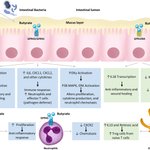
Consider giving your body extra Vitamin C (supports antioxidant defense), Butyrate (strengthens the gut-immune connection), and trace minerals (keeps cellular signaling intact) to get the best results.
The goal shouldn't be to "prepare your immune system for winter," it should be to to build a body that's ready to defend itself against anything, at any time.
You can't just add immune resilience at the last minute like a stocking stuffer. It's something you need to maintain all throughout the year during the ordinary moments when nothing feels urgent.


3
58
Without adequate phospholipids, sauna can actually increase circulating toxicants rather than eliminate them 🤷🏻♀️
Sauna is one of the most effective health protocols I've done. Here is everything I've learned; it's the most robust characterization ever produced.
Results:
1) Fifteen sessions of sauna dramatically reduced environmental toxins in my body:
+ 65% drop in 2,4-D
+ 100% drop in MEP
+ 15% drop in MBP
+ 100% drop in MEHP (undetectable post sauna)
+ 56% drop in NAPR
+ 56% drop in HEMA
+ 100% drop in Perchlorate (undetectable post sauna)
2. Sauna eliminated 85% of microplastics from my ejaculate.
Nov 2024:
165 particles/mL
July 2025: 20 particles/mL
Nearly identical drop in my blood same time period:
Oct 2024: 70 particles/mL
May 2025: 10 particles/mL
3. Sauna, without ice on the boys, devastated my fertility markers.
Total Motile Count: –56%
Concentration: –30%
Motility: –50%
Morphology: –48%
Count: –9%
4. Sauna coincided with my fertility markers being at an all-time high. I have more total and motile sperm than 99.6% of men of any age, including men under 25.
+ total count: 600 M
+ concentration: 162 M
+ motility: 55%
+ total motile count: 330M
+ morphology (normal): 10%
We do not know what to make of these improvements. Was it the sauna? Sauna + ice? Ice only? We don't know but we did not identify any other protocols or lifestyle changes during this interval that would plausibly account for the change.
5. My vascular function improved by a ten year reduction in age. Now I have the vascular age of an elite 18-early 20s.
+ Central Systolic Blood Pressure: 96 mmHg
+ Central Pulse Pressure: 20 mmHg
+ Pulse Pressure Amplification: 160%
+ SEVR: 227%
+ Augmentation Pressure: 1 mmHg
+ Augmentation Index Wave: 3%
+ Traditional blood pressure: 107/75 mmHg
6. What type of sauna?
Use a dry sauna with high temperatures between 80-100°C (176 to 212°F) and 5-20% relative air humidity. Aim for the lower end of this spectrum, especially as a beginner. Higher temperatures closer to the boiling point can cause side effects like headaches and severely dried nose and eyes.
Note: Steam baths, hot tubs, and infrared saunas fail to replicate the same effects because they do not allow you to safely reach the required high temperatures and do not induce the same level of sweating, the necessary inverted (skin-to-core) temperature gradient, and the massive re-direction of blood to the skin with resulting vasodilation.
Dry sauna is unique, and very likely superior to wet (steam bath) and infrared saunas. By heating up your skin way faster than your core, dry hot sauna flips your core skin temperature gradient, eliciting the following hormetic benefits:
+ enhanced blood flow: the heart pumps up to 70% more blood, similar to intense aerobic exercise (zone 2-+ increased sweating for detoxification: to maintain a stable core temperature, the skin produces 0.6-1 liter of sweat per hour, facilitating significant detoxification.
+ improved heat tolerance: the body becomes better at handling heat, leading to a lower core body temperature (offering metabolic advantages)
+ safe activation of heat shock proteins: the skin experiences substantial heat shock protein activation, while a modest 1°C increase in core temperature is sufficient to activate these proteins without the risk of hyperthermia.
+ extended Exposure at higher temperatures: dry saunas are more tolerable for longer durations and at higher temperatures, maximizing the benefits.
7. Sauna protocol and frequency
Type: hot dry sauna
Temperature: 176–212°F ( I do 200°F)
Relative air humidity: very low, 5-20%
Duration: 20 min
Frequency: 4–7x a week
8. Heat Protection
If you'd like, you can protect your head from the heat by wearing a sauna hat or wrapping it with a towel (use only cotton or other 100% natural material). You can breathe through a towel or cloth if needed to protect your nose. I am personally fine not doing this.
Most importantly, ice the balls.
Icing the testicles is absolutely required to prevent heat from damaging fertility markers.
+ Ice the testes during the sauna session.
+ Use a non-toxic, reusable ice pack material.
+ Wear cotton boxers and shorts.
+ Place ice packs in between the boxers and shorts.
+ Keep them in place for the entire session.
Men should care about preserving fertility markers even when they are not trying to conceive. Sperm quality is tightly coupled to testicular function, which governs testosterone production, metabolic health, and long term endocrine stability. When fertility parameters decline, the same upstream dysfunction often drives lower testosterone, higher inflammation, and increased cardiometabolic risk.
9. Hydration
Dry sauna induces sweating as part of its beneficial mechanism. Be sure to hydrate properly. In general, you might need to rehydrate with up to 16–32 oz (0.5–1 L) of fluid after a sauna session. Be sure to add electrolytes.
If you want to be precise, measure your sweat amount and electrolytes (saltiness) using a patch (e.g., from Gatorade) to quantify your liquid and electrolyte loss, and rehydrate accordingly. Some people have saltier sweat than others and must ensure they replenish electrolytes as well as water.
My results: my body sweats 18 oz during a 20 min sauna at 200 °F, with a sodium concentration of 25-39 mg/oz. A single sauna session flushes 450–700 mg of sodium out of my body.
#
I wish you all the best in life my friend. A new era or being human is here. One where existence is the highest virtue. Prioritize sleep, daily exercise and eat well and you'll be in a strong position. Try to avoid the bad stuff. Anything that takes away your agency.
Be a warrior and caretaker of existence. Don't Die.
1
71
If you're spending money on omega-3 supplements, consider this: fish roe delivers the same nutrients in their most absorbable form for a lower cost.
People have been eating fish roe to improve their fertility, vitality, and longevity for thousands of years. It's not a delicacy to them. It's medicine.
And there's science to back this up.
Whether it's caviar, salmon roe, or trout roe, fish roe is loaded with omega-3 fatty acids, choline, B12, and trace minerals like selenium, iron, and zinc.
The omega-3s support cardiovascular health, reduce inflammation, and help build cell membranes.
Choline supports brain function, liver health, and cell membrane integrity.
B12 and those trace minerals are essential for everything from hormone production to immune function and cellular repair.
But here's what makes it different from other nutrient-dense foods:
The nutrients in fish roe are already in forms your body can use immediately.
No conversion required. No breakdown needed.
Your cells recognize it as exactly what they need to build membranes, produce energy, and support hormone synthesis.
This is why cultures that included fish roe in their diets, like the Inuit people of the Arctic region or the coastal communities of Japan, had remarkably low rates of the degenerative diseases we see so commonly today.
Now, I know what you're probably thinking: caviar is expensive.
Here's the good news...
You don't need expensive caviar to get the health benefits.
And if the texture turns you off, you'll adjust faster than you think. A small spoonful a few times a week is all you need.
Here are a few easy ways to work it into your diet:
• Add it to your rice bowls
• Mix it into scrambled eggs or an omelet
• Pair it with avocado toast or cucumber slices
• Eat it straight with a squeeze of lemon and sea salt
If texture is the only thing stopping you, it's worth getting past it.
People have been eating fish roe for thousands of years. Modern science backs up the health benefits. And it's both more accessible and more affordable than many of the supplements in your cabinet.
86
If there’s one detox trend people are overusing, it’s zeolite. Here’s why I’m not on board.
Using zeolite for detox has become one of those wellness trends people reach for daily — sprinkled into smoothies, taken every morning, added to the “detox stack” — believing it's quietly sweeping toxins out of the body.
But here’s the truth no one talks about:
Zeolite doesn’t get to decide what it binds and what it leaves behind.
It’s not scanning for toxins. It’s binding whatever fits its structure, including minerals your cells actually need.
So when someone takes zeolite every day as a wellness routine, they’re not just targeting heavy metals. They’re also pulling out magnesium, potassium, trace minerals, and electrolytes that fuel cellular energy and detox enzymes
The very building blocks your body needs to detox in the first place.
You think you're supporting detoxification, but you’re quietly draining the raw materials your liver, kidneys, and cells rely on to do the job naturally.
You’re creating the deficiency while trying to solve the problem.
Now, does that make zeolite “bad”?
No.
There are legitimate uses. It can bind certain compounds effectively in specific, targeted situations.
But daily detoxing with zeolite as if it's a nutrient-neutral tool? That’s where the wellness world gets it wrong.
Your body already comes equipped with the most sophisticated detox system on the planet. It’s happening right now — your liver, kidneys, lymphatic system, and gut are constantly clearing waste, metabolizing hormones, neutralizing toxins.
They don’t need zeolite to do that. They need:
- Minerals to power enzyme pathways
- Phospholipids to strengthen cell membranes so toxins can actually move out
- Hydration and electrolytes for lymphatic flow and filtration
- Butyrate + gut repair to reduce endotoxin load
When those foundations are strong, your body detoxes quietly, efficiently, every single day — no binders required.
When they’re not, no amount of zeolite will magically fix it.
And taken the wrong way, it may even make things worse.
True detox isn’t about forcing the body to purge.
It’s about restoring the cellular environment so your system can clear waste the way it was designed to.
1
5
174