

🔍 Exploring physics, ideas & human behavior 🤔Discussing topics that sparks your curiosity ♟️Chess Trainer
Kerala, India
Joined November 2011
- Tweets10.1K
- Following570
- Followers708
- Likes19.5K






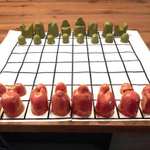


What if a farm could rotate its plants instead of keeping them in one position? 🌱🔄
That's exactly what this system does..
They combine rotating drums with soil-free growing methods to cultivate plants in a compact space!
But does it actually help them grow better?
1/🧵
produce enough value to justify these expenses
🌿 The bigger practical question
Rotary hydroponics combines two ideas:
🌱 Growing plants without soil
🔄 Rotating them within a compact structure
The potential benefits include efficient space use & ..
8/
Ludic Explorer🤸🏻🔍 retweeted

🌿🧘 May traditions continue to shine..🧘🌿,#viral ,#motivation
Ludic Explorer🤸🏻🔍 retweeted

𝐂𝐚𝐫𝐫𝐨𝐭𝐬 𝐖𝐞𝐫𝐞𝐧’𝐭 𝐀𝐥𝐰𝐚𝐲𝐬 𝐎𝐫𝐚𝐧𝐠𝐞 🥕𝐓𝐡𝐞 𝐇𝐢𝐬𝐭𝐨𝐫𝐲 𝐲𝐨𝐮 𝐰𝐞𝐫𝐞 𝐧𝐞𝐯𝐞𝐫 𝐭𝐨𝐥𝐝:
For most of their history, carrots weren’t orange. They were purple, sometimes yellow, and before anyone farmed them, the wild root was plain white.
So how did one bright orange carrot end up in almost every grocery store in the world? The answer runs through the Silk Road, a Dutch market town, and a prince who may have had nothing to do with it.
𝐖𝐡𝐞𝐫𝐞 𝐜𝐚𝐫𝐫𝐨𝐭𝐬 𝐛𝐞𝐠𝐚𝐧
The wild carrot is the same plant as Queen Anne’s lace, and its root is thin, pale and white.
The first carrots people grew for their roots show up about 1,100 years ago in Central Asia. When scientists sequenced the carrot genome in 2016, they found that those first farmed carrots were purple and yellow.
From there they travelled west. Purple and yellow carrots were grown in Persia and Arabia by the 900s, and in Spain by the 1100s.
Although not documented, there is also hearsay that the ancient Egyptians ate purple carrots.
𝐇𝐨𝐰 𝐨𝐫𝐚𝐧𝐠𝐞 𝐡𝐚𝐩𝐩𝐞𝐧𝐞𝐝
Orange arrived in Europe in the 1500s. A few yellow carrots naturally mutated into orange ones, and farmers liked them and saved the seed. You can see orange carrots in German and Spanish paintings from that century.
The Dutch are the ones who perfected them. Carrots from around the town of Hoorn were already common at the Amsterdam market by 1610. Two Dutch varieties, Long Orange and the Horn carrot, became the parents of nearly every orange carrot grown in the West today.
𝐒𝐨 𝐰𝐡𝐚𝐭 𝐚𝐛𝐨𝐮𝐭 𝐖𝐢𝐥𝐥𝐢𝐚𝐦 𝐨𝐟 𝐎𝐫𝐚𝐧𝐠𝐞?
This is the story you’ve probably heard: Dutch farmers bred orange carrots in honour of William of Orange, the prince who led the Dutch revolt against Spain in the 1500s.
It’s a great story, and one that’s stuck for centuries. Historians still debate whether that was really the reason. What’s certain is that the orange carrot and the House of Orange ended up tied together in Dutch history.
And it didn’t stay just a vegetable. Historian Simon Schama describes a time in the 1700s when a big display of orange carrots at the market could be read as a provocative show of support for William’s exiled descendant. So whether or not it began as a tribute, the orange carrot did become a political symbol.
𝐌𝐞𝐚𝐧𝐰𝐡𝐢𝐥𝐞, 𝐢𝐧 𝐀𝐬𝐢𝐚?
While Europe was going orange, the rest of the world was cooking up something completely different.
Because the Silk Road connected Central Asia to China and India, the original purple and yellow carrots travelled east too. They reached China by around 1300. That’s why the Chinese word for carrot, 胡萝卜(hú luóbo), means roughly “foreign radish.”
Farmers in China and India kept selecting their own way, and by around the 1700s a red carrot had appeared in both. Its colour comes from lycopene, the same pigment that makes tomatoes red.
These Asian carrots also suit warm places better. European carrots need a cold winter before they’ll flower and make seed, so they can’t set seed on the hot plains of north India. The Asian type doesn’t need that cold spell, so it flowers and seeds right there. Those are the deep red carrots that go into the very famous carrot halwa.
Every colour is a different pigment ⬇️
Purple: anthocyanins, the same family of pigments found in blueberries and red cabbage
Yellow: lutein
Orange: beta-carotene, which your body turns into vitamin A
Red: lycopene, the tomato pigment
White: almost none, just like the wild ancestor
Isn’t it amazing how a wild root that was once white turned into something so colourful? And the orange one we think of as “normal” is one of the newer arrivals.
Did you know this? Let me know in the replies, and follow for more stories behind ordinary food.
vc: @bluezoneinsider Instagram

For me - Work from Home is heaven!
Convenience and comfort is my priority over hustling.. Yes it depends on what priority you have
Yes the comfortzone trap is there..but for work i still prefer my home
VC :
thediaryofaceopodcast
S. Valarmathi is 40 years old. This is her last chance to get appointed !!
When will the government give them the written order for their grievances??

In Delhi, Rahul Gandhi plays the “warrior” for students - chasing cameras and shooting scripted reels.
Want to see the reality? Look at Congress-ruled Kerala.
After 110+ days of protests, LPST rank holder S. Valarmathi was forced to shave her head on the pavement and go on a hunger strike, just begging for the PSC teaching job she rightfully earned.
Ludic Explorer🤸🏻🔍 retweeted

For those interested to read the full article on the origins of chess & snakes n ladders 👇
medium.com/@jkjerry/the-hidd…
Such a good read it was...

Ludic Explorer🤸🏻🔍 retweeted

During one of the programs I attended at Isha, we were introduced to a few farmers from one FPO supported by Isha Outreach’s Save Soil Farmers Movement (SSFM)
Today 3 FPOs have earned National recognition at the CII FPO Excellence Awards 2026, held in New Delhi for the 4th consecutive year!
2026 Awardees:
🥇 All-India Winner in Market Linkage: Thencherimalai FPO, Coimbatore
🏅 All-India Special Recognition in Market Linkage: Senniandavar FPO, Coimbatore
🥇 All-India Winner in Technology & Sustainability: Ponnad FPO, Kodagu, Karnataka
The CII FPO Excellence Awards - instituted in 2023, highlight best practices and the transformative role of FPOs in strengthening agricultural value chains. They take into account the significant strides made in enhancing the profitability and livelihoods of their member farmers.
There is a rigorous 3-stage assessment process involving 100s of FPO applicants from across India.
The Ponnad FPO has also won the CII FPO Excellence Award 2024 - Market Linkages Category and was invited to present its inspirational Women led model at the CII FPO Summit 2024.
SSFM brought together 1063 farmers to form the Velliangiri Uzhavan FPO in 2013. This initiative has later expanded to 25 FPOs as of 2025 operating across Tamilnadu & Karnataka!
SSFM provides technical, financial and marketing assistance to turn them into profitable enterprises.
Personally having met a few farmers, it actually feels great to see how Isha has been empowering the lives of many farmers - by enhancing their bargaining power, income and profitability!


#WATCH | Delhi: Prime Minister Narendra Modi says, "Over 10,000 Farmer Producer Associations (FPOs) were formed in the last 11 years. My arrival was delayed because I was having a chat with several farmers. I spoke with many farmers and fishermen. I had the opportunity to hear the experiences of women working in agriculture. There are many achievements that the country's farmers have experienced in the past 11 years. Today, the nation's temperament has become such that it is not satisfied with just a few achievements. If we want to become developed, then we must continuously improve in every field. We must make improvements. The PM Dhan Dhanya Krishi Yojana is the result of this thinking..."
The chessboard you see today began as something resembling a miniature battlefield♟️
And here's the wild part: the queen wasn't always the most powerful piece. In earlier forms of chess, its predecessor could move just ONE square diagonally
Let's explore how chess evolved
1/🧵

ALT img credits: pinterest
That changed in late 15th-century Europe.
The queen gained the ability to move any number of squares horizontally, vertically or diagonally.
Suddenly, she became the most powerful piece on the board.
One rule change transformed the entire game. ♟️
6/

ALT Img credits : Pinterest/Magnific.ai