
A student of causal inference
Geneva, Switzerland
Joined January 2012
- Tweets930
- Following392
- Followers109
- Likes501


Jonathan Edwards retweeted

Happy to share slides for six lectures on "causal panel analysis" based on my recent short course at Waseda.
github.com/xuyiqing/panel-le…
Written for applied researchers.

Jonathan Edwards retweeted
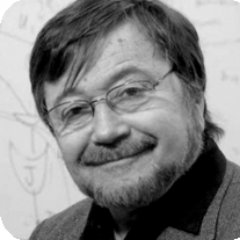
Dear Readers in Causality Research,
I am delighted to let you know that the second edition of The Book of Why (BOW) is scheduled to appear on September 20, 2026.
This edition will include:
1. Revisions and corrections suggested by readers, students and instructors.
2. An account of recent breakthroughs in causal inference (e.g., missing data, personalized medicine, and more).
3. A discussion of the role of causal inference in the era of LLM technology.
4. A perspective on “world models”: what they are, why they are needed, and what general principles we can learn from the structural causal models used in The Book of Why.
The latter topic has become hot in the past few months, so I am posting a section from the Preface, titled "Worldviews, Mindsets, and Narratives: Hidden Nuggets of Causal Inference," ucla.in/4yGPuBk -- which highlights the general principles we can learn from the structural causal models used in The Book of Why.
A word about the dangers of AGI (Artificial General Intelligence, or "super-intelligent AI systems"), which have become the target of general public concerns in just the past two weeks. I remain convinced that AGI is achievable, that the road to AGI goes through causal inference, and that the dangers of AGI taking over and enslaving humanity are real. At the same time, I also believe that causal inference may hold the key to controlling AGI systems so as to secure the survival of the human species.
I hope therefore, half jokingly, that The Book of Why will not be banned by draconian legislation currently brewing in DC. (Hurry to get a copy just in case.)
With warmest regards,
Judea
@GaryMarcus @eliasbareinboim @soboleffspaces @tdietterich @erichorvitz @ylecun @geoffreyhinton
Jonathan Edwards retweeted

🎉My book Impact Evaluation in Firms and Organizations turns one!
mitpress.mit.edu/97802625529…
Impact evaluation/causal inference for business applications in a non-technical way. R/Python code & datasets freely available:
unifr.ch/appecon/en/research…
📚Lecture slides coming soon @mitpress


@yudapearl @eliasbareinboim I like @PhilDawid's idea of viewing causal inference as "the task of predicting what would happen under a hypothetical future intervention". Putting aside "attribution" questions, answering rung 3 questions is useful for improving future decisions 1/n
Jonathan Edwards retweeted

As a fully open LLM, Apertus allows researchers, professionals and experienced enthusiasts to build upon the model and adapt it to their specific needs, as well as to inspect any part of the training process.
Watch our video: youtube.com/watch?v=q8iEzU7A…

Jonathan Edwards retweeted

Thank you! The JTBD Pyramid is (still) Amazon's #1 New Release in Product Management, by @newproductdog open.substack.com/pub/scottb…

@_MiguelHernan Question what if 3.2: "randomization ensures that the independent predictors of the outcome are equally distributed between the treated and the untreated groups." Is covariate balance really necessary for randomization to produce exchangeability?
@_MiguelHernan @yudapearl @eliasbareinboim How can I incorporate variables that are deterministic or functional constructions of other variables (change of variables) in causal graphs? Say I have some SCM including Y_1 and Y_2 and I define G=Y_2-Y_1 how can G be incorporated? 1/2
Jonathan Edwards retweeted

Il est minuit moins cinq avant l’apocalypse technologique de l’Europe. Et je pèse mes mots. L’obsession pour la régulation, le mépris des élites technocratiques envers les entrepreneurs et la peur de l’avenir nous font décrocher de la grande bataille de l’IA.
Pendant que l'humanité se rapproche de l’intelligence artificielle générale et que chaque nouvelle IA surpasse la précédente, l’Europe choisit de se suicider avec un « IA Act » qui bride l’innovation. Les choix politiques sont dictés par la peur et le mépris, au détriment de l’audace et de l’avenir.
Ce mélange de peur et de mépris est le même qui nous a fait perdre la course au spatial : il y a 10 ans, le président d’Arianespace se moquait ouvertement de SpaceX et d’Elon Musk. Résultat des courses : un seul lancement pour Ariane en 2024, contre plus de 130 pour SpaceX et un saut technologique historique avec des lanceurs réutilisables. C’est cette même arrogance qui nous fait décrocher de la grande bataille des voitures électriques et autonomes, ou encore de celle des biotechs. C’est elle aussi qui, il y a 30 ans, nous a fait passer à côté de la révolution de l’Internet. Et j’en passe.
Mais comment pourrait-il en être autrement dans un pays qui a inscrit dans sa Constitution un mortifère « principe de précaution », qui érige la peur du risque en vertu, aux dépens de l’audace et de l’innovation ?
Je suis convaincu que notre salut réside dans l’abandon de ce funeste principe de précaution au profit d’un principe d’audace et de liberté. Cela exige, je vous l’accorde, un véritable choc des consciences. Pourtant, nous n’avons pas à chercher bien loin des exemples de ce dont nous sommes capables : la reconstruction de Notre-Dame et l’organisation des JO ont démontré que, dès lors qu’elle parvient à s’affranchir du monstre technocratique avec des lois d’exception, la France est capable d’accomplir des prouesses qui marquent l’Histoire.
Oui, il est minuit moins cinq avant l’apocalypse technologique de l 'Europe. Mais le pire n’étant jamais certain, je continue de croire en la possibilité d’un sursaut. Alors réveillons-nous !
Merci à David Pujadas et à LCI de m’avoir donné hier soir carte blanche pour exprimer ce point de vue, que nous sommes, je crois, nombreux à partager.
@24hPujadas
@yudapearl What is the DAG where assignment is decided based on the outcome var Y at a previous time, introducing confounding? We put radars (T) only on high accident frequency (Y) junctions, we find a reduction in accidents. So Ypast-> T but what is backdoor path from T to Ynow?
Some fantastic work presented here, including a do-calculus for level 3 of the ladder of causation by @eliasbareinboim !

Our weekly harvest of CI papers brings us 9 pages of new titles: ucla.in/3Xddueh.
I am particularly excited by @eliasbareinboim and Correra's causalai.net/r115.pdf
which offers (1) A sound, complete, and efficient procedure for testing conditional independences among counterfactual variables, and (2) a sound and complete calculus for identifying counterfactuals from observational and experimental distributions.
@quantumciaran Hi Ciarán, I really liked your talk on counterfactual reasoning youtu.be/AZaBM6IcKyE?t=902 and had a question.... 1/2
I don't understand why the bayesian approach would give high prob of diabetes if we condition on those symptoms?! prob of having those symptoms and diabetes would be low no? 2/2
Nice connection between causality and storytelling!

Students at NYU asked the creators of South Park the million-dollar question:
“What makes a good story?”
They gave one of the best explanations of story I’ve heard:
“If we can take the beats of your outline, and the words ‘and then’ belong between those beats… you got something pretty boring.
What should happen between every beat you’ve written down is the words ‘therefore’ or ‘but.’”
They go on to say, “That gives you the causation between each beat, and that makes a story.”
Point 1:
There’s an idea in storytelling called ‘Promise, Progress, Payoff.’
Essentially, a story is a never ending cycle of promises that are paid off over the span of the story.
It’s a cycle of expectation and resolution. Cause and effect. Conflict and progress.
Point 2:
A story isn’t a bunch of random events thrown together.
A story is a series of but / because / therefore moments.
A famous example:
• Harry discovers he's a wizard. Because of this, he goes to learn magic at Hogwarts.
• But then he learns Voldemort wants to kill him and rule the world.
• Therefore, he must find a way to defeat him.
Point 3:
The ‘But / Therefore’ concept works in layers.
You can apply it at the line level, paragraph level, or whatever your largest unit of story is – be it chapter, Act, or whatever.
I’m reminded of a Hemingway quote:
“Prose is architecture, not interior decoration.”
Great writing is intentional. It doesn’t wander. It builds upon itself.
Jonathan Edwards retweeted
Get jobs-to-be-done from Urko Wood, who specializes in working with executives... on the latest Product Quest Podcast
@WermuthYann @jonathanedwards
productquestpodcast.com/e/ep…

@UVEK_DETEC le site de l'OFEN semble avoir un problème bfe.admin.ch/bfe/fr/home.htm…
