

Sarcastic by default., honest by force and liar by choice., but also great at conspiracy theories about the world and who governs it. Research Everything.
Joined July 2024
- Tweets4.3K
- Following155
- Followers204
- Likes10.2K







Jonathan retweeted

Watch Starship Flight 14 teapaw.org/i/broadcasts/1qxvvenMP…


Jonathan retweeted

Fechas en las que sucede cada historia de película 👇
#movies #timelapse


Jonathan retweeted
A fully and rapidly reusable rocket will fundamentally change how humanity accesses outer space. “The Holy Grail of Rocketry” continues the ongoing Starship series with a look back at the scrappy days of SpaceX engineers proving reuse was possible and takes you onboard a high-seas race to recover a floating Starship


Jonathan retweeted
Moonbase Alpha will be so cool.
And we want to make it so that anyone can go to the Moon if they want.

SpaceX is getting very close to building the first serious base on the Moon
Starship changes the entire equation
It is designed to deliver up to 100 tonnes directly to the lunar surface - enough to transport habitats, rovers, power systems, construction equipment and everything needed to begin building a permanent outpost
Then the other pieces come together
Tesla Optimus robots could eventually unload cargo, assemble structures, move equipment and perform dangerous construction work before large human crews arrive
Building a base mostly with humans is a serious limitation
Humans need life support, pressurized habitats, spacesuits, oxygen, food and protection just to survive and work on the lunar surface
But with Tesla Optimus, that equation changes entirely
Tesla’s experience with solar energy, batteries, autonomous vehicles and large-scale manufacturing can support the power and transportation systems required on the Moon
SpaceX provides transportation
Tesla provides energy, autonomy and robotics
Starship provides the scale
Suddenly building a serious base on the Moon becomes dramatically easier
And once that infrastructure is ready, humans can stay for much longer periods and eventually even routine private lunar missions and tourism become possible
Once the first permanent lunar outpost is established, its usefulness will compound rapidly.....supporting science, resource development, communications and deeper missions into space
The Moon could become humanity’s first true outpost beyond Earth

Jonathan retweeted

Your our history shouldn’t be taught in a boring way 🫠
I’ve always loved history, but I could never imagine what life actually looked like back then.
So I built Empire Atlas, a 3D interactive explorer of 8 historical empires using @threejs and @Kimi_Moonshot K3 🔥
It lets you explore how people lived, what their homes looked like, their maps, daily life, interiors, and more. Properly researched.
But the craziest part is that this was near one shot vibe coded with Kimi K3 🤯
When I previously built a 3D anatomy app with GPT 5.6 sol, I had to iterate on performance and optimization.
With Kimi, the moment I handed over the 3D assets (generated using @tripoai), prompt and design (by GPT Image 2.0), it created an 11 step engineering plan to build the entire thing.
The very first step it did was optimizing the assets.
It took nearly 500MB of 3D assets and brought them down to just 17.8MB using mesh simplification, Draco compression, and 1024px WebP textures.
Absolutely nuts.
It also generated 56 historical images across the 8 empires showing daily life, maps, interiors, and more using its image plugin with batch processing.
Those were converted to WebP too, bringing the total image size to around 10MB.
That’s a huge reason the experience loads so fast on website.
It's engineering workflow or intelligence has really impressed me so far. The only downside is that it took more than 5 hours, though 😅
Anyway, back to history.
In Empire Atlas, you can explore 8 different empires and see how people and our ancestors lived at that time. I really love those textures I was able to create using @tripoai.
You can explore their homes in 3D, and there’s so much more we could do with this.
We could extend these houses into fully explorable interiors and create increasingly realistic reconstructions of what life actually looked like. And maybe create fun education games too.
I genuinely think this can make history education so much more immersive. Much more than showing black and white images in boring textbooks.
Go explore your history now 👇
Live: empireatlas.vercel.app/
Code: github.com/thebuggeddev/empi…





Jonathan retweeted
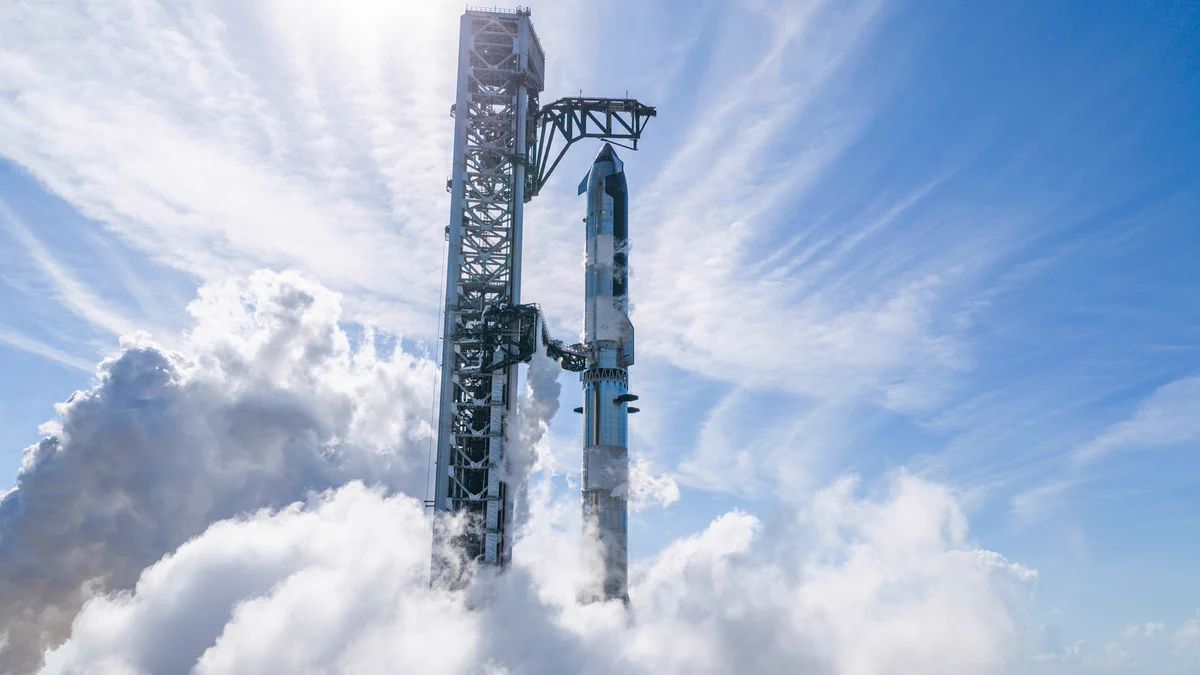
Now targeting Friday, July 24 for Starship’s thirteenth flight test, due to weather.
A key objective for the flight test is to get clear imagery from the ground of Starship’s heatshield as it flies at a higher dynamic pressure during ascent, which won't be possible with today's weather conditions. Visibility is forecast to be ideal for a Friday attempt.

