

Information Systems Researcher | Building tools for community | Adobe and Tachyon alum 🦦🇺🇸
Ann Arbor, MI
Joined April 2008
- Tweets10.1K
- Following4K
- Followers1.8K
- Likes47.1K




Pinned Tweet
Life is a temporary celebration of something larger and eternal. We walk in the shadows of countless generations before us that gave us this shared reality to make our own. Human wealth is not measured in abstract numbers.. but in experience, love, and in new ideas imagined.🍄
Jonathan Dunlap retweeted

There is a pattern underneath some of the most interesting computer graphics techniques. Culling, level of detail, light clusters, particle systems, Gaussian splatting: they look like different problems, but the same pattern shows up in every one of them.
My new video shows that pattern:
count → prefix sum → write
the three shapes it takes (compaction, expansion, binning), and how they chain into a GPU-driven frame.
Watch the full video on youtube


Jonathan Dunlap retweeted

Here's a quick look at some of the editing features in Pixel Art Lighter.
The tool will be fully free and open source!
So based on the systems I made for the quantum field demo, I've built a new project experiment called the Holon Engine which can take a video of any 2D game to create a high dimensional geometric representation of that game. Basically video input => playable game output!!
I should add that there's NO CODE generation in this engine as the ML model encodes a holistic aspect of the observed game behaviors. I still have bugs and details to sort out, but I'll be posting more details soon as I get time!

Jonathan Dunlap retweeted

"Mathematical Theory of the Transformer" is an extensive, 825-page mathematical monograph exploring the theoretical foundations of Transformer architectures.
It covers a remarkable range of topics, including embeddings and positional encoding, self-attention and multi-head attention, matrix decompositions, linear algebra, spectral analysis, information geometry, training dynamics, redundancy, optimization, and incremental Transformer architectures.
This is an advanced, mathematically rigorous read for anyone interested in understanding the mathematical structures underlying Transformer-based AI systems, including modern generative AI.
doi.org/10.5281/zenodo.20199…

This age is marked by those that can ask the right questions. PySR is a neat idea that answers the question: does my data follow an approximate equation? – at Ann Arbor, MI

Inspired by quantum field theory, I built a game engine using only field mechanics.
I've been building the Dzog Simulator: an experimental game engine in Rust where space isn’t an empty coordinate system, but a continuous wave-matter field running on compute shaders.
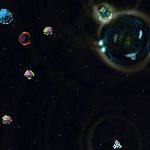
Asteroids:
Shout out to the great @echoLogin for the inspiration for the shmup tech demo using the experimental field engine. 'Raptor Call of the Shadows' in 1994 was legendary to me and got me originally into shmups 🚀
I wanted to push the physics under arcade pacing and now released the shmup demo.
Dense curtains of enemy fire aren't thousands of bullet structs. They are oscillating wavefronts forming caustics and standing interference patterns with the fields.
Even the audio is synthesized directly from pressure spikes across the lattice as you play.
The engine and demos are fully open-source in Rust. Now idea if this is useful, but afaik, it is a novel way to build a gfx engine! github.com/jadbox/dzog

Traditional engines populate space with isolated rigid bodies and bounding-boxes.
In Dzog, every cell in a 2D lattice carries pressure, velocity, and cohesion.
Ships, shields, and lasers are persistent excitations in the medium. Gameplay emerges directly from wave physics.

Jonathan Dunlap retweeted

My dear friends, I’d like to show you my latest toy project
Introducing Handwired: turn your regular JavaScript code into a neural net!
- no training
- exact outputs vs the JS program
- fully differentiable
All runnable in a browser, without GPU
Jonathan Dunlap retweeted

Complex shock and rarefaction interactions in a formally verified, ultra-high-resolution multi-GPU simulation for compressible hydrodynamics.
One shot from a single prompt. 2 minutes to write the solver and prove correctness. 5 minutes to run the simulation on 8 GPUs.
Jonathan Dunlap retweeted

BudgetPix
Compute-Adaptive Tokenization for Pixel-Space Image Diffusion
paper: huggingface.co/papers/2610.1…
Jonathan Dunlap retweeted

This is a beautiful analysis of the order in which diffusion models resolve uncertainty about information at different abstraction levels in different representation spaces, with significant implications for latent diffusion.
panjiashu.github.io/feature-…

Jonathan Dunlap retweeted

Vision Transformers Learn Word Meaning from Images Alone
TL;DR: DINOv3 learns word semantics from images alone. Its features capture semantic similarity and country–capital relations, and align written words with their visual counterparts—without explicit language supervision.
arxiv.org/abs/2610.13252

Jonathan Dunlap retweeted

Wrote an interactive blog post on the theory of autonomous flows 🌊 and transport maps 🗺️ for language modeling!
sophtang.github.io/discrete-…
Explore how removing time dependence from the generative flow yields straighter trajectories on the simplex, stable equilibria, and an endpoint map that yields a clean sequence in one step by construction —and can be trained end-to-end directly from data without a teacher flow.
Had a lot of fun with animations, so hope you enjoy!