



Pinned Tweet
Thread of threads:
1/ Prewar BTRZ count: xitter.cf/Jonpy99/status/1765131…

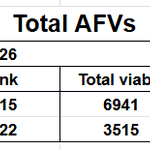
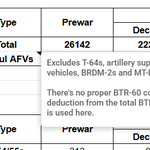
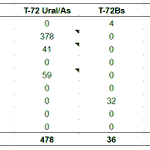
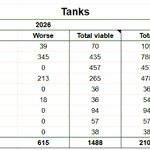
1/ Prewar AFV and tank count of Russian BTRZs (BTRZ stands for Armor Repair Plant) in collaboration with @HighMarsed. Before diving into the count, BTRZs aren't actual storage facilities, but factories where equipment previously in storage is set to be refurbished for service.

Jompy retweeted

The Ukrainian Armed Forces struck the 75th Arsenal in Serpukhov, Moscow Oblast, with missiles/jet-powered drones.
A defense-industrial complex enterprise specializing in the repair, restoration, and storage of military equipment, including air defense systems.According to Rostec, the facility repaired equipment for the Buk-M1, Buk-M2, and S-300V systems.
A missile alert was issued in the city during the attack.
OSINT researchers had paid particular attention to the facility. In a post dated March 29, 2024, OSINT researcher Jompy described the 75th Arsenal as the only storage base for Russian surface-to-air systems he had identified.
54.931187, 37.412960

Jompy retweeted

Yes, yesterday the Russians launched another mechanized assault in the southern direction. Vehicles were updated. More details will be released later I’m sure.
The Russians are experimenting with bringing armor back, which is going to be important over the winter as foliage disappears. Experiments are having mixed results but they have lots of armor laying around.


Jompy retweeted

The US Army undoubtedly shows, and will keep showing, the best results in terms of its adaptability during exercises, and I’m sure in real combat as well. But such figures (like the loud claims about NATO brigades being “crushed by drones”) somewhat distort reality and, as a result, lead to false conclusions.
Questions that should be asked:
- How many Ukrainian (or any other) UAV crews were deployed per 1 km of frontage (and, accordingly, across the frontage of the whole “offensive” of the notional enemy);
- How many integrated sensors, of the kind fielded on the Ukrainian side in the current war, were deployed;
- What density of drone detection assets and EW suppression assets was deployed against the advancing American brigade;
- What percentage of the deployed UAV crews on the frontage, broken down into SRD, fixed-wing ISR, FO, FR FPV, heavy drones, RUGVs, etc., took part in the exercises;
- Did the defending side manage to establish constant surveillance of the notional enemy with SRD and fixed-wing ISR;
- Was mining carried out with assets such as FPVs, heavy drones and fixed-wing “bombers”;
- Was a decentralized SIGINT & ELINT network deployed;
- Was a radar field built with STR;
- Were UAV crews capable of striking at depths of 25–75 km present at the exercise;
I could name quite a few more such “?” questions. Fighting a notional enemy that has 7–12 FPV/SRD/fixed-wing ISR crews deployed across a 10–15 km frontage is not the same as breaking through an echeloned defense made up of a large number of sensors, a unified situational awareness system, and detection and strike assets with corresponding strike zones and depths.

Ukrainian drone operators caused about 70% of a U.S. Army armored brigade’s casualties in the first three days of an exercise in Germany. The brigade cut drone-caused losses below 30% by day three and later used over 700 drones to breach enemy lines.
Read more: defence-blog.com/ukrainian-d…

Jompy retweeted

"During Operation Vivaldi, units of the 3rd Army Corps successfully used armored vehicles twice to conduct mechanized assaults behind Russian lines...
According to Biletskyi, armored vehicles can no longer serve as a conventional reserve rapidly deployed after an enemy breakthrough.
'Today, the use of armored vehicles is effectively a special operation. It requires extremely detailed planning and the coordination of a huge number of assets,' he explained...
The first mechanized assault helped Ukrainian forces partially encircle the settlement of Nove.
During the second assault, Ukrainian armored vehicles advanced about 4.5 km behind Russian lines and deployed infantry in the rear of Russian units. The Ukrainian troops then attacked wooded areas where Russian drone operators were stationed.
According to Biletskyi, losing these positions deprived Russian forces of some reconnaissance capabilities and FPV drones, allowing Ukrainian units to keep advancing.
The deployed Ukrainian infantry operated virtually surrounded for several days while continuing to destroy Russian drone operators’ positions. Biletskyi said he believes the raid contributed to the subsequent collapse of a significant section of Russian defenses."
militarnyi.com/en/news/ukrai…

Jompy retweeted

And next year will be worse, and the year after that. Destroying the occasional launcher once in a blue moon will not stop Russia's missile strikes.
Small amounts of interceptors won't stop it either, only means (as we've seen already) that next year you'll require more interceptors.
If you want to reduce the number of missiles hitting Ukraine, cripple the production chains that keep them coming. This is currently outside Ukraine's capabilities.

Last week the HUR said Russia is developing a version of the Kinzhal missile that swaps out the penetrating HE warhead for an HE frag warhead, likely because the latter requires less accuracy. According to HUR, Russia had suspended Kinzhal production at least partly due to accuracy issues and shifted resources to 9M723 Iskander production (see below).
pravda.com.ua/eng/news/2026/…


Jompy retweeted

Situation in Dobropilla 🇺🇦/🇷🇺
The situation in the city has recently deteriorated, with Russian forces now being spotted in various neighborhoods and started the first flag videos for their propaganda efforts.
For several weeks, if not months, Russian forces have made repeated attempts to infiltrate the area, utilizing two main routes: one leading to the northeast of the city and another, more recently, to the southwest. Russian forces continue to advance into the southern outskirts, particularly following the capture of Bilytske and Shevchenko, and the "gray zone" has now expanded into parts of the city itself.
The battle for Dobropilia began a little over a month ago, and we now have a clearer picture of the current, real-world situation. While Ukrainian forces still hold the city, the presence of Russian infiltrators is becoming increasingly apparent. The situation is broadly similar to that of Kostiantynivka a year ago (the city is still disputed); however, Ukraine retains a defensive advantage, as it still controls the flanks, supported by defensive lines that protect the rear of the city, as well as its eastern and northern sides.
With autumn and winter approaching, the Russians are under pressure to reach the city, as infiltration will become significantly more difficult once the leaves fall, especially given the defensive lines, trenches, and barbed wire established by the Ukrainians.
Right now, the battle for Dobropilia is the primary ongoing engagement; the Russians have committed massive manpower, while the Ukrainian side, defended by the National Guard’s Azov Corps, is fighting for every square kilometer, while their strategic reserves remain held behind for now.

Having just taken a look at most of the BMP-focused BTRZs, the most notable change is just some fewer hulls in the yards of the repair plants.
Indeed it seems likey they stopped pretty much all BMP-1 efforts and the workload in these BTRZs has been limited to just...
Jompy retweeted
Russian significantly increases EW direction in their army. Would be interesting to see these kind of changes in NATO countries.
In particular, the plan provides for the creation of a separate EW battalion within the combined-arms army from 01.09.2026, and for the reorganization of EW companies into EW battalions within separate motor rifle brigades from 01.12.2026. As a result of the reorganization, the strength of the EW unit in a separate motor rifle brigade increases from 83 to 151 personnel, and the number of officers from 8 to 18.
The EW battalion will consist of a command element, a staff, a command post, an EW company, a radio jamming company, a command platoon, and a support platoon. The planned armament includes the RP-377UV, RB-504P, RB-338A, R-330Zh and R934B systems, command-and-control vehicles (shelters), and satellite and secure communications equipment.
This points to the adversary’s systematic buildup of EW capabilities at the tactical and operational-tactical levels, primarily to counter UAS, suppress control channels, and jam VHF radio communications.

Jompy retweeted

I never thought this day would come. In fact, I was sure it never would.
The last time we visited Ukrainian infantry positions was in February 2024. Back then, there were networks of dugouts with beds, showers, toilets — even freshly brewed coffee and lunch with the troops.
Jompy retweeted

If accurate (or close enough to it), this means:
1. Armies across the NATO/EU+ can start rebuilding their artillery ammo stockpiles (to much higher numbers than before 2022)
2. The focus should now be on a full propellant charge being the norm, not an exception

欧媒,乌军的炮弹生产能力已经过剩。
由于无人机的主导炮弹预算在缩减。
乌克兰在全面战争的几年中发展了自己的火炮弹药工业,生产能力现在已超过政府采购的财政能力。
乌克兰装甲公司首席执行官弗拉迪斯拉夫·贝尔巴斯表示。
据他所述,在入侵初期,该国依赖西方国家的供应,主要优先事项是尽快组织进口。今天,情况已发生根本性变化。
“我们现在生产的弹药量超过了国家预算所能采购的量,而且我们还能出口同等数量。换句话说,我们已经建立并发展了火炮弹药工业。对于某些类型的弹药,我们甚至可以说已经形成了完全封闭的生产循环,”贝尔巴斯说。
他将此描述为近年来一个毋庸置疑的积极成就,并补充说,在许多其他类型武器的生产方面也取得了类似的进步。
谈到军队当前的弹药供应,该公司首席执行官表示,目前正在积极签订远程弹药合同,同时外国伙伴的交付也在继续。他预计到年底不会出现供应问题,除非是特殊弹药,特别是集束弹药。