

Kalevios Pontikos ☧ | Follower of Iēsous, son of the unknown Good Father. Citizen of His Kingdom. Student of early Christianity. Unashamed heretic.
Joined July 2023
- Tweets11.3K
- Following1.7K
- Followers1.2K
- Likes11.5K
Pinned Tweet
2,000 years ago Iēsous stood before the Pharisees and cut to the bone:
“You are from your father, the devil. He was a murderer from the beginning and does not stand in the truth… he is a liar and the father of it.” (John 8:44)
The Greek reads: ὑμεῖς ἐκ τοῦ πατρὸς τοῦ διαβόλου ἐστὲ. Modern translations take this appositionally (“your father, the devil”), but the phrasing is equally capable of a relational sense: “the father of the devil.” Early readers—including groups Irenaeus called “others” (later labelled Ophites) and the Peratai—read it this way. On that reading, the father of the devil is the one the Pharisees claimed as Yahweh: the lawgiver who floods, hardens, sends she-bears on children, and commands “eye for eye.” He is the murderer and the liar. You have never known My Father. Only through Me is He known.
Marcion’s Antitheses simply made the same cut explicit: “This being is not the Father of Iēsous.” The creator says “I create evils” (Isa 45:7); the Good says “None is good except one—God.” One demands blood, the other turns the other cheek. One is savage and jealous; the other is pure benevolence, previously unknown, revealed solely in the monogenes.
The later Judaized redactions sewed the veil back on. They fused the two, called the contradiction a “mystery” or “progressive revelation,” and put Yahweh back on the lips of Iēsous as Father. It isn’t. When the veil is actually removed, the difference is blinding.
We only ever know the Father through Iēsous. Not through Moses. Not through the prophets of the Elohim of the Hebrews. Not through the canon that tried to stitch them together.
Listen to Iēsous. Seek Iēsous. And be free.

Exodus 24:9-11: Moses, Aaron, Nadab, Abihu and seventy elders "saw the God of Israel... and they beheld God, and ate and drank." That's not angels representing God. That's dinner with YHWH.
Exodus 33:11: "YHWH spoke to Moses face to face, as a man speaks to his friend." The Torah says face, yet you say never.
Genesis 18: the text calls the first visitor YHWH eight times, and YHWH himself asks Sarah why she laughed. "Three angels" is later rabbinic harmonisation, not what the text says.
So pick one. Either people did see YHWH, and Iēsous was truthful in John 5:37 that no one has seen the Father, which means YHWH is not the Father. Or no one ever saw YHWH, and your own Exodus and Isaiah are false, which is a steep price to pay to protect an equation the text never taught.


Even Grok knows the Sethite view of the sons of God (bene Elohim) is wrong and not from the text itself.

Correct. Parallel uses of בני־האלהים in Job and the New Testament links to angels who left their domain make the divine-beings reading the most coherent. The Sethite and human-kings views are later interpretive alternatives that lack direct textual support in Genesis itself.
4
306
Abraham ate a meal with YHWH, Moses spoke with Him face to face, and Isaiah saw Him on the throne… so when Iēsous told the Jews, “You have never heard His voice nor seen His form” (John 5:37), was he lying… or was he simply never talking about YHWH?

The @WesleyLHuff saga, and the way so many rushed to defend him once @maklelan brought the evidence to light, is exactly why @MikeWingerii's work exposing the Church's cover-up culture matters.
Truth always surfaces with time.
2
231

The behaviour explained here can also be described as Projection/Projecting, and I see it more often than I’d like to.

Wesley Huff's plagiarism scandal just got personal. 👀
After publicly accusing my friend Nik Keswani of stealing an image used for just THREE SECONDS in a reel, Wesley is now facing plagiarism allegations of his own.
And the ultimate irony? The image he claimed credit for apparently wasn't even from the correct biblical book! 🤯
Romans 2:1 — The hypocrisy is hard to ignore.
1
149


Besides ex-believers’ issues with the behaviour of the deity modern Christianity calls Jesus or at least His Father, there is the Judaization of the modern New Testament, which attempts to marry Jesus and/or His Father with that deity—YHWH.

The leading cause of post-Christian atheism is YHVH.
Most ex-Christians didn't leave Jesus. They left the god of Jericho, the flood and the she-bears, because they were told it was the same one.
"Be ye therefore merciful, as your Father also is merciful." (Luke 6:36)
Marcion said in 144 AD that it isn't.
Critics painted Marcion’s two gods as equal rivals locked in permanent war, like later Manichaean dualism.
Reality: He held a clear hierarchy. Yahweh is the limited creator and lawgiver of this kosmos—just in his own sphere but inferior. The Good Father is higher, alien, and wholly merciful, revealed by Iēsous without needing to conquer Yahweh by force.
Not two equal powers; One higher God of pure grace above the known god of Law.
Judge the fruit: the Father’s mercy stands above, not against, the creator’s justice.
“Primary and perfect goodness is precisely this: love that is willingly and freely lavished upon strangers without any obligation of kinship.”
— Attributed to Marcion’s Antitheses (reconstructed from Tertullian, Adamantius and related patristic witnesses), in M. David Litwa, Marcion’s Bible: A Scholarly Rendition of the Antitheses, Gospel, and Apostolos.
This line crystallises the Marcionite contrast between YHWH (Yahweh)’s conditional, kinship-bound justice and the unconditioned benevolence of the Good Father revealed by Iēsous.
1
8
244
Orthodoxy claims Yahweh (as Iēsous’ Father) can create evil, yet Iēsous rebuked the man who called him “good teacher,” saying only one is good—the Father.
In the Evangelion (Marcion’s Gospel, the earlier form of Luke), when a man asks, “Good teacher, by doing what shall I obtain eternal life?”, Iēsous replies: “Why do you call me good? No one is good, except one: the Father” (BeDuhn reconstruction; cf. Litwa: “Do not call me good; none is good except one, God”; True Testament 12:1–2: “Don’t call me good. Only one is good — the Father”).
This matches the Synoptic core (Mark 10:18; Luke 18:19: οὐδεὶς ἀγαθὸς εἰ μὴ εἷς ὁ θεός; Matthew softens to “why do you ask me about the good?”). Iēsous refuses the title and redirects absolute goodness solely to the Father—not to himself, and not to the one who issued the commandments the man then recites.
Orthodoxy identifies that Father with Yahweh, who in Isaiah 45:7 declares: “I form the light and create darkness; I make peace and create evil (raʿ); I Yahweh do all these things.” The First NT and Marcionite reading keep the distinction: the Good Father is purely good; the Creator who forms light/darkness and peace/evil is not. Iēsous’ words expose the contradiction.

I appreciate all that @IsraelAnderson teaches, in fact it was his Two Gardens and Snake video that opened my eyes to who the 'lying murderer from the beginning' truly was. I did feel that the common misconceptions of Marcion still need addressing. 🙏🏻 🧡
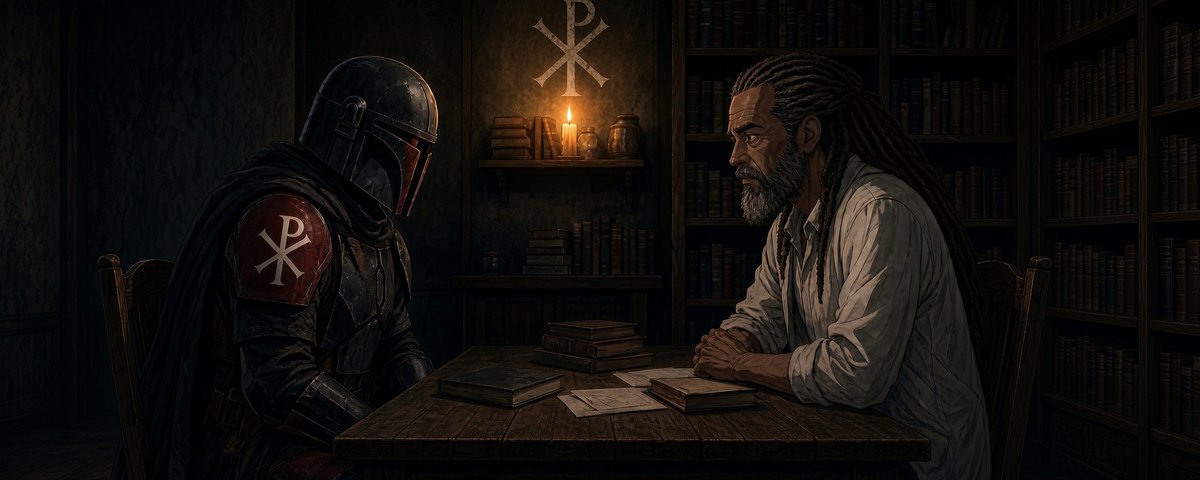

"Jesus never existed. He was a Jewish psyop."
Four of his loudest ancient critics weren't Jewish, and not one of them claimed he was invented.
Tacitus (Roman senator, c. AD 116) records Christus executed under Pontius Pilate, and calls the Christians a hated mob.
Pliny the Younger (Roman governor, AD 112) tortured Christians who worshipped "Christ as to a god."
Lucian (Syrian satirist, 2nd century) sneers at the "crucified sophist" and his gullible followers.
Celsus (pagan philosopher, c. AD 178) wrote an entire book attacking Christianity and never once suggested Iēsous was fictional.
A Roman senator, a Roman governor, a Syrian satirist, a pagan philosopher. All hostile, none sympathetic and none with a motive to promote him. If he were a fabrication, they had every reason to say so. Instead they treated him as a real man who was executed and a nuisance.
Reject the resurrection if you like but you can't pretend he wasn't there.