








Kate Poyner retweeted

As of 4.00pm today the candidates were confirmed, and the race for the Clacton by-election is officially on between @CountBinface & @Nigel_Farage. Here's our parody of "Englishman in New York" by #Sting - titled "Garbage Can Who Can Talk" - to reflect on the challenger 🎶🚀
#noAI
Kate Poyner retweeted

In Anglo-Saxon calendars, around now - '15 nights before Lammas' - is the start of the dog days of summer. Drawing on classical learning, medieval medical texts warn that it's a perilous season, when the air is full of poisons and people should stay inside in the heat of the day.


Kate Poyner retweeted

Long before Michelangelo, long before Rembrandt, long before Picasso.....women were quietly and collaboratively creating their own masterpieces in Western art history....
#BayeuxTapestry

Kate Poyner retweeted

Oh wait, we're talking about the peasant's revolt.
I can't resist using this as an excuse to share one of my favourite memes ever:

Kate Poyner retweeted

'Marsh landscape.' (1958) In the early 1950s, Denis Wirth Miller settled in the Essex town of Wivenhoe - he considered the ship-building and fishing town a perfect retreat for his work and began to skillfully capture the austere, beautiful Essex flatlands on canvas.

Kate Poyner retweeted

The far right didn’t commandeer our thought processes. They never shared our thought processes.
What happens was that the trans rights movement’s insistence on male people’s access to female only space was commandeered by the far right.
You don’t need to have a feminist

Kate Poyner retweeted

⛔️Wednesday 14.45 ⛔️
A222 - Bickley Park Road / Summer Hill remains closed following a burst water main. 💦
Unfortunately it’s not yet fixed and Thames Water are still working on it.
If you have no water or low pressure please notify TW directly.

Kate Poyner retweeted
The Bayeux Tapestry, a 70 meter long medieval masterpiece created by artisan women, is actually an embroidery in crewel (wool yarn) on a linen ground. Depicting the Norman conquest of England, it was made in the 11th century & will be displayed at the British Museum this year. #WomensArt #EmbroideryWeek

Kate Poyner retweeted
'#Summer tree glow' Linocut by contemporary printmaker Alexandra Buckle #WomensArt

Kate Poyner retweeted

I have put my views on the over reliance of Bushell’s Case into a short blog.
jaimerhblog.wordpress.com/20…

Kate Poyner retweeted
'Dusk in Browning Street.' (c1954) Edward Seago painted many views of London throughout his career. His streetscapes from the 1950s are some of his most accomplished, showing to best effect his mastery of light and reflection.

Kate Poyner retweeted

Across Britain right now, farmers are shearing their sheep, bagging up the wool, and burning it. Some bury it. Some leave it to rot in a corner of the field. The wool-burning has made the odd headline as a protest, but the truth is duller and sadder. The fleece is worth less than the diesel it would take to haul it to the depot.
The numbers are grim. In recent years a kilo of British wool has fetched somewhere between twenty and sixty pence, and hill breeds like Swaledale and Welsh Mountain sank as low as ten. A whole fleece off a mountain ewe might bring thirty pence. Shearing that same ewe costs the farmer around two pounds. One Lincolnshire farmer added it up out loud: over three pounds to shear and cart a single fleece to the depot, and twenty-six pence back. So she burns them. A great many do.
Here is the part that stings. The shearing still has to happen, every year, whatever the wool will fetch. A sheep left in full fleece overheats, struggles to move, and gets eaten alive by maggots. So the job carries on purely as welfare, a cost the farmer simply eats to spare the animal, with the wool itself going on the fire straight after.
And think about what this fibre once was. For centuries wool was the engine of the English economy, the country's greatest export and the crown's main source of tax. It raised the soaring wool churches of the Cotswolds. It turned merchants into princes. To this day, whoever presides over the House of Lords sits on the Woolsack, a literal cushion of wool, put there in the fourteenth century so nobody would forget where the nation's wealth began.
Prices have lifted off the floor this past year, the first real relief in a long while. It still does not cover the shears for a hill farmer. The fibre that built England now smoulders in a heap behind the barn, and almost nobody notices the smoke.

Kate Poyner retweeted
Using various shades of green and varied brushwork, Christopher Sanders study captures the intricacy of grassland species growing in a meadow at Polstead in Suffolk in 1950 - a work that immediately brings to mind Dürer's 'The Great Piece of Turf,' from 1503.

Kate Poyner retweeted

Fascinating and in depth article by @PaulKnaggs for Labour Heartlands on the framing of the ‘trans debate’ around toilets rather than women’s fundamental rights.
It’s an accurate observation of a highly successful PR campaign. Across the media, presenters last week repeatedly asked women if they feel guilty about men who can’t use their toilets, businesses who can’t afford to build more toilets, and disabled people whose toilets are suggested as alternatives.
But most importantly they’ve not bern asking about anything except toilets. Specifically they’ve failed to ask men/trans campaigners why they don’t understand that if they are included in the legal meaning of ‘woman’, women themselves have no rights at all on the basis of sex.
It follows a pattern of successful ‘identity’ media campaigns, with which news outlets collude because 1. their proponents are very top down and powerful and 2. they advance men’s rights. Previous examples include lived experience journalism, no debate, the narrative of victimhood and the infinite necessity of a trans male contributor.
This excellent article also looks at the impact:- ‘The cost has been real and it has fallen on working class women in particular’.
labourheartlands.com/trans-r…

Kate Poyner retweeted

On tolerance, freedom, diversity of thought, and the naked hypocrisy of the Scottish Greens.
It’s time the Government did its job. It’s time to talk.
forwomen.scot/19/05/2026/pop…

Kate Poyner retweeted

Yoshida Hiroshi helped revive woodblock prints in 20C after inroads made by photography. He travelled widely, absorbing western influences in portraying light and depth. He visited India often in 1930s ~ and here’s some of what he saw (Udaipur Castle / Kailasa Temple, Ellora)


Kate Poyner retweeted

I am sure the looked-after children and local disabled people will appreciate the immediate priorities of the Mayor

“We would like to explore twinning with a Palestinian town.”
The new Green mayor of Lewisham Liam Shrivastava tells #TimesRadio he is “very keen” to show solidarity with the people of Palestine.
Kate Poyner retweeted

Result announced in the local election for Chislehurst Ward.
Elected = Alison Margaret Stammers, Mark Jeffrey Smith, Mike Jack - Chislehurst Matters
For full election results for wards in the London Borough of Bromley visit, bromley.gov.uk/localelection…

ALT Ballot box imagery with the council logo and text reading “Counting underway with Local Election results to follow. www.bromley.gov.uk/LocalElections2026”
Kate Poyner retweeted
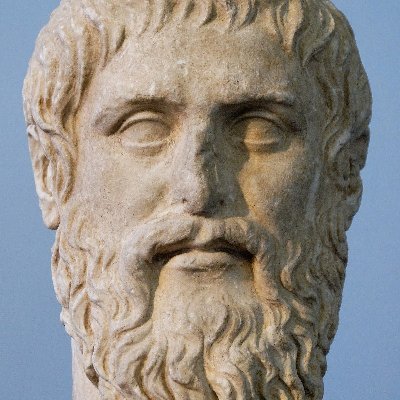
I’ve made a short film.
Look at the things around you: doors, bins, staircases, furniture, railings, doorhandles, windows.
Do you like how they look, or not?
Modern design has become boring, but it doesn’t have to be this way.
The word “beautiful” is overused. We don’t need “beautiful” lamps, bus stops, and water fountains – we just need lamps, bus stops, and water fountains that are interesting, that actually mean something.
Or, at the very least, not boring.
Because the aesthetics of architecture and urban design aren’t just a bonus; they totally change how we think, feel, and behave.
Boring environments make us more stressed and less productive; they erode our sense of community; they make us sadder, less trusting, and lonelier.
A boring world is one where we spend even more time online and where our addictions are even harder to battle.
The Problem
There is global, widespread dissatisfaction with how the world looks. In this film, and the series it will lead to, we want to investigate that feeling and give it a voice.
The point isn’t that we should return to the past or get rid of modernism. It’s about learning from the past in order to improve the present, and about giving the public what they very clearly want, which isn’t the eradication of modernism but the co-existence of modernism AND traditionalism.
Just look where tourists go, where they take their photos, and that tells you everything you need to know about what most people find interesting or beautiful.
And look at where people go on holiday. It’s always to cities filled with old architecture and design, with churches and mosques and palaces, with charming little alleyways and stone staircases and wrought-iron railings.
Of the world’s fifty most visited buildings, only four were made in the 20th century, and they’re all museums or memorials.
There’s a reason why posts about this go viral online all the time. Regardless of why the change happened, it is clearly the case that we no longer make things how we used to.
People are rightly confused by the fact that old lamp posts (to take the example we focus on in the film) are usually so pretty, while modern ones are usually so boring.
Some people say this is just an example of survivorship bias… and they’re mostly correct. But that’s the whole point!
Saying old buildings are usually prettier than modern buildings is not to say that architecture used to be better, or that the past was better.
It is simply to say that certain kinds of buildings, because they have been preserved, are good examples of what people like most.
In which case... shouldn't we try to design at least some buildings in a way that we know people like?
A Unifying Cause
Everybody, from all sides of the political spectrum and all backgrounds, stands to benefit from a world that is designed more thoughtfully and imaginatively. The world could be such a colourful, meaningful, and thrilling place!
So this isn’t about left versus right or conservatism versus progressivism; it’s about making our world a more interesting and meaningful place to live in. This should be a unifying cause, because everybody loses out when our homes and cities are badly designed.
I want this film to unite people who think they’re on opposite sides, and to create a consensus that we need to change our approach to how we design our buildings and the objects – benches, bus stops, bins, lamp posts, aircon units – that fill our cities.
The Importance of Details
We are incredibly rich and have a sprawling choice of shows to stream, phones to buy, or shoes to wear… but everything feels more and more generic all the time.
If you want to understand a society, don’t listen to what it says about itself – look at what it creates. You can learn everything about the Victorians – the good and the bad – just by looking at their lamp posts.
And what do the ordinary details of the modern world say about us?
That we are technologically advanced, very efficient… and care more about making money, about making things as quickly and cheaply as possible, than making our world an enjoyable place to actually live in.
It’s important to learn about why and how things have changed, but that’s for another time. The first step is establishing that the public aren’t happy with modern architecture and design, and that something needs to be done.
But what we need isn’t a total revival of so-called ‘traditionalism’; the truth is that traditionalism and modernism can (and should) co-exist.
The trouble right now is that we only have one, and that people are tired of it.
The Power of Noticing
But this film (and the series it will, all being well, lead to) is about more than the specific argument it presents. Above all it’s about a way of seeing the world around us, a way of noticing and thinking.
“How you do anything is how you do everything.” That is probably true, and it also applies to whole societies, not just individuals; a single doorbell implies everything else about the whole socio-economic and political system that gave rise to its creation.
And, beyond being merely “useful”, the ability to notice details makes the world a richer place to live in, and life a richer thing to lead. This is what the film is about, more than anything: the power and joy of noticing.
A Bigger Project
This short film is just the beginning. We want to make a full series about the history of art and architecture, both for their own sake and also to see what we can learn about life in the twenty-first century and how to improve it. To keep updated you can join our email list over at our website, linked in the reply below.
Final Words
You can watch the film here on X, or over on YouTube, also linked in the reply below.
So… this is where the dream begins, the dream of a new series and the dream of a more charming, more interesting, more meaningful modern world.
Spread the word.