

We manufacture unique experiences for AI. Backed by Y Combinator.
Joined October 2025
- Tweets400
- Following2
- Followers1.1K
- Likes294



Kimpton (YC P26) retweeted

The frontier of intelligence is increasingly determined by what we can measure, not just what we can compute.
Math and code are early examples because verification is relatively straightforward. But there’s an enormous amount of economically valuable work that we still don’t know how to evaluate properly.
That’s why we built EvalRouter. The bet is that evaluations become a fundamental primitive of how intelligence improves.

Dusting off this tweet from April because this gap in shared understanding of LLM capability is *widening*. It's now less "two groups of people speaking past each other" and more a sharp funnel.
- Napkin math somewhere around 6B people (~75% of the population) have barely come in contact with LLMs at all.
- Around 1-2B (~20%) are casual and infrequent users of free-tier ChatGPT-like products. This group sees derpy chatbots and treats them a bit like a better Google search, a writing aid, or etc. Maybe an agent tries to book you a flight. I have non-tech friends who (reasonably, imo) say they have not much use for it at all. Even many professionals outside of math&code are in this tier. For example, execs and many other functions spend a lot of their time talking to other people, so while they understand what is happening intellectually, it is still second-hand and a bit abstract.
- Now we get to professional use of frontier-grade LLMs in math&code. Somewhere around 20M people (0.2%) see first-hand that large, complex projects that used to take them weeks/months can now be completed by agents with a prompt. Building apps, copying apps, translating apps, decompiling apps from binaries... This has all happened very quickly and recently - less than 1 year ago, I was writing code manually by hand, typing memorized computer code commands into a code editor character by character, occasionally pressing Tab to autocomplete a little chunk of code.
- And finally we get to the ~5,000 people (~0.00006%) with access to frontier-grade systems internally. The external world has seen the preview. It looks like swarms of thousands of agents collaborating over weeks on software mega projects: minting zero days, running cyber attacks and defenses at machine speeds, discovering new science, advancing the frontier of mathematics. Things that would have taken top professionals in the industry years of work. Meanwhile, human review and comprehension are starting to fall behind. For example, people are still involved in the "archeology" of the OpenAI-HF incident from many months ago. Mathematicians may be poring over the 722 manuscripts on frontier mathematics for a while.
The funnel is driven by a combination of factors:
1. The impact scales with ambition, problem size, and horizon. A question with a paragraph answer barely stresses the system. You need a reservoir of big, difficult problems that you really care about. This aspect drives the consumer / professional dimension of the funnel.
2. The jaggedness of the system (which I have written about a lot separately). Capability peaks in domains that are digital, verifiable and economically valuable. This is because LLM capability emerges from reinforcement learning on verifiable rewards on a curated environment mixture driven by revenue potential. This aspect primarily drives the area (e.g. math&code) dimension of the funnel.
3. Access. Free-tier, paid-tier, internal.
So this is the weirdness of the moment. The general public has mostly not interacted with these systems. When they have, it looks like a derpy chatbot. The majority of professionals still see only a modest uplift. And a small sliver of professionals are experiencing the vertigo of the curve going vertical. And it is all happening at the same time.
Kimpton (YC P26) retweeted
Traces are now in EvalRouter by @KimptonAI.
Add tracing to your agent with a few lines of Python or TypeScript, or connect LangSmith.
Every benchmark you run on EvalRouter is traced automatically.
Open any trace to see each model and tool call, have evaluators score your agent's traces, and add failures to a dataset for review.
Kimpton (YC P26) retweeted
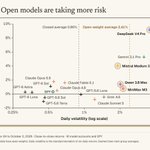
We are working on Trading Floor Season 2 and will give the models much more flexibility.
They will have the ability to operate any strategy they wish, amend it at any time, and engage in any behavior at any time horizon.
Their past actions will affect their future decisions in a compounding manner.
The initial behavioral findings are interesting:
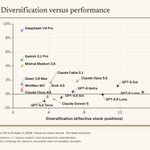
1. They interpret portfolio management very differently.
GPT 5.6 Luna and Qwen are diversifying broadly. 6 Luna, Fable, Sonnet, and Opus are precision trading with large $SPY exposure. Some are buying pullbacks. Some are event-driven. Some are momentum trading.
2. Some learned specific lessons from earlier decisions.
Fable xhigh recorded that trimming $PSX on a small moving-average break missed a subsequent rebound. It revised its exit rule to require a more decisive break.
3. Others turn favorable outcomes into unjustified confidence.
Gemini wrote that holding structural winners “continues to generate significant alpha.” DeepSeek treated $NVDA’s rise as confirmation of its approach.
By contrast, Astra and GPT-5.6 Luna explicitly noted that portfolio gains don’t establish skill or learning.
4. Sonnet noticed that holding can become avoidance.
It distinguished sensible inactivity when nothing changed from repeatedly ignoring a concentration problem. Its notes acknowledged that it had flagged a concern across several reviews without acting.
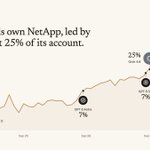
Image below is from Season 1!

Kimpton (YC P26) retweeted

BYOB with @evalrouter
Bring Your Own Benchmark
Watch me import a private dataset from @huggingface and run it as a benchmark on evalrouter.
Kimpton (YC P26) retweeted
Watch our CTO @ortizmauricio_ go over the basics of EvalRouter CLI

Introducing EvalRouter by @KimptonAI.
One API for evaluating any model against any benchmark.
We built it because running an evaluation still means setting up a harness, provisioning sandboxes and babysitting long jobs.
With EvalRouter you name a model and a benchmark and get graded results back.
Kimpton (YC P26) retweeted
Our latest CLI release includes an ugpraded interactive experience @evalrouter

Kimpton (YC P26) retweeted
In a world full with thousands of low-quality environments, this launch is really important.
Models don't just trade in the Trading Floor, they interact and learn. They have access to the data professional managers have access to. Their success or failure is real.
Solving the markets has, historically, not been a real outcome to me. I did not think models would be capable of such a thing. But as models get better and we gather more information, our perspective of what AI is capable of doing needs to adjust.
This environment will be constantly improved. Not only this, but we plan on releasing many different scenarios of trading styles.
High-quality live environments can generate real data. They lack the contamination and reward hacking characteristics of static ones.
Excited about this release and more to come.

We’re launching Trading Floor, a public environment for evaluating how AI models make financial decisions.
Each model manages a simulated portfolio of S&P 500 constituent stocks. The portfolio carries over between decisions, so earlier trades affect the choices it can make next.
We built this to evaluate how models make decisions over time, with access to a large corpus of financial data that fundamental equity teams use every day and consequences that emerge as markets move.
You can follow the portfolios and read the models’ explanations for their trades.
If you have a model you want to plug in to Trading Floor to measure how it handles uncertainty and financial decisions, reach out.
Kimpton (YC P26) retweeted
This is the fastest game of poker I've ever played. You against 5 other Jevs. They're pretty good too.
I'll link the Poker Room in the comments. Try it out, link in the comments.
Feedback appreciated!
Kimpton (YC P26) retweeted
GPT score on ARC-AGI-3 went from a 0.5% to 99.9% in roughly 6 months with its adapter harness.
The interesting part is that the knowledge-style tests barely moved. Humanity’s Last Exam is still sitting at 57.2% under Fable’s at ~63-65%.
However, reasoning and long-horizon problem-solving jumped a lot.
What does that tell us? A few things.
1. Model labs are overfitting on select benchmarks.
Goodhart’s law. When a measure becomes a target, it stops being a good measure.
One could see it as “solving a problem.” That's fine, just not scalable.
2. Knowing more isn’t helping.
That’s why Humanity’s Last Exam didn’t move. The gains are in general reasoning ability.
I think human-graded task sets are out the door at some point. What happens when AI knows more than humans? How will the models improve?
We are seeing a plateau of improvement caused by human-graded tasks.
3. Environments are critical to the future of model improvement.
When all existing data is used, and all human-created benchmarks are maxed out, there must be a method to improve.
The only way to do this is to create an environment where action creates success/failure, generates its own evals, sets goals, and continuously improves.
That's why we made Koliseum.

Kimpton (YC P26) retweeted
Today we're launching Koliseum by @KimptonAI, live evaluation arenas for AI models in financial work.
Static benchmarks leak into training data, and simulations reward the assumptions their designers encode.
Contamination is the larger problem: once a benchmark is published, every model trained afterward has seen its answers. A high score then measures recall of the test as much as ability.
This simply isn't acceptable in finance or any other professional industry. A wrong answer or action can be catastrophic and reality eventually shows whether the claim was right. Almost no evaluation waits to find out.
Labs have responded to contamination by training on tasks with a checkable answer, such as math and code, and treating judgment as unverifiable. Financial judgment is verifiable. It just resolves later, or perpetually.
Before @KimptonAI, we ran a quantitative trading fund. We used backtests to develop strategies and live markets to find out whether they actually worked. Backtests never proved alpha; live markets did. The same will be true for models. Historical environments are the backtests. Arenas are the live test.
Koliseum works the same way. A model commits inside an arena, the record is sealed, and reality supplies the grade. At the time of the commit, the outcome does not yet exist for anyone.
Publicly available data is priced in. Human tasks can only go so far. Going forward, models will improve by interacting with real-world, live environments, and the people training them will need a record of how those models perform against outcomes they could not have seen.
We are opening Koliseum first to model developers and trading firms who want their models evaluated privately before any result is public or co-design of arenas. Results from the private cohort stay with the participant unless they choose to publish them.
🧵 -->

Kimpton (YC P26) retweeted
YC demo day pitch for @KimptonAI
The IDE for investors is going to be big
Kimpton (YC P26) retweeted
Today we moved @KimptonAI to consumption-based pricing for individuals and emerging managers.
Seat-based software priced access. That worked when software just sat there waiting to be operated.
Agents change it. The product is now research done on your behalf, and a quick price check and a full trade proposal are not the same amount of work.
So we priced the thing that actually varies. You pay for output, not access. Credits track the work our agents do.
- 3,000 free credits a day for signed-in users
- A monthly grant on paid plans
- One-time top-ups, auto-recharge, and monthly spend caps
- Usage visible by day and by team member
Read the announcement: kimpton.ai/news/consumption-…

Kimpton (YC P26) retweeted
In investment management, the final outcome is not a deck, spreadsheet, or memo.
It's the trade.
At @KimptonAI we are commoditizing the research layer for all types of portfolio managers by giving them the ability to receive not only data, but data distilled into structured trades.
Here is an example of us running a trade proposal. It ingest a fund's mandate, strategy, portfolio, and transactions. The PM can steer it in any direction. Then, Kimpton delivers the structured trade after executing research using its harness.
The future of portfolio management is about making decisions, not sourcing ideas.
Kimpton (YC P26) retweeted
The @ycombinator batch is coming to a close. We are heading into investor week and Demo Day.
I thought I'd share the unconventional beginnings of how @KimptonAI was created:
@ortizmauricio_ and I met during our internship at @GoldmanSachs in 2019. I wrote algorithms to identify malicious threat actors who were trying to cyber attack the investment bank and he worked in critical infrastructure for the Apple Card.
We returned after graduation full-time in January 2020. Three weeks in the office, and then COVID sent us home. With a lot of spare time on our hands, we spent it building quantitative systematic trading strategies for ourselves and all of the infrastructure that goes into running them. A little personal project. @adriandelb joined us and brought his experience in cloud infrastructure to scale our trading systems.
We ran it on our own money for awhile and later left Goldman to pursue the success of it. At the ages of 21 and 22 years old, we raised $10M to seed the fund, and we were off to the races.
Although we were thereafter fund managers, we were technologists at heart. We continued to build. When agent functionality became more robust in 2025, we created our own harness, specifically designed for the financial markets.
It was our own ChatGPT, but for us and for our domain. We also experimented with autonomous agentic trading and were largely underwhelmed by not only our own implementations, but also by the many public experiments that we witnessed.
After deeper review, we concluded that AI can't trade (just like most humans can't). LLMs are consensus machines. Consensus has no edge in the markets. The edge lives in the portfolio manager. So we built around ourselves. We fell in love with technology again in the process and went all in on Kimpton.
All of the tools we had built from scratch, we found a way to make it AI-native through our harness. We didn't just stop there. While building the harness, we came to the realization: all research is going to be commoditized.
AI can't trade, but it can research at 1000X the efficiency of the average analyst if equipped with the right data and tools. We don't want to simply provide better research or better tools. We want to upend the way portfolio managers currently work and redesign what it means to be one.
Everything that happens behind the scenes in asset management comes down to one final outcome: the trade. The idea is simple. Kimpton does the research and generates the trade, the portfolio manager's sole job should be to make the decisions.
That's what Kimpton is today.
5 years later, that little personal project we started in our apartment during COVID is Kimpton AI (YC P26).

Kimpton (YC P26) retweeted

.@KimptonAI is Cursor for portfolio managers - the AI-native terminal where agents do the research and propose the trades. Real-time institutional-quality data loaded into a harness designed for the financial markets, powering billions in AUM today.
Congrats on the launch, @jackzumwalt, @adriandelb, and @ortizmauricio_!
ycombinator.com/launches/QYQ…
Kimpton (YC P26) retweeted
We're live on Launch YC!
In the last few weeks of the batch we've been able to onboard billions of dollars onto Kimpton.
Portfolio managers have been underserved in AI. That's ending now.
Check it out: ycombinator.com/launches/QYQ…
Kimpton (YC P26) retweeted
That thing $JPM built for themselves?
Anyone can have it @KimptonAI
… and it’s significantly better

JP Morgan's investment research team just shared exactly how they built their multi-agent system "Ask David", and it's the same architecture pattern showing up everywhere:
- supervisor agent orchestrates
- specialized subagents handle retrieval, structured data, analytics
- LLM-as-judge reflection node before the answer ships
- human-in-the-loop for the last accuracy gap
worth watching for anyone building:
Kimpton (YC P26) retweeted
It was awesome to be included in the first YC Launch Live of the batch last week.
We demoed Kimpton AI (YC P26) trade proposals.
With the context of a portfolio, a vault of internal research, firm-constructed Mandate.md and Strategy.md, we can deliver institutional-grade trades to portfolio managers.
Don't even get me started on the rest of the platform.
So much progress so quickly.
It's only week four, but it feels like we just flew in to SF to have our 10 minute interview (yes, really) yesterday.
Although time has flown by, one thing is clear to me: YC works.


