

Psychiatrist/Instructor, Mass General Hospital/Harvard Medical School | antireductionist, subjective experience, psychedelics | my views
Boston, MA
Joined November 2016
- Tweets6.8K
- Following339
- Followers3.7K
- Likes9.2K



Check out and share this study on cognitions related to meditation and psychedelics
👇👇👇


Franklin King MD retweeted

Study Participant Perceptions of the Relevance of Therapist and Study Team Personal Psychedelic Experience
"Study participants demonstrate preference for prior psychedelic experience in therapist and study teams."
sciencedirect.com/science/ar…
Franklin King MD retweeted

A new study found that about 1 in 9 adults over 65 who use cannabis meet the criteria for cannabis use disorder. That deserves attention, but the number also needs some context. @WGBH
Read more:
wgbh.org/news/local/2026-09-…

Franklin King MD retweeted
Holy fuck. $17-22k for a dose of shrooms.

$CMPS $DFTX $HELP $STIM
Some useful details (some new/some not) from the @COMPASSPathway team this past week regarding pricing and commercial launch readiness, particularly at the Deutsche Bank 2026 Healthcare Summit and TD Cowen Neuropsychiatry Summit.
1. Drug Pricing: Compass cited roughly $50–$65k as the annual cost of Spravato and said it expects COMP360’s annual drug pricing to land around that range. Its assumption of three COMP360 doses per year on average implies about $17–$22k per dose.
Lori Englebardt, Chief Commercial Officer: "Right now, currently, on average, SPRAVATO is in the range of anywhere from $50,000 to $65,000 annually. We have, based on our discussions with payers, but also given the product profile and the value proposition that we're bringing, you can expect pricing on an annualized basis to be around that. We will be pricing on a per dose basis...
We believe that will be somewhere in the two to four range, which means an average of three [annually]. The reason I say two to four is not to be silly, but it is to articulate that there will definitely be patients that probably only need two, and there will be patients that probably need four. The average will be somewhere in the three range."
2. REMS/Label: Compass expects a broad label that could describe two initial doses at least three weeks apart, followed by additional treatment at the clinician’s discretion for a total of roughly 2-4 treatments per year. It also expects a REMS similar to Spravato’s, using much of the same clinic infrastructure, with the only key difference being six hours of monitoring instead of Spravato’s minimum two.
Steve Levine, Chief Patient Officer: "We expect a fairly broad label to essentially say for the treatment of treatment-resistant depression. As far as the dosing, we have studied up to four doses in a year in our COMP006 trial. They were up to three in the COMP005 trial. We looked at an initial dose in two different ways. One was a single initial administration in COMP005. That was our placebo-controlled trial. In our three-dose, low-medium-high 006 study, we looked at two initial administrations, three weeks apart. What we have seen from that study with the two initial doses three weeks apart, as well as from the part B data, the blinded part B data from the first study, where that second dose was given a bit later, typically between weeks 10 and 14, is that for many participants, there was a significant additional benefit of having a second dose.
Ultimately, we think that that will translate into a label that may talk about initiation of treatment as two doses no sooner than three weeks apart, with additional treatment at clinician discretion or as clinically indicated."
3. Commercial Reach: Compass estimates there are about 8,000 Spravato-certified sites today, growing by roughly 500 per quarter. It says approximately 80% of Spravato volume comes from 20% of sites. They are currently building out a sales team to develop prescribing-site engagement and a referral network, targeting all 8,000 clinics and roughly 2,000-2,500 nearby referring physicians, including psychiatrists and PCPs.
Lori Englehardt, Chief Commercial Offider: "These sites are growing at about 500 sites a quarter. So whereas there are about 8,000 now, by the time we launch, if that trajectory continues, there will be quite a few additional clinics that will be prepared to administer multi-hour treatments by the time we launch. This has been pretty remarkable growth. These sites are growing because they are growing in anticipation of additional multi-hour treatments coming to market...
We have already started our sales force hiring to make their offers contingent upon approval, to which they will cover all of these 8,000 sites. Most importantly, they will also cover referring physicians. So those physicians that are surrounding outside of these interventional psychiatry treatment centers to make sure that physicians who have treatment-resistant depression patients in their practice understand what the opportunities are for new products coming to market."
4. Reimbursement: Compass expects sites to have existing billing pathways available at launch while the psychedelic service codes remain in Category III. It also plans to seek a dedicated drug code for buy-and-bill after approval and estimates that moving the service codes to Category I could take about 18 months. It is also hiring field reimbursement specialists to help sites navigate billing for the time spent supporting and monitoring patients. Regarding billing at launch, Lori Englebert, Chief Commercial Officer, mentioned, "no site should be disadvantaged versus providing Spravato"; however, they also indicated this could contribute to a slower ramp-up period post-launch.
Lori Englehardt, Chief Commercial Officer: "We know the number one reason that physicians won't prescribe, and Steve alluded to it previously, if you don't get reimbursed or it's not easy to get reimbursed, they likely won't prescribe the product.
The patient has a bad experience because they're not well prepared, or they don't understand what is happening, or they themselves can't get the product reimbursed, then the sites will likely not prescribe. So we're trying to remove all those barriers, and because of that, it will take some hand-holding along the way to make sure that sites are well-trained, well-educated, and fully prepared, and can hopefully get the reimbursement codes through easily. Due to that, we anticipate the launch to be somewhat slow coming out of the gate, just because this is a new product, and sites are going to want to get a little bit of clinical experience before they start doing additional ramp. We do expect, if we do it well, that that ramp will be quite dramatic, and most likely be a pretty dramatic increase in fast fashion. Go slow to go fast."
Reiteration of Timeline: Compass continues to expect completion of its rolling NDA submission in Q4 2026 and a potential launch in H1 2027, subject to FDA approval and federal and state rescheduling. COMP360 received a national priority voucher carrying an FDA target of 30–60 days for review of a submitted application (some skepticism mentioned about whether they can meet this target). Federal law then gives the DEA up to 90 days to reschedule (April EO could shorten this timeframe). Following federal rescheduling would be state rescheduling. Compass estimates that 44–45 states, representing about 93% of the U.S. population, could reschedule within 30 days of federal action.
Overall, Compass appears to feel confident in its commercial launch plans and seems to have a good line of sight into regulators and treatment centers. I remain slightly cautious about reimbursement at launch. The existence of billing codes is helpful, but actual coverage, payer rules, payment rates, and clinics’ confidence that they will be paid adequately for a six-hour visit will matter for adoption. Uncertain and confusing billing pathways partly contributed to a slower Spravato roll-out back in 2019. Englebert has described feedback with payers as "overwhelmingly positive," so we shall see, and this will be something to continue to monitor.
Senate testimony in 1977 on CIA covert opps, spectacularly failing at a planned fake party convened simply to dose unwitting American civilians with aerosolized LSD


Franklin King MD retweeted

I guess we buried the lede on this one in our Sunday newsletter and last Bulletin... ICYMI...

Last week, we reported that, according to sources who spoke to Psychedelic Alpha on condition of anonymity, Resilient Pharmaceuticals (formerly Lykos Therapeutics) has resubmitted its MDMA for PTSD new drug application (NDA) to FDA.
It comes after the agency rejected the original NDA in August 2024. The new package, we understand, is supplemented with fresh safety data and references third-party trials, including one from the VA.
The company has not publicly confirmed the filing.

In 1972 psychologist of religion Walter Clark posted a survey for people doing or interested in doing psychedelic research, and published the first 100 responses. Never knew about this paper until now. “Psychedelic Research: Obstacles and Values”, J Humanistic Psychology, 1975.


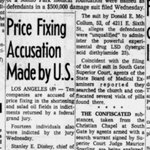
1/x Long Beach Press-Telegram, 6/14/62. This was a very interesting period: LSD had started to generate minor scandals, but still at the margins of psychiatry—not fully out in the culture at large. The IFAS is itself an interesting entity, with Hubbard, Fadiman, Stolaroff, Savage


"Whatever Happened to Psychedelic Research?" Jules Asher, APA Monitor, November 1975—a very interesting year, with the scandals in rearview but research not fully dead yet.
Also included is his article on the CIA and military's flagrant human rights violations in the 50s/60s.


Franklin King MD retweeted

“Right to Try” access to schedule I substances takes a major blow in Congress.
A final death spell for The Freedom to Heal Act of 2025, which as I reported last December never appeared to have any legs on Capitol Hill to begin with.

The House passed NDAA amendments to extend a military psychedelics research program & codify provision of Trump's psychedelics executive order—but separate proposals on marijuana test waivers for recruits & access to Schedule I drugs under "Right to Try" were blocked from receiving votes.
marijuanamoment.net/house-pa…

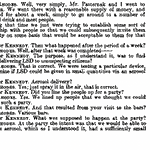
Karl Menninger raising a comment at the Round Table on Lysergic Acid Diethylamide and Mescaline in Experimental Psychiatry, held at the Annual Meeting of the American Psychiatric Association, Atlantic City, New Jersey, May 12, 1955:

Franklin King MD retweeted
I spoke with Joji Suzuki, who has received a NIDA grant of up to $11M to seek an IND for ibogaine and conduct a Phase I, and possibly Phase IIa, study.
Backed by $11M NIDA Grant, Harvard Moves Forward on Ibogaine for Opioid Use Disorder Research
Read more on our website: psychedelicalpha.com/news/ba…

Franklin King MD retweeted

Psychedelics may soon make the transition from Schedule I substance to the clinic, but only a handful of drugs have successfully completed the journey. @KingFranklinIV and I examine the development of GHB into an FDA-approved treatment for narcolepsy. jamanetwork.com/journals/jam…

Franklin King MD retweeted

🗳️ We also tested a 2024 Massachusetts ballot measure to legalize natural psychedelics
A few rounds of chat with a pro- or anti-legalization bot shifted support by 10–20 points, depending on starting views - Local & issue campaigns may be especially susceptible to persuasion!

Franklin King MD retweeted

The serious medical risks of psychedelics aren't spread evenly across the class — they cluster in specific agents and settings. A Massachusetts General Hospital Rounds review in PCC maps where the real hazards lie: ibogaine (QTc prolongation, torsades de pointes, reported sudden cardiac death) and high-potency synthetics like NBOMe and DOx sit at the top; MDMA turns dangerous in hot or polydrug settings; classic serotonergic agents (psilocybin, LSD, mescaline) are generally well tolerated in healthy people.
Read the full article here -----> psychiatrist.com/pcc/medical…
Sign up for our weekly email newsletter here -----> psychiatrist.com/register/es…
#Psychiatry #Psychedelics #Toxicology #HarmReduction #PatientSafety #ConsultationLiaison #PCC

The report of Massachusetts Veterans Alternative Therapies Working Group—which I had the pleasure of chairing over the last year and half and which was convened to examine questions regarding psychedelics for veterans—is now official and online: malegislature.gov/Reports?st…
Franklin King MD retweeted

Can Sufi and mystical islamic meditation help us understand consciousness?
Modern science has only recently begun to investigate advanced meditation and related altered states of consciousness. Most of this research has focused on Buddhist traditions and related meditations, especially from Theravāda and Tibetan sources. Sufism, despite its rich contemplative heritage and sophisticated models of self-transformation, remains absent from contemporary neuroscience and consciousness research.
As contemplative science increasingly turns toward advanced meditation, we need to develop a more comprehensive, cross-tradition understanding capable of integrating diverse contemplative perspectives on selfhood and awareness.
In our new manuscript, “Extending the Scientific Study of Advanced Meditation Across Contemplative Traditions to Sufism within Islam: A Comparison Case of Self-Attenuation including Theravāda Buddhism and Tibetan Dzogchen,” we explore how Sufi contemplative practice can contribute to the scientific study of consciousness and meditative development, and particularly to our understanding of selfhood and the attenuation and reorganization thereof.
Drawing on classical Sufi concepts including ‘nafs’ (self-centered or egoic processing), ‘qalb’ (‘heart’ as a center of awareness and affective transformation), and ‘rūḥ’ (a deeper non-egoic mode of awareness), we develop a neurophenomenological framework for understanding how Sufi contemplative practice reorganizes the ordinary sense of self while preserving vivid consciousness. Through this lens, we further present and examine ‘fanāʾ,’ a temporary dissolution of egoic selfhood, ‘baqāʾ,’ a reintegrated and stabilized mode of awareness following self-transformation, and ‘dhikr,’ a rhythmic devotional remembrance involving repeated phrases, breath, sound, and focused attention.
We present our new framework, theorizing that Sufi contemplative practice involves:
— Neural entrainment through rhythmic repetition
— Reduced dominance of narrative self-focus
— Reweighting of affective salience and motivational relevance
— Changes in agency, ownership, and self-boundaries
— Preserved awareness rather than loss of consciousness
Integrating Sufism into contemplative science is not simply about broadening comparative scope. It promises to deepen current scientific models of meditation by foregrounding dimensions often underexplored in modern contemplative science: devotion, affective salience, meaning, and the transformative role of rhythmic practice. Future research may thus advance a more integrative science of consciousness capable of linking phenomenology, large-scale brain dynamics, and the lived transformation of self-experience across contemplative traditions.
I’m so grateful to first author Asiya Gul, our collaborators Sebastian Ehmann, Catherine Prueitt @CatPrueitt, Terje Sparby @terjesparby, and the contemplative practitioners and traditions that continue to inspire this work.
Preprint below ⤵️
May this work benefit many 🙏


Franklin King MD retweeted

“This underscores the need to have therapists available with experience in dealing with emerging and frightening material, which is common in volunteers with a history of trauma. All the unresolved issues come bubbling to the surface under the influence of the psychedelic.” - Scott T. Aaronson
Read the full conversation on our website: psychedelicalpha.com/news/ps…
