- Tweets162
- Following592
- Followers320
- Likes3.8K









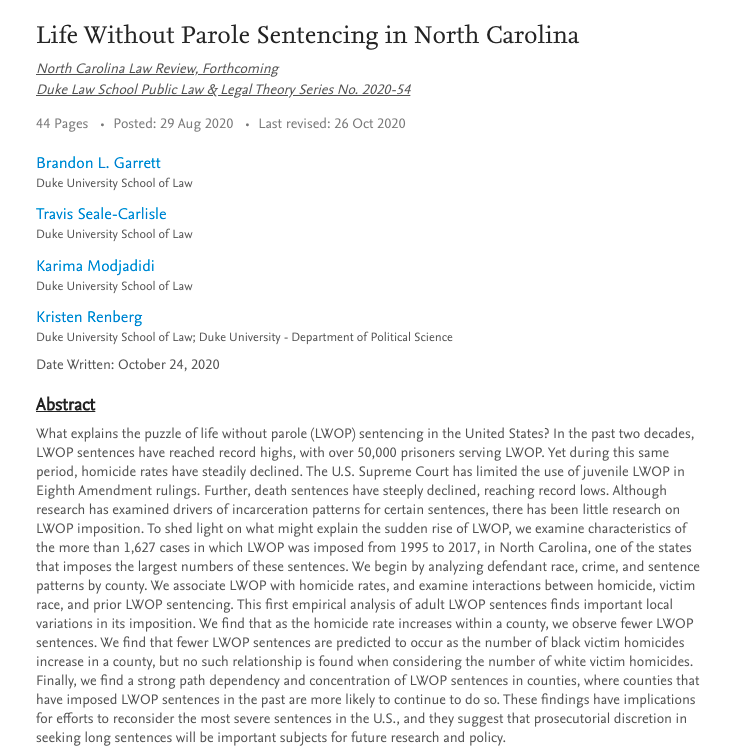
ALT What explains the puzzle of life without parole (LWOP) sentencing in the United States? In the past two decades, LWOP sentences have reached record highs, with over 50,000 prisoners serving LWOP. Yet during this same period, homicide rates have steadily declined. The U.S. Supreme Court has limited the use of juvenile LWOP in Eighth Amendment rulings. Further, death sentences have steeply declined, reaching record lows. Although research has examined drivers of incarceration patterns for certain sentences, there has been little research on LWOP imposition. To shed light on what might explain the sudden rise of LWOP, we examine characteristics of the more than 1,627 cases in which LWOP was imposed from 1995 to 2017, in North Carolina, one of the states that imposes the largest numbers of these sentences. We begin by analyzing defendant race, crime, and sentence patterns by county. We associate LWOP with homicide rates, and examine interactions between homicide, victim race, and prior LWO