

Retrieving from oblivion the antiquities of the old kingdom, where the sun sets and the divine awakens. Personal account: @FCMart1n
Joined March 2025
- Tweets1.7K
- Following37
- Followers2.8K
- Likes5.2K






Pinned Tweet
Reasons to lump Callaecian and Lusitanian together:
>Same onomastics.
>Same toponymy.
>Same gods.
>Same Celtic and pre-Celtic strata.
>Same recorded pre-Latin language.
Reasons to differentiate Callaecian and Lusitanian:
>"Bro, Galicia sounds like Galatian/Gaelic/Gaulish."


>There is zero evidence of a "Gallaecian language" distinct from Lusitanian. Neither was Hispano-Celtic, as neither was Celtic to begin with.
>Cantabria as a mixed Celto-Vasconic area makes no sense at all.
teapaw.org/Lethescholar/status/20…

Lethe scholar retweeted
Celto-Italic ethnogenesis vibes.

The mystery of the Unetice formation.
As the Bell Beaker culture forms and spreads, can see a mosaic of Bell Beaker and Corded Ware settlements all intermingled across this region.
This is, quite frankly, bananas.
The Bell Beakers didn't just take over like in other areas of Europe.
Look at the first two maps. Two different belief systems, pottery styles, burial customs functioning side by side for centuries.
They were genetically related but culturally distinct.
The Bell Beaker side slowly started taking over and then a synthesis emerged, combining elements of both into a new way of life - the Unetice culture.
But how did this happen in practice?
I don't know.
But then you see powerful chiefs emerging who were buried in splendour. Maybe their ancestors were feted because they had unified these cultures.
These images are from Harald Meller's 2019 paper on Unetice culture called Armies, Princes, and something something etc.


Lethe scholar retweeted
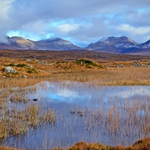
Few things have more Iron Age vibes than bogs:
>Bogs spread massively in the Iron Age.
>Bogs were a source, well, for iron.
>As the Iron Age ended, civilization drained bogs.
>Iron Age lasted longer in bog-rich lands. Not only Ireland--much more so in the Baltic!
Bogs are cool.

Lethe scholar retweeted
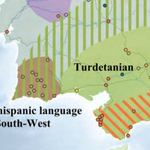
The language of the SW Iberian stelae (more often, and perhaps improperly, known as Tartessian) is undeciphered. As for the Turdetani, they retained very little pre-Latin material besides toponymy.
It's possible, but far from clear, that they were related… (+)


Lethe scholar retweeted
Even Iberians could be seen as non-indigenous, as they most likely came from the EEF that displaced the WHG. And if not, from the Epigravettians that displaced the Solutreans. And if not, from the modern humans who displaced the Neanderthals.


Lethe scholar retweeted
Since Éber Finn and Éremón, Ireland has had a recurring tendency to be divided into two north-south halves: La Tène (3rd century BC), Leath Cuinn-Leath Moga (2nd century AD), Synod of Ráth Breasail (1111), and, well, the 1921 partition--undoubtedly the most imperfect of them all.


Lethe scholar retweeted
Ok, Iberia was not as diverse as the Balkans or Anatolia during the Iron Age, but lumping it all together under the category of "Hispanians" is utterly ridiculous, especially when the point is to highlight religious diversity… (+)


Lethe scholar retweeted
A substantial change involving what was known as Albion in the 6th century BC becoming Prettaniké (Britain) by the 4th?
Well, pretty obvious.
Gallo-Brittonic Celts occupying long-lost Gaelic realms > the Gaelic name gives way to the Gallo-Brittonic one.


Celto-Italic ethnogenesis vibes.
The mystery of the Unetice formation.
As the Bell Beaker culture forms and spreads, can see a mosaic of Bell Beaker and Corded Ware settlements all intermingled across this region.
This is, quite frankly, bananas.
The Bell Beakers didn't just take over like in other areas of Europe.
Look at the first two maps. Two different belief systems, pottery styles, burial customs functioning side by side for centuries.
They were genetically related but culturally distinct.
The Bell Beaker side slowly started taking over and then a synthesis emerged, combining elements of both into a new way of life - the Unetice culture.
But how did this happen in practice?
I don't know.
But then you see powerful chiefs emerging who were buried in splendour. Maybe their ancestors were feted because they had unified these cultures.
These images are from Harald Meller's 2019 paper on Unetice culture called Armies, Princes, and something something etc.
Few things have more Iron Age vibes than bogs:
>Bogs spread massively in the Iron Age.
>Bogs were a source, well, for iron.
>As the Iron Age ended, civilization drained bogs.
>Iron Age lasted longer in bog-rich lands. Not only Ireland--much more so in the Baltic!
Bogs are cool.
The language of the SW Iberian stelae (more often, and perhaps improperly, known as Tartessian) is undeciphered. As for the Turdetani, they retained very little pre-Latin material besides toponymy.
It's possible, but far from clear, that they were related… (+)
Here you can see the Turdetani settlements mapped by the renowned late Spanish scholar Javier de Hoz. The Algarve region (where the SW stelae are concentrated) appears as Turdetani territory.
Great for our issue, but uncertain.
teapaw.org/Lethescholar/status/20…

Lethe scholar retweeted
Ancient inscriptions containing indigenous languages of Iberia, sorted by writing system (Tartessian excluded):
🔵Levantine script
🌲Southern script
⭐️Greco-Iberian script
🟥Celtiberian script
⚠️Greek alphabet
🟨Latin alphabet
Source: Hesperia database.


Even Iberians could be seen as non-indigenous, as they most likely came from the EEF that displaced the WHG. And if not, from the Epigravettians that displaced the Solutreans. And if not, from the modern humans who displaced the Neanderthals.
(I mention the Iberians because they seem to have been the ethno-linguistic group with the longest-standing presence in Protohistoric Iberia--the proto-Basques were clearly Iron Age migrants from the northern Pyrenees imo)
teapaw.org/Lethescholar/status/19…
Bell Beaker items distribution again insists on the French Massif Central as a refractory area to foreign influences at crucial times.
Since the Beakers were a vector of the Indo-Europeanization of western Europe, the Massif Central appears to have escaped it too…➡️


2
10
281
Ancient inscriptions containing indigenous languages of Iberia, sorted by writing system (Tartessian excluded):
🔵Levantine script
🌲Southern script
⭐️Greco-Iberian script
🟥Celtiberian script
⚠️Greek alphabet
🟨Latin alphabet
Source: Hesperia database.
I don't know why the map's makers excluded Tartessian, BUT clearly Tartessian stands apart, as it is older and has no continuity into the fully historical period or with the other script categories.
teapaw.org/Epicgravettian/status/…

1
12
1,156
Ok, "indigenous" is vague, as every human group arrived from abroad at some point and bla bla bla.
But clearly the map is not about just "ancient" stuff, as it does not include the most attested ancient language in Iberia, Latin. Nor Greek or Phoenician.
teapaw.org/tatanzai/status/212280…
6
814
Lethe scholar retweeted

(Visto en FB): "Mapa dos Estados do Conde de Monterrei", por X. R. Fernández-Oxea.
Friendly reminder de que, malia a alerxia cartográfica da nosa historiografía medievalista e modernista, a Galiza foi coma eses mapas tan vistosos que tod@s coñecemos do Sacro Imperio ou Francia.

Lethe scholar retweeted
Here, a major reason for the Irish (and wider Atlantic) Late Bronze Age collapse.
Bogs.
The colder and wetter conditions that set in by 800 BC expanded the bog's realm.
Agriculture, herding, communication, accumulation--all became harder, and tribes scattered.
(+)


Here, a major reason for the Irish (and wider Atlantic) Late Bronze Age collapse.
Bogs.
The colder and wetter conditions that set in by 800 BC expanded the bog's realm.
Agriculture, herding, communication, accumulation--all became harder, and tribes scattered.
(+)
Yes, that was a major issue throughout the Atlantic Late Bronze Age collapse, although peat bogs were not the whole story everywhere, as they were in Ireland: (+) teapaw.org/Lethescholar/status/19…

A nice Galician caption on the issue:
teapaw.org/Lethescholar/status/19…
