







MFPL retweeted

The importance of this paper cannot be overstated.
The authors compared AI reviews with 134 reports written by carefully selected, paid human experts.
The results are impressive.
Not only AI received higher ratings across all seven dimensions assessed by an AI judge.
But even three former journal editors preferred AI reviews in 90% of the cases.
The potential benefits of AI reviews for scientific advance are getting enormous: faster and higher quality feedback, less reviewing work, more time for research.
We could even imagine journals run entirely by AI editors and reviewers. This could radically disrupt a publishing system that costs researchers considerable time and money. Let me say: some disruption would be welcome.
But there are also major concerns.
What happens when a few AI systems become gatekeepers across sciences?
They might increase average review while narrowing the range of ideas that survive.
This is particularly critical at the scientific frontier, where an important contribution may challenge the assumptions that existing research takes for granted.
And even worse: let’s not forget that, near the frontier, AI systems become more likely to hallucinate.
So they might embed errors at the very core of human knowledge.
A tsunami is coming.
And we’re not ready.
*
Paper in the first reply

MFPL retweeted

Body, Mind, and an Entirely Misplaced Accusation edzardernst.com/2026/10/body… via @edzardernst

MFPL retweeted

"In fact, memory works like this in most species... Using Loftus-style paradigms [...] false memory effects have now been demonstrated in a variety of species, including pigeons, rats, gorillas, and even cuttlefish" amazon.com/Thinking-Animal-O…

MFPL retweeted
My logic professor told us that if we affirmed the consequent, we'd fail the test. And I did fail the test. So I guess I affirmed the consequent.
MFPL retweeted

Sometimes we limit ourselves based on negative associations. Example many people associate "unfalsifiable" with "don't believe that." But:

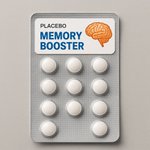
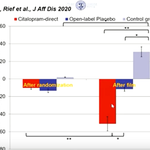
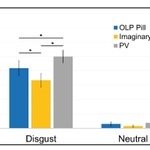
Can placebos improve your memory?
Placebo and Nocebo Effects in Memory Performance: A Narrative Review | Journal of Cognitive Enhancement | Springer Nature
doi.org/10.1007/s41465-026-0…

MFPL retweeted

Beyond “non-significant” results: Why and how to test for practical equivalence | PNAS pnas.org/doi/10.1073/pnas.26…

MFPL retweeted
The number of people who think any request for empirical evidence makes you a positivist is too damn high.
MFPL retweeted

"When parents and others do treat boys and girls differently, it’s often in the opposite direction to that presupposed by the sociocultural theories. Rather than discouraging aggression in girls more than boys, for instance, parents spend more time discouraging it in boys. Why? Because boys engage in more of it!"
stevestewartwilliams.com/p/f…

MFPL retweeted

Science and observation has shown many religious claims, and tri-omni monotheism, to be false. Various supernatural claims can confirmed/refuted by science.
MFPL retweeted

This is a complete argument for objective morality.
In this episode of Seeing Clearly, professor @Michael__Huemer and I run through his argument for moral realism: the thesis that there are objective moral facts knowable via intuition. We cover every other metaethical theory and show why each of them fails and how moral realism responds to the most popular objections against the view. I did my best to pressure Professor Huemer by steel manning anti-realism every step of the way.
1:01 — What is metaethics?
2:52 — The 5 metaethical theories
10:58 — Why are philosophers, and not linguists, talking about semantics?
13:36 — Why non-cognitivism (emotivism, prescriptivism) is wrong
19:11 — Why quasi-realism is wrong
24:09 — Why naturalism is wrong
27:49 — The Open Question argument and can we just deny it?
29:34 — Is the is/ought gap even real?
33:11 — If normative facts depend entirely on descriptive facts, are they really different?
37:16 — Why subjectivism is wrong
54:04 — The Principle of Phenomenal Conservatism
56:41 — Why nihilism is wrong
58:11 — Isn’t it more intuitive to be a nihilist given a modern scientific worldview?
1:10:09 — What if someone just doesn’t have realist intuitions?
1:18:44 — Does evolution debunk morality?
1:25:42 — How could we possibly know “non-natural” moral facts? Can meditation help?
1:36:25 — If you’re wrong about morality, does anything bad actually happen?
1:39:16 — What are moral statements true *about*?
1:46:19 — Does the Form of the Good = a value attractor state?
1:48:48 — Do souls exist?
MFPL retweeted

This narrative review suggests mental disorders are statistical clusters of biopsychosocial properties, not sharply defined categories, mirroring concepts in species classification and supporting dimensional #MentalHealth frameworks. ja.ma/3Sn3TTs

MFPL retweeted

Güdülenmiş akıl yürütme:
Beynimiz bir bilim insanı gibi gerçeği aramaz, bir avukat gibi arzularımızı savunur. Arzuladığımız sonuca ulaşmak için hafızamızı yanlı tarar ve kusursuz bir "objektiflik illüzyonu" yaratırız.


MFPL retweeted
Ways of influencing the beliefs of others
1. reward/punishment
2. censorship/control info
3. repetition
4. peer pressure
5. psych manipulation
6. rational persuasion
1-5 are causally powerful. However only 6 is truth-sensitive. 1-5 are as effective for false beliefs as for true.
MFPL retweeted

"There is no conflict between science and metaphysics, only between science and bad metaphysics. At the edges of science, metaphysical questions ... inevitably arise, and they can be answered by the same kinds of coherence-based inferences found within science."
- Paul Thagard


Has metaphysics become redundant?
Philosopher of science Massimo Pigliucci proposes that in an age of flourishing science, metaphysics is no longer a necessary area of study.
Tap here to watch his full interview on stoicism, pseudoscience, and metaphysics. iai.tv/video/stoicism-teache…
MFPL retweeted
"In other words, parsimony, consilience, and observational continuity carry a lot of epistemic weight—more weight than the theist has yet been able to move."
- Kenneth Williford, Hume’s Dialogues Concerning Natural Religion: A Philosophical Appraisal


MFPL retweeted

Critical thinking is older than we think.
Long before modern education, philosophers challenged assumptions, questioned beliefs, and searched for truth through reflection.
Progress begins when people start questioning.

MFPL retweeted
Imagine a 19-year-old scrolling TikTok. She watches a creator list five "signs you have undiagnosed anxiety." She recognizes three in herself. By the end of the week, she's describing herself as anxious to her friends. A month later, she's avoiding situations she used to handle fine.
What went wrong?
In a new paper by my PhD student Dasha Sandra, titled "Why mental health awareness can harm: Converging explanations for a societal problem", we argue that well-meaning mental health awareness can backfire, and we identify how. Four separate literatures (concept creep, nocebo effects, prevalence inflation, and illness self-labeling) have been circling the same problem from different angles. We show they converge on three mechanisms:
1.Awareness lowers the threshold for what counts as a disorder.
2. It trains people to scan their inner lives for symptoms and reinterpret normal distress as pathology.
3. Once someone adopts an illness identity, they behave in ways that confirm and deepen it.
The evidence is wide. Learning that loneliness is harmful makes solitude feel worse. Learning that stress is harmful worsens well-being and performance. Awareness videos about fake conditions like "wind turbine syndrome" produce real headaches. Trigger warnings raise anticipatory anxiety without reducing distress.
This does not mean awareness should stop. It means awareness can have unintended consequences, including manufacturing the suffering it tries to prevent. Inoculating people against these mechanisms works, and we already have evidence it does.
Link to paper: michael-inzlicht.squarespace…


