

Renegade economist/investment strategist for top 50 Global Asset Manager & itinerant permaculturist.
Lower Cascadia
Joined March 2015
- Tweets7.9K
- Following458
- Followers1.5K
- Likes3.1K




1/n What else might you expect from someone who joined and advised a fascist Party in Austria? Mises wrote in the 1927 book:[43]
"It cannot be denied that Fascism and similar movements aiming at the establishment of dictatorships are full of the best intentions"


Investors have spoken, & the PRC, in the efficient processing of information that asset mawkhets always offer, is no longer pricing the existential threat to America that Sam & crew pitched. So no US bailout will be rationalizable. Bank NVDA will just have to cover it.

🦔China’s AI stock bubble already burst. The STAR50, an index of China’s AI and chip companies, fell 40% from its July high in under four months and wiped out about $480 billion. Robot maker Unitree, which retail buyers oversubscribed 8,000 times at its listing, has halved since August.
My Take
Small investors carried this rally, and a lot of them bought because state-backed funds owned the same companies, so it felt like Beijing had signed off. Those state funds sold into the rally to cool it down while small investors kept buying. I don’t blame them much. When the government’s own money owns a stock, assuming it’s safe is reasonable, and that trust made the losses hurt more.
US AI stocks look cheap next to that. The Nasdaq 100 trades around 30 times earnings, and the STAR50 is still near 100 even after the crash. The weak spot here is debt and new stock, with Meta selling $35 billion in shares this week and credit spreads at 17-month highs. If US AI stocks slide, the pain shows up in index funds and 401(k)s, since that’s where most Americans hold this trade. Chinese chipmakers will also end up in a price war at home (one Shanghai fund manager says it’s coming), and cheaper Chinese chips and models make it harder for American labs to cover their compute bills.
Hedgie🤗
reuters.com/world/china/chin…

Further evidence that Carl Sagan used to smoke the finest ganja. & cultivated a rather touching faith in the impartiality of science and linear logic.


Robert Parenteau,CFA until CFAI CMO fraud revealed retweeted

Why do all his projects sound like something a bunch of 10-year-old boys came up with at a sleepover?

Palmer Luckey unveils “Warhound,” a $200 million startup developing genetically enhanced dogs for the US military in partnership with Colossal Biosciences and Anduril Industries.
Colossal will provide genetic engineering and cloning expertise, while Anduril will equip the dogs with advanced cybernetic technology and battlefield awareness systems.
Follow: @AFpost


If incentives in asset markets were designed for the efficient processing of information, inconsistency like this would be price rectified by investors in nanoseconds. Instead, the long only institutional investors are paid to play. Shareholders uber alles: a mandate from hell.

Zuck's recent move proves this is not true. Zuck is electing to increase his "investment". He's requesting new issuance of shares. To him. To pay the tax. Nor is there any sign META is pulling out of the AI capex arms race. Though the dilutive hit on his shareholders may hit that

I've made this point before, but "a 5% tax will not make any difference to the way they live" is an argument against levying such a tax. A tax that doesn't cause the taxpayers to consume less will cause them to reduce investment, hurting growth.
Some reduction in private investment is unavoidable when levying almost any tax, but we should not levy taxes narrowly targeted to reduce investment as much as possible and consumption as little as possible.
We know externalizing costs is a rewarded business practice in the economic system we inhabit.
Zuck appears prepared to dilute his existing shareholders so he can pay a prospective California wealth tax. Not sure his shareholder or creditors will be rewarding him 4 that 1.

If Prop 40 is enacted, Zuckerberg will be on the hook for about $10 billion.
@Meta will allow him to sell up to 20% of his new class C shares. Because these shares are non-voting, Zuckerberg will not lose any voting rights. He will keep control of @Meta.
In return, Zuckerberg commits to staying in California for at least 8 more years.
This destroys the argument that somehow billionaires “cannot pay” a wealth tax because they would “lose control” of their companies (which would be bad, according to them).
During the late 90s TMT bubble, New Economy true believers ate up Geoffrey Moore's 1995 tech mktg book & pitched "Tornado Economics" - i.e. unstoppable positive feedback driven growth induced by TMT. They ignored the macro incoherencies that led to Tourbillion Economics. Rerun.


Ok, looks like you can now check the Irving Fisher/Alan Greedspan/Ben Berdankweed Memorial box of The Impending Minsky Moment checklist.

“I don’t see a systemic problem" in AI, Bessent told investors at a closed-door event. 👇🏼
ft.com/content/5b7c2fdf-2300…

Ask urself why does the Fed still pay interest on reserves to banks when it no longer imposes reserve requirements on banks? Note an "ample reserve regime" then becomes massive bank profit subsidization. The corridor method of policy rate mgt comes at a price (& a bank benefit).

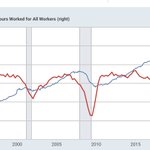
The multiplier effects of AI capex on other capex, GDP, labor hours, & income are unusually low. Low multiplier effects make it very challenging to hit the revenue expectation built into investor required ROIs. Creditors figure it out first, equity analysts find out last.

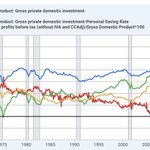
More on the "crowding out" problem of AI: "A popular view holds that the AI capital boom is powering a broad US investment revival. The numbers say otherwise. In the three years after ChatGPT launched, US data center investment tripled and broader technology investment grew 50%. Yet total productive investment held flat as a share of GDP, because many investments unrelated to technology, software, and R&D fell relative to GDP. The tech build-out has shifted the composition of US investment rather than ramping up its total." - McKinsey
For my next report, I've been buried in "Global Electricity Undersupply" (learn more about our reports here: sageroadresearch.com/collect…). Electricity supply exemplifies AI's crowding-out downside. Last year saw global electricity demand increase 3%. The IEA expects demand to only accelerate over the next two years, hitting 3.6% demand growth in 2026 and 3.8% in 2027. Data centers are only a sliver of that growth equation, currently accounting for only 1.5% of global electricity consumption. Even considering current AI buildout expectations, that share of consumption is projected to reach just 3 to 4% by 2030.
The drivers of increasing global electricity demand extend far beyond data centers, from transportation to heating and cooling to industrial electrification. For just one indication of how electrification can boost global productivity, just consider AC in Europe. Only 10% of European households have AC. Europe suffered at least 35,000 excess deaths this summer from back-to-back heatwaves, according to government figures. Yet, as tragic as that is, it is not the only concern. Extreme heat is also an intensifying economic drag on Europe. As Allianz calculated in a report earlier this year: “Workers’ hourly output declines by $1.30 for every degree between 30 and 35 Celsius…Heat waves cost between 0.3% and 0.5% of European GDP overall, and more than 1% of GDP in heat-prone southern regions.”
AI is compromising the ability of the globe to meet electricity demand increases outside of AI, generating electrical equipment shortages and inflation. For one, gas turbines are reportedly sold out through 2030, with prices spiking 195% since 2019. For another, delivery lead times for high-voltage transformers have ballooned from about a year in 2020 to upwards of two to four years, with prices climbing to nearly four times 2021 levels, according to Reutersreporting. Much the same is true for circuit breakers, “with high-voltage circuit breakers recording an average lead time of 151 weeks in 4Q25, an increase of more than 130% YoY,” according to Wood Mackenzie. And then there’s switchgear, with “medium-voltage switchgear lead times currently sitting at 40 to 80 weeks, more than double pre-pandemic averages, while large low-voltage switchboards lag at 35 to 62 weeks compared to the 20 to 30 weeks once considered standard,” according to DEI Power Solutions.
Far more to come in the report!
McKinsey link: mckinsey.com/mgi/unconventio…

Given the lack of a productivity dividend, meeting investor profit expectations will require a surge in prices the Fed won't allow.
Given the lack of total investment, income, or employment multiplier effects from AI capex 4 years in, such pricing power may prove very elusive.

Insane.
"Taking the next three years of projected earnings for the S&P and summing them, we can see that its rise has never been higher as far back as we have data for, running at a 40% annual pace."
Earnings growth has NEVER BEEN HIGHER.
Without it, a 10-year yield still over 5% would be a much more serious headwind for multiples.

This is brilliant. When you recognize AI is a control strategy, clarity ensues. JMK's theory of money is that we hold it to quell our disquietude with uncertainty. The liquidity premium is, in other words, a control premium. & AI funnels money upward. Faster. Silly monkeys.

Today's Post
Get Out of the Phone Box
polemicpaine.substack.com/p/…
On why short-term trading now belongs to the machines and the edge has moved to the medium term.
Algos trading correlations they don’t understand.
Why the economists’ letter is still the best contrarian indicator going, from Brexit and Trump to Milei.
Why wars don’t back test.
Alex Karp on the neurodivergent and why sideways thinkers may beat the consensus machines.
AI capex boom, a smorgasbord nobody’s sure will be paid for.

That moment when you realize VCs are to the US economy what the CCP is to the PRC...and that you are consequently living through another Great Leap Forward, which may conclude with similar consequences if asset Mawkhets aren't as Efficient as the Chicago Boys asserted.

This chart shows the key risk to the AI trade, and it's missing from the latest revenue announcements.
The AI boom is fundamentally driven by a top 1% of companies that drive 80% of spend. Within that top 1%, 80% are venture-backed.
That's all fine if the AI trade works out, and if, as some prominent investors say, everyone wins.
But if it doesn't work out, then we have a cascading effect of large customers simultaneously pulling back their AI spend.

AI is built on expropriating the digital commons - not unlike the birth of capitalism through enclosing the Commons. How ironic that the agents being released by AI firms now bump up against corp fences. Rules for thee, but not 4 me, only gets you so far.
theepochtimes.com/business/c…


There is no productivity dividend from AI. Which means this is not the promised path to post scarcity utopia. The same one the enforcers of Moore's Law promised you. Time to face that AI is just a fancier human fracking machine designed to engorge the techbros & their financiers.

Probably better to see some noticeable productivity acceleration on a macro level before pitching 5x the growth rate ever seen in the history of man in just 3yrs.
xitter.cf/scaling01/status/21112…

Never mistake a control gambit with an engine of abundance. 4 years into AI, there is no productivity dividend. Which means there is no path to post scarcity via AI, just like microprocessors & PCs brought us surveillance & extraction, not price deflation. You've been punked.


Robert Parenteau,CFA until CFAI CMO fraud revealed retweeted

Perry Mehrling marked Bernanke’s "Econ Nobel" by sharing Kindleberger’s verdict on him: “a most ingenious solution to a non-problem.”
xitter.cf/PMehrling/status/15805…
Now Woodford has just won this year’s prize, and Mehrling is sadly no longer here to weigh in. So here is his own take on Woodford:
"...he abstracts from essentially all of the institutional apparatus of the banking system. Not only is there no capital in his account, but also there are no banks. No doubt there is a wide range of economic problems for which these abstractions are useful, but I confess to some doubts about the usefulness of these abstractions for many monetary problems."


Lovely tribute to Perry Mehrling from @adam_tooze
adamtooze.substack.com/p/cha…
(worth reading it, particularly the ending, while considering that Michael Woodford just won the Nobel for a model of the economy that explicitly has no money in it at all)