

Hello world, nice to meet you. Here you’ll find birds, insects, plants, and other things I like. Working on weevils. #LowCarbonBirding #LGBTStem 🏳️🌈 he/him
United Kingdom
Joined August 2014
- Tweets1.5K
- Following273
- Followers968
- Likes1.8K




Pinned Tweet
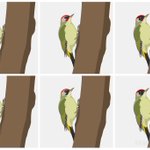
Pittas are one of my favourite things. Bouncy and bright, they lighten up any dull winter day. Here are nine of them arranged, controversially, in approximate order of splendidness.

African birds colonising Europe. This is one of the most interesting things I have read this year, in @ArdeolaJournal by Ernest Garcia. ardeola.org/en/volumes/712/a…
Mark Gurney retweeted

🚨Really excited to share our new preprint on the multi-dimensionality of climate-driven shifts! Species have many nested spatial and temporal thermal gradients along which they could shift, but which will they choose? Big thanks to a great team! #SOTM doi.org/10.32942/X2G902

This Post is from an account that no longer exists. Learn more
Mark Gurney retweeted

New preprint up! We sequenced hundreds of samples from across one of Earth's oldest living organisms - the Pando aspen clone - to understand how mutations accumulate and spread in long-lived clonal organisms. Our results were…surprising. 1/30

Mark Gurney retweeted

Newly published research on rapid selection for increased #dispersal rates by the #endangered #butterfly #Phengaris (#Maculinea) arion across #RestoredLandscapes
Read the #EarlyView here⬇️
resjournals.onlinelibrary.wi…
@RoyEntSoc @WileyEcolEnt
#OpenAccess #LargeBlue #reintroduction

Mark Gurney retweeted

The most remarkable story I have covered: the origin of oak mildews is astonishing. Also fascinated by how they make mature trees more susceptible to drought and hinder woodland regeneration. More videos: youtube.com/@bill_sutherland
Mark Gurney retweeted

seems like the proposal for a new name to the northern giant hummingbird (Patagona chaski) was unnecessary, and is now been 'synonymized' by a century-old name: peruviana
The late Ecuadorian ornithologist Fernando Ortiz Crespo was right (I highly recommend his 1974 paper)


The giant hummingbird, Patagona gigas, is really two species, a southern species that migrates and a northern species, dubbed Patagona chaski, that does not. Chaski is Quechua for “messenger,” and refers to relay runners of the Inka Empire. In PNAS: ow.ly/F0FP50RO69F

ALT Southern giant hummingbird Patagona gigas (top) and northern giant hummingbird Patagona sp. nov. (bottom). Bryce Robinson (Cornell University, Ithaca, NY)
Mark Gurney retweeted

If, like me, you find it fascinating that small migratory birds reach altitudes of 5,000 or 6,000m when crossing ecological barriers, check out our new preprint. We equipped 16 nocturnal migratory species with multi-sensor loggers to study their migration: tinyurl.com/2xs7nvaz

Mark Gurney retweeted

As an ecologist specialising in species' responses to climate change, I am deeply troubled by growing calls pushing for assisted colonisation. Whilst well meaning, this concept is built on a very outdated understanding of how species interact with climate. theguardian.com/environment/…


Mark Gurney retweeted

Bat Detector is now live on the App Store! Free forever, no ads. Connect an inexpensive USB microphone and your iPhone / iPad device becomes a full-featured bat detector and ultrasonic recorder with real-time time-expansion. @_BCT_
Mark Gurney retweeted

"A random half of panelists were shown a CV and only a one-paragraph summary of the proposed research, while the other half were shown a CV and a full proposal. We find that withholding proposal texts from panelists did not detectibly impact rankings."
link.springer.com/article/10…

Mark Gurney retweeted

Empirical results show dispersal proxies fail to predict actual dispersal. Greater progress may lie in employing innovative measurement of actual dispersal in the field. These words COULD be about seed dispersal, but are from a new aquatic insect paper👉 royalsocietypublishing.org/d…

Mark Gurney retweeted

Seawatch update: 16,210 Common Terns, 3,104 Arctic Terns, 48,BlackTerns, 154 Little Terns, 51 Arctic Skuas, 7 Pomarine Skua, 2 Bonxie etc up to 17.00
Mark Gurney retweeted

A thread on inappropriate (re)introductions. It’s a little long (sorry) and perhaps a little grumpy (sorry again). Arguing against the work of others is rarely a good look, especially as we are all, essentially, on the same side, but… 1/21

Mark Gurney retweeted

🌱 Introducing RMAVIS, our new #RShiny app for assigning vegetation plot data to GB National Vegetation Classification (NVC) communities. It succeeds MAVIS, used widely by UK researchers, ecologists & NGOs.
➡️ ceh.ac.uk/rmavis 1/2

ALT Screengrab from RMAVIS application showing example plots using sample data
Mark Gurney retweeted

Does tweeting increase citations? We conducted an experiment with 110 tweeted papers and 440 controls, waited 3 years for citations to accumulate... and found no significant increase in citations
journals.plos.org/plosone/ar…

Mark Gurney retweeted

XC is now open to all frogs and toads of the world! We start off with several hundred recordings from several decades ago, by Marinus Hoogmoed, former curator of herpetofauna at Naturalis Biodiversity Center. Made possible by @NLBIF

Mark Gurney retweeted
The astonishing #thejury programmes shockingly revealed the serious failings of group decision making that apply to jurys, job appointments, the cabinet, SAGE and any collective decision. The masses of science on the problems and solutions is almost never used. A thread 1/7

Mark Gurney retweeted

Did you know that an update of the seminal 2005 “ROBERTS BIRDS of SOUTHERN AFRICA – 7th edition” is currently underway? And that instead of going direct-to-print, the editors are incorporating Roberts 8 into the online Birds of the World platform? 1/
birdsoftheworld.org/bow/spec…

ALT Gurney's Sugarbird (gurneyi) Promerops gurneyi gurneyi
Mark Gurney retweeted

Anyone who ever made an SDM has pondered about it: how to get accurate information on where your species is NOT?
Now, in a new paper in @MethodsEcolEvol, we provide a better algorithm to generate pseudo-absences.
Why and how, I summarize in this post👇
the3dlab.org/2023/10/06/wher…
