

Roman Catholic, Father, Husband, Constitutional Conservative, substitute teacher (CCSD), former football coach. pit crew guy, Board Member of @pitstopsforhope
North Las Vegas, NV
Joined October 2011
- Tweets18K
- Following3.4K
- Followers1.4K
- Likes15.4K











Matthew J. McKinley retweeted

Israeli chicken breast for sale at the Saraya Intersection in Gaza City for 28 shekels per 1 kg ($8.36 per 2.2 lbs).
Timestamp: 1 day ago (22 Nov '26)
#TheGazaYouDontSee
Link in 1st response
NYC: avoid at all costs until the adults are back in control.
pix11.com/news/local-news/la…

26
Matthew J. McKinley retweeted

Pope Leo XIV has appointed a new papal theologian, and this is a rather interesting choice.
Fr Serge-Thomas Bonino OP succeeds Fr Wojciech Giertych OP, who has held the position since Benedict XVI appointed him in 2005. Bonino is no theological lightweight, a distinguished French Dominican, professor at the Angelicum, former secretary general of the International Theological Commission and a leading scholar of St Thomas Aquinas, he has spent decades defending the intellectual foundations of Catholic theology.
What interests me particularly is his concern about the abandonment of metaphysics and objective truth within contemporary Catholic thought. In a revealing 2023 interview, Bonino described how the International Theological Commission had attempted to produce a document about God but failed because its members could not agree on the very nature of God. Think about that for a moment. A commission of Catholic theologians could not agree sufficiently on the Christian understanding of God to produce a theological document about Him. Bonino sees this as symptomatic of a much deeper problem: the tendency to reduce theology to historical experience, cultural interpretation and subjective understanding, rather than recognising that divine revelation communicates objective truths about reality.
His treatment of Amoris laetitia is equally interesting.
While recognising the legitimate importance of pastoral discernment and mitigating circumstances, Bonino questioned whether certain arguments in Francis's exhortation could be reconciled with Aquinas's teaching on moral responsibility. He reaffirmed that intrinsically evil acts cannot become morally permissible simply because circumstances make obedience difficult. In other words, here is a theologian who understands that genuine pastoral concern and objective moral truth must never be set against one another.
His predecessor, Fr Giertych, was himself a distinguished and thoroughly orthodox Dominican moral theologian. His 21 years in office were not particularly unusual, and his replacement at 75 should not be interpreted as a repudiation, nevertheless, I cannot help wondering whether this appointment tells us something about Leo's theological priorities.
The papal theologian is responsible, among other things, for examining texts prepared for the Pope and ensuring their theological accuracy and clarity. After a pontificate in which theological ambiguity became a persistent source of controversy, there is certainly something encouraging about the appointment of a man who has devoted so much of his intellectual life to defending doctrinal coherence.
Of course, the appointment of an orthodox theologian does not guarantee an orthodox theological direction. Francis also had an excellent Thomist serving him throughout his pontificate and that did not prevent some deeply troubling ambiguities from emerging. Ultimately, the theologian advises, the Pope decides.
But perhaps the most encouraging aspect of Bonino's appointment is his insistence that theology must recover its proper subject: God Himself. For too long, much contemporary ecclesiastical discourse has seemed preoccupied with structures, processes, accompaniment and the changing expectations of society. There's a profound difference between theology that begins with God and theology that begins with the demands of the contemporary world.
If Bonino can help Pope Leo restore that proper order, this could prove to be a much more consequential appointment than it initially appears.


My “nobody cares” Top Ten
1) Utah
2) Georgia
3) Wake Forest
4) Notre Dame
5) Miami
6) Tennessee
7) Alabama
8) UCLA
9) Texas Tech
10) Texas
42


Matthew J. McKinley retweeted

This is actually insane...
Well said, @adamcarolla 🎯

Matthew J. McKinley retweeted

The communist Deputy Mayor of Salzburg in Austria, Kay-Michael Dankl, refused to have the historic Mirabell Palace illuminated in red for Red Wednesday, which highlights the persecution of Christians worldwide. He said the city did not want to send a message in support of only one religion.


Matthew J. McKinley retweeted

Islam shut down African ancient churches with the sword.
In Egypt, St. Mark planted the church in Alexandria in the year 42, while Rome was still persecuting Christians.
Alexandria became the greatest Christian city on earth, the school where Athanasius and Cyril defended the faith.
In North Africa, in Carthage and Hippo, men like Tertullian, Cyprian, and Augustine were writing the theology that Europe still reads today. They were Africans, writing in Africa.
In Sudan, there were three Christian kingdoms, Nobatia, Makuria, and Alodia, that stood as Christian nations for a thousand years, building cathedrals and monasteries in the desert while Europe was still in darkness.
In Ethiopia, King Ezana made Christianity the faith of the kingdom in 330, before most of Europe had even heard the Gospel.
Africa was Christian, deeply Christian.
Then the invasions came.
First, Egypt fell in 639. The Arab armies came, and the Coptic Christians who had been the majority for centuries were suddenly made second-class citizens in their own land.
They had to pay a tax just to remain Christian. They could not build a church. They could not even repair a church without permission.
Their language was slowly replaced, their churches were slowly taken, and over hundreds of years, a Christian nation was squeezed until it became a persecuted minority.
Then North Africa fell. Carthage, the great Christian city, was burned and abandoned in 698. Hippo, where Augustine had preached, was emptied.
The bishops were killed or driven out, the churches were turned into mosques, and within a few generations, a land that once had five hundred bishoprics had almost no Christians left. The Berber queen Kahina fought to the end, but after her, the resistance was broken.
Then Sudan fell. The Nubian kingdoms had resisted for six hundred years. They had even defeated the first Arab invasion and forced a peace. But in 1276, the Mamluks invaded Makuria. In 1315, the king was forced to convert, and the great cathedral of Dongola was turned into a mosque. By 1504, Alodia had fallen too.
The churches were left to rot in the desert, their beautiful frescoes of Jesus and Mary buried under sand, waiting for the world to remember them.
Only Ethiopia survived, and it survived by blood. In 1529, Ahmed Gragn invaded with Ottoman guns, burning churches, slaughtering priests, and destroying monasteries and manuscripts that can never be replaced. Ethiopia fought back, mountain by mountain, and it lived, but it lived scarred.
It was never just war. It was conquest, then tax, then humiliation, then church destruction, then language erasure, then slow conversion. Generation after generation was pressured until Africa forgot it was ever Christian.
nypost.com/2026/11/16/world-…

Let them eat bat.

China lashes out, fearing failed plan to conceal fishing ecocide
washingtonexaminer.com/opini…

2
45
Matthew J. McKinley retweeted

Trump was right. Gas prices did drop after the election
washingtonexaminer.com/opini…

Matthew J. McKinley retweeted

Thanks to all the new followers
Maybe I should explain my perspectives - it’s long!
I left England in 1998 when I was 27 with my white English wife, after being transferred to Tokyo
I was a young investment guy and thought I’d be back in 2 years. But I got head hunted by other firms and 2 years became 25!
I didn’t know Japanese but I took lessons twice a week. It was hard to begin with, especially when our son was born there, a year later.
In short we became an ethnic minority, granted permanent residence when the 5 year period had elapsed.
It took a very, very long time to really settle in to their way of life, their thinking. Even 25 years is nothing like enough
But I did experience their mindset. It is fundamentally different from our own. There’s just a feeling of people pulling together as a unit. Sure, there’s the same political fights, but underneath is an unspoken recognition of their sameness
I’ll talk more of this in future posts
As an “immigrant” to Japan it would never even cross my mind to offer them my political opinions. However my job brought me into contact with many Japanese politicians, senior civil servants and board members of their largest companies.
I could observe their fascinating politics and culture from the highest level, without wanting to engage in it. All immigrants and their offspring should understand this! It’s NOT your country!
When the Tohoku quake hit in 2011 I was there. The trains were cancelled and everyone had to walk home from central Tokyo. The orderliness and quietness will stay with me. People talked in polite but hushed tones and no one became enotional.
Many foreigners simply rushed to the airports and just left. Half of them left for good eventually
I was managing Japanese staff at this point. I’ll never forget the level of respect they had for me thereafter.
These people are bonded by millennia of natural disasters. It is profound to lose entire communities and families in a single moment
I digress. To cut to the chase, through these experiences and my own deep reading of British history, I began to imagine when this country was at one with itself
That was a very long time ago. Out of memory now almost
I returned two years ago, cutting short a successful career to look after my parents, both whom passed in the first year back
Returning home has blown my mind
Literally culture shock
It’s super hard to meet people. The middle class in particular have become abominable with all their ideological fetishes.
The working class is where it’s at. This is where what is left of Britain has retreated to.
A country is not a country without its people. Japan and Britain have equally long histories and much in common
When you see me write it is written through the lens of a person who knows what true conservatism is - I’ve lived it
I won’t give up trying to take us back to that place.
The British people have achieved incredible heights.
We can do again
🇬🇧🏴🇬🇧🏴🇬🇧🏴🇬🇧🏴🇬🇧🏴🇬🇧🏴🇬🇧🏴
My top 10
1. Utah
2. Georgia
3. UCLA
4. Wake Forest
5. Indiana
6. Notre Dame
7. Miami
8. Texas Tech
9. Alabama
10. Tennessee
1
1
72
Matthew J. McKinley retweeted
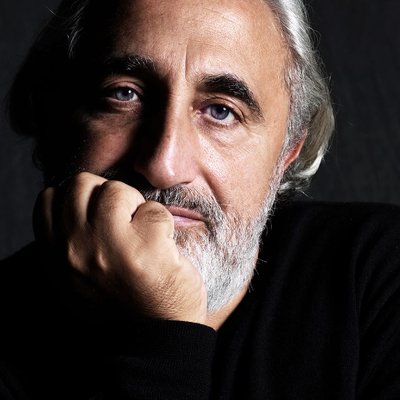
Oh yes. My childhood in Lebanon where so many non -Muslims were enriched by Islam.

1976. Palestinians and Lebanese Muslim enter the Christian town of Damour and executed hundreds of civilians, gang raped the women and shot babies in the back of the head. Not content to kill the living they excavated the local cemetery, exhumed the bodies and scattered the skeletons in the streets.
On 20 January, under the command of Fatah and as-Sa'iqa, members of the PLO and leftist Muslim Lebanese militiamen entered Damour. Along with twenty Phalangist militiamen, civilians - including women, the elderly, and children, and often whole families - were lined up against the walls of their homes and sprayed with machine-gun fire by the militiamen; they then systematically dynamited and burned these homes. Several of the town's young women were separated from other civilians and gang-raped.
For several days after the massacre, 149 bodies of those executed by the Palestinians lay in the streets; this included the corpses of many women who had been raped and of babies who were shot from close range in the back of the head. In the days following the massacre, Palestinians and Lebanese Muslims exhumed the coffins in the town's Christian cemetery and scattered the skeletons of several generations of the town's deceased citizens in the streets.
After the Tel al-Zaatar massacre later that year, the PLO resettled some of the surviving Palestinian refugees in Damour. After the Israeli invasion of Lebanon in 1982, the Zaatar refugees were expelled from Damour and the original inhabitants brought back.
According to an eyewitness, the attack took place from the mountain behind the town. "It was an apocalypse," said Father Mansour Labaky, a Christian Maronite priest who survived the massacre. "They were coming, thousands and thousands, shouting 'Allahu Akbar! (God is great!) Let us attack them for the Arabs, let us offer a holocaust to Mohammad!", and they were slaughtering everyone in their path, men, women and children."


Matthew J. McKinley retweeted
This is wonderfully funny
Thank you, Poles

🇵🇱🇷🇺🇩🇪🇮🇹🇫🇷🇬🇧🇺🇦🇷🇺 Podobno polska delegacja na rozmowy pokojowe z Rosją ma zażądać zwrotu Smoleńska, powołując się na pokój w Polanowie z 1634 r. Argumentacja prawna jest mocna. Pokój był wieczysty, a wieczność jeszcze nie upłynęła.
Rosyjskie zastrzeżenia dotyczące późniejszych traktatów zostaną odrzucone jako wybiórcze podejście do historii. Skoro o granicach mają decydować dawne mapy, Polska również przyniesie swoją. Mamy ładną, z XVII w.
Delegacja zapewni przy tym, że rozumie rosyjskie obawy o bezpieczeństwo. Dlatego po zwrocie Smoleńska Rosja otrzyma pisemne gwarancje, że Polska nie zamierza posuwać się dalej. Gwarancje będą dokładnie tyle warte, ile rosyjskie.
Rosja otrzyma też zapewnienie, że przyłączenie Smoleńska nie jest wymierzone przeciwko niej. To wyłącznie odpowiedź na polskie obawy o bezpieczeństwo. Liczymy, że w Moskwie docenią znajome sformułowanie.
