

Water, energy, carbon cycles; Arctic environments. Climate System Research Center @UMassGeo @UMassAmherst
Amherst, Massachusetts, USA
Joined March 2015
- Tweets1.5K
- Following200
- Followers298
- Likes1K




Moreover, the recent wet weather, including the past 12 months, has been characterized by a large number of extreme events. Of course, this element of climate change is an expected manifestation of warming.


Parts of New England have had some of the wettest weather on record from December through the end of March. The beginning of April brought more rain and snow.
bit.ly/49jBJM4

Hat tip to the Environmental System Science program.
Want to know more about the study?
tc.copernicus.org/articles/1…


How will the Arctic look in 80 years? Researchers @UMassAmherst combined satellite data, field observations, & modeling to answer how climate change will affect 22.45 million square km. They produced the most detailed view yet of a possible future: umass.edu/news/article/we-kn…

ALT Michael Rawlins (a white man in a white t-shirt and outdoors pants) kneeling next to a stream with short, green grass around him
Icy conditions likely a result of more winter days above freezing. NWS data for nearby North Conway.
Yet another impact--in this case tragic--of our warming climate.


Tragic news on Mount Washington: weather.com/news/news/2024-0…


Accumulated precipitation at Worcester since Dec 1 is wettest on record. Data since 1891.


@WX1BOX @KevinBoston25 @jreineron7 @ericfisher 1.4" storm total in Dudley, MA 5.9" month-to-date - very wet start to March!

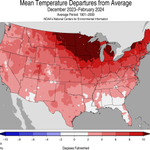
Per NOAA NCEI, the 2023–24 winter season ranked warmest on record for the contiguous U.S. with eight states across the Upper Midwest, Great Lakes and Northeast each observing their warmest winter on record. Northeast U.S. also had its warmest winter.
ncei.noaa.gov/news/national-…


Southern New England experienced warm, wet winter, climate researchers say masslive.com/westernmass/202…

Arctic river are and will continue to see effects of warming, permafrost thaw, and water cycle intensification.
Take home: More river runoff in the far north where more where soil carbon exists. Increasing river flows could freshen the North Atlantic.
@EuroGeosciences #climate

New #EGUhighlights: Regime shifts in Arctic terrestrial hydrology manifested from impacts of climate warming doi.org/10.5194/tc-18-1033-2…

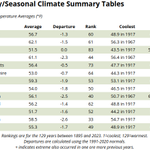
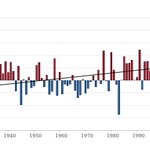
Amherst MA just experienced its warmest meteorological (Dec-Feb) winter over the official period of record since 1893. BUT... data for the area extend to 1836. Winters have warmed by 4.4 F over those 188 years. And it was very wet too! @UMassAmherst @UMassScience @UMassGeo

Michael Rawlins retweeted

“I wanted to go sledding and it’s really hard to go sledding without any snow," a 6-year-old in Dorchester told me. As the planet warms, that disappointment has become a recurring theme — and one that’s expected to increase in the future.
bostonglobe.com/2024/02/13/m…


Michael Rawlins retweeted

Climate data from 2023 confirms what we in western Massachusetts experienced firsthand last year amid heat waves & catastrophic floods: the year was one of the hottest & rainiest ever recorded in the region. My latest on local impacts of the #ClimateCrisis:theshoestring.org/2024/01/05…

Smart piece on how this latest extreme weather anomaly fits with our understanding of manifestations of a warming climate. Impacts of hydrological cycle intensification are wreaking havoc in many parts of the world this year: Las Vegas, Libya, Greece, Brazil to name a few.

After 11" of rain fell in Leominster in just a few hours—and as Hurricane Lee churned in an anomalously warm Atlantic Ocean—I asked one climate scientist if this is our new normal. "I don’t think we know what normal is anymore," he said. bostonglobe.com/2023/09/13/s… via @BostonGlobe
Members of our Beaufort Lagoons team wrapping up sampling of rivers near Prudhoe Bay, including the USGS-gauged Sagavanirktok and Kuparuk, and a small stream 8 km from the coast. Today heading south to foothills of Brooks Range. ble.lternet.edu/ @polargriffin @hardisonlab


For the Northeast U.S., both May (-1.7 F) and June (-3.3 F) were colder than normal. The last time that consecutive months were colder than normal was three years ago, during April & May 2020.


North America had a record-warm May. The temperature anomaly was 2.4 C above the 1901-2000 average.


Find more information about the May 2023 U.S. Climate Report, including individual state and county information, as well as downloadable maps: bit.ly/USClimate202305 #StateofClimate @NOAA
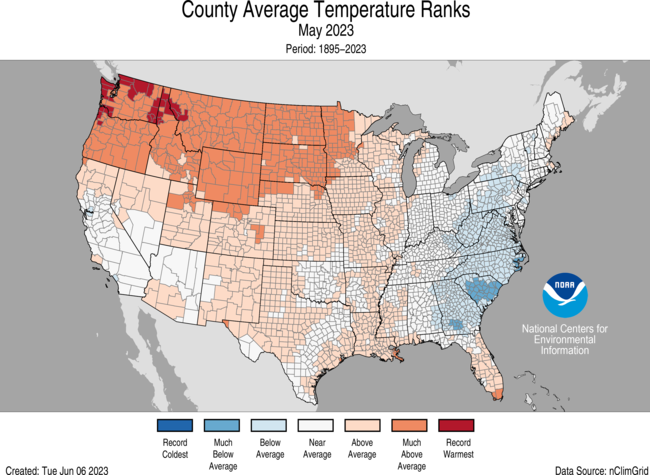
ALT Map of the U.S. showing county average temperature ranks for May 2023 with warmer areas in gradients of red and cooler areas in gradients of blue.
Smart piece by @dustyc123 on connections between climate warming, associated changes, and wildfire risks in this region.

Much of the state experienced serious wildfire warnings this week as the region posts record-breaking temperatures to begin the year. We @the_shoestring talked with @MichaelARawlins about the impact climate change may have on wildfire risks in the future: theshoestring.org/2023/04/14…

Michael Rawlins retweeted

Can climate change mean more #snow? Yes! @MichaelARawlins @UMassGeo explains to @BerkshireEagle that warmer air is wetter air, and wetter air can mean snowier, more intense storms. 🌨️ 🌨️ 🌨️ #climatechange #winterweather berkshireeagle.com/news/loca…

Michael Rawlins retweeted

"It's counter-intuitive and yet borne out by the science and predictions that with a warming climate here in the Northeast, we will actually likely continue to see more intense snowstorms," said Elena Traister, professor of Environmental Studies at … berkshireeagle.com/news/loca…
Michael Rawlins retweeted
It's not a blip in the data, it's part of a trend in which winters are warming. berkshireeagle.com/weather/w…