

PhD Student @CUBoulder @NYU & @Lehman alum lRoots: Black American & Ayisienne. Interests: multicultural/racial identity, STEM diversity, intersectional safety.
Black Diaspora
Joined March 2020
- Tweets340
- Following465
- Followers401
- Likes1.4K




Nadia Floyd retweeted

Thematically the show was about Kendrick refusing to conform to white Americans standards so this makes sense
This quoted post is unavailable.
Nadia Floyd retweeted

Hip hop in its purest form will always make America uncomfortable. The genre has been watered down in mainstream culture for so long that folks have forgotten it was never designed to be accepted by the masses. Enjoyable? Yes. But accepted as equal to pop, country, rock? Never.


Nadia Floyd retweeted

White and non-Black people cannot tell the difference between a Haitian, Black American, Jamaican, Nigerian, or Kenyan. Y’all better learn some solidarity or die. Honestly, they were all right. Thomas Sankara, Kwame Ture, James Baldwin, Malcolm X. They were all right.
Nadia Floyd retweeted

while haiti is in the news so much this week maybe we should all take a moment to discuss the fact that their economic destitution is entirely due to being forced to spend ~80% of their federal budget every year for 150 years on reparations to france for freeing the slaves

Nadia Floyd retweeted

That you’d have people in Ohio believing Haitians are running around and randomly eating wildlife and are a threat to them, is directly related to the fact that US politicians have been spreading myths of “Haitian cannibalism” to justify getting police + troops into Haiti
Nadia Floyd retweeted

I firmly believe that anti-Haitian racism is deeply tied to the legacy of the Haitian Revolution. It feels like we're still being penalized for that historic fight for freedom.
Nadia Floyd retweeted

The reason why y’all keep trying to equate Haiti to settler colonialism is because y’all don’t see Africans as indigenous people. If you did, you would know the Africans in the Americas are indigenous people whose ancestors were victims of displacement and human trafficking.
Nadia Floyd retweeted

Exactly how many Black students do people think elite schools admit? The where are the Black people tweets regarding the protest seem confused. Trust me, I asked the same thing at Northwestern and I wasn’t talking about a protest.
Nadia Floyd retweeted

With #2024MPA right around the corner, we are getting excited to see all the amazing research and present our own.
@aikawa_26 @NadiaFloyd15 @AndrewLikesPsyc
@tiffany_ito @EvaSPietri @amandadiekman
@MidwesternPsych

Nadia Floyd retweeted
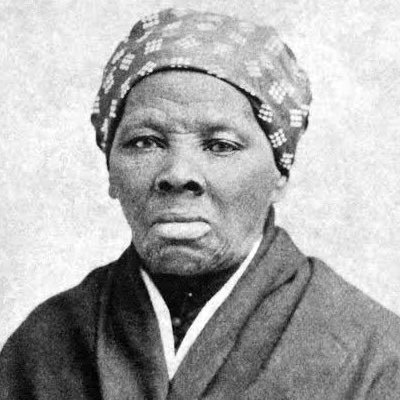
The Tignon laws of the 18th century were laws that banned black women from exposing their natural hair in public. #InternationalWomensDay
Their hairdos was obscuring the status of the white women and this threatened the social stability. The law would control colored women “who dressed too elegantly..”
Resembling today’s West African Gele, a tignon is a type of head-covering. It is a large piece of material wrapped or tied around the head to form a kind of turban concealing the hair.
Tignons were worn by free and slave Creole women of African descent in Louisiana from 1786. Historically, their prevalence was as a result of sumptuary laws passed in 1786 under Governor Esteban Rodriguez Miró.
These prescribed and enforced appropriate public dress styles for women of color in a white-dominated society. Hence, they were made as a way of regulating the appearance of black women in the U.S.
During the period, when black enslavement in America was at its peak, and places like New Orleans was unique in its high population of gens de couleur libres (free people of color), black women’s beauty and features often attracted white men who approached them as suitors.
This enraged white women who perceived them as competitors. Evidently, African women competed openly with white women through elegant dressing, including adorning their textured hair with gems, beads, and other accents that made them stand out from white women and possessing great beauty.
To take care of this perceived menace, series of sumptuary laws birthing the Tignon Law were put in place in order to stop white men from pursuing and engaging in affairs with women of colour, “while also being a class signifier,”
🖊️As the only admin behind this page, I try to research to educate. If you appreciate this effort, you can support to help the page thrive on ko-fi.com/africanarchives. Your support is deeply appreciated! (Or just the ko-fi page for articles/posts roundup)

