

Editor y Responsable de Panorama Católico Internacional desde 1999.
Argentina
Joined December 2012
- Tweets16.9K
- Following407
- Followers2.3K
- Likes3.8K




Panoramix retweeted

P. CASTELLANI:
"No desaparecerá la Cristiandad: será profanada. Ni quedará intacta la Iglesia visible: dentro de ella habrá santuario y atrio. Habrá fieles, clero, religiosos, doctores, profetas que serán pisoteados, que cederán a la presión, que tomarán la marca de la Bestia1/2

Panoramix retweeted

Hasta di Mattei. Es lamentable!

Professor Roberto de Mattei has written a piece speculating that the Vatican authorities’ prohibitions - absurd and unjust, I would add - on the Summorum Pontificum Pilgrimage were due to the choice of Bishop Athanasius Schneider, because of the defence he made of the SSPX.
We must remember that, regarding Covid, the Professor treated it as a genuine epidemic, refusing to acknowledge that the real “epidemic” at issue was the imposition of tyranny. He also criticised those who, as a matter of principle, refused the vaccines because they had been developed using research involving aborted foetuses.
Professor de Mattei has already proved himself to be a great historian. I cannot recommend highly enough his books on the Second Vatican Council, on Pascendi Dominici Gregis, and on Cardinal Merry del Val. Yet, in analysing current affairs, he has also shown that he can be thoroughly deceived. Especially when he wants to prove that God intended to punish the world with that disease, or that the persecution of the Traditional Mass is the SSPX’s fault.
Panoramix retweeted

Cardenal Ranjith: ““Lamentablemente, la Iglesia Occidental ha sucumbido a la tentación de la desesperación y la falta de fe, abandonando su propio patrimonio espiritual y litúrgico pensando que bastaba con dejarse llevar por la corriente.”

Cardinal Ranjith –– the Church in West has abandoned its “own spiritual & liturgical heritage”
Re the growth of the Latin Mass – it is a “natural consequence of a conviction” about the deeper meaning of life.
“Unfortunately, the Western Church has succumbed to the temptation of despair & lack of faith, abandoning its own spiritual & liturgical heritage thinking that it was enough to go with the flow.”

ÚLTIMA HORA: El cardenal Parolin confirma que el Papa León XIV ha dado su asentimiento a los nombramientos episcopales bajo el Acuerdo Santa Sede–China.
“Esa ha sido la línea, por lo que no ha habido cambios. Los nombramientos de obispos se realizan de acuerdo con las disposiciones del Acuerdo, y el Papa ha dado su asentimiento a esto.”
Respondiendo a las observaciones del arzobispo Gallagher sobre sus imperfecciones, Su Eminencia dijo: “Por supuesto, todos los acuerdos son imperfectos. Y por lo tanto, el de China también lo es.”

LATEST: Cardinal Parolin confirms Pope Leo XIV has given his assent to episcopal appointments under the Holy See–China Agreement.
“That has been the line, so there have been no changes. The appointments of bishops are made according to the provisions of the Agreement, and the Pope has given his assent to this.”
Responding to Abp Gallagher’s remarks on its imperfections, His Eminence said: “Of course, all agreements are imperfect. And therefore the one on China is too.”
Full report at @RealAdVaticanum.
advaticanum.com/article/card…

Fra Modestino da Pietrelcina, cappuccino, que vivió varios años junto a Padre Pío en San Giovanni Rotondo, refiere:
«En 1945, una noche, Padre Pío salió del coro después de la bendición eucarística vespertina. Yo estaba con él en el pasillo que llevaba a su celda y le pregunté:
Padre, ¿qué piensa de las llamas del purgatorio?
Me respondió: Si el Señor permitiera a un alma pasar de ese fuego al más ardiente de la tierra, sería como pasar del agua hirviendo al agua fresca».
EN LA FOTO: El Siervo de Dios Fra Modestino Fucci (a la izquierda) y Padre Pío. Los dos compartieron una estrecha amistad durante veintiocho años hasta la muerte de Padre Pío ocurrida en 1968.
Extraído de: Alessio Parente, *Padre Pío y las almas del purgatorio*, Ed. Padre Pío da Pietrelcina, San Giovanni Rotondo 2022, pp. 95-96.

Fra Modestino da Pietrelcina, cappuccino, che visse diversi anni accanto a Padre Pio a San Giovanni Rotondo, riferisce:
"Nel 1945, una sera, Padre Pio uscì dal coro dopo la benedizione eucaristica vespertina. Io ero con lui nel corridoio che portava alla sua cella e gli domandai:
Padre, che cosa pensa delle fiamme del purgatorio?
Mi rispose: Se il Signore permettesse a un'anima di passare da quel fuoco al più ardente della terra, sarebbe come passare dall'acqua bollente all'acqua fresca".
IN FOTO: Il Servo di Dio Fra Modestino Fucci (a sinistra) e Padre Pio. I due condivisero una stretta amicizia per ventotto anni fino alla morte di Padre Pio avvenuta nel 1968.
Tratto da: Alessio Parente, Padre Pio e le anime del purgatorio, Ed. Padre Pio da Pietrelcina, San Giovanni Rotondo 2022, pp. 95-96.

Por fin lo descubrieron... la culpa es de Mons. Schneider que confundió a Roma haciéndole creer (gente ingenua la de Roma) que la peregrinación Ad Petri sedem era una tapadera de los lefevbristas.
Por suerte ya se enteraron. Ahora habrá que excomulgar a Schneider para alegría de los miembros de Pax Liturgica.
"¿Fue el obispo Schneider la causa del desastre de la peregrinación? "Los organizadores se esforzaron en especificar que los fieles reunidos en Roma no son lefebvrianos. Pero el rostro episcopal de la peregrinación fue el de un obispo favorable a la Fraternidad Sacerdotal San Pío X en su conflicto con Roma."


Panoramix retweeted

El Papa León XIV afirma que «orar en sufragio de los difuntos significa celebrar la vida».
La doctrina tradicional es otra: el sufragio no es para celebrar ni para «recordar», sino para aplicar el Sacrificio de Cristo a las almas del Purgatorio que aún padecen y pueden ser ayudadas.
Cuando se sustituye la satisfacción de las penas purgatorias por el lenguaje de la memoria, la esperanza comunitaria y la «celebración de la vida», se diluye el fin propio de la Misa de Réquiem.
La Iglesia siempre rezó por los difuntos para liberarlos del Purgatorio, no para celebrarlos.
-------------------------------------
El Papa: “¡Orar en sufragio de los difuntos significa celebrar la vida!” - Vatican News vaticannews.va/es/papa/news/… – at San isidro, Peru

Más obispos chinos... estos sí tienen permiso para consagrar aunque sean un poquito comunistas.
NEW: Chinese state-approved Bishop Ignazio Ding Zuyao of Haimen has said in a speech that his diocese “strives to build a Chinese Catholic Church that integrates with China’s fine traditional culture and adapts to socialist society.”
The approved mainland Bishop added that the Church in China is “honest and friendly, and is eager to befriend people of goodwill in the Catholic community around the world,” warmly inviting visitors “to visit China and see it for yourselves.”
More to come at @RealAdVaticanum


Panoramix retweeted

1. This is normal for the SSPX.
Young people (I'm one of them) only remember a time post-Benedict lifting the excommunications, and post-Francis granting faculties for Confessions and Marriages.
But from the 1970s-2000, the SSPX was treated like a pariah by Rome and the Mainstream Media. I've included some screenshots of newspapers from this time period to give you a sense of what things were like.
2. What we are living through today is the same thing the Society went through after 1988.
The method was the same: strict excommunications for Bishops in 1988 and 2026 Decrees (both of which only warn faithful and priests against formal adherence), and then 1996 and 2026 Explanatory Notes that purport to declare the entire "Lefebvrist" movement schismatics, including Laity who "formally adhere."
3. Yet, if Archbishop Lefebvre did not do what he did in 1988, there would be no SSPX today. From the 1960s-1988, the SSPX was the only traditionalist fraternity in existence.
They were the only ones in the institutional Church training Traditional Priests and Ordaining them, which they did illicitly after Rome forbade Archbishop Lefebvre from ordaining the first major class at Econe in 1976, which he did anyway (the "Hot Summer of 1976").
And good thing he did, because the Priests illegally ordained in this time period went on to become future Bishops of the SSPX, the founders of the FSSP and IBP, as well as Priests of the Abbey of Le Barroux.
4. Things got hot after the 1988 Consecrations, as well. One over-zealous Hawaii Bishop tried to excommunicate six laity who received confirmation from SSPX Bishop Williamson (fun fact, he was one of the Priests ordained in the Hot Summer of 1976).
That Excommunication was overturned a few years later, by none other than Cardinal Joseph Ratzinger, who was the main Prelate in charge with negotiating with Archbishop Lefebvre in the lead-up to the 1988 Consecrations.
5. The SSPX does a great service to the Church by preserving the integrity of traditional Catholic doctrine and Sacraments, in their fullness, without compromise.
Unfortunately, given the crisis in the Church, this is not possible without its own Bishops, which is why Archbishop Lefebvre was so adamant on consecrating Successors.
If you agree in theory that what the Archbishop did in 1988 was correct, then the Consecrations in 2026 are even more justified, given that SSPX has 3x-ed in size, but consecrated the same # of Bishops.
And the Crisis is far worse now, given the Francis and Leo Pontificates. We're no longer in the days of semi-traditional Popes like Pope Benedict. We're in the Francis-Leo-Traditionis-Era.


El morocho la tiene clara en cierto modo, aunque hay mucho más en juego.
La Iglesia no puede declarar la guerra a quienes asisten devotamente a la misa sólo porque prefieren otra forma litúrgica.
Dicho así podría interpretarse, por ejemplo, que los neocatecumenales tienen derecho a celebrar sus misas inventadas por Kiko porque la prefieren.
No creo que esto sea lo que quiere decir Sarah... pero lo dice de un modo oscuro. El que lo dice con claridad es Mons. Schneider.
lifesitenews.com/news/latin-…
Conozco la FSSPX desde hace unos 45 años. Lo que dice el Sr. Smith es exactamente como lo describe. El crecimiento es explosivo, la demanda está muy, pero muy por encima de sus recursos humanos. Los primeros sacerdotes tienen más de setenta años o ya han muerto. La FSSPX toma muy seriamente la formación de sus seminaristas y carga también con la reeducación parcial de los sacerdotes o seminaristas del Novus Ordo que se le unen. Además atienden a comunidades religiosas que no tienen obispos propios o capellanes en el caso de las religiosas. Lo que piden encarecidamente son vocaciones; nuevos destinos que cubrir es lo que les sobra.
Is there really an SSPX growth strategy?
A few influencers have recently discussed the "expansion strategy" of the SSPX in the USA.
Now, I don't speak for the Society, but I probably have more inside knowledge than the average person. Every story needs a hero, and lots of people want the SSPX to be the competent, calculating adult in the room that takes back tradition amidst this conciliar circus.
Anyone who actually attends an SSPX chapel would get a healthy chuckle out of this characterization!
Don't get me wrong — the priests are wonderful. They are pious, forbearing, and have a true zeal for souls. But they are insanely overworked, and the entire organization is pretty chaotic. It's something of a minor miracle that they ever got to this point.
The SSPX is not, never has been, and never will be anything more than a holding pattern. Archbishop Lefebvre called it "Operation Survival." The Society was formed to preserve the traditional priesthood — formation, education, sacraments, and discipline — when it truly seemed to be disappearing forever.
But as the crisis went on, more and more laity wrote to the SSPX, begging them to send priests. And discerning an obligation to help, the Society sent them priests as they were able. Over the past fifty years, this missionary practice took shape in the form of priories and mission chapels.
Priories are the established churches where SSPX priests live, say Mass daily, live in community, and often teach schoolchildren during the week. Living in community was an important aspect of Archbishop Lefebvre's original rule for priests.
Some priories are large, like Post Falls or Saint Mary's, with over a dozen priests. Others are smaller, like Nicholville or Chicago, with only a handful of priests serving a chapel or two.
The distance traveled is often immense. For example, the priory in Walton, Kentucky services chapels in North Carolina, Tennessee, and even northern Ohio!
But the chapels are where the real missionary work happens. Every weekend, SSPX priests head to the airport and travel to their assigned chapel — sometimes two! There is almost no downtime. I have often seen Father running straight from his Uber into the sacristy with his carry-on bag after a flight delay.
These priests basically pack a community's entire sacramental life into less than 24 hours. Confessions. Masses. Sick calls. Weddings. Baptisms. Then on Sunday night, they're back in the airport, with a full school day ahead of them.
There are currently 120 mission chapels in the USA, and only slightly more priests than that. As you can probably imagine, this is a logistical nightmare which can tolerate almost no unexpected illnesses, flight cancellations, or vacations.
My point in explaining all this is to emphasize that the SSPX is having its own Operation Survival at the moment. There is no "strategy" for expansion — the demand for sacraments already far exceeds their supply. Any growth you're seeing is not the result of SSPX machinations, but the grassroots Catholic Action of their lay faithful.
If the SSPX comes to a new place, it is because a group of dedicated laity have asked them to come there, and have done the painstaking work of acquiring a location for Mass, establishing a sizeable congregation, buying altar linens and sacred vessels, training altar servers, assembling a schola, etc.
The existing mission chapels are all "staffed" by lay volunteers doing all the same planning and execution...even down to scrubbing the toilets. Any expansions you see are spearheaded by the lay people in those communities. Remember, 99% of the time, THE PRIEST IS NOT THERE.
The mission chapels have all seen an influx of new families due to Traditionis Custodes, and their existing lay faithful are doing the magnanimous work of planning, fundraising, and executing various expansion projects to accommodate these new orphans within their communities.
The SSPX recognizes the conciliar authorities as true authorities, and they lean heavily on Supplied Jurisdiction to justify their missionary activity. I'm not here to argue to merits of that — but a huge part of supplied jurisdiction is that certain activities only become licit when the faithful NEED and ASK for them.
Because of this, the Society is always walking a fine line between two realities in a state of extreme tension:
1. HUNDREDS of traditional communities are asking them for mass centers, sacraments, and schools, which, due to the state of the Church, they feel an obligation to provide, and
2. They cannot give the impression that they are setting up a parallel church (which, due to their growth, is only getting more difficult as time goes on).
Threading this ecclesiological needle is almost impossible as it is, so we shouldn't make the situation any more confusing than we have to.
I don't know any SSPX priests that would characterize themselves as going on any kind of "offensive strike." From their perspective, they're just doing what they've always done: fulfilling their obligation to provide the traditional faith and sacraments to the Catholic faithful that ask for them...after everyone else in the Church has refused.

El nuevo vídeo documental de la FSSPX fue emitido ayer, fiesta de Todos los Santos, aniversario de la Fundación de la Fraternidad en 1970, por decreto del obispo de Friburgo, Mons. François Charrière,
Se denomina Salus animarum, (La Salvación de las Almas). Está dedicado a los días de las ordenaciones y consagraciones episcopales del año en curso.
fsspx.news/es/news/salus-ani…

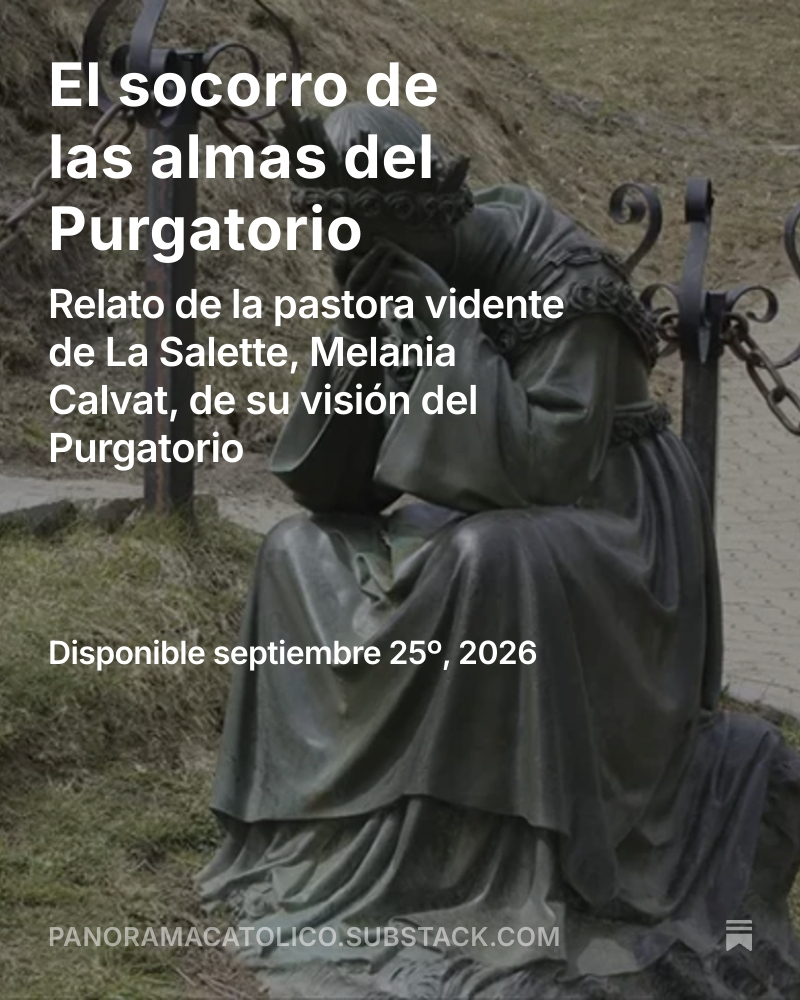
Indulgencias para las almas de los fieles difuntos.
FSSPX Actualidad fsspx.news/es/news/del-1-8-n…

Retiro las cosas negativas que he dicho sobre Lefebvre. Por lo que puedo ver, fue claramente un hombre muy piadoso que tenía un profundo amor por las tradiciones de la Iglesia y una genuina preocupación por las almas de los católicos. Arzobispo Lefebvre, ora pro nobis.


Un doctor de la Iglesia. ¿Qué diría Don Orione sobre esta profunda constatación?

LA NACION - Monseñor Braida: “Es importante que el Papa vaya a Don Orione; los más postergados nunca pueden ser la variable de ajuste” - lanacion.com.ar/politica/mon… por @mdv2011 y @matimore