PPPL tackles the world's toughest science and technology challenges with plasma, the fourth state of matter. @ENERGY @Princeton

Princeton, NJ
Joined December 2009
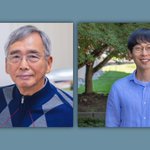
Join Matt Landreman with @UofMaryland to discuss an important mathematical hypothesis in plasma physics and fluid mechanics that has implications for the design and function of fusion systems. Attend #AI4Fusion online: Oct. 21, 4-5 PM (ET) ➡️ bit.ly/4B2RyWE.
3
2
316
We're a proud partner of the @ENERGY's Genesis Mission. Our work was central to the development of Genesis Agent Skills ▶️ bit.ly/4zzJdId
2
11
990
Join Matt Landreman with @UofMaryland to discuss an important mathematical hypothesis in plasma physics and fluid mechanics that has implications for the design and function of fusion systems. Attend #AI4Fusion online: Oct. 21, 4-5 PM (ET) ➡️ bit.ly/4B2RyWE.
5
1
12
664
There's now a faster way to find the best diamond-based materials for quantum computers. By treating qubits like individual molecules, scientists can now predict their behavior faster and more accurately. bit.ly/4jODpG4
1
3
389
PPPL scientists will partner on a national effort to create a digital twin of the @CFS_energy SPARC fusion system. The project, part of @ENERGY's Genesis Mission, brings together national labs, key industry players and university researchers. ➡️ bit.ly/4en5d0G.
2
1
8
720
The Lab is looking forward to working with @CFS_energy and fellow partners on this important digital twin project for @ENERGY's #GenesisMission.
Through the U.S. Department of @ENERGY's Genesis Mission, fusion energy machines are about to get a lot smarter. CFS is the only private company leading a Genesis Mission Phase II project, directing a group of American companies, universities, and labs that’ll extend our work applying artificial intelligence and digital twin technology to our SPARC fusion demonstration machine. With decades of publicly funded fusion science data and the might of DOE supercomputers, we’ll be able to put faster AI technology to use. This phase of the Genesis Mission is designed to help expand the impact of projects with a demonstrated potential to benefit from AI and to improve the nation’s scientific capability. A digital twin is a sophisticated clone of real-world hardware, a 3D representation with two-way communication links that show what’s happening in the tokamak while also helping us control it. Building AI models into this digital twin adds ultrafast AI simulations, giving us new abilities to understand SPARC fusion pulses in just moments. That rapid learning will let us chart the best path to progress so we can deliver fusion energy to the grid as fast as possible. In effect, AI can serve as a co-pilot to run the machine, and the digital twin gives us a better flight simulator cockpit. DOE supercomputers will help us train AI models validated with data from decades of fusion research, helping to turn hours of plodding computer simulations into immediate insights. “This project will convert decades of R&D performed across the U.S. fusion community into tools that can be applied to accelerate SPARC operations,” said @BrandonSorbom, Chief Science Officer and Co-founder of CFS. “Together, our team of public and private leaders in AI and fusion will be able to unify and apply decades of U.S. research and tackle some of the fusion industry’s biggest challenges — creating new opportunities to move fusion to the grid faster.” The group we’re leading on this project also includes laboratories (@Livermore_Lab, @ORNL, @PPPLab, @SLAClab), universities (@CarnegieMellon, @MIT), and private companies (@GoogleDeepMind, @nvidia, @Synopsys, and @GeneralAtomics). #FusionEnergy #Energy
3
11
467
In #FastPhysics, PPPL's Jack Berkery explains how the fusion device known as a spherical tokamak will enable scientists to test the viability of its compact design to reliably generate cost-effective electricity from fusion energy. ➡️ bit.ly/42C2CdQ
1
4
9
683
New research from PPPL's Luis Felipe Delgado-Aparicio, Masayuki Ono and Jonathan Menard could change the way fusion energy systems known as tokamaks and stellarators are designed and operated. ➡️ bit.ly/4hLKhlg
1
3
14
764
When scientists want to learn the latest techniques involved in using plasma to fabricate microelectronics, they come PPPL. Learn more about the recent Adopting Sustainable Partnerships for Innovative Research Ecosystem (ASPIRE) mini workshop at the Lab. bit.ly/46UKAVy
1
5
660
PPPL's Choongseok (CS) Chang and Seong-Moo Yang win two top prizes for plasma physics from the Division of Plasma Physics of the Association of Asia Pacific Physical Societies (AAPPS-DPP). Explore more about their research and honors. ➡️ bit.ly/3Tv3srh
1
4
630
OpenStar Technologies (@openstartech) and PPPL have signed a memorandum of understanding, formalizing a new partnership to advance scientific, academic and educational cooperation in the science and technology of fusion energy. ⚛️ bit.ly/3VG0iS5
1
2
1
7
1,134
The University of Missouri (@mizzou) Research Reactor has entered into an agreement with PPPL to support diagnostic development for @iterorg, an international fusion research and development facility now under assembly in southern France. ⬇️ bit.ly/3VxtpqF
2
2
6
693
Two PPPL computer codes — M3D-C1 and the X-Point Included Gyrokinetic Code (XGC) — were recognized by the @ENERGY Scientific Discovery through Advanced Computing (SciDAC) program as it celebrates its 25th anniversary. Learn more about codes at PPPL ➡️ bit.ly/3URBTZu.
4
5
610
The new SUNRISE - STELLAR-AI Federation links the @UKAEAofficial's SUNRISE supercomputer and PPPL's STELLAR-AI platform to help researchers on both sides of the Atlantic collaborate and better leverage AI to speed up fusion energy research. bit.ly/46Q5WU0
1
3
4
676
.@Nature checks in on how private companies are pursuing commercial fusion energy and PPPL Director Steve Cowley shares his perspective on the pace and progress of fusion research and commercial development. go.nature.com/4xtuw97
2
5
696
What geometry will offer the best design for a fusion power plant? ⚡Spherical tokamaks, like the National Spherical Torus Experiment-Upgrade (NSTX-U), may help confine plasma energy more efficiently than other more conventional doughnut-shaped designs. bit.ly/4xGx0QY
4
7
797
Congratulations 🙌 to SangKyeun Kim at PPPL on receiving the 2026 Early Career Scientist Prize for the Commission on Plasma Physics from @IUPAP_physics for his work using AI for fusion energy research. bit.ly/4x5AZa0
1
5
683
How will the Princeton Plasma Innovation Center at PPPL maximize energy efficiency? Dennis Pasternak, project manager, explains in #60Seconds how one feature — passive shading — will enable PPIC to block solar heat 🌞 and reduce cooling demand. bit.ly/3UNyTe6.
2
6
1,325