
Research Scientist @GoogleDeepMind
Moutain View
Joined July 2021
- Tweets102
- Following440
- Followers896
- Likes401




Jiageng Mao retweeted

Introducing the USC Physical Superintelligence (PSI) Lab (psi-lab.ai). We are rebranding to better reflect our current focus. From here on out, we are tackling one thing: solving robotics and physical intelligence with every model, every bug, and every line of code. And yes, we are hiring at all levels, especially PhDs in this cycle and potential PostDocs who are excited about robotics. We hope you can join us in this journey! 1/9
Jiageng Mao retweeted

Full episode dropping soon!
Geeking out with @zhenyuzhao123, Hongyi Jing, Xiawei Liu, @PointsCoder @yuewang314 on Humanoid Everyday: A Comprehensive Robotic Dataset for Open-World Humanoid Manipulation humanoideveryday.github.io/
Co-hosted by @micoolcho @chris_j_paxton
Jiageng Mao retweeted

See you this Friday, Dec 5, 4:30–7:30 PM PST at Exhibit Halls C/D/E, Booth #4809. Huge thanks to my amazing coauthors and advisors!

"Who has seen the wind? Neither I nor you: But when the leaves hang trembling, the wind is passing through."
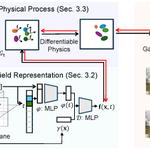
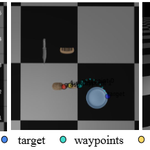
@ScottZhiyuanGao will present our work "Seeing the Wind from a Falling Leaf" at #NeurIPS2025! We teach AI to "see" invisible force fields directly from video using differentiable physics.
Project Page: chaoren2357.github.io/seeing…
Paper: arxiv.org/abs/2512.00762
Jiageng Mao retweeted

A robot could learn a task just by watching a generated video?
PhysWorld connects video generation with real-world robot learning.
It turns visual imagination into physical skill.
✅ Takes one image and a task prompt
✅ Generates a video showing how to complete the task
✅ Reconstructs a 3D scene from that video
✅ Learns real-world actions through object-centric RL
The result: zero-shot robotic manipulation that needs no real demonstrations.
Across pouring, inserting, sweeping, and placing tasks, success rates rise by 15% compared to earlier video-based learning.
It’s one of the first real steps toward robots that can learn from visual reasoning itself.
Thanks for sharing, @PointsCoder !!!
📍Paper: arxiv.org/abs/2511.07416
Project: pointscoder.github.io/PhysWo…
Interactive Demo: hesic73.github.io/OpenReal2S…
—-
Weekly robotics and AI insights.
Subscribe free: scalingdeep.tech
Jiageng Mao retweeted

Many people think practical robots are far away, because they can only walk and dance.
But thanks to technologies like below (training robots in simulations) we can now teach them various tasks 1000s of times faster than in real life.
That’s why humanoid robots will be extremely capable by late 2026.
Today they’re still like toys(although advanced). In a year, they’ll become one of the most useful, productivity increasing technologies we’ve ever developed.
"PhysWorld, a framework that bridges video generation and robot learning through AI (generated) real-to-sim world modeling."
This quoted post is unavailable.
Jiageng Mao retweeted

Real2sim should always be the prior to sim2real. The results look really promising! 👉Also checkout our similar paper with a real2sim2real pipeline here! teapaw.org/luccachiang/status/198…
We release OpenReal2Sim, an open-source toolbox for real-to-sim reconstruction and robot simulation.
A key difference from prior work is our focus on building an interactive digital twin from in-the-wild data — even Internet images or generated videos.
Try it out:
Interactive Demo: hesic73.github.io/OpenReal2S…
Code: github.com/PointsCoder/OpenR…
Jiageng Mao retweeted

An important step to bringing neural world models into the 3D physical world.
We release OpenReal2Sim, an open-source toolbox for real-to-sim reconstruction and robot simulation.
A key difference from prior work is our focus on building an interactive digital twin from in-the-wild data — even Internet images or generated videos.
Try it out:
Interactive Demo: hesic73.github.io/OpenReal2S…
Code: github.com/PointsCoder/OpenR…
Jiageng Mao retweeted

Good way to use video-generation world model in robotics
This quoted post is unavailable.
Jiageng Mao retweeted

Generative video is becoming a new form of simulation.
PhysWorld links video generation with robot learning, turning visual synthesis into real-to-sim modeling where zero-shot manipulation starts to emerge.
This quoted post is unavailable.
Jiageng Mao retweeted
How can we turn a generated video into a robotic demonstration? Check out @PointsCoder 's recent work PhysWorld. We also open-sourced the whole pipeline that hopefully can make real-to-sim simpler.
This quoted post is unavailable.
Jiageng Mao retweeted

Great work from our student researcher Jiageng Mao @PointsCoder to enable scalable robot learning by imitating AI-generated videos.
This quoted post is unavailable.
Jiageng Mao retweeted

This is the most impressive world model -> physical AI training project I have seen published. I know world models are going to be a large part of solving the simulation data gap, this this really puts all of the pieces together.
#Robotics #Simulation
This quoted post is unavailable.
Jiageng Mao retweeted

Unified multimodal models can generate text and images, but can they truly reason across modalities? 🎨
Introducing ROVER, the first benchmark that evaluates reciprocal cross-modal reasoning in unified models, the next frontier of omnimodal intelligence.
🌐 Project: roverbench.github.io
📄 Paper: arxiv.org/abs/2511.01163
📂 Benchmark: huggingface.co/datasets/cher…
Jiageng Mao retweeted

🚀 Introducing InstantSfM: Fully Sparse and Parallel Structure-from-Motion.
✅ Python + GPU-optimized implementation, no C++ anymore!
✅ 40× faster than COLMAP with 5K images on single GPU!
✅ Scales beyond 100 images (more than VGGT/VGGSfM can consume)!
✅ Support metric scale.


Jiageng Mao retweeted
🚀 Join Us: Research Internships in Embodied Intelligence
The USC Geometry, Vision, and Learning Lab (usc-gvl.github.io/) is seeking highly motivated interns to push the frontiers of AI, robotics, and 3D computer vision. You’ll work on large-scale VLA models, hardware–software co-design for robotic data collection, humanoids, and cutting-edge 3D computer vision research.
🔍 Research Areas
Robot Learning — Large-scale algorithm training for embodied agents
Hardware–Software Co-Design — Building next-gen robotic sensing and actuation platforms
3D Reconstruction & Perception — Neural scene representations, SLAM, and generative 3D modeling
Deep Learning at Scale — Vision-language-action model development and optimization
🛠 Desired Expertise
We welcome candidates with experience in one or more of the following:
Robot learning algorithm development & training pipelines
Hardware design for robotic platforms and sensor integration
3D reconstruction, NeRFs, and geometric deep learning
Large-scale deep learning (PyTorch, JAX, distributed training)
Computer vision & multimodal learning (images, videos, language, actions)
🌟 What You’ll Do
Design and train large VLAs for robotic decision-making
Develop novel hardware–software systems for efficient, high-quality robotic data collection
Implement and benchmark state-of-the-art 3D perception and reconstruction algorithms
Collaborate with a multidisciplinary team spanning AI, robotics, and computer vision
📍Commitment
Duration: >= 3 month
Weekly commitment: >= 20 hours, ideally 40 hours
Start Date: 09/2025
📩 How to Apply
USC Students: Apply here forms.gle/YCqXRF3wnksNCwYc8
Non-USC Applicants: Apply here forms.gle/wLmPS3bZNGPtSXA39
Jiageng Mao retweeted
[Hiring!] I am hiring multiple PhDs @CSatUSC @USCViterbi for this cycle. If you're interested in scene representations, neural simulation, generative AI, and robotics, feel free to mention my name in your application (no need to email). For USC masters/undergrads who're interested in our research, feel free to fill in this form forms.gle/RerZfDqCqmCj8As27.
Jiageng Mao retweeted

AHA: Human-Assisted Out-of-Distribution Generalization and Detection #NeurIPS 2024
AHA strategically labels examples within a novel maximum disambiguation region to tackle both OOD generalization and detection. With just 2% additional human annotations, AHA achieves new SOTA🚀

Jiageng Mao retweeted
Agent-Driver is accepted to @COLM_conf with top 1% reviews (7, 7, 8, 9) among all submissions. We sincerely thank reviewers for providing super constructive comments and helping us improve this paper. We incorporated all feedback from the rebuttal and released a final version: arxiv.org/abs/2311.10813. Hopefully this 40-page report provides a comprehensive study of LLM agents applied to autonomous driving and facilitates future research ideas. Huge thanks to student leads @PointsCoder @JunjieYe9 and James Qian who spent days and nights improving every single bit of this paper and to @drmapavone for countless support of this project. Most importantly, thank you @COLM_conf organizers for putting together this timely conference and all the efforts of making the review process so smooth!

Releasing Agent-Driver, led by our students @PointsCoder @JunjieYe9 and w/ James Qian and @drmapavone. Agent-Driver is a complete paradigm shift from the common perception-prediction-planning pipeline. We propose an agent-based autonomous driving approach that capitalizes on LLMs as a central scheduler.
Website: usc-gvl.github.io/Agent-Driv…
Paper: arxiv.org/abs/2311.10813
Jiageng Mao retweeted

🤖 Our "Vision and Language for Autonomous Driving and Robotics" full-day workshop @CVPR will take place next Tuesday. Please check the details here: vision-language-adr.github.i…
See you in Seattle!


We are happy to announce the first Vision and Language for Autonomous Driving and Robotics (VLADR) workshop at @CVPR 2024!
Call for contributions and more details 👇🏻
vision-language-adr.github.i…
See you in Seattle! 😃
Jiageng Mao retweeted
Amazing Friday! Our USC-Stanford (@USCViterbi @StanfordEng) joint team, led by students @PointsCoder @JunjieYe9 and co-advised by @drmapavone won the Qualcomm fellowship! The most proud moment in the year. Thank you @Qualcomm for supporting our research.