

We coordinate and conduct big data-based historical inquiries #HKUBusinessSchool @HKUFBE @HKUniversity | Quantitative History | An Area of Excellence
University of Hong Kong
Joined July 2023
- Tweets324
- Following96
- Followers502
- Likes340



Pinned Tweet
Delighted to see Measuring the Early Modern and Modern Chinese Economy: Data, Methods, and Limits featured by @Palgrave.
Edited by our Centre Collaborator Prof. Kaixiang Peng @WHU_1893 and Research Affiliate Dr Ziang Liu @ziangliu_hist @KingsCollegeLon, the volume brings together leading scholars to rethink how we measure and interpret China’s economic past.
Covering taxation, land, population, wages, GDP, genealogical data, urbanisation and more, the book highlights not only what historical data can tell us, but also how such data were produced — and what their limits are.
Congratulations to the editors and all contributors on this important contribution to Chinese and global economic history. @Study_In_HZNU @sijie_hu @hkihss @HKUFoSS @StudyatZJNU @ziangliu_hist @KingsCollegeLon @WHU_1893 @NUSingapore @RenminUniv @RUC1937
Find out more: cqh.hku.hk/news/rethinking-c…
#newbook
#EconomicHistory #ChineseHistory
#QuantitativeHistory #ChinaStudies #HistoricalData #DigitalHumanities #HistoricalDemography #GlobalHistory
#GreatDivergence #EconomicDevelopment #DataMethods #UrbanHistory @QuantHistoryHKU @HKUFBE @HKUniversity


Bridging economic methods and economic history, 'Measuring the Early Modern and Modern Chinese Economy' showcases the latest quantitative research on China’s economic past. It examines new data, methodologies and debates, covering GDP, taxation, land, population, wages and urbanisation. bit.ly/4C3ZHdH @ziangliu_hist

ALT Measuring the Early Modern and Modern Chinese Economy
Centre for Quantitative History retweeted

【Event Highlights 🎉】IHSS Interdisciplinary Research Seminar Series feat. Prof. Ying Bai ✨
On November 24, 2026, we were honoured to have welcomed Professor Ying Bai, Professor at HKU Business School, Professor by-courtesy at IHSS, and Associate Director of the Centre for Quantitative History, to share his research on "God or Government? An Explanation from (In)Compensable Climate Risks" with the academic community at May Hall!
Using cross-country and within-country ethnic group data, the study offers a thought-provoking dialogue with existing theories on the historical origins of culture and institutions.
A big shout-out to Professor Bai and all who joined us for a stimulating lunch hour of interdisciplinary exchange!
Stay tuned for more exciting events at our Institute!
#ihss #climatechange #climaterisks #environmentalscience #hybridevents #interdisciplinaryresearch #globalimpact #sustainability
@hkihss
@HKUFBE


🔆Live from the Quantitative History Webinar🔆
We’re pleased to be hosting “The Climatic Origins of Risk-Taking: Evidence from China,”with Prof. Pei Gao of @NUSingapore.
The webinar explores how centuries of climate variability may shape risk-taking—from investment and household financial choices today to crop decisions in early twentieth-century China. It also examines how the predictability of climate shocks may influence people’s responses.
Thank you to our speaker and everyone joining us. Stay tuned for more events from the Centre for Quantitative History.
#QuantitativeHistory #ClimateHistory #RiskTaking #EconomicHistory #ChineseHistory #HistoricalResearch #ClimateAndSociety #HKU #NUS #CQH #Webinar #ResearchEvents
@HKUniversity
@QuantHistoryHKU
@hkihss @HKUFBE


Fascinating new study in @PNASNews by Prof. Joerg Baten et al., bringing together 20+ #international scholars to analyse 18,457 archaeological records across 783 sites and 7,000 years.
We are pleased that our @QuantHistoryHKU Centre researchers Prof. #ZhiwuChen and PhD candidate Wanda Wang are part of this international collaboration. Congratulations to Prof. Joerg Baten @uni_tue and the full research team on this important work.
Read more: pnas.org/doi/10.1073/pnas.26…
@uni_tue @UofCalifornia @OhioState @HKUFBE @hkihss @HKUniversity @OtagoInfo @maxplanckpress @usaghawaii @KelaniyaUni @durham_uni @KyushuUniv_JP @SILPAKORN_PR @SejongU @JilinUni @WHU_1893 @SISJAC_UK @TAMU


Data on human height from 18,457 records of archaeological remains collected across 783 sites and spanning 7,000 years suggest broad regional variation in stature over time, with periods of declining stature in some regions. In PNAS: ow.ly/qYgu5108vjf

ALT Trends of female and male stature estimates.
🌟 Join us for our upcoming hybrid Quantitative History Webinar on "The Climatic Origins of Risk-Taking: Evidence from China"
📅 Date: November 26, 2026
🕓 Time: 4 pm (HKT)
👤 Speaker: Pei Gao of the National University of Singapore
📍 Venue: G01, May Hall, HKU] & Online via Zoom
🔗 Register now: hku.zoom.us/webinar/register…
#QuantitativeHistory #HKU #EconomicHistory #ChinaStudies #AcademicWebinar #RiskTaking #ClimateHistory #NUS #HKU
@HKUniversity @QuantHistoryHKU @hkihss @HKUFBE

New article: “Male marriage outcomes and social reproduction in Chinese lineages during the Ming–Qing period”
This study uses individual-level genealogical data from seven lineages in southeastern China to examine how men’s marriage outcomes were shaped by status, family background and lineage structure.
The article looks at three dimensions of male marriage:
1) Access to marriage — who married and who did not
2) Timing of family formation — when men had their first recorded sons
3) Status-based marital matching — whether men married into degree- or officeholding families
One striking finding is the gender asymmetry in recorded marriage outcomes: 75.7% of surviving men married, compared with 91.6% of surviving daughters with available marital information.
The results show that men with keju degrees or offices, and men from higher-status families, enjoyed more favorable marriage prospects. Larger male sibships were also associated with a higher likelihood of marriage, though not necessarily with earlier family formation or higher-status marital alliances.
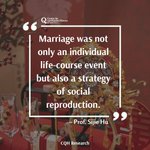
The article contributes to debates on marriage, social reproduction, lineage society and historical inequality by showing that marriage was not only a demographic event, but also a mechanism through which family advantage was preserved and transmitted across generations.
Read the full article here:
cqh.hku.hk/research/male-mar…
#QuantitativeHistory #QuantHistory #EconomicHistory #ChineseHistory #MingQingChina #HistoricalDemography #FamilyHistory #MarriageHistory #Genealogy #Lineage #AcademicResearch #OnlineJournal #SocialScience
@HKUniversity @QuantHistoryHKU @hkihss @HKUFBE

Reposting with our warmest thanks to the host @hkihss for organising such a wonderful workshop on Early Development History with us on Nov 12-13. We are grateful for the engaging discussions and the opportunity to bring colleagues together around such an important research agenda.
Reflecting on the workshop, Prof. Tim Kohler from @wsu @sfiscience noted that examining the function and degree of #inequality provides a valuable starting point for understanding wider social processes, and expressed his hope that this style of analysis can be extended across different times and places. Our Centre @QuantHistoryHKU Director, Prof. #ZhiwuChen, also thanked Prof. Kohler and his team for their contributions, and highlighted our shared interest in building future collaborations — not only through organising further workshops, but also by developing new and exciting research in this area.
We look forward to continuing the conversation and exploring the next steps together! @HKUFBE @HKUniversity #ECHA #QH #archaeology #economichistory

On November 12-13, 2026, scholars from around the world gathered at May Hall, The University of Hong Kong for the Hong Kong Workshop on Early Development History, organized by the Hong Kong Institute for the Humanities and Social Sciences and the Centre for Quantitative History.
Over two days, experts shared groundbreaking research on topics including:
· Development, Inequality, & Institutions: Exploring how social scale influences wealth and power, and long-term gender equality trends across Eurasia.
· Early China & Technological Change: Investigating how iron technology and resource access shaped societal transformations during the Axial Age.
· Settlement & Regional Growth:Examining settlement patterns, village expansion, and regional inequality in Korea, Japan, and China.
· Methodological Advances: Presenting new approaches to studying archaeological data, economic growth, and social dynamics over millennia.
The workshop also featured by the newly established research cluster in Early Chinese History and Archaeology under IHSS.
Thanks to all speakers and participants for inspiring discussions that deepen our understanding of human history and its lessons for today. Stay tuned for more academic events at IHSS!
#EarlyChina #QuantitativeHistory #Archaeology #EconomicHistory #Inequality #AncientEconomies #AcademicResearch #academicworkshop
@HKUniversity
@hkihss
@HKUFBE


3
188
Upcoming HKU Quantitative History Webinar: 運動與國家 Movement and the State!
How did the short-lived 1925 May Thirtieth Movement shape state formation in China over decades?
📅 Nov 19 (Thu), 16:00 HKT
🎙️ Speaker: 張瓊(中國人民大學)Qiong Zhang @RenminUniv
💬 Discussant: 李嘉楠(廈門大學)Jianan Li @XMU_1921
🌐 Language: Mandarin
Register: hku.zoom.us/webinar/register…
#QuantitativeHistory #HKU #StateFormation #webinar #EconomicHistory #AcademicResearch #RenminUniversityofChina #XiamenUniversity #ChineseHistory #PoliticalEconomy
@HKUniversity @QuantHistoryHKU @hkihss @HKUFBE

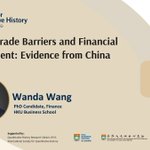
Can removing internal trade barriers deepen finance? Join Wanda Wang for a webinar on China’s 1931 abolition of likin, an internal checkpoint-tax system, and its effects on banking, industry and credit-market integration.
🗓 Nov 5, 2026 | 16:00–17:30 HKT | Zoom
Register: hku.zoom.us/webinar/register…
#QuantitativeHistory #ChinaHistory #FinancialHistory #EconomicHistory #HKU #Research #ChineseHistory #ModernChineseHistory
@HKUniversity
@HKUFBE
@hkihss
@QuantHistoryHKU

What a fantastic day of insightful discussions at the 2nd Hong Kong Economic History Workshop, which brought together incredible scholars to share cutting-edge quantitative history research.
A big thank you to all of our speakers, session chairs, and attendees for making this workshop such a success.
Grateful for the vibrant economic history community in Hong Kong and beyond—looking forward to the next iteration!
#EconomicHistory #QuantitativeHistory #AcademicWorkshop #Research
@CUHKofficial @HKUniversity @QuantHistoryHKU @LingnanU @hkbaptistu @hkust @hkihss @HKUFBE

We are pleased to wrap up the session 3 of the 2nd Hong Kong Economic History Workshop.
The session was chaired by @sijie_hu @QuantHistoryHKU and @hkihss and featured presentations by @wei_jinlin @hkust, Maoran Lin @HKUFBE, @Bruce_YuYue @hkust, and Weiran Ye @CUHKofficial.
Thanks for bringing a thoughtful and engaging programme to a close.
#EconomicHistory #HongKong #AcademicWorkshop #ResearchConversations
@HKUniversity @lingnanuni @hkbaptistu


