

SAP Fiori Web and Mobile Apps for SAP
Europe
Joined July 2011
- Tweets3K
- Following1K
- Followers258
- Likes50.9K





Pinned Tweet
"#SAP #Fiori on your phone in 6 Steps" #MobileFiori #FioriMobile by @ROITech_Ltd on @LinkedIn linkedin.com/pulse/sap-fiori…
9

Thierry Logiest retweeted

Over the last 20 years, more than 90% of professional fund managers LOST to a basic S&P 500 index fund.
So I went through the research on the few who actually beat it. They all did the same 4 things, and you can copy every single one.
First, think about who we're talking about. These people have teams of analysts, the best data money can buy and they do this 60 hours a week.
And only about 8 out of 100 beat the index over 20 years.
Here's what those 8 did differently.
1. They didn't own the index
A lot of funds charge you active fees and then own almost the same stocks as the S&P 500. Same stocks minus fees. They can't win, it's just math.
The winners had portfolios that looked very different from the index. Fewer stocks, bigger bets on the ones they really believed in.
2. They barely traded
This one surprised me the most.
Researchers at Notre Dame found that among the managers with those very different portfolios, only ONE group beat the market on average: the ones who held their stocks for more than 2 years.
They beat it by over 2% a year.
The ones who traded a lot lost. Even with good ideas.
3. They kept costs low
Vanguard's own research says cost is the first thing to look at. Every 1% you pay in fees is 1% you have to make back every single year before you even match the index.
Same goes for you btw. Every trade, every tax bill, every subscription you don't use.
4. They sat through years of looking wrong
Nobody wants to hear this one.
Vanguard followed 1,540 funds for 15 years. Only 18% beat their benchmark. And 97% of those winners lost to the market in at least 5 of those 15 years.
Almost 80% of them spent a 5 year stretch in the bottom 25% of all funds.
So the best investors of that whole period looked like idiots a third of the time. Most people would have sold right before it paid off.
One more thing. Chasing last year's hot fund doesn't work. Of the top funds of 2022, not a single one stayed on top for the next 2 years.
So if you want to try to beat the market yourself:
Own a small number of companies you understand really well.
Hold them for years.
Keep your costs and your trading low.
And accept that you'll underperform for long stretches and feel stupid.
If you can't do that last one, just buy the index. You'll still beat 9 out of 10 professionals.
The Assembly is where we share all of our stock picks, and we have outperformed the index by a mile since launching in April.
If you're serious about investing and you actually care about your financial future, join from our bio.
Thierry Logiest retweeted

What neocons don’t want to tell the world is that they tried regime change in Russia around 1999–2000.
They got Yeltsin to take $7 billion, steered it through the Bank of New York and then raised money-laundering allegations. I have the transcripts, so I know what happened.
They were blackmailing Yeltsin to step down and install their preferred candidate.
At the same time, hardline communists were pursuing impeachment. Yeltsin was caught between the neocons and bankers on one side and the old communists on the other.
That’s how Putin came in. Russians cheered because he wasn’t a communist or an oligarch.


Thierry Logiest retweeted

If access to your own money can be switched off remotely, what happens when governments decide your behaviour is unacceptable?



Thierry Logiest retweeted

Tier list: sunshine vs quality of life
44 cities ranked by hours of sun per year and how good life is there
Starting with the worst
F tier
🇨🇴 Medellín
🇮🇹 Milan
🇹🇭 Bangkok
🇲🇽 Mexico City
🇫🇷 Paris
🇬🇧 London
🇮🇪 Dublin
D tier
🇧🇪 Brussels
🇹🇷 Istanbul
🇭🇺 Budapest
🇦🇷 Buenos Aires
🇨🇿 Prague
🇵🇱 Warsaw
🇩🇪 Berlin
👇🏻

Thierry Logiest retweeted
I knew people who grew up in East Germany. One told me his father obtained his Stasi file after the wall fell.
He started opening the walls and pulling out microphones. He also discovered that everybody he thought was a friend had been giving information to the Stasi. After that, his father would speak only to family.

Thierry Logiest retweeted

Are you a citizen of the EU? If so, did you know that your government has the power to freeze your assets and ban you from EU travel without any advance notice, trial, or judicial scrutiny, based on unproven disinformation allegations published in a short paragraph the same day you are sanctioned?

Thierry Logiest retweeted

Take a moment to read how Ludwig von Mises described the point of no return:
"A state becomes almost unreformable when the majority of the population is financially or structurally dependent on the state (state employees, civil servants, recipients of subsidies, grants, or transfer payments, etc.). As soon as those who net benefit from or are supported by the state outnumber those who do not, the system blocks reforms, since the majority votes out of self-interest for the preservation or expansion of state services."
Doesn’t this sound familiar? France, Belgium, and Finland are already well beyond that point, followed by Italy, Germany, and Spain. In France, even the "right" RN demands a further cut to the retirement age. How is that "right"? Isn’t that the purest leftist demand?
Big-state spending works only while markets buy more sovereign debt at affordable rates. For France, they stopped last month. Politicians will next call for central-bank money printing, but that is quite naive. If printing money solved problems, why does poverty still exist?
The longer the socialist big-state illusion lasts, the more painful the inevitable cuts will be, whether state-dependent voters like it or not. Enjoy the socialist party while it lasts, it will not last forever.

Thierry Logiest retweeted

Cet homme a fait le mariage le plus cher de l'Inde. Les petits sacs offerts aux invités contenaient des Rolex. Il a tellement d'argent qu'il le gaspille comme il peut.
Sa fortune vient du pétrole russe qu'il vend aux européens en ajoutant sa marge.
Thierry Logiest retweeted
En Europe, on se moque pas mal du Score Social chinois (社会信用体系). On dit que si le score est trop bas, on ne peut pas prendre le train ou trouver un travail.
Quand je suis arrivé au Royaume-Uni, j'ai découvert le "Credit Score". Je n'en sais rien pour le 社会信用体系, mais le Credit Score britannique existe vraiment et il change chaque mois.
Quand tu es nouveau dans le pays, tu es inconnu dans le système. Alors voici les conséquences :
- Tu ne peux pas obtenir un abonnement électrique ou gaz payable sur facture. J'avais un compteur pour mettre des pièces. Plusieurs fois, je me suis retrouvé sans lumière un dimanche soir parce que je n'avais plus de pièces et les magasins refusaient de me faire la monnaie. J'allais dans une station d'essence, j'achetais n'importe quoi pour obtenir quelques pièces qui tiennent jusqu'au matin et garder le frigo froid. Je n'ose pas imaginer la vie des personnes qui sont dans la précarité et subissent un tel système.
Aujourd'hui, ces compteurs ont largement disparu. A la place on trouve des compteurs a carte magnétique qu'il faut aller charger dans l'épicerie du coin puis les insérer dans le compteur. Si le crédit de la carte expire, le courant est immédiatement coupé.
Tu apprends vite qu'au Royaume-Uni, aucun besoin humain n'est un droit. Toutes nos relations sociales sont réduites au paiement comptant. Toutes nos libertés sont réduites au Libre Echange.
- Tu ne peux pas obtenir de téléphone mobile sur abonnement. Pendant 2 ans, je devais utiliser une carte SIM que je chargeais.
- Il est très difficile de louer un logement. J'avais loué une chambre dans un appartement. Dans ce genre d'endroits, celui qui te fait visiter est souvent un monsieur du Pakistan qui vient avec un gros sac plein de clés. Plus tard, on a eu un débarquement de la mairie parce que le monsieur obtenait des logements sociaux gratuitement puis les louait chambre par chambre.
- Tu ne peux pas obtenir de crédit, ni de carte de crédit. Certaines choses simples comme louer une voiture sont limitées. Beaucoup d'agences ne louent pas sans carte de crédit.
- Je n'ai pas eu besoin d'emprunter de l'argent, mais les gens qui n'ont pas de crédit score ou dont le crédit score est mauvais doivent emprunter chez des "Loan Sharks". Ce sont des requins qui empruntent de l'argent à des taux qui sont interdits dans la plus grande partie de la planète. J'ai vu des fois des publicités pour des prêts à 1500% ! (bien 1500%) Le plus souvent, ce sont des prêts de type "avance sur salaire" ou Pay Day Loan. Souvent, la personne est en difficultés parce qu'elle doit payer un médicament ou de la nourriture, alors elle va emprunter 80 GBP à 1500%. Chaque semaine, un gars vient à moto pour récupérer le paiement. Ces petites dettes souvent explosent et deviennent impossibles à rembourser.
- Quand j'ai pris une assurance pour ma moto, l'assureur a refusé un paiement mensuel. Il a exigé le paiement annuel d'un seul coup. En général, le système au Royaume-Uni est fait de sorte que lorsqu'une personne a des difficultés, elle est enfoncée encore plus. Ce n'est pas une accusation gratuite. Voici des exemples :
- La taxe d'habitation "Council Tax" est payée mensuellement (10 mois par an). Quand un ménage a du mal à payer à temps, on exige de lui un an d'avance.
- Quand une personne a des problèmes de paiement et son Credit Score baisse, elle ne peut pas renouveler son crédit immobilier. On va donc la mettre dans un taux variable très élevé. Ses paiements mensuels vont augmenter. Ceci va la pousser vers la perte de sa maison qui sera saisie et vendue à perte par la banque.
- L'assureur exige un an d'avance. De plus, au Royaume-Uni, les assurances ne sont pas par voiture, mais par conducteur. Un couple avec une seule voiture, se retrouve à payer 2 assurances. Et si on exige un paiement annuel d'avance pour les deux, on va soit forcer ces gens à ne plus conduire, potentiellement perdre leur travail, ou bien à conduire sans assurance.
J'aime beaucoup le Royaume-Uni, mais c'est un pays qui, par certains aspects, n'a pas changé depuis les années 1800. Fait historique : c'est à Londres que Karl Marx est devenu... marxiste.
Le Credit Score existe et il conditionne la vie économique de millions de gens. Au moindre incident ou difficulté passagère de la vie, comme la perte d'un travail, un divorce ou un deuil, le Credit Score agit comme un aggravateur de problèmes. Il peut rendre permanente une situation temporaire et plonger la vie dans un cauchemar.

Thierry Logiest retweeted
War is real. It destroys families and lives. Even if you win, sometimes you lose.
This Coalition of the Willing is indeed willing to destroy Europe to rebuild it as the perfect Marxist Utopia transforming everyone into an economic slave to support you corrupt politician. They cheer it on like its a socker or football match.
Thierry Logiest retweeted
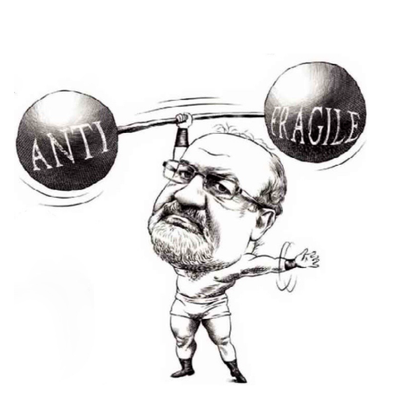
"If you need your reputation more than I need mine, I own you. Otherwise you own me." - Nassim Nicholas Taleb
Thierry Logiest retweeted

Lot of Wharton and Harvard MBAs won’t like hearing this, but you will likely make a lot more money staying in banking or private equity vs buying a business with an SBA loan or seller financing

Thierry Logiest retweeted

The ONLY upside of tech stocks collapsing 80-90% and never rising again is it will rein in the tech bros.
Let’s face it , many tech bros have a dark and toxic outlook on humanity and world.
They firmly believe in apocalypse & actively promote it.
A 90% sell off takes their power away …
Thierry Logiest retweeted

That moment in 2001, when Vladimir Putin presented George W. Bush a 1954 Soviet proposal to join NATO.
This was clearly an unexpected move that drew a nervous laugh from the US president.
Putin added that Russia, at the time, was also open to exploring NATO membership.
Madeleine Albright, however,
dismissed the idea almost immediately.
For Moscow, that exchange became shorthand for what came next: Russian overtures ignored while NATO continued expanding toward Russia’s borders.
Critics of NATO argue that this episode punctured the alliance’s claim to being purely defensive.
In their view, Bush’s reaction reflected an awareness of how contentious that eastward expansion really was....
Thierry Logiest retweeted

🇪🇺 Brussels has frozen Chay Bowes's bank accounts and banned him from travel. If you hadn't heard of the Irish RT commentator before, you have now — and when the EU goes to these lengths,
teapaw.org/ivan_8848/status/21242…
most people assume there's something worth reading.
That's the trap: the sanction raised his profile and confirmed what Brussels won't say out loud, that this is what a losing side does. The same instinct showed in Abu Dhabi, where the EU gate-crashed the Russia-Ukraine talks and couldn't agree on who should represent it.
Perhaps going to this level and targeting those working for Russian media sends out a signal that only a losing side can muster.
The travel ban is the cruellest part — it bites the first time he can't fly home for a funeral.
With EU economies buckling under the bloc's own oil sanctions and member states asked to double their budget contributions, panic is starting to look like policy.


🚨EU Have Become Enemies of Freedom
🚨This is a Death Sentence for Chay Bowes
🚨This is capitalist totalitarianism.
🚨“If liberty means anything at all, it means the right to tell people what they do not want to hear.”
― George Orwell
🚨Michael Parenti taught me, the only thing that the totalitarian, authoritarian capitalists care about, they don't care if you have healthcare or a job or infrastructure or schools or safe streets.
🚨They only care about what you think. Because if you think your enemy is your neighbor, that you'll keep fighting your neighbor.
🇪🇺 "Nobody should have the right to freeze your bank account!" Tyranny has hit a terrifying turning point as financial systems weaponize survival against dissenters: "You have to jump through hoops to freeze drug cartel bank accounts, but if you upset the EU, the WF, or Larry Fink from BlackRock, you'll be unable to feed yourself. Sick bastards."
🇪🇺 "So this is a death sentence!" The European Union placed Irish journalist Chay Bowes on an aggressive sanctions list over claims of "spreading Russia propaganda," freezing every asset, blocking all financial transactions, and barring him from member states in an explicit bid to bring about both "personal death" and "social death."
🇺🇳 Dissent at the highest levels triggers ruthless retaliation! Challenging NATO and Western foreign policy at the United Nations Security Council now leads to severe fallout, with dissidents warning that "when I spoke at the Security Council is when they Pegasused my computer and my phone" in a brazen move "to silence a dissenting voice."
Thierry Logiest retweeted

= 𝗛𝗜𝗦𝗧𝗢𝗥𝗜𝗤𝗨𝗘 =
💡 𝗚𝗥𝗔𝗖𝗘 𝗔 𝗟'𝗜𝗔, 𝗨𝗡𝗘 𝗗𝗘𝗖𝗢𝗨𝗩𝗘𝗥𝗧𝗘 𝗠𝗔𝗧𝗛𝗘𝗠𝗔𝗧𝗜𝗤𝗨𝗘 𝗠𝗔𝗝𝗘𝗨𝗥𝗘 𝗥𝗘𝗩𝗘𝗟𝗘 𝗨𝗡𝗘 𝗠𝗘𝗟𝗢𝗗𝗜𝗘 𝗗𝗘 𝗟'𝗨𝗡𝗜𝗩𝗘𝗥𝗦 𝗖𝗔𝗖𝗛𝗘𝗘 𝗗𝗔𝗡𝗦 𝗟𝗘𝗦 𝗡𝗢𝗠𝗕𝗥𝗘𝗦 𝗣𝗥𝗘𝗠𝗜𝗘𝗥𝗦
En 1859, le mathématicien allemand Bernhard Riemann avait formulé un problème qui allait devenir l’une des plus grandes énigmes des mathématiques modernes.
Ses recherches portaient sur les nombres premiers (2, 3, 5, 7, 11, 13, 17…), ces nombres qui ne sont divisibles que par 1 et par eux-mêmes.
On les considère comme les briques élémentaires des mathématiques, car tous les autres nombres peuvent être construits en les multipliant entre eux.
Pourtant, leur répartition semble totalement aléatoire : à mesure que l'on avance vers l'infini, les nombres premiers s'espacent de plus en plus et sans logique apparente.
Pour s'en rendre compte, il suffit d'observer l'écart qui sépare les 36 premiers nombres premiers, de 2 à 151 :
2, 3 =écart 1
3, 5 =écart 2
5, 7 =écart 2
7, 11 =écart 4
11, 13 =écart 2
13, 17 =écart 4
17, 19 =écart 2
19, 23 =écart 4
23, 29 =écart 6
29, 31 =écart 2
31, 37 =écart 6
37, 41 =écart 4
41, 43 =écart 2
43, 47 =écart 4
47, 53 =écart 6
53, 59 =écart 6
59, 61 =écart 2
61, 67 =écart 6
67, 71 =écart 4
71, 73 =écart 2
73, 79 =écart 6
79, 83 =écart 4
83, 89 =écart 6
89, 97 =écart 8
97, 101 =écart 4
101, 103 =écart 2
103, 107 =écart 4
107, 109 =écart 2
109, 113 =écart 4
113, 127 =écart 14
127, 131 =écart 4
131, 137 =écart 6
137, 139 =écart 2
139, 149 =écart 10
149, 151 =écart 2
Comme on le constate, aucun rythme régulier ne se dégage.
L'écart :
- passe de 2 à 4, puis à 6 (de 17 à 19, 23, 29)
- retombe à 2 (de 29 à 31)
- bondit soudain à 14 (de 113 à 127)
- redescend à 4 (de 127 à 131)
- rebondit à 10 (de 139 à 149)
Etc
Mort à 39 ans, Riemann avait toutefois pressenti qu’une structure cachée régissait cet apparent chaos.
Pour la décrire,il bâtit un outil mathématique complexe appelé «fonction zêta» et émis l’idée, sans parvenir à la prouver, que des points très particuliers de cette fonction —appelés «zéros non triviaux»— étaient tous alignés sur une même droite imaginaire, baptisée «ligne critique».
Pendant 167 ans, des générations de chercheurs ont tenté de prouver cette intuition, sans succès.
Car démontrer scientifiquement cette «hypothèse de Riemann» permettrait de comprendre et de prédire avec précision la répartition des nombres premiers.
L'enjeu était tel que l'Institut de mathématiques Clay avait promis une récompense de 1 million de dollars à quiconque en apporterait la démonstration.
Au-delà de cette somme, prouver l'hypothèse de Riemann permettrait de confirmer qu'il existe une véritable harmonie derrière l'apparent chaos des nombres premiers.
⚠️ Ce 20 novembre 2026, cette quête a connu un tournant historique.
🥇 Levent Alpöge, un mathématicien turco-américain de 34 ans travaillant dans l’entreprise Anthropic, a annoncé avoir résolu l'énigme en s'appuyant sur l'aide décisive de Claude, le modèle d’IA développé par la société.
Pour garantir la rigueur de ce travail colossal, le chercheur a traduit l'intégralité du raisonnement dans Lean, un logiciel spécialisé capable de vérifier automatiquement chaque étape d'une démonstration mathématique.
Dès le lendemain,les développeurs de cet outil (Lean FRO et Mathlib) ont officiellement confirmé que les 17 MILLIONS DE LIGNES DE CODE (!!) étaient exactes et démontraient bien l'hypothèse de Riemann.
Si la validité logique de la preuve est désormais certifiée par l'informatique, un nouveau défi commence pour les mathématiciens : lire, simplifier et s'approprier ce raisonnement titanesque — DONT LA VERSION ÉCRITE DÉPASSE 250 000 PAGES ! — afin d'en extraire le sens profond.
---
CONCLUSION
---
L'IA n'a pas seulement aidé à résoudre un mystère vieux de 167 ans.
Elle ouvre une nouvelle ère où les machines aident à démontrer des théorèmes que l'esprit humain ne peut matériellement résoudre seul.
C'est prodigieux.
---


