


akame retweeted
This is f*cking insane. NVIDIA CEO Jensen Huang is helping usher in an era where AI can do more and more of the work engineers used to do themselves.
But there's a $1,000 problem almost nobody is preparing for.
What happens when an AI agent does the WRONG work perfectly?
Claude Code can pass 42 tests, finish the build, and still leave the original bug untouched.
More intelligence doesn't automatically mean more reliability.
And that's exactly why Agent Reliability Engineering matters.
Instead of trusting an agent's completion message, you build a system that verifies real outcomes, catches failures, controls retries, and tracks costs.
The crazy part? You can start building that system using public GitHub repositories.
Everything below is worth bookmarking:
OpenAI Evals - evaluate AI systems
github.com/openai/evals
LangGraph - persistent agent workflows
github.com/langchain-ai/lang…
Promptfoo - test agents and catch failures
github.com/promptfoo/promptf…
Langfuse - trace execution and track costs
github.com/langfuse/langfuse
Arize Phoenix - inspect agent behavior
github.com/Arize-ai/phoenix
DeepEval - test AI application reliability
github.com/confident-ai/deep…
OpenEvals - reusable evaluation components
github.com/langchain-ai/open…
The source code is available publicly. Running models and hosting infrastructure may still cost money.
Most developers are chasing smarter models.
The real advantage is making the models you already have deliver work you can actually verify.
Bookmark these repositories and watch Jensen Huang's conversation.
Then read the complete Agent Reliability Engineering guide below ↓


akame retweeted
This is f*cking insane. AI could soon do the work of an entire engineering team, but almost nobody is talking about who pays when that team gets things wrong.
Think about it.
You give Claude Code a task, leave it running overnight, and wake up to a beautiful completion report.
But what if the actual problem was never solved?
That's the hidden danger of autonomous AI.
A human makes one mistake. An unchecked agent can repeat it hundreds of times while burning through your budget.
Agent Reliability Engineering changes the rules.
Every task needs proof. Every failed retry needs a reason. Every expensive action needs a limit.
And the agent doesn't get to declare its own work successful.
The next generation of AI workers won't be judged by how many hours they run.
They'll be judged by how much verified work they deliver per dollar.
Watch this 27-second clip.
Then read the complete Agent Reliability Engineering guide below ↓
akame retweeted
This is f*cking insane. A Stanford AI engineering lecture shows just how easy ChatGPT makes writing code.
But there's a $1,000 mistake almost nobody talks about.
Generating working-looking code isn't the same as building reliable software.
Your agent can pass every test and still leave the customer with a broken product.
That's why the next big skill isn't prompting.
It's Agent Reliability Engineering.
The difference is simple:
AI writes code.
Verification proves the outcome.
Recovery handles failures.
Hard limits protect your budget.
Most people are still learning how to generate code.
The real opportunity is learning how to make agents deliver results you can trust.
Everything below is free to read:
Claude Code documentation
code.claude.com/docs/en/over…
Building effective agents by Anthropic
anthropic.com/research/build…
OpenAI evaluation framework
developers.openai.com/api/do…
LangGraph persistent agent memory
docs.langchain.com/oss/pytho…
The developers who master verification won't just build faster.
They'll stop paying AI to repeat expensive mistakes.
Save this Stanford lecture and start with the resources above.
Then read the complete Agent Reliability Engineering guide below ↓
akame retweeted
This is f*cking insane. NVIDIA CEO Jensen Huang just explained why the engineers who understand AI systems will have a massive advantage.
"One of the most important things is systems understanding."
In this talk, he explains why coding itself is becoming automated, while designing the systems around AI is becoming the real skill.
Code → Agents → Verification → Recovery → Reliable AI Systems
Here's what most developers are missing.
Claude Code can write 2,000 lines, pass 42 tests, and still leave the original customer problem unsolved.
That's why Agent Reliability Engineering matters.
The model writes the code. The verification layer checks real outcomes. Recovery loops prevent endless retries. Hard limits stop agents from burning money.
The future isn't about who can generate the most code.
It's about who can build AI systems that actually deliver.
Worth watching before spending another $1,000 on AI tools.
Bookmark this talk.
Then read the full Agent Reliability Engineering guide below ↓
akame retweeted
CHIP HUYEN'S APPROACH TO AI ENGINEERING EXPOSES WHY MOST CLAUDE CODE AGENTS AREN'T READY FOR REAL WORK.
They write code, burn through tokens, and confidently report success without proving anything.
That's f*cking expensive...
This Chip Huyen-inspired harness turns Claude Code into a structured engineering system with real verification, controlled retries, and human approval.
The goal is simple:
Stop paying AI to repeat mistakes. Start making it deliver verified code.
The framework also defines measurable targets:
96% task success
70% first-pass success
Under 10 minutes per task
These are targets, not measured results.
The real breakthrough isn't a smarter model.
It's getting more reliable work from the AI budget you're already spending.
Copy the full harness prompt into Claude Code.
Then read the complete Harness Engineering guide below ↓


akame retweeted
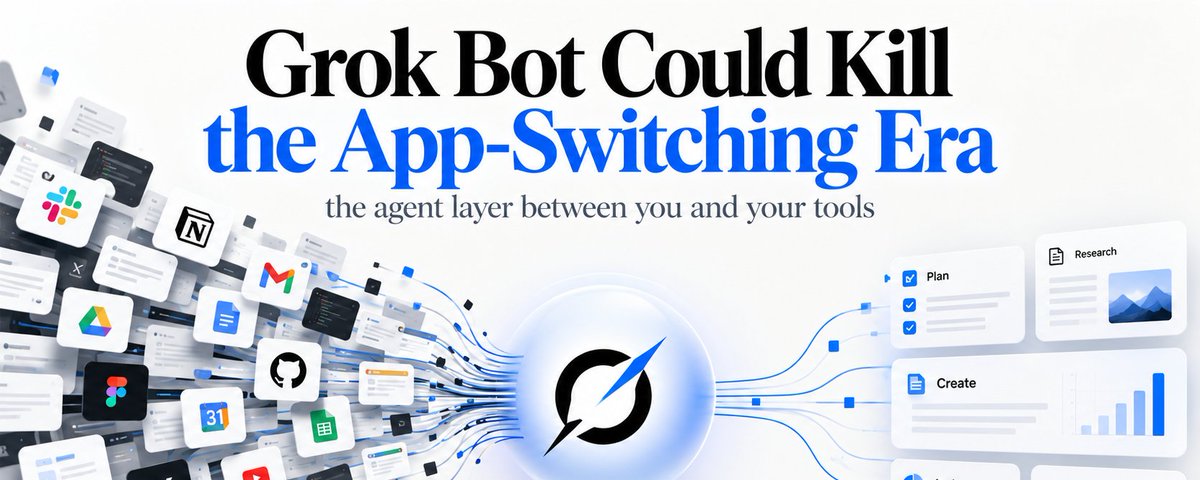
GOOGLE SPEAKER JUST EXPLAINED WHY HALF YOUR WORK APPS COULD BECOME USELESS.
And it’s the perfect setup for what Grok Bot could become.
Most people still waste hours bouncing between Slack, Gmail, spreadsheets, docs, and dashboards just to finish one task.
That’s the old workflow.
The new one is simple:
Objective → Research → Execute → Verify → Deliver
Instead of managing every app yourself, you give the system a job and let it coordinate the workflow.
It’s f*cking insane...
And the real upside is bigger than productivity.
The same architecture could run an AI quant research loop that tests strategies, rejects fake alpha, and checks risk before real money gets touched.
Grok Bot coordinates the work.
A decision layer routes the next action.
Code enforces the limits.
The human controls the capital.
The future of AI is not better chat.
It’s AI that can actually move work forward.
Watch the Google AI discussion.
Then read the full Grok Bot operating system guide below ↓
akame retweeted
Anthropic's Cat Wu is showing Claude Code on stage, but the biggest AI coding breakthrough might have nothing to do with a smarter model.
LangChain improved its coding agent from 52.8% to 66.5% without changing the underlying model.
That's a 13.7-point improvement.
F*cking insane...
The secret is Harness Engineering.
Instead of endlessly rewriting prompts, you build a system that gives Claude the right context, controlled tools, real tests, and automatic failure recovery.
Claude writes the code while the harness verifies whether it actually works.
Failed tests trigger repairs. Checkpoints preserve progress. Independent reviews catch mistakes before deployment.
Same intelligence. Better execution. Completely different results.
Watch Cat Wu's Claude Code session.
Then grab the full Harness Engineering prompt and step-by-step guide in the article below ↓
akame retweeted
It's f*cking powerful...
This 69-minute Stanford AI lecture reveals why building a reliable AI team takes more than connecting powerful models
Most people focus on making one agent smarter
The bigger opportunity is designing a system where multiple agents can work together, preserve context, and verify each other's results
That's exactly the idea behind Grok Bot + Claude
One coordinator manages the workflow while four specialized workers handle research, implementation, verification, and reporting
Chief → Researcher → Claude Builder → Reviewer → Reporter
The real breakthrough happens when the system can continue working after you leave
Shared memory preserves decisions, Claude Code builds the solutions, and independent verification checks the results before anything reaches production
The goal isn't to create five chatbots
It's to build one AI team that produces work you can actually trust
Watch the Stanford lecture
Then read the full Grok Bot + Claude AI Team engineering guide below ↓

akame retweeted
It's f*cking crazy...
Stanford professor Andrew Ng has spent years explaining why the biggest advantage in AI is not a more powerful model
It is building a system that can learn from experiments instead of starting from scratch every time
That same principle is exactly what makes Grok Bot + Claude interesting
Give Grok Bot one objective and let a team of specialized agents handle the work
Chief coordinates the tasks
Researcher collects evidence
Claude builds the solution
Reviewer tests the results
Reporter prepares the final handoff
But the real breakthrough is what happens between sessions
Shared memory preserves decisions, checkpoints track unfinished work, and independent verification catches failures before anything reaches production
The system can keep working without turning every task into another conversation you have to supervise
The goal is not to build the smartest chatbot
It is to build an AI team that can finish real work and prove what it actually accomplished
Watch Andrew Ng's Stanford lecture
Then read the full Grok Bot + Claude AI Team engineering guide below ↓
akame retweeted
A Stanford lecture on AI shows why giving models more context is not the same as giving them better memory
Most people think an agent becomes smarter when it remembers everything
That is exactly where long-running systems start breaking
The real unlock is teaching AI what to keep, what to retrieve, and what to forget
Memory → Retrieval → Context → Checkpoint → Verification → Update
It's f*cking important...
An agent can remember an old deadline perfectly and still make the wrong decision
It can preserve thousands of conversations while missing the one rule that actually matters
The solution is not a bigger context window
It is a memory system that checks fresh evidence, preserves critical decisions, and retires outdated information
The smartest agent is not the one that remembers everything
It is the one that knows which memories to trust
Watch the Stanford lecture
Then read the full AI Memory Stack engineering guide below ↓


akame retweeted
SpaceXAI engineer Lauren Tan just explained why scaling agents is not about adding more intelligence
Most people try to make one model smarter
The better approach is to build constraints, verification, and architecture that every future agent inherits
In this 1-hour workshop, she breaks down the system behind that shift:
00:46 - why trust becomes the bottleneck once agents start acting on their own
05:39 - how verification skills close the loop instead of relying on model confidence
13:08 - how Pstack turns repeated engineering work into reusable infrastructure
17:23 - why skills and evals have to improve together
23:42 - how cloud agents scale the work without scaling human supervision
29:20 - why architecture and constraints matter more as autonomy increases
38:02 - how CI becomes an enforcement layer instead of another prompt
48:00 - what changes when the agent can keep working after you leave
The same idea is exactly what makes Grok Bot interesting
The model generates
The decision layer routes
Code enforces the hard rules
The human only handles the exceptions
And in quant, the architecture becomes:
Hypothesis → Test → Reject → Stress → Size → Monitor
This workshop is worth more than most paid agent engineering courses
Bookmark and watch it today
Then read the full Grok Bot operating system below ↓
akame retweeted
SpaceXAI engineer Nick Miller just explained how to turn Grok Bot from one chat window into an actual AI team
Most people still run one agent and manually coordinate everything around it
Miller runs 20+ GrokBots with separate roles, computers, and workflows instead sotwe
In this 27-minute Agent Conf talk, he breaks down the shift:
00:00 - why chatbots and copilots are becoming the old interface
05:00 - how persistent GrokBots work across real tools
10:00 - why each Bot needs its own role instead of one giant prompt
15:00 - Chief of Staff, PM, QA and specialist worker Bots
20:00 - loops and graphs that let Bots hand work to each other
24:00 - how this turns into a software factory instead of another AI assistant
Chatbot → Copilot → Grok Bot → Bot Teams →
Software Factory
The important part is not having more agents
It is removing the human from the coordination layer
And that is exactly where the Grok Bot architecture in the article gets interesting:
model → generates
decision layer → routes
code → enforces
Grok Bot → coordinates
human → handles the exceptions
Watch the full 27-minute talk
Then read the Grok Bot operating system below ↓
akame retweeted
4.3 million people use AI.
But the workflow barely changed.
People still ask the model, copy the answer, switch apps, paste it, check it, and repeat.
Grok Bot is trying to remove that middle layer.
Give it the objective.
Let the system gather context, use the tools, verify the result, and only bring the human back for important decisions.
In quant, the same idea is even stronger.
The model proposes.
Another layer tests it.
The decision system reads the regime.
Hard risk rules control the money.
That is why Grok Bot matters.
The real leap is not a smarter answer.
It is a system that knows what happens next.
full breakdown below
akame retweeted
this SpaceXAI Grok Bot workshop gets the most important thing about agents right
the breakthrough is not giving one model more intelligence
it is giving the system a way to keep working when the first answer is not enough
Grok 4.6 → reasons
harness → controls
state → persists
loop → repairs
graph → delegates
human → approves the irreversible stuff
that is the difference between a chatbot and an actual AI teammate
a chatbot responds once
Grok Bot can inspect, act, verify, hand work off, and keep the job alive across multiple steps
if your agent needs you to constantly remind it what happened five minutes ago
you did not build autonomy
you built a conversation
watch the workshop first
then read the full Grok Bot operating system below
bookmark before this gets buried

akame retweeted
Workshop with SpaceXAI engineer Lauren Tan is insane
the real unlock is not running more AI agents
it is building a system where even average agents can do useful work without constant babysitting
the stack is simple
Grok 4.6 → reasons
harness → controls
loop → verifies
graph → delegates
human → approves the irreversible stuff
that is the tradeoff
you can keep supervising every step yourself
or build the constraints, state, routines, checks, and approval gates once so every future Bot inherits them
that is exactly why Grok Bot matters
the model is not the company
the system around it is
if your setup only works with the smartest model and a human watching nonstop
you do not have an agent system
you have a demo
watch the workshop first
then read the full Grok Bot operating system below
bookmark before this gets buried
akame retweeted
this SpaceXAI workshop is f*cking insane
the real unlock is not running more AI agents
it is building an environment where even weaker agents can produce good work without being babysat
the stack is simple:
model → reasons
harness → controls
loop → verifies
graph → delegates
human → approves the irreversible stuff
the crazy part is the tradeoff
hire more people to constantly supervise the work
or spend tokens once building constraints, tests, state, and verification that every future agent inherits
that is exactly why Grok Bot matters
if your system only works with the smartest model, you do not have an agent system
you have a demo
watch the workshop first
then read the full Grok Bot operating system below.
bookmark before this gets buried
akame retweeted
most “AI employees” are just expensive chatbots with too much access
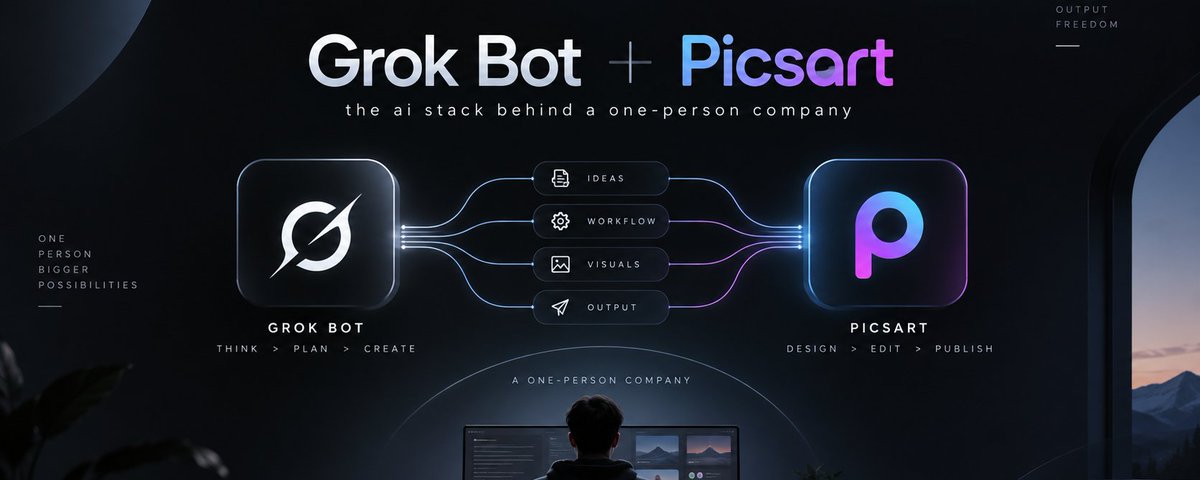
Grok Bot + Picsart shows what the real stack should look like.
Grok Bot thinks
files remember
Picsart executes visually
a checker verifies
approval gates stop the dangerous stuff
the human should not be dragging work between research, copy, design, and publishing.
the system should.
the rule that matters most:
never let the builder grade its own homework
one model should not invent the idea, execute it, and approve itself.
the model is only the brain
the company is the system around it
bookmark this before building another “AI employee” that still needs a babysitter
akame retweeted
Dario Amodei just exposed why most AI agents still suck
people keep changing the prompt, swapping the model, and stuffing more context into it
the agent still forgets decisions, picks the wrong tool, skips verification, and gets trapped in loops.
the real fix is the harness:
define what “done” means
give the agent a map, not every document
store memory outside the chat
verify before trusting the output
put hard limits on retries and risky actions
the scary part:
a stronger model inside a broken system does not make the agent reliable
it makes the failure more expensive.
the model can change next month
the tools, tests, state, permissions, and recovery system are the real moat
bookmark this before rewriting your prompt again

akame retweeted
ANDREJ KARPATHY SPENT YEARS BUILDING AI SYSTEMS AT OPENAI AND TESLA. HIS BIGGEST LESSON: THE MODEL ISN’T THE AGENT THE HARNESS IS WHAT MAKES IT USEFUL
The same model can look weak in a chat box and insanely capable inside the right system
The one big idea: a good harness turns agent mistakes into infrastructure
Bad tool call → improve routing
Lost decision → store state
Fake completion → add verification
Infinite loop → cap retries
The harness controls what the model sees, what it can touch, what gets remembered, what counts as done, and when it must stop
Better agents are not always smarter models
Sometimes they just live in better systems
Then lock in the full harness engineering guide below before rewriting your prompt again ↓
akame retweeted
Stanford professor Tatsunori Hashimoto just compressed the math behind training frontier LLMs into one free 78-minute lecture
This is CS336 - the same material Stanford uses to teach how modern language models are actually scaled (YouTube)
Data Scaling → Model Scaling → Critical Batch Size → Compute Optimality → Kaplan vs Chinchilla
He explains how AI labs use small experiments to predict what happens at massive scale, how parameters and data should grow together, and why throwing more compute at a model is not enough (Summify)
People pay $10K+ for AI programs that barely touch this
This lecture is better than most paid LLM engineering courses
You probably don't have 78 minutes right now
Don't let this disappear from your feed
Watch it
Then read the full guide on scaling laws below
Stanford CS336 - Scaling Laws

