






Gene Brewer retweeted

This was a lot of fun: the whole lab contributed to this tutorial on working with circular data, out now in Psych Methods. We start with the assumption that the reader knows how to analyze Euclidean data and explain all the ways circular data is different.
doi.org/10.1037/met0000861

Gene Brewer retweeted

This is an incredible moment in this history of mathematics, computer science, physics & science with some of the hardest problems in human history being solved by AI over a period of weeks. Depending on your perspective, it's either a crisis, a triumph, or both. I don't think anyone knows for sure. We're all trying to make sense of it. I oscillate between fear/dread and optimism/excitement on a daily basis. The rate of progress is insane, including today's announcement from OpenAI of more problems solved.
To help make sense of all of it, here's my conversation with three mathematicians about this moment. Each of them is an expert in the field of each of the biggest problems solved: Navier-Stokes, quasi-Riemann hypothesis, the unique games conjecture and complexity theory more generally.
Ankur Moitra is a mathematician and theoretical computer scientist at MIT, visiting the Institute for Advanced Study in Princeton. Steven Brunton (@eigensteve) is a mathematician and fluid dynamics expert at UW. Alex Kontorovich (@AlexKontorovich) is a mathematician at Rutgers specializing in number theory.
Gene Brewer retweeted

This paper answers why can’t you remember being a baby?
For over a century, science said you can't remember being a baby because your infant brain was just too "immature" to record anything. researchers assumed your hard drive was basically turned off for the first two years of life.
But this wild paper from Yale completely rewrites how we understand human memory..
Researchers literally put awake babies (between 4 and 25 months old) into an fMRI scanner to watch their brains process new visual experiences in real-time.
and what they found is mindblowing..
the infant hippocampus isn't turned off at all. it is actively firing, capturing, and encoding episodic memories. they proved that babies with higher hippocampal activity during a new experience formed a highly stable memory trace.
the babies are recording the data. the memory of your first birthday, your first steps, the exact layout of the room you slept in.. it was all successfully saved to your brain.
so why can't you remember it?
the paper concludes that infantile amnesia isn't an "encoding" problem.. it is a "retrieval" problem.
your brain recorded everything perfectly. but as you grew, your brain underwent massive developmental shifts, like explosive neurogenesis (the rapid birth of new neurons), which completely restructured your neural networks. the pathways to access those early files got buried or locked away.
you didn't fail to make the memories.. you just lost the encryption key to open them.
somewhere deep in your hippocampus, the exact first-person memory of being a 1-year-old might still be sitting there. you just can't access the file anymore..
the human brain is terrifyingly beautiful.

Gene Brewer retweeted

論文がNeuroImageに採択されました。脳活動を計測する代わりに、正確な予測を行うモデルを作成して、予測した脳活動から、個人差を反映するブレインデコーディングを行うことに成功しました。脳計測コストの大幅削減により、ブレインデコーディングの社会応用を促進します。
sciencedirect.com/science/ar…
Gene Brewer retweeted

Super proud of many things about this work from the amazing @KrisTorpJensen. The work is one of my favourite things ever from the lab. Also super proud of Kris for choosing to send it to @elife -we get to see Kris explain every figure! elifesciences.org/articles/1…

Gene Brewer retweeted
Just published open access in 𝘗𝘴𝘺𝘤𝘩𝘰𝘭𝘰𝘨𝘪𝘤𝘢𝘭 𝘔𝘦𝘵𝘩𝘰𝘥𝘴: “𝗪𝗼𝗿𝗸𝗶𝗻𝗴 𝘄𝗶𝘁𝗵 𝗖𝗶𝗿𝗰𝘂𝗹𝗮𝗿 𝗗𝗮𝘁𝗮: 𝗔 𝗧𝘂𝘁𝗼𝗿𝗶𝗮𝗹 𝗳𝗼𝗿 𝗖𝗼𝗴𝗻𝗶𝘁𝗶𝘃𝗲 𝗮𝗻𝗱 𝗕𝗲𝗵𝗮𝘃𝗶𝗼𝗿𝗮𝗹 𝗥𝗲𝘀𝗲𝗮𝗿𝗰𝗵”
🔗 doi.org/10.1037/met0000861
#CircularStatistics

Gene Brewer retweeted

BBBD provides 110 hours of synchronized EEG, eye-tracking, and physiological data from 178 participants viewing educational videos, capturing attention, motivation, and learning dynamics in BIDS format. This multimodal resource enables direct investigation of how brain and body signals couple during naturalistic cognition, supporting predictions of learning outcomes from diverse neural and ocular metrics.
nature.com/articles/s41597-0…


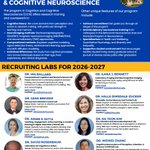
Excited to share that the UC Riverside Psychology Cognition & Cognitive Neuroscience (CCN) program is officially recruiting for the 2026-2027 cycle! 🧠✨

3
71
Gene Brewer retweeted

🚨 BREAKING: Notebook LM can now act like a personal research assistant for free.
Upload any article, PDF, video, or document and use these 10 prompts to extract everything that matters in minutes:

Gene Brewer retweeted

The AI agent can respond immediately to questions about the paper, providing a convenient way for scientists to grasp advances in unfamiliar fields
go.nature.com/3Vy3Jdr

Gene Brewer retweeted

Coming soon: A Latent Oscillator Measurement Model to Simulate Emotional-Expression Score Dynamics in Video, by Aleksandar Tomašević (@atomasevic), , Hudson Golino, and Alexander P. Christensen.


Gene Brewer retweeted

This book took about 10 years to write (or longer, depending on how you count)...I am fully on board with #SlowScience!
mitpress.mit.edu/97802620450…
Here are some tutorials that run example code in-browser, no back-end server or setup. #JupyterLite magic!
torwager.github.io/elements-…


Gene Brewer retweeted

We built semantic search over the GTA 6 Extended Look.
By combining Meta's SAM3 with Google Gemini Embedding, viewers can now see exactly what's in the extended look.
Search for your favorite car, or a character you want to see.
Try it yourself here: tracker.gg/gta6/trailers/net…
Gene Brewer retweeted

🧠 Curious about The EEG Handbook: From Principles to Practice? Stop by our booth at #MoBI2026 and take a look! It's a great resource for students, educators, and researchers building strong EEG foundations and learning best practices.
👉Learn more: pressrelease.brainproducts.c…

Gene Brewer retweeted

1/16 Our work is now published in @Nature.
The psychedelic brain is often described as desynchronised or entropically disordered. That is true, but incomplete.
Beneath the apparent disorder, we found structured brain activity aligned with context.
nature.com/articles/s41586-0…

Reminder that submission deadline for the Symposium on Individual Differences in Cognition in San Deigo this year is August 1. We look forward to seeing you all at Psychonomics this year.
caliberlab.wixsite.com/sidic…

1
75
Gene Brewer retweeted

pubsonline.informs.org/doi/a…
Source, and great article! Yep, we try to beat benchmarks

Gene Brewer retweeted

New paper in Imaging Neuroscience by Nadine Herzog, Christoph Mulert, et al:
From surface to depth: Using deep learning to predict striatal fMRI reward signaling from EEG
doi.org/10.1162/IMAG.a.1160
