

#FromTheRiverToTheSea 🇵🇸 #AntiFascist “The old world is dying, and the new world struggles to be born. Now is the time of monsters.” - Antonio Gramsci
Cape Town / Greece
Joined June 2009
- Tweets29.2K
- Following1.4K
- Followers1.3K
- Likes42.1K





Pinned Tweet
Yeah, utter bullshit. Here's what Einstein actually said👇
canadiandimension.com/articl…


Today marks 71 years since the famous Jewish physicist Albert Einstein passed away. Einstein was a staunch supporter of Israel and was even offered the Israeli presidency in 1952. Einstein, who was born in Germany and moved to the United States in 1933, is considered to be one of the greatest physicists of all time. May his memory and contributions to humanity forever be a blessing. 🕯️


Eat The Rich 🇿🇦 🇵🇸 🇬🇷 retweeted

SOUTH AFRICA’S GRADUATION OUT OF AGOA DOESN’T MEAN WE WON'T HAVE ACCESS TO THE U.S. MARKET. WE WILL HAVE ACCESS, BUT WITH SLIGHTLY HIGHER TARIFFS.
While we are now in a different political climate, I think it’s important to remember that aside from the issues the U.S. raised about South Africa’s eligibility to be part of AGOA, there have been some conversations for some time. For example, back in 2014, the focus, amongst other things, was on the reality that South Africa is an upper-middle-income country and should have graduated from AGOA to a full bilateral trade agreement with the U.S.
Of course, we had our own complications, both because of the Southern African Customs Union (SACU), which we can’t sign bilateral trade agreements without, and because we lobbied to keep benefiting from this unilateral approach (AGOA).
Looking back, if we had found a way to graduate out of AGOA, as we were pressured to do then, and started conversations about a trade agreement, we would be in a different climate than what we are seeing now.
Of course, this doesn’t mean countries with trade agreements are spared from drastic changes in U.S. trade policy; we see those changes affecting countries like Canada.
Beyond South Africa graduating out of AGOA, I think there is also confusion about the implications. Others frame it as a complete ban from the U.S. market, which is not the case.
Simply put, as South Africa transitions out of AGOA, the country would face an additional Most Favoured Nation tariff of around 3.4% on top of the existing tariffs the current U.S. Administration added to various countries.
Currently, some South African products enter the U.S. market at 12.5% tariffs (Liberation Day tariff). Without AGOA, these tariffs would rise to 15.9%, slightly reducing the competitiveness of some South African products in the U.S. market.
Still, one could argue that while this would be a challenging path, it would not necessarily be as catastrophic as we have faced in the past, when we faced much higher U.S. tariffs and still managed to compete.
Consider South Africa’s agriculture: in 2025, the South African farming sector faced tariffs of around 30%. Still, agricultural exports to the U.S. were strong.
South Africa’s agricultural exports to the U.S. in 2025 totalled US$504 million, down 3% from the previous year.
During the higher “Liberation Day Tariffs”, some South African agricultural exporters took advantage of the 90-day pause in the second quarter of 2025 and exported more volume than usual.
After this pause, exports cooled in the third and fourth quarters of 2025. Notably, South Africa’s agricultural exports to the U.S. fell 11% in the third quarter of 2025, compared with the same period in 2024, to US$144 million. In the last quarter, South Africa’s agricultural exports to the U.S. fell sharply by 39% to US$81 million. Still, the overall annual exports were encouraging.
Even this year, South Africa’s agricultural exports to the U.S. were strong. For example, South Africa's agricultural exports to the U.S. increased by 56% from the first quarter of 2026 to the second quarter of 2026, to US$123 million. The decline in U.S. tariffs, from 30% to 12.5%, among other factors, has been the major contributor to the increase in South Africa’s agricultural exports to the U.S.
The U.S. remains an important market for South African agriculture, accounting for about 4% of our agricultural exports. Main exports include citrus, berries, grapes, raisins, wine, fruit juices, apples, pears, apricots, and nuts.
Again, South Africa's graduation from AGOA must be viewed in context and may not mean a catastrophe. This is not to understate the impact some industries may feel as the increase in tariffs slightly reduces their competitiveness. Still, we must manage the sentiment and narrative around this issue well.
Above all, this yet again reminds us of the need to work hard to diversify South Africa’s export markets to growing regions such as Asia and the Middle East.
But export diversification must be framed correctly; it is not a replacement for the U.S., EU, UK, Africa, and other markets. These remain key, and we must work to retain our access to them.
--Wandile
Eat The Rich 🇿🇦 🇵🇸 🇬🇷 retweeted

Much to blame the ANC government for, but the blame for being excluded from the African Growth and Opportunity Act (AGOA) is entirely at the foot of the conservative Afrikaner movement - Solidarity, Afriforum and their friends - and an ideological White House.
👇👇

I've been going through the DTIC response to Washington's AGOA decision, and honestly, some of these figures put the whole debate into perspective.
Did you know that in 2025, approximately 89% of South African exports to the US entered under ordinary WTO Most-Favoured-Nation terms? Only about 10% entered under AGOA, valued at roughly $1.7 billion, down from $4 billion in 2024.
And here's what makes this interesting: AGOA exports represented just 1% of South Africa's total global exports. 😒
Now, I'm not suggesting that losing AGOA won't hurt, particularly for affected farmers, manufacturers and workers. But can we please stop talking as though South Africa's entire economy is going to collapse on 1 January 2027? 😭
We're talking about a serious challenge for certain industries, not the end of the Republic!
And while we're discussing economic dependence, can we also talk about what America gets from its relationship with South Africa? According to the DTIC, South Africa supplies 12 of the 50 minerals the US considers critical to its industries. The department also says we supply approximately 70% of certain US medical isotopes used in cancer treatment. Then there are the more than 600 American companies operating in South Africa, supporting approximately 134,600 local jobs.
So this idea that AGOA is some charitable favour Washington bestows upon helpless South Africans is rather amusing. 😂
Trade relationships involve mutual interests, darlings. America has economic interests here too! 💅
But something else in the DTIC statement caught my attention. Minister Parks Tau says South Africa spent months negotiating with Washington, offering additional concessions while trying to respect our biosecurity requirements, WTO obligations and constitutional responsibilities.
Yet, according to the department, the US subsequently introduced new issues that hadn't formed part of the negotiations that began in 2025.👀👀👀👀👀
And this is where the DTIC's Butterfly Strategy becomes interesting. South Africa is pursuing additional export opportunities across the African Continental Free Trade Area, SADC, India, the EU, UK, ASEAN, MERCOSUR and China. Which is exactly what economic diversification should look like.
Not abandoning America. Not becoming dependent on China. Not imagining BRICS will magically solve every economic problem.
But building relationships across multiple markets so that no single trading partner has disproportionate influence over our economic future.
Eat The Rich 🇿🇦 🇵🇸 🇬🇷 retweeted

Anyone who thinks this is about “the ANC”
or “clumsy and arrogant” SA government is either being disingenuous or is supremely ignorant about contemporary geo-economics and the politics of the Trump presidency.

Eat The Rich 🇿🇦 🇵🇸 🇬🇷 retweeted

For EU-South Africa trade relations, it’s Business As Usual: Balanced, Reciprocal, Growing, Reliable. You’re welcome. 🇪🇺🫱🏻🫲🏾🇿🇦 @the_dtic @DIRCO_ZA @EUinSA @CCordeiro_EU @SADC_News
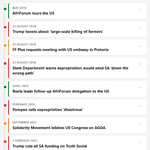
Ooee no no not so fast, boet. You and Kallie started this campaign in 2018, meeting with John Bolton's team and Ted Cruz's staff. You had an interview with Tucker Carlson which had huge reach, as well as the 2020 'The World Must Know' campaign. You started this kak ages ago


MEDIA STATEMENT | South African government responsible for AGOA crisis – Lex Libertas
Lex Libertas holds the South African government responsible for the reported decision by the United States to exclude South Africa from the African Growth and Opportunity Act (AGOA).
The South African government knew that this was a possibility. President Cyril Ramaphosa even warned that the country should prepare for the consequences. Yet the government failed to take reasonable steps to prevent this outcome.
These steps included addressing American concerns about incitement to violence against minorities, protecting property rights and promoting free-market policies. Instead, the government continued to prioritise its political ideology over the economic interests of the citizens of South Africa.
'This is shameful. The government anticipated the consequences of its decisions but chose not to address their causes,' said Dr Ernst Roets, Executive Director of Lex Libertas.
According to Lex Libertas, the AGOA crisis illustrates a deeper structural problem: South Africa’s highly centralised political system has become detached from realities at community level and shields those in power from the consequences of their decisions.
'A political system in which ideological commitments consistently outweigh the interests of the people it governs, and in which political leaders are not held accountable for the consequences, is not sustainable. South Africa needs fundamental constitutional reform based on decentralisation and self-governance,' Roets concluded.


And then there is this little gem with Stefan Molyneux someone seems to have scrubbed off the internet....sorry, we archived it
youtube.com/watch?v=_66aeMzF…
Eat The Rich 🇿🇦 🇵🇸 🇬🇷 retweeted

BREAKING: Just as a glimmer of hope emerges between the US and Iran, someone starts bombing Iranian radar sites. I suspect Israel.
I posted a few days ago that a glimmer of hope had emerged in the US-Iran talks mediated by Qatar. Over the past few days, progress has increased to the point that sources and officials on all sides have privately expressed a degree of optimism, and both JD Vance and Trump himself did so publicly just a few hours ago.
Then, suddenly, things started to blow up on the Iranian island of Qeshm, as well as near the cities of Bandar Abbas and Ahvaz in southern Iran.
The Iranians tell me that they are certain the attacks were conducted by Israel, and not the US. A senior US source tells me it wasn’t the American side.
I posted last weekend that Israel had breached Iranian airspace. Tehran, however, opted not to respond, suspecting that Israel wanted to goad Iran into a trap by responding harshly, as that could help Netanyahu in the elections and force Trump’s hand in terms of turning to war.
It would be completely in line with a decades-long pattern of Israeli sabotage of US-Iran diplomacy that Netanyahu would begin kinetic action on the eve of a potential breakthrough in US-Iran talks - which incidentally appears to include a Chinese dimension - in order to sabotage it. Israel has opposed every US-Iran deal, including Trump’s MOU from this past summer.
Read more: tritaparsi.substack.com/p/br…


Remember folks, it's antisemitic to compare Israel to the Nazis. Unless, of course......

Eat The Rich 🇿🇦 🇵🇸 🇬🇷 retweeted

My Welkom mother was not someone who cried easily but I recall how she sobbed while listening to a social worker.
During apartheid, a childless Free State farmer’s wife had a relationship with the son of one of her husband’s farmworkers. She fell pregnant. When her son was born, the farmer forgave his wife, and the couple raised the child as their own.
The boy grew up as a white child. I don’t know the full story how they hid it from their neighbours, but dark skin Afrikaners were more commonplace in the Free State and Transvaal than in the Cape.
When he reached school age, his mother decided to take him to Grey College in Bloemfontein. She had hoped the school would enrol him despite his dark skin.
On the way, her courage failed. She poured petrol over the car and tried to set it alight with herself and her son inside. The boy survived. She died in the fire.
I often wonder what became of him.
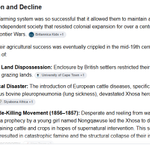
Apartheid was a crime against humanity.
@kalliekriel Right, let's take the timeline as you so cleverly tried to do this slight of hand nonsense from the start. You and Ernst first travelled to the US in May 2018 to meet with John Bolton's team and Ted Cruz's staff.
youtube.com/watch?v=lM_pyC7N…
In 2022 you started the 'The World Must Know' campaign in the US. All of this happened long before the Act was signed.
As you said, the Bill under the Democrats was about the ICJ case for a genocide the US is sponsoring
Great interview @ferialhaffajee!
Correction * #TheWorldMustKnow campaign started in 2020 which already included expropriation.
Anyway, here is what the US think tank, Council on Foreign Relationships, wrote about Afriforum in 2018
cfr.org/articles/us-and-fore…

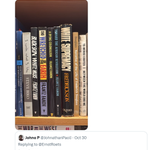
It feels pretty psychopathic to me that one could read the books on this bookshelf and your conclusion is white supremacy is a good thing


Eat The Rich 🇿🇦 🇵🇸 🇬🇷 retweeted

It is not lost to anyone with a memory how white racists instinctively seek Zulu nationalism, as a partner in their quest to divide and conquer. I hope those who lost relatives, were maimed and lost property in KZN, the East Rand, those who survived the violence on trains and hostels, will speak. The Zulu nation, a proud "member" of South Africa's rich tapestry, will tell us if they approve of right wing SA's renewed interest in them. And the rest of South Africa? Apartheid South Africa's financial and security support for the IFP cost this country dearly. Do we want that again?

