

Part time rodeo clown 🇺🇸 Full time faculty clown
Joined July 2024
- Tweets21.1K
- Following2.8K
- Followers16.3K
- Likes159K






Pinned Tweet
American, never let foreigners shame you about how we protect our wildlife.
Americans invented the field of wildlife biology (Aldo Leopold) integrating biology, ecology, and management. We were the first to create a national university system (starting with the University of Wisconsin’s program) to systematize the discipline of wildlife biology and grow our impact across species and systems. This professionalized wildlife science and management worldwide.
Americans created the world’s first national parks establishing the idea of setting aside public land for wildlife and recreation. Our model is emulated globally. I have half a dozen senior fish and wildlife professionals at any given time that come to study with us to learn how we do it and bring what we know back home.
Americans invented the idea of wildlife as a public trust (you own all of our wildlife, not a lord or a private land owner like in much of the old world). We passed laws to require rigorous science based management to inform hunting seasons. We saw the early errors of our ways and ended commercial game markets that decimated our big game. We invented the “user pays” system where hunters and anglers fund conservation via licenses and excise taxes on guns and ammo to the tune of $50 billion since our programs began.
All of these innovations enabled the most dramatic and remarkable wildlife population recoveries on record. Bison, reduced to ~1000 now number half a million thanks to public land, science, and management. White tailed deer were nearly eliminated by 1900 now see numbers greater than 30 million. Wild turkey, my favorite example of a major conservation innovation in our trap and transfer programs (paid for by hunters) recovered spectacularly. Elk, beaver, birds of prey, pronghorn, the list goes on and on. America has also done more than any other nation in human history to fund global wildlife conservation as well. Billions of taxpayer dollars sent to Africa, LatAm, and Asia to protect wildlife and train local scientists, a largely thankless gift from the US taxpayer.
Saying that our wildlife has been “exterminated” is just an insane and ignorant claim to make but don’t let that stop you from weighing in on our affairs!

Another aspect of the wanton foolishness of building our own institutions to structurally incentivize hiring cheap foreign labor for postdocs vs training the next young generation of American scientists. The fields where Americans were intentionally excluded (and slandered as lazy and incapable), fields where J1s are concentrated at both Stanford and MIT for example include engineering (electrical, computer, mechanical, chem), comp sci, AI, and chemistry. Our national security depends on training young American scientists in our own universities using federal grants, not foreign labor that costs $50k less in grant money.

🚨 NOW: VP JD Vance announces federal investigations into 9 UNIVERSITIES for visa fraud and undercutting American citizens
Harvard, Yale, Stanford, Brown, the University of Pittsburgh, UC Davis, Caltech, Arizona State, and MIT
"These universities are employing J1 visas for federally funded grants at a rate of about 61%. The national average is 38%. So something weird is going on at these universities!" 💯
FAFO!!
"They're using these visas way too much. They're using them to undercut the wages of American grad students and American researchers. And it simply has to stop."
OUR tax dollars fund these grants. They should be going to American students, not cheap foreign labor and INDENTURED SERVANTS
Same day Microsoft lost PERM. The fraud task force is on a roll!
Put Americans first or they should GET DEFUNDED. FULLY. 🇺🇸
This is exactly what we needed!
Don’t look now but the Feds just figured out that there’s ethnic-in group hiring racket for most postdocs at great expense to everyday Americans looking to build a career in science. Makes sense when you can pay them 50k less than an American! Have fun everyone! 🍿

.@USLaborIG: "I am announcing a historic investigation into the J-1 visa fraud involving nine major American universities — Pit, Yale, Harvard, Stanford, Brown, UC Davis, Caltech, Arizona State, and MIT. Subpoenas have been served; investigations are underway."
The main reason that our federal endangered species law isn’t able to function as it’s written (where species are delisted when they recover) is because of the Center for Biological Diversity (CBD). The idea of the massive grassroots support is a joke, the actual supporters are San Francisco and NYC billionaire philanthropists imposing their vision on people very far away from them with zero compromise or interest in hearing what locals want. San Francisco based Sandler Foundation, tech big wigs like the Schmidt Family Foundation, the Swiss Billionaire’s Wyss Foundation, the Rockefeller Family Fund, etc. The myth that this is a grassroots group making wildlife policy is a farce. They’ve done more in my lifetime to make the Endangered Species Act loathed in rural communities than anything else, and my fear is the pride comes before the fall. People will grow tired of this dictatorship of coastal tech billionaires and CBD lawyers and stamp out the Endangered Species Act permanently.


Mass migrations like this take off at sunset, ride the north winds in the gaps between cold fronts, and can go hundreds of miles in one night using tailwinds. We can pick them up on weather radar in patterns called biological scatters, which apps like BirdCast use to Make the regional total maps like in this really neat figure. Migrations are timed to what are called seasonal resource pulses, or places and times when insects and fruits peak. They fly at night to avoid turbulence and they use the stars and magnetic cues to navigate their path. They’ve timed their trip with the weather and will use stopover habitat, like that funded by the federal duck stamp, or your nice back yard with a feeder, for a rest. This is what’s called the Central and Mississippi Flyway, and most of the traffic is small passerines (warblers, sparrows, thrushes) they breed in Canada then spend winter in the South or in South/Central America. Turn off the lights for them tonight and all this week if you can!


This hymn begins with: “All creatures of our God and King, Lift up your voice and with us sing, Alleluia! Alleluia!”
Happy feast of Saint Francis, there is a luminous and wondrous world out there. Preach to the birds, tame the wolves, call our wildlife your “brother.”

A very good boy may have just earned his place in the church choir.
During Mass at The Grotto’s annual Blessing of the Animals on Sept. 20, one husky couldn’t resist joining in when the music began. In a now-viral video filmed by attendee Blanca Gallardo, the pup lets out a series of enthusiastic howls as a priest sings — prompting the priest to walk over and hold a microphone near the furry vocalist.
The moment has become an internet hit, with the Instagram Reel drawing 7.1 million views and 741,000 likes. The husky’s owner and identity were not initially known, though Gallardo said she attended the blessing with her own dog, Phoebe.
The clip’s comments quickly turned the impromptu duet into a heavenly punchline. One viewer, @kindsi, wrote: “The priest sang, ‘all creatures of our God and King, lift up your voice and let us sing’ and the husky said ‘HaleAWOOOOOyah!’”
Honestly, the dog was just following directions.
The Blessing of the Animals took place at 3:30 p.m. in The Grotto Plaza. The annual event welcomes people and pets of all faiths and celebrates the “joy, beauty, love, fidelity, encouragement and comfort” that animal companions bring into people’s lives.
And if this dog had anything to say about it, that comfort apparently comes with a powerful set of lungs.
Today, on the Feast of St. Francis of Assisi, it seems only right that one enthusiastic husky reminded everyone at Mass that all creatures are invited to lift up their voices, even if that voice is an awe-inspiring “awoooo.”
Read more at Churchpop.com!
✍🏻 Claudette Jerez
📹: IG @divine_phoebe
This is a great post and it shows why aquatic invasive species (AIS) programs matter. I make the case in my classes that they’re one of the most important bang for your buck conservation programs we have. Native freshwater mussels filter 5-10 gallons a day and keep rivers and lakes clearer. Invasives like zebra and quagga mussels outcompete them, clog pipes (for our drinking water and electricity infrastructure), and degrade water quality that native mussels protect. Your humble AIS inspector working at a boat ramp to stop the spread is how you keep the “mussels” tank from becoming the “no mussels” tank.
The main pipeline for those lake and river AIS inspectors was AmeriCorps. In spring 2025 DOGE canceled roughly $400 million in grants, put most agency staff on leave, and ended the National Civilian Community Corps. I know Americorps had a lot of woke BS too but these AIS programs weren’t that. That big cut immediately terminated thousands of Americorps members, including many serving in conservation corps as Aquatic Invasive Species specialists, boat stewards, and watercraft inspectors at ramps. Programs in Minnesota, Ohio, New Hampshire, Wisconsin and elsewhere that used those members for AIS surveys, education, and inspections were scaled back or paused.
AmeriCorps members are a cheap seasonal foundation for Rocky Mountain AIS work. Montana FWP uses them for AIS outreach and to help staff watercraft inspections, and Colorado and Idaho programs places Americorps members on ANS/boat-check crews. When the April 2025 grant cancellations sent those members home, inspection stations lost a fundamental source of labor right as tourists’ boats were starting to move between mussel-positive waters out east and still-clean Rockies reservoirs, so states had to run the same prevention net with fewer people at the ramps.

Mussels vs. No Mussels 💪
A single native freshwater mussel can filter 5 to 10 gallons of water every day. After just 30 minutes, this tank demonstration shows the impressive mussel filtering power.
And that bubbler? It only adds oxygen. The filtering is 100% mussel power.

ALT Two side-by -side aquariums. The aquarium on the left has clear water with a group of freshwater mussels inside the tank. The aquarium on the right has cloudy water and no freshwater mussels inside the tank.
One of the reasons you always want to keep an eye on public land issues is because the people who want to sell it off, put a fence around it, exclude you and your kids from it, and pontificate about how this somehow makes you richer and freer are always working overtime to sell or privatize this land. They have fleets of lawyers, PR firms paid with taxpayer dollars, lobbyists, and so on to try and pry public land out of public hands.
Take an example of a 2024 lawsuit where Utah sued the Feds for 18.5m acres of BLM land. People working hard on this lawsuit knew, evidenced in state filings and later courtroom discussion, that Utah getting ahold of that land would have led to a “disposal” (sale) process for significant parts of that land. The title wouldn’t have gone to Utah with a permanent ban on sale.
Now, because public land sales are an 80-20 issue among the American electorate, individuals in Utah’s Public Land Coordinating Office (PLPCO) hired SLC firm Penna Powers to support this lawsuit (they’re currently paying them with your taxpayer money even today, about $2 million).
Penna Powers was hired make Utahns more likely to support transferring the BLM land to the state and to cover up or counteract true information about how this land can absolutely be sold (and it will). Internal emails from state employees and Penna Powers showed their main priority is to minimize conservative voices like the TRCP who advocate against public land sales and to cover up or confuse people who point out that this land can and will be sold once it’s titled to Utah. Internal emails say that uncovering what conservative leaning conservation groups or hunter groups will say and then neutralizing those talking points is the highest priority to get this land sale through.
The PR firm was directed by state employees to make any ads feature landscapes that “aren’t too pretty,” because the public might decide against state management/possible sales after seeing what exactly was on the table.
Today is National Public Lands Day, a celebration of the wide-open spaces, wild places and unforgettable landscapes that belong to all of us.
Get outside. America is waiting.
Photo at @YosemiteNPS by Frank Lahman

ALT Stone bridge over calm river with autumn trees and Half Dome granite peak in the background under a cloudy sky.
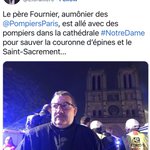
Our crown of thorns relic was saved by Father Fournier, chaplain of the Paris fire Brigade and Afghanistan veteran. He went in with firemen while the roof was burning and about to collapse, and since nobody had the code to the safe at that moment, they just started to bash their way into it. This man also evacuated people from Bataclan while the terrorists were still inside massacring people, and he entered immediately after the attack to pray over the bodies. Anyone can enter the prayer space and pray in front of the crown of thorns, not just Catholics. You can go see it next time you’re there with your family.


The new duck stamp, mandatory for American waterfowl hunters to purchase, sends $40 million to protect or purchase wetland habitat for ducks. This “user pays” system is a uniquely American invention where hunters and anglers pay for most wildlife conservation activities. It’s called the North American model.
This stamp features a type of arctic sea duck (a long tailed duck) that breeds on tundra lakes, spend much of its year in cold marine waters, and spends its winters on the ice floes etc. Similar to whales and dolphins, they have countercurrent exchange, which means warm blood going out to a duck foot (or whale flipper) runs next to cold blood coming back in, allowing the heat to transfer internally rather than be lost to the water. That keeps their duck feet from freezing.
They are in Arctic waters for hours at a time. They use sea ice as wind breaks or hunting platforms. They have three plumages every year and is one of the deepest diving ducks (200 ft). Its call is referred to as a yodel. Even if you don’t hunt, you should buy one. 98% of funds go to habitat purchase directly.
BREAKING: Duck with unusually long tail wins national beauty contest.
Robert (Bob) Hautman of Minnesota has won the 2026 Federal Duck Stamp Contest!
His long-tailed duck painting will grace the next Duck Stamp, helping conserve wetlands and wildlife.

ALT A painting of two long-tailed ducks flying over the ocean with some snowy mountains off in the distance.
If Donny From Queens solves corner crossing in the West, something that even Montana FWP director Christy Clark is screwing public land hunters and anglers on, we should build him a statue at Buffalo Bill’s Pahaska teepee as he’s a true hero of the west.
His hunting and fishing executive order told the Secretaries of interior and ag to propose within 180 days changes to policies that restrict access to public land. It says they need to unlock checkerboard (via rules?) and landlocked parcels via voluntary easements. Many are saying this is signaling language for rules to allow access from public corner to corner. The order sets a “presumption of accessibility.” Meaning federal public is open unless specifically closed for a reason.
It’s sort of funny that Wyoming and the 10th circuit figured out corner crossing before Montana, and that an NYC developer needed to come here and slap some people around to get us to figure it out. Steve Rinella recently said the Trump admin offers “nothing” on public land (on the Eric Odell wolf interview episode which was very good), will this change his tune? Hand up, I never expected Trump to sort corner crossing for us. Whoever did this, thank you.

President Trump has moved to settle the corner-crossing issue with an executive order that appears to favor hunters, supporters say. They cite a White House fact sheet that says it will include efforts to “unlock checkerboarded and landlocked parcels.”
cowboystatedaily.com/2026/09…

Please help to spread the word on this case. Rocky Mountain Power wants to run 345 kV transmission line down the west side of Quichapa Lake right through historic working range and federally designated wetlands with a key migratory flyway stopover site. This is incredibly rare desert meets wetland habitat in a dry valley like this, and just running a high voltage line across it doesn't make any sense. It is also an important Pacific Flyway stopover for migratory birds, making it one of the most biodiverse bird sites in Iron County. It's also a bald eagle wintering area and an important stopover for pelicans after the monsoon. In this same area, we have multi-generational family ranches with winter sheep range and cattle pasture. It doesn't make sense to run high voltage transmission through Quichapa as this area matters as both wetland and rural agricultural land. @johnrich please look into this for these ranching families who love the land. Information below on public comment.


Rocky Mountain Power is proposing a 345 kV transmission line through Cedar Valley down the Western border of Quichapa Lake, and the question is not whether southern Utah needs power. It is whether that steel has to cut through the last quiet refuge of Cedar Valley.
Cedar City still runs sheep the way it has since the 1850s.
The Willden family brought the first ten head in those years. By 1869 the Cedar City Cooperative Sheep Association counted 2,184 at Iron Springs. Families whose names are still on that country still summer flocks on the same mountain. That trail is still alive. Last November, 6,000 head were driven off Cedar Mountain, through town, and west toward winter range. Iron County is still one of the top sheep counties in the state. Cattle follow the same mountain-to-desert cycle, much of it on multi-generational family ground, grazing the same land and feeding those Southern Utah families.
Rocky Mountain Power’s draft Three Peaks–Purgatory Flat 345 kV line is being drawn through the west side of Cedar Valley around Quichapa Lake — the rural edge that is supposed to stay pasture, wetland, and family ground.
Quichapa is not empty desert. It is a federally designated lacustrine wetland and, per SUU research, the most biodiverse bird site in Iron County. When it holds water it is a Pacific Flyway stop: Canada geese, mallards, gadwall, cinnamon teal, northern pintail, American avocet, white-faced ibis, American white pelican, eared grebe. Bald eagles and golden eagles hunt that shoreline. Cedar City has been a southern Utah bald-eagle wintering spot for decades.
You can put a 125-foot-class industrial corridor through land that will be commercial and industrial anyway. Or you can put it across the last rural west-valley floor — winter sheep country, cattle pasture, and a wetland eagles actually use.
The company’s own slides already talk about collocating with existing infrastructure. Do that here. Keep the towers on the developing I-15 / commercial-industrial side. Leave Quichapa and the west-valley grazing country rural. The load they are planning for is not out here. It is stacking up along I-15: commercial pads, warehouses, and the data-center appetite that is chewing through rural Utah one campus at a time. It does not have to sacrifice a wetland and a winter range so the next warehouse of servers can stay cold.
This is still a draft route. Comments still count.
Open houses:
October 6, 5–7 p.m., Festival Hall, 96 N Main, Cedar City
October 7, 5–7 p.m., Leeds Fire Station 47, 730 N Main
October 8, 5–7 p.m., Heritage Hall, Washington
October 14, virtual
Tell them to keep the towers on the developed corridor and leave Quichapa to the birds and the stock. Save rural Utah, starting here.
There’s a very famous Northern Continental Divide Ecosystem grizzly (these are the griz near Glacier NP) she’s known as “Lakeside Female” who was collared in the 2010s who basically was the first to show us that water crossings were part of grizzly territory. She kept returning the the west shore of Flathead Lake and they moved her to get her to stop but she’d keep coming back, and they even observed her doing water crossings as long as 7 miles or so lasting 8-12 hours before realizing this is ackshully part of their territory map in their heads.
So effectively she had this big body of water in her territory and she’d just cross it so she could use both sides to look for food. This was back when collaring tech was much less advanced than it was today with GPS pinging once every 4 hours so if you talk to the people that discovered “water crossing as territory” science, they’ll be like “yeah we thought that was wrong or wonky.” Swimming might be increasing right now as they try and put on pounds during hyperphagia before they go hibernate.

GRIZZLY BEAR VIDEO: Check out these grizzly bears spotted swimming in Polson Bay.
Thank to Aaron Gerard Ouellette for the video.
Send us your favorite Montana videos: nbcmontana.com/chimein
If you’ve ever had the privilege to dive around giant mantas, they show really remarkable curiosity about humans. They come right up to divers, they’ll circle you for a long time, they’ll make eye contact with you, like you’ll literally look into their eyes and see something there. They’ll keep eye contact while they circle around you.
They have the largest brains of any fish and have enlarged regions of their brains linked to sensory processing, memory, and maybe complex behaviors (we don’t know very much about this, there’s still so much out there for young scientists to discover).
We have some data from captive mantas that show they spend a lot of time looking in the mirror vs blank walls, blowing bubbles at their reflections, etc. We think they recognize themselves in mirrors, but like I said, still a lot of science to do. Sometimes when you’re diving, they’ll circle you, making eye contact, leave for a few minutes and come back.

Coast redwoods have a lot of tannins and other extractives. Extractives are leftover chemicals in wood that aren’t part of the structural stuff like cellulose. They are things like resins, oils, fats, waxes, sugars. It’s probably what the ents were brewing when they were giving Merry and Pippin Ent Draught, no doubt. But since coast redwoods have lots of tannins and extractives, they’re quite rot resistant. So an old growth log can lay on the forest floor for decades and not rot, and you can still mill it.
Most American old growth redwood on private was cut during the post WW2 housing boom. Another really famous salvage was the 1800s Big River Salvage near Mendocino where all these old growth logs were pulled out of the mud. They still had their axe cut ends from before we had circular saws. Second growth redwood is logged all the time, but you cannot commercially log remaining ancient trees as it’s mostly in parks or on private land.


Sir this work of art/nasheed just came across my desk. Remember that the libtard journos at Wired (or whatever magazine they’re wearing the skin suit of now) want to ban these kids on these burners who are the funniest thing going on on this website:

Imagine showing up to the duck blind with your Da Vinci over under. Da Vinci was a duck autist who studied and described bird flight, with the contrasted wing beat of duck flight compared to other species in his journals. He’d have loved TETRA Customshield technology. This gun belongs on an airboat in South Texas or Nebraska.


