

PhD @MIT_CSAIL | Continual Learning, RL
Cambridge, MA
Joined April 2017
- Tweets146
- Following857
- Followers3K
- Likes923






Pinned Tweet
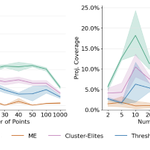
Your RL post-training may be sabotaging your LLM’s test-time scaling!
Conventional RL pretends that you can collapse all reward signals *upfront* into a single *scalar reward*.
We introduce Vector Policy Optimization (VPO), which natively maximizes *vector-valued* rewards, boosting test time search performance, even on the original scalar.

Ryan Bahlous-Boldi retweeted

We present OpenTac, an open, full-stack ecosystem for 3D tactile sensing on any robot surface.
Anyone can design and fabricate high-density tactile skins for any part of their robot, then read them out, simulate them, and share data across different sensors.
Ryan Bahlous-Boldi retweeted

@EkaRobotics has raised a $150M Series A.
Generality v/s Performance is the fundamental tension at the frontier of robotics. Generality without performance is just a prototype. Performance without generality is just a single-purpose tool.
Customers shouldn’t have to choose. Eka breaks the tradeoff. Powered by our Vision-Force-Action (VFA) model, we deliver the performance and versatility customers need to put robots to work every day.
Eka is built on three convictions:
⚡️Force is the language of manipulation.
🚀 Reinforcement learning is how dexterous manipulation scales.
🎂 System 1—fast, reliable physical execution—is the bottleneck to solve.
With this funding, we will scale our model and accelerate customer deployments.
Grateful to be building alongside a dream team and investors who share our ambition.
Ryan Bahlous-Boldi retweeted

Every robot already carries contact sensors: its own joints. When a robot touches something, its joints drift slightly off their commands, and the encoders pick it up. Legged robots and humanoids already leverage this signal to walk blind - but is it enough for blind precise assembly?
We find that it is! Our policies can insert pegs, mesh gears, and thread nuts using only the robot's joint positions - no camera, no tactile, and no object poses. And the peg policy works zero-shot in the real world! 🧵
w/ my amazing co-first author @younghyo_park, and advised by @kushalk_ and @pulkitology.
Awesome work by @nolan_fey and co! I always thought residual world modeling was a super elegant idea

(1/9) Same rewards. Less domain randomization. Higher jumps. Stable landings.
Just by improving the actuator model.
Introducing Contact-UAN: a residual world model for humanoids, learned from proprioception. No torque sensing or motion capture.
Project website: contact-uan.csail.mit.edu.
Had a great time chatting with @yacinelearning about VPO! Looking forward to hearing people’s thoughts on the discussion we had


Ryan Bahlous-Boldi retweeted

As humanoid robots become part of our everyday lives, they need to do more than just perform impressive motions. They should be safe, fun to interact with, and respond naturally to unexpected contact, without sacrificing performance.
Our latest work, Compliant GMT (C-GMT), brings whole-body compliant responses to general motion tracking.
🌐 More details: venki1899.github.io/c-gmt/
Work done at MIT Improbable AI Lab with @michl_wang, Jin, @pulkitology.
Ryan Bahlous-Boldi retweeted

New paper with Google PI: We derive a new learning paradigm coming from the sgd/linear-attention duality, where instead of updating linear layers with gd at every step during training, we maintain a growing “kv cache” of gradient signals we attend over (NN grows during training)

There is a beautiful dual view of gradient descent on dense linear weight layers: A linear layer trained by GD computes exactly the same function as its initial weights plus linear attention over its own training history. Each test input attends to every input the layer received during training ("keys") and recombines the backpropagated errors stored assoc. with them ("values"). This intriguing connection has been discovered and revisited before but is unfortunately still not really well-known!
If you want a new perspective on one of the most fundamental things we do when training modern neural networks, I highly recommend studying this dual view, and thoroughly thinking about its implications.
Taking this perspective seriously, we replaced the linear attention with more powerful kernels, such - obviously ;) - softmax attention. This (not trivial at all!) led to a new paradigm for neural network learning that we call Retrieval-Centric Deep Learning (RCDL): neural networks whose basic building blocks aren't classic linear weight matrices but growing, nonparametric databases of inputs and backpropagated errors, read out by nonlinear attention variants.
Via the RCDL approach, we were furthermore able to find cool, insightful derivations for known ml tools such as the FOOF optimizer!
In our new paper, we describe this RCDL in detail and study its behavior on simple learning tasks - it performs surprisingly well! And of course, we also address the obvious current limitation: Linear growth in memory as the number of training points increases. To circumvent this, we propose some early ideas using a hybrid parametric/nonparametric approach. We are particularly excited to see what tricks can be found to adapt these growing layers to today's hardware constraints. But after all - this work was originally motivated by a simple idea: Compute is getting cheaper and cheaper, hence are there methods that seem wildly expensive today, but may be affordable and extremely powerful in the future? We think this RCDL paradigm offers a promising path :)
There is a ton of possible follow-up work that can be done now and we are very excited to see what people will try and do with this new retrieval centric learning approach!


Ryan Bahlous-Boldi retweeted

Check out this conversation on the field of artificial life and the underappreciated power of evolutionary algorithms!
With all these new autonomous AIs running around, ideas from ALife are going to become more and more important.
Thanks @MLStreetTalk @ecsquendor for having me!

"Evolution is anything but random."
This is INSANE...
@akarshkumar0101 (@MIT_CSAIL, @SakanaAILabs) on artificial life: searching the space of possible universes with foundation models, why evolved networks find structure SGD misses (with @kenneth0stanley), and LLMs evolving Core War programs.
Ryan Bahlous-Boldi retweeted

i wanted to understand openai’s math release, so i built a visual explorer
my favorite part is changing how similarity is measured and seeing what families are neighbors. spin glasses and random SAT connect through their references!
Ryan Bahlous-Boldi retweeted

There is a new kind of robotics called "Vibe Robotics"
It's when you ask agents for fully functioning embodied agents (both hardware and software) that must solve a given task in physically grounded environments.
We build an evaluation to test how good agents (frontier models) are at "Vibe Robotics".
Website: artifactarena.ai/
I’ll be in SF for COLM this week! Reach out if you’d like to catch up or chat about RL post training, diversity, discovery, or anything else!
Awesome work by @osieberling on getting more expressive hidden states for linear attention!


Awesome work on mitigating catastrophic forgetting!

(1/7) Humans can acquire many capabilities without (catastrophically) forgetting previous ones. Why can't neural networks do the same?
Local Support Learning (LSL) takes us a step closer towards this goal.
In LLMs of up to 7B parameters, LSL augments gradient-based training to retain prior capabilities while learning new tasks at full capacity. Notably, it does so without access to prior data.
Key idea: casting forgetting as a geometric problem, and optimizing for the worst case.
Paper: arxiv.org/abs/2610.02126
Website and code: assafbk.github.io/lsl
An important question now that we have very impressive frontier models is how to best leverage them for low latency, long horizon robotic tasks.
Nitish's work is an important stepping stone towards realizing this future!

There’s lots of buzz around agentic harnesses for robots, particularly for long horizon tasks that require complex reasoning and memory. But what will it really take to turn a reasoning agent into a reactive, reliable and low-latency robot policy?
In our new paper, workspace models, we design a new memory architecture that acts as a latent harness for stronger reasoning models. Here’s why we think this might be the way forward:
(1/9)


Ryan Bahlous-Boldi retweeted

Students sometimes ask me if it still makes sense, in this accelerating age, to pursue a PhD in AI.
Perhaps counterintuitively, I think it's a great time to do so.
I wrote up some thoughts on this here: web.mit.edu/phillipi/www/wri…
Ryan Bahlous-Boldi retweeted

Scale ML is resuming this Fall with Alok from Jane Street!
We will go over how to do data mixture experiments at scale! 🔥
Sign up for the zoom link via the website.

Ryan Bahlous-Boldi retweeted

X-rays are everywhere in medicine, but extracting general, quantitative anatomical information from them remains remarkably difficult.
Announcing FleXray: an open-source, open-weight model for zero-shot anatomical segmentation across the human body—from different regions, viewing angles, and acquisition settings.
FleXray learns from large-scale synthetic supervision generated from 3D anatomy, then transfers directly to real clinical X-rays.
Try it now on your own X-rays in our in-browser demo!
🧵 1/N — project page, demo, weights, code & paper below ↓