

EMS Medical Director, Emergency Physician, Board Member @ResuscAcademy, Opinions not policy of my employer, #UWashEMS
Seattle, WA
Joined November 2008
- Tweets1.1K
- Following348
- Followers1.3K
- Likes3K



Michael Sayre retweeted

Dusting off this tweet from April because this gap in shared understanding of LLM capability is *widening*. It's now less "two groups of people speaking past each other" and more a sharp funnel.
- Napkin math somewhere around 6B people (~75% of the population) have barely come in contact with LLMs at all.
- Around 1-2B (~20%) are casual and infrequent users of free-tier ChatGPT-like products. This group sees derpy chatbots and treats them a bit like a better Google search, a writing aid, or etc. Maybe an agent tries to book you a flight. I have non-tech friends who (reasonably, imo) say they have not much use for it at all. Even many professionals outside of math&code are in this tier. For example, execs and many other functions spend a lot of their time talking to other people, so while they understand what is happening intellectually, it is still second-hand and a bit abstract.
- Now we get to professional use of frontier-grade LLMs in math&code. Somewhere around 20M people (0.2%) see first-hand that large, complex projects that used to take them weeks/months can now be completed by agents with a prompt. Building apps, copying apps, translating apps, decompiling apps from binaries... This has all happened very quickly and recently - less than 1 year ago, I was writing code manually by hand, typing memorized computer code commands into a code editor character by character, occasionally pressing Tab to autocomplete a little chunk of code.
- And finally we get to the ~5,000 people (~0.00006%) with access to frontier-grade systems internally. The external world has seen the preview. It looks like swarms of thousands of agents collaborating over weeks on software mega projects: minting zero days, running cyber attacks and defenses at machine speeds, discovering new science, advancing the frontier of mathematics. Things that would have taken top professionals in the industry years of work. Meanwhile, human review and comprehension are starting to fall behind. For example, people are still involved in the "archeology" of the OpenAI-HF incident from many months ago. Mathematicians may be poring over the 722 manuscripts on frontier mathematics for a while.
The funnel is driven by a combination of factors:
1. The impact scales with ambition, problem size, and horizon. A question with a paragraph answer barely stresses the system. You need a reservoir of big, difficult problems that you really care about. This aspect drives the consumer / professional dimension of the funnel.
2. The jaggedness of the system (which I have written about a lot separately). Capability peaks in domains that are digital, verifiable and economically valuable. This is because LLM capability emerges from reinforcement learning on verifiable rewards on a curated environment mixture driven by revenue potential. This aspect primarily drives the area (e.g. math&code) dimension of the funnel.
3. Access. Free-tier, paid-tier, internal.
So this is the weirdness of the moment. The general public has mostly not interacted with these systems. When they have, it looks like a derpy chatbot. The majority of professionals still see only a modest uplift. And a small sliver of professionals are experiencing the vertigo of the curve going vertical. And it is all happening at the same time.

Judging by my tl there is a growing gap in understanding of AI capability.
The first issue I think is around recency and tier of use. I think a lot of people tried the free tier of ChatGPT somewhere last year and allowed it to inform their views on AI a little too much. This is a group of reactions laughing at various quirks of the models, hallucinations, etc. Yes I also saw the viral videos of OpenAI's Advanced Voice mode fumbling simple queries like "should I drive or walk to the carwash". The thing is that these free and old/deprecated models don't reflect the capability in the latest round of state of the art agentic models of this year, especially OpenAI Codex and Claude Code.
But that brings me to the second issue. Even if people paid $200/month to use the state of the art models, a lot of the capabilities are relatively "peaky" in highly technical areas. Typical queries around search, writing, advice, etc. are *not* the domain that has made the most noticeable and dramatic strides in capability. Partly, this is due to the technical details of reinforcement learning and its use of verifiable rewards. But partly, it's also because these use cases are not sufficiently prioritized by the companies in their hillclimbing because they don't lead to as much $$$ value. The goldmines are elsewhere, and the focus comes along.
So that brings me to the second group of people, who *both* 1) pay for and use the state of the art frontier agentic models (OpenAI Codex / Claude Code) and 2) do so professionally in technical domains like programming, math and research. This group of people is subject to the highest amount of "AI Psychosis" because the recent improvements in these domains as of this year have been nothing short of staggering. When you hand a computer terminal to one of these models, you can now watch them melt programming problems that you'd normally expect to take days/weeks of work. It's this second group of people that assigns a much greater gravity to the capabilities, their slope, and various cyber-related repercussions.
TLDR the people in these two groups are speaking past each other. It really is simultaneously the case that OpenAI's free and I think slightly orphaned (?) "Advanced Voice Mode" will fumble the dumbest questions in your Instagram's reels and *at the same time*, OpenAI's highest-tier and paid Codex model will go off for 1 hour to coherently restructure an entire code base, or find and exploit vulnerabilities in computer systems. This part really works and has made dramatic strides because 2 properties: 1) these domains offer explicit reward functions that are verifiable meaning they are easily amenable to reinforcement learning training (e.g. unit tests passed yes or no, in contrast to writing, which is much harder to explicitly judge), but also 2) they are a lot more valuable in b2b settings, meaning that the biggest fraction of the team is focused on improving them. So here we are.
Michael Sayre retweeted

Among comatose survivors of out-of-hospital #CardiacArrest treated with #TherapeuticHypothermia at 33 °C, increasing cooling duration did not improve neurological outcomes or mortality.
ja.ma/3RTXrnc

Michael Sayre retweeted

Our paper "Towards autonomous medical artificial intelligence agents" is out in @Nature today! It was led by @Dykex6 who did the real work here.
We present MIRA, an autonomous AI agent that runs end to end through a clinical patient case. We build it on top of LLMs and provide it with scaffolding, tools, and most importantly, a thorough evaluation against human doctors. We show that our agent can solve a clinical case in a multistep process. It takes the history, orders labs and scans, selects medications, decides on procedures, and triages for admission.
For me the most important part is that we can now benchmark humans against AI for the whole decision pathway, not just the end result. Our evaluation shows very good results, almost no severe errors, these AI agents perform just really well on difficult medical cases.
As we move now to implement this in real clinical routine, and run clinical trials about it, we must first fix the infrastructure in our hospitals (and also ensure we still have access to the underlying LLMs...).
Kudos also to our colleagues from Google and Deepmind who published a very similar study back-to-back with us! (nature.com/articles/s41586-0…) We are happy that with <<0.01% of Google's R&D budget we can contribute to this space together.
Thanks to all co-authors, our institutions @UniHeidelberg @tudresden_de and also the great @EricTopol for covering us in his newsletter. Congratulations to Dyke and the whole team!
Full text link: nature.com/articles/s41586-0…


Michael Sayre retweeted

I recently took @tszzl and @RichardHanania (true story lolz-and both advisors to my new venture in full disclosure) to one of the countries largest academic medical centers.
@tszzl has since wrote a viral X thread thats worth reading again teapaw.org/tszzl/status/195869377…
It speaks for itself. I'll just add if he's surprised by the missing data .....he'd be further surprised by the data we do capture: fragmented, delayed, and built for billing, not clinical insight. It tells us very little about human disease and how to truly treat it.
Epic Systems is at the center of this monumental failure.
Simply put: AI cannot reach its full potential in medicine while Epic Systems controls the underlying data architecture. The ideas are fundamentally oppositional at their core.
I explain why Epic's culture, regulatory inertia, and the staggering $1B sunk costs of its clients do not guarantee its dominance but if anything bring a slow march into irrelevance.


companies like Facebook record every imaginable interaction their users have with the platform. they log each of your clicks and taps. they keep track of how long your gaze lingered on a post, whether you were on the same WiFi as that woman who might be your friend, which instagram reel you watched three times.
for a single user this is quaint, but these practices are done on a planetary scale across all technology giants. they create petabytes of data per day and keep it for as long as the European regulators will let them. then they can have machine intelligence instrument it into useful knowledge for their cybernetic control systems that build newsfeeds, serve ads, decide how much compute to spend on you, which SKUs should be in which warehouses right before you want them. the Hive metastore bills run into the billions
hospitals throw most of their data and telemetry out after each case, every single day. they record videos of vascular surgeries, endoscopies, discovering interesting physiologies. sometimes they're not recorded at all and most of them the time they delete them as soon as they’re done
it's even worse for physiologic waveforms (ECG, EEG, arterial lines) which are essentially never recorded anywhere at all. milisecond scale views of patient's brains, vasculatures, hearts are generated and instantly destroyed. all of these time series of course predict people's hearts stopping, brains exploding, etc ahead of time. surgeons teleoperate robots, none of the micro-movements are recorded, policies never learned, never correlated into which outcomes were successful or not
this would be unthinkable to most software people whose instinct is to record everything everywhere never mind the cloud costs, because we are sure there will be some use for it later and some model to be trained later. i don't have a prescription here per se my point is just that our civilization routinely hoards and treasures some of the silliest data in the world "i pressed like on the john pork reel" & destroys much of all the most important data it generates and limits what machines can learn
Michael Sayre retweeted

Mixed-methods study protocol to evaluate whether Resuscitation Academy training for EMS agencies improves cardiac arrest survival @saketgirotra @sayremr @saintlukeskc ahajrnls.org/3K93rEA

Michael Sayre retweeted

From 8.2% to 25.0% Utstein survival — Detroit's transformation in OHCA outcomes is turning heads nationwide. CARES data helped drive the change.
detroitmi.gov/news/detroit-f…
Michael Sayre retweeted

Presented at #ESOC2025:
Among 550 patients with stroke due to large-vessel occlusion who had presented within 4.5 hours after onset, 90-day functional outcomes were better with intravenous tenecteplase before thrombectomy than with thrombectomy alone.
Read the full BRIDGE-TNK trial results: nej.md/3GTVKAk
@ESOstroke

ALT A figure showing the distribution of scores on the modified Rankin scale at 90 days in the intention-to-treat population
Michael Sayre retweeted

ICYMI:
Ketamine vs midazolam for pre-hospital agitation?
thesgem.com/2025/04/sgem473-…
@hp_ems @EMS1 @EMSWorldOFCL @MLPS911 @ACEPNation
Michael Sayre retweeted

What if an Amazon delivery van could also help save lives? Scoop here, with @BenoitBerthelot @mattmday, on Amazon's experiment to get more AEDs into the residential areas where most heart attacks happen:
bloomberg.com/news/articles/… via @business @technology

Michael Sayre retweeted

Congrats to @jesunshine and team on developing this impressive technology that will certainly improve detection of unwitnessed cardiac arrest.
Nature paper here: nature.com/articles/s41586-0…
@uwmnewsroom @UWAnesthPainMed


Michael Sayre retweeted

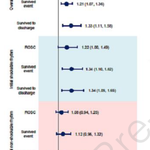
Newsflash: “refractory” #VF is not really that refractory. In patients needing three shocks at rhythm checks, successful VF termination occurred in one or more shocks in 95%. In other words, it is recurrent VF. Check out our new @ARREST_study in the #EHJ: academic.oup.com/eurheartj/a…

Michael Sayre retweeted

Powerful Medical wins Best Overall and Best Science Pitch at the #AHA2024 Health Tech Competition!
Thank you for this wonderful recognition @American_Heart.

Michael Sayre retweeted

Hot off the Press: A Comparison of Ketamine to Midazolam for the Management of Acute Behavioral Disturbance in the Out-of-Hospital Setting annemergmed.com/article/S019…


Michael Sayre retweeted

No difference in airway management (EMS or ED) for cases of acute behavioral disturbance treated with either midazolam or ketamine.
A high functioning EMS system can safety deliver ketamine to agitated patients. #UWashEMS annemergmed.com/article/S019…


Michael Sayre retweeted

📢 Call for Engagement: Neonatal Global Resuscitation Alliance (Neonatal-GRA)
The Neonatal Global Resuscitation Alliance Leadership Team would like to invite interested organisations and individuals to solicit their feedback on a 10-step approach to improving neonatal resuscitation.
The broad objective of the Neonatal-GRA is to ensure knowledge and experience gained in each neonatal resuscitation setting can be shared and used by others in a truly global fashion to support neonatal resuscitation implementation and performance and improve outcomes worldwide.
The Neonatal-GRA will host a virtual meeting from 12:00-14:00 EST on September 24, 2024 to discuss the drafted 10-step approach.
You can register for the virtual meeting using this link: lnkd.in/gmWa_UbY
Access the draft of the 10-step approach and provide your feedback using this link: lnkd.in/g3nPc73t
#ItTakesASystemToSaveALife

Michael Sayre retweeted

Evidence is not mounting. There is already ample safety data.
It is time to allow this drug in the US!

Michael Sayre retweeted

"Dr. Copass was a beacon of excellence, setting high standards for himself and those around him,” said Dr. Tim Dellit, CEO of @UWMedicine. "He was admired for always being ready for an emergency, whether it was carrying a radio to go to the scene of an accident himself, providing medical advice to paramedics, personally attending to patients or mentoring colleagues.” @harborviewmc @AirliftNW @UWashEM @MedicOneFndn @SayreMR
bit.ly/4c05K4N
Myth busting results found in this investigation. @larswik1 and Rose Yin did great work.

Recovery of arterial blood pressure after chest compressions pauses in patients with out-of-hospital cardiac arrest
resuscitationjournal.com/art…
#Resuscitation

Michael Sayre retweeted

😍 Proud of our MICA paramedics for another successful launch of a world-first clinical trial: Today the #PANDA trial enrolled its 1st patient! The #PANDA trial will end the long-standing debate around the optimal vasoactive agent for cardiogenic shock in the prehospital setting
