

Co-Founder & CEO @CryptoQuantique. Opinions expressed are my own. Crypto means Cryptography!
Joined October 2015
- Tweets1.5K
- Following541
- Followers334
- Likes3.5K








Shahram Mossayebi, PhD retweeted
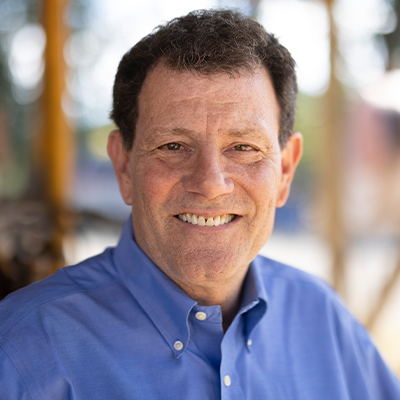
Nabeel Rajab, a human rights activist from Bahrain who pushed for democracy and freedom in the Arab world, has died of a heart attack at 62. He was enormously courageous and was a leader in Bahrain's short-lived Arab Spring movement, later crushed. RIP, Nabeel.
Shahram Mossayebi, PhD retweeted

Over the past week, I’ve been overwhelmed by the love and support of friends, industry colleagues, and people I've never met. Thank you to everyone who has shown kindness to my family and me. It means the world to me.
I came to the United States 53 years ago, and becoming an American citizen is one of the greatest gifts and proudest moments of my life. NVIDIA has been my life’s work. Building it into the company it is today alongside my colleagues has been a privilege and an honor. Nowhere but in America could a company like NVIDIA be possible. I love our country, and I love NVIDIA.
I did not live up to the standards expected of everyone at NVIDIA, and I have made serious mistakes in my personal life. I created problems for the Board that I deeply regret. I own my mistakes completely, and I am committed to cooperating with the Board’s independent investigation.
Since my departure, I’ve seen an outpouring of calls from NVIDIA’s employees, investors, business partners, and customers for me to return as CEO. Many continue to reach out to me directly as the company navigates complex technology, market, competitive, and geopolitical dynamics. NVIDIA is a once-in-a-generation company. If the Board of Directors decides that my return is in the best interest of our shareholders, our employees, the company, and America, I would be honored to answer these calls and return as CEO.
Thank you again to everyone who has shared their good wishes. I am profoundly humbled by your support. To my family: I love you, and I will spend the rest of my life being worthy of yours.
Jensen
Shahram Mossayebi, PhD retweeted

In my ongoing quest to find the limits of Opus 5.5, I directed it to audit my old scientific field, theoretical astrophysics. We indexed about 150,000 papers, audited 50,000 for issues, and did progressively more thorough checks on thousands more. We found nearly 1000 major errors that got cited many times, most are still uncorrected. This survey enabled me to estimate the efficacy of peer review for correcting errors (not very good) and to identify dozens of open questions that anyone with spare Claude Max tokens could answer today (.md context files included).
Bottom line: AI can speed up quantitative science by >1000x with no further model improvement required. But I'm seeing no evidence of this being pushed within universities, only academics complaining about labs dropping math proofs.
Among my fellow reformed academic high agency founders, however, several are speed running entire disciplines.
This survey has implications for how science will be run in the very near future. Hint: Academic publishing is dead. It was already a very stupid way to record and promulgate knowledge, and had been so for decades, even before all that publicly funded knowledge was locked behind paywall cartels. Now AIs can generate thousands of novel, correct papers per day, it is no longer meaningful for humans to consider a research paper a "unit of science" or to even bother much with the 99.9% of science which, up to this point, was necessary drudgery. Time to discover something like General Relativity or Evolution every week. LFG!!
Enjoy: science.caseyhandmer.com/phy…

.@British_Airways We booked bassinet seats months ago for our first long-haul trip with an infant. One week before departure, we've been moved to random seats and customer service can't help. This has caused huge stress for our family. Can someone please resolve this?
Thanks for looking into this, @British_Airways. I understand the aircraft change, but we booked months ago specifically for bassinet seating for our infant. Can you review how replacement bassinet seats were allocated and add us to a priority waitlist if one becomes available?
14
3,808
Shahram Mossayebi, PhD retweeted

back in London for a month, so here’s my contribution to the city.
introducing the London Food Money Matrix: a map of ~600 London restaurants, cafés and pubs and who owns them, whether that’s private equity, big corporates, or independent. look up a place before you go, and if it’s PE-owned it’ll show you an indie spot nearby.
why: went to Harry’s yesterday and the staff broke into Bella Ciao mid-dinner. since when is Harry’s a tourist trap?
so me and my friends looked it up - it was sold this year in a £1.4bn deal to an Abu Dhabi investment group.
london-food-money-matrix.ver…

Shahram Mossayebi, PhD retweeted

1/5 Nvidia helped finance the businesses buying its chips. What happens when the man driving that system leaves?
Here’s how I see the fallout
exponentialview.co/p/jensen-…

Shahram Mossayebi, PhD retweeted

Announcing a major milestone achieved by my team @GoogleDeepMind: we have proven key security properties of the machine code underlying the Signal messaging protocol. This is the first time the actual production code of a widely deployed protocol has been formally verified – by any method, with or without AI – and at this depth.
More than a research breakthrough, it’s a prime example of how frontier AI can be a force multiplier to counter the speed and scale of modern cyber threats.
Formal verification offers a higher standard of security; however, it’s extremely complex and time consuming, which is why in many cases it’s considered to be impractical. Similar efforts could take teams decades of combined effort. We did it in a month’s time.
Using AlphaProof Code, Google DeepMind's new agentic framework for formal verification that runs on LLMs including Gemini Carbon, we verified the Signal protocol down to the actual code running on devices. This milestone lays the groundwork for a future in which vital systems, from medical device firmware to power grid software, ship with mathematical proof that their protections work.
Reaching that future will take continued research from our community. In that spirit, we're open-sourcing our formal specifications and verification artifacts so others can build on this work.
On a personal note, this moment is of deep significance to me. I started my own research journey more than two decades ago as an intern working on checking the consistency of complex software systems. Seeing this grand challenge made practical with modern AI is extraordinary.
I'm extremely proud of my team members: Swarat Chaudhuri, Andrew Ferraiuolo, Anton Kovsharov, Tej Chajed, Sam Schlesinger, Karn Seth, Jonathan Katz, and Charles Sutton for taking on this grand challenge and delivering, and grateful to the Signal team for their partnership.
deepmind.google/blog/formal-…


Shahram Mossayebi, PhD retweeted

“Europe doesn’t necessarily have a founder-quality problem - it has a founder-retention and company-scaling problem. The continent is a talent-exporting ecosystem, and has been for a long time, while the US captures a disproportionate share of the economic value created by that talent.” sundaycet.substack.com/p/seq…
Shahram Mossayebi, PhD retweeted

BREAKING: Israeli president Herzog gives the mandate for forming a new government to Gadi Eisenkot
Shahram Mossayebi, PhD retweeted

Today Physical Superintelligence PBC is announcing a proof of the Aaronson-Ambainis conjecture, one of the central open problems in quantum complexity, with major implications for quantum computing speedup.
psi.inc/research/aaronson-am…
Thread 👇

Shahram Mossayebi, PhD retweeted

"Fan Factories: Multiple Number Fields in Factorization Factories and Batch NFS" draft from Google Deep Mind to improve factoring:
storage.googleapis.com/deepm…
Shahram Mossayebi, PhD retweeted

21-year-old Iranian twins Taraneh and Romina Rahimi - one sentenced to death, the other to 25 years in prison for protesting their govt - have had their suit alleging torture and threats of rape dismissed and their lawyer jailed. The cousin who helped raise them tells me they now “look to the world to hear their voice.”
Shahram Mossayebi, PhD retweeted

we've found, validated, and prepared patches for almost 1,000 linux local privilege escalations using our cyber vulnerability pipeline, at the cost about $1,000 per vulnerability.
an emerging scalable approach to significantly hardening both open source and proprietary projects

Our security researchers built an autonomous cyber vulnerability discovery, exploitation, and patching pipeline.
In a single run with an upcoming cyber model, it validated and generated patches for 948 local privilege escalation vulnerabilities in the Linux kernel at a total API cost of $1.2 million.

Shahram Mossayebi, PhD retweeted

There will now be a temptation in many parts of Europe, including the UK, to think that things will eventually go back to normal with the US and that Europe can stop its reluctant shift towards strategic autonomy. That would be a serious mistake.
Shahram Mossayebi, PhD retweeted

Slides for my talk at the Nobel Symposium on Quantum Computing: "Quantum error correction gets real"
preskill.caltech.edu/talks/P…
Shahram Mossayebi, PhD retweeted
Anthropic is releasing an open source library, FlashProve, for provable inference. It was measured on Llama 4 Maverick, a 400B-parameter mixture of experts model.
Code:
github.com/anthropics/FlashP…
Blog post:
anthropic.com/research/prova…
Shahram Mossayebi, PhD retweeted

It’s my birthday 🎂 So I’m giving myself a challenge.
7 days. One mission. Find the next extraordinary founder before the rest of the world catches on.
The relentless builders working on something that could change an entire industry.
AI, energy, health, or something I haven’t even thought of yet. Surprise me.
No pitch decks. No warm intros.
Just DM me what you’ve built, who desperately needs it, and why you’re the one to build it.
If something blows me away, I’ll move fast. Really fast. We invest $250k-$3m in 1 meeting.
Let’s see what I’ve been missing. ⏳
Shahram Mossayebi, PhD retweeted

Capital Expenditure (capex)
The global economy is $128 trillion
Global capital expenditure (capex) is $28.5 trillion
By sector, global capex looks like this…
1. $3.9 trillion - Manufacturing, all industries
2. $3.6 trillion - Residential property
3. $2.6 trillion - Non-residential property
4. $1.5 trillion - Electricity infrastructure
5. $1.4 trillion - Transport infrastructure
6. $1.1 trillion - Oil and gas
7. $950 billion - *DATA CENTERS & COMPUTE*
8. $750 billion - Defense
9. $620 billion - Healthcare and education
10. $300 billion - Telecoms
11. $250 billion - Water infrastructure
12. $200 billion - *SEMICONDUCTOR FABS*
[…]
The capital structure that underpins the above capex shortlist varies materially by sector, because the assets are fundamentally different in financial terms.
What matters is their;
• Asset life / duration, it can vary from 3yrs to 50yrs
• Cash flow forecastability, oil & gas is volatile, rent less so.
• Residual value, highly specialized assets are harder to resell
Capex is capitalised with a combination of debt and equity, what matters for pricing the capital is the combination of these things (there’s other stuff but I’m simplifying).
Global capex is about 50% funded by loans and debt instruments, and 50% equity.
What is happening with data centers has nothing to do with global liquidity, which is frankly vast and would like a lot more big projects to originate.
The issue is that a lot of data center projects are delayed or overrunning. Execution is what matters, you must hit the cash requirement milestones. Many are not. The build out is made up of myriad construction projects that compete for the same land and suppliers. Much of the debt financing comes from the same few pools and those pools have reached the point where the marginal loan is net negative to the value of the pool.
It seems that if the economy has to build more than $800bn of data centers in US, then projects start tripping over each other.
This is a major problem, because capex was forecast to hit $2 trillion by 2028 but the construction industry seemingly struggles to deliver that level of site development.
What lenders want and compute operators need is a non-competing supply chain that can deploy data center capacity. A supply chain that is not competing to buy the same powered land, plant equipment and diggers, something that isn’t built out in concrete and grid connections.
The available investment capital and lending is actually greater than ever, and increasing, it’s just looking for another deployment channel, because powered land is stuffed.
Capital is readily available but bankable delivery capacity is what is scarce.
An alternative industrial supply chain (alternative to powered land) can massively expand the set of financeable projects, reduce delivery bottlenecks and make completion more predictable.
Such opportunities exist, and they are able to absorb the stranded $1 trillion capex, and have the delivery capacity to scale well beyond powered land.
What is required… is to make those new channels bankable. Asset financing precedent and mature liability and underwriting contract law all help here, along with actually building and qualifying the delivery capacity channel.
But this is what 2027 is going to be all about without people actually describing it as this.
Construction industry prices will likely rise, but this is somewhat a case of ‘nine women cannot have a baby in a month’. So there’s likely some market dislocations coming as major capital pools move to stand up the new bankable deployment capacity and get funds deployed into the most lucrative part of the economy.
Interesting times!
